Unlock the Groove: Randy Jacobs' Funk Guitar Masterclass with 6 Fresh Ideas!
0 reactions
9 months ago
Beatbounty
Randy Jacobs Funk Guitar Masterclass: Six Unique Ideas from One Groove!
Watch On
Funk music carries a unique energy that sets it apart from other genres. While it may not boast the technical prowess of rock, the emotional depth of blues, or the personal touch of folk, its true essence lies in the groove. At the heart of this groove is the rhythm section, typically comprising drums, bass, and electric guitar. When these three instruments lock in together,the entire band-from keyboards and brass to vocals-can thrive on the rhythmic magic. Legends like James Brown, Kool and the Gang, Earth, Wind & Fire, and Chic understood this dynamic perfectly.
Randy Jacobs embodies this understanding.
More importantly, he grasps what it takes for the guitar to truly shine in a funk context.
Renowned for his contributions to Was Not Was, Randy has collaborated with a plethora of artists, including Bonnie Raitt, Ringo Starr, Willie Nelson, and Billy Preston. His guitar work is characterized by infectious grooves and impeccable tightness, a quality that has persisted from his pop-funk days in the 1980s to his current role in the blues-funk ensemble, the Boneshakers, whose latest release is Live to Be This.
In this exclusive feature, you’ll witness Randy demonstrating deep grooves using his thumb in the style of Wes Montgomery, while explaining the techniques that make them so impactful. The twist? For each of the six examples, he utilizes a single drum and a bass groove built around the notes E, A, and B.With this minimal foundation, he showcases the advantages of a diverse rhythmic and harmonic vocabulary through 16th note grooves, muted strings, and classic funk chords.
One groove, six distinct guitar interpretations-pure funk brilliance.
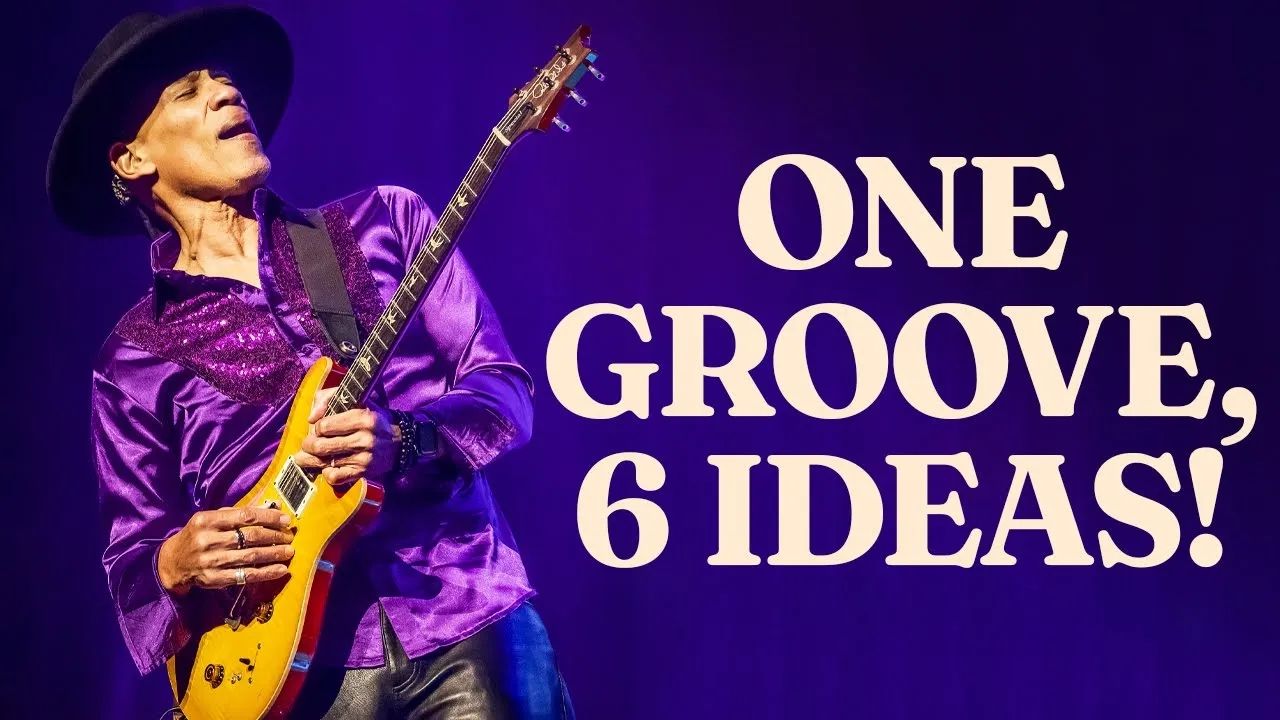
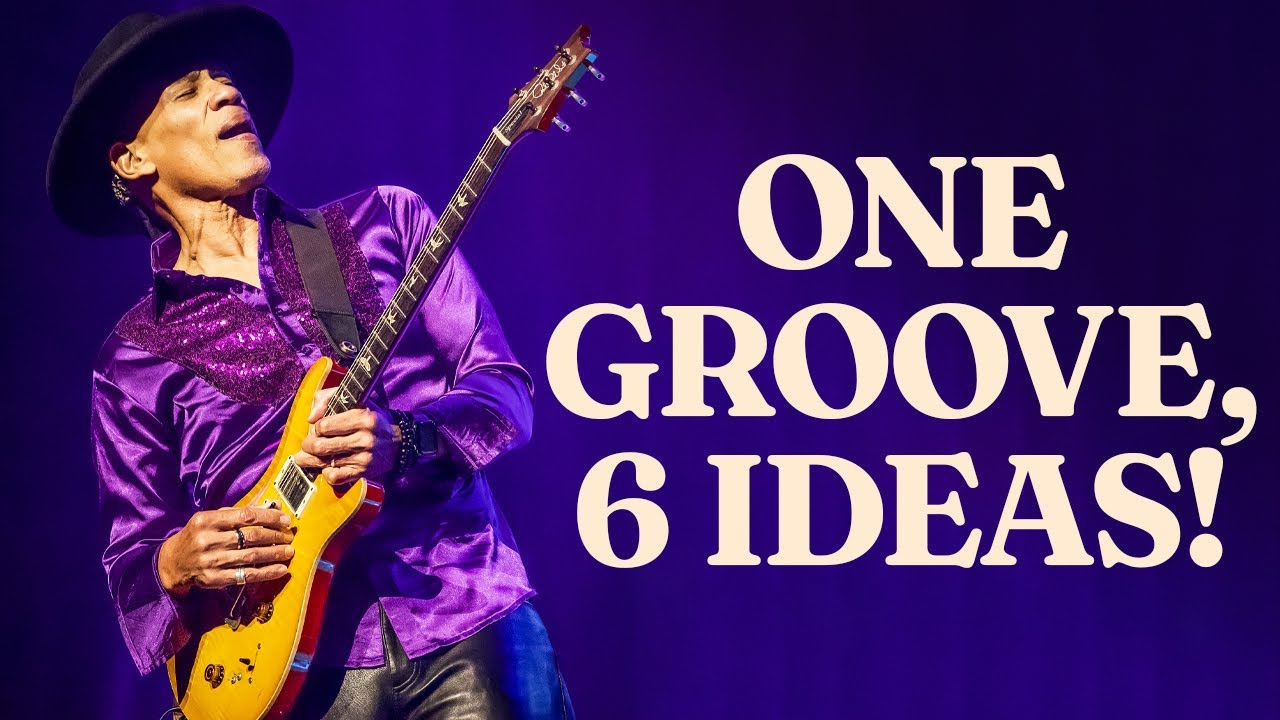
Randy Jacobs performing with his 22 fret PRS Special(Image credit: Brooke Lowe)
Example 1: Spank a Lank Groove
In this example, Randy delivers a robust funk guitar performance, blending chord fragments, single-note pops, and muted strokes. He employs his thumb for strumming while maintaining a consistent hand motion over the strings to ensure precise timing. although rooted in E Dorian (E F# G A B C# D), he briefly incorporates Am9 chords, dipping into the E natural minor scale (E F# G A B C D).
Example 1(Image credit: Jon Bishop)
Example 1 continued(Image credit: Jon Bishop)
Example 2: Dancing Shoes
This section introduces slash chords, which add vibrant movement to the progression. The transition from G/E (G chord over E bass) to F#m/E creates a rich sound. The A/B chord, often referred to as B11, is a staple in funk and R&B genres. For the embellishments in the second bar,simply hammer onto the 9th fret while allowing the first string to ring. You can mute the second string using your fretting hand.
randy Jacobs Funk Masterclass: Six Ideas from One Groove – YouTube
Watch On
Example 3: bluish Hump Groove
This groove draws inspiration from iconic bands like the Rolling Stones. Instead of relying on high-pitched chords, it emphasizes robust low-string notes. The transition from B to E/B is reminiscent of classic Keith Richards style. To execute this, use your first finger to create a barre on the 4th fret, then employ your second and third fingers to form the E/B chord.
Randy Jacobs Funk Masterclass: Six Ideas from One Groove – YouTube
watch On
Example 3(Image credit: Jon Bishop)
Example 3 continued(Image credit: Jon Bishop)
Example 4: I Can Smell It Groove
Randy elevates the funk vibe by integrating various techniques previously demonstrated, such as muted strokes, low-end riffs, and funky chord fragments. To achieve the signature “spank,” he slides a tritone double-stop up a half step from the 4th fret to the 5th fret, then strums the open first and second strings. The B7#9sus4 chord is a classic sound embraced by many artists, including the Average White Band and Prince.
Randy Jacobs Funk Masterclass: six Ideas from One Groove – YouTube
Watch On
Example 5: Smooth Strum Funk Groove
In this section, Randy shifts gears by utilizing smooth-sounding major 7 chords. To enhance the movement, he slides into the Emaj7 chord from a half step below (Ebmaj7). This technique creates a delightful tension and release effect. The E/A chord contributes to a rich Amaj9 sound. Additionally, he incorporates double-stops by sliding a first finger barre between the 7th and 9th frets on the first and second strings, adding a slinky feel to the groove.
Randy Jacobs Funk Masterclass: Six Ideas from One Groove – youtube
Watch On
Randy Jacobs Funk Masterclass: Six Ideas from One Groove – YouTube
Watch On
Example 6(Image credit: Jon Bishop)
Example 6: Spankala Groove
In this final example, Randy primarily utilizes two notes from an Em9 chord to create a bold and confident sound. This can easily be transformed into an Em7 by lifting the first finger. For added texture, the full Em9 chord can also be played. When forming the Bm11 chord, Randy allows the open first and second strings to resonate, producing a rich and vibrant tone.
Unlock the Groove: Randy Jacobs’ Funk Guitar Masterclass with 6 Fresh Ideas!
Unlock the Groove: Randy Jacobs’ Funk guitar Masterclass with 6 Fresh Ideas!
Understanding the Funk Groove
funk music is all about rhythm and groove, and no one embodies this better than Randy Jacobs. Known for his work with Was Not Was and collaborations with legends like Bonnie Raitt and Ringo Starr, Jacobs has a unique approach to funk guitar that can elevate any player’s skills. In this masterclass, he shares six innovative ideas that will help you unlock the groove and enhance your funk playing.
1.The Power of Thumb Technique
Randy emphasizes the importance of using your thumb for strumming. This technique allows for a more percussive sound, which is essential in funk music. By incorporating thumb strokes, you can create a tight, rhythmic feel that drives the music forward.
Practice strumming with your thumb while muting the strings with your palm.
Experiment with different rhythms to find your unique groove.
2. Exploring 16th note Grooves
One of the key elements of funk is the use of 16th notes. Jacobs demonstrates how to incorporate these into your playing to create a more dynamic sound. By playing 16th notes, you can add complexity and excitement to your riffs.
Start with a simple 16th note pattern and gradually add embellishments.
Use a metronome to keep your timing precise.
3. Muted String Techniques
Muted strings are a staple in funk guitar playing. jacobs shows how to use palm muting effectively to create a punchy sound. This technique not onyl adds texture but also helps in maintaining the groove.
Practice muting the strings with your palm while playing chords.
Combine muted notes with open strings for a fuller sound.
4. Funky Chord Progressions
Jacobs introduces several funky chord progressions that are easy to play yet sound complex. For instance, using slash chords can create a rich harmonic texture that is characteristic of funk music.
Chord
Notes
Example Usage
G/E
G chord over E bass
Great for transitions
A/B
A chord over B bass
Common in funk and R&B
B7#9sus4
B7 with added 9th and suspended 4th
Used by Average White Band
5. sliding Techniques for Smooth Transitions
Randy demonstrates how sliding into chords can create a smooth transition between notes. This technique adds a fluid quality to your playing, making it sound more professional.
Practice sliding from one chord to another to develop muscle memory.
Incorporate slides into your solos for added flair.
6. Incorporating Double-Stops
Double-stops are another effective way to enhance your funk playing. Jacobs shows how to use double-stops to create harmony and depth in your sound. This technique is especially effective when combined with sliding and muted notes.
Experiment with different fingerings to find the best sound.
Use double-stops in your solos to create a fuller sound.
Benefits of learning funk Guitar Techniques
Mastering these funk guitar techniques not only enhances your playing but also opens up new creative avenues. Here are some benefits:
Improved Rhythm: Funk guitar emphasizes timing and groove, helping you develop a better sense of rhythm.
Enhanced Creativity: Learning new techniques encourages experimentation and creativity in your playing.
versatility: Funk techniques can be applied to various genres, making you a more versatile musician.
Practical Tips for Aspiring Funk Guitarists
To get the most out of your funk guitar practice, consider the following tips:
set aside dedicated practice time each day to focus on these techniques.
Record yourself playing to track your progress and identify areas for betterment.
Join online forums or local groups to connect with other funk guitarists and share tips.
Case studies: Prosperous Funk Guitarists
Many successful guitarists have utilized these techniques to create their unique sound. For example:
Prince: Known for his innovative use of chords and rhythms, Prince often incorporated muted strings and double-stops in his music.
George benson: His smooth transitions and use of slides have made him a legend in the jazz and funk genres.
First-Hand Experience: Randy Jacobs’ Journey
Randy Jacobs has spent decades perfecting his craft. His journey thru various genres has equipped him with a wealth of knowledge that he now shares with aspiring guitarists. By learning from his masterclass, you can gain insights that would typically take years to acquire.
Ready to take your funk guitar skills to the next level? Join the Beatbounty platform today and create an account to submit your ads and connect with other musicians!