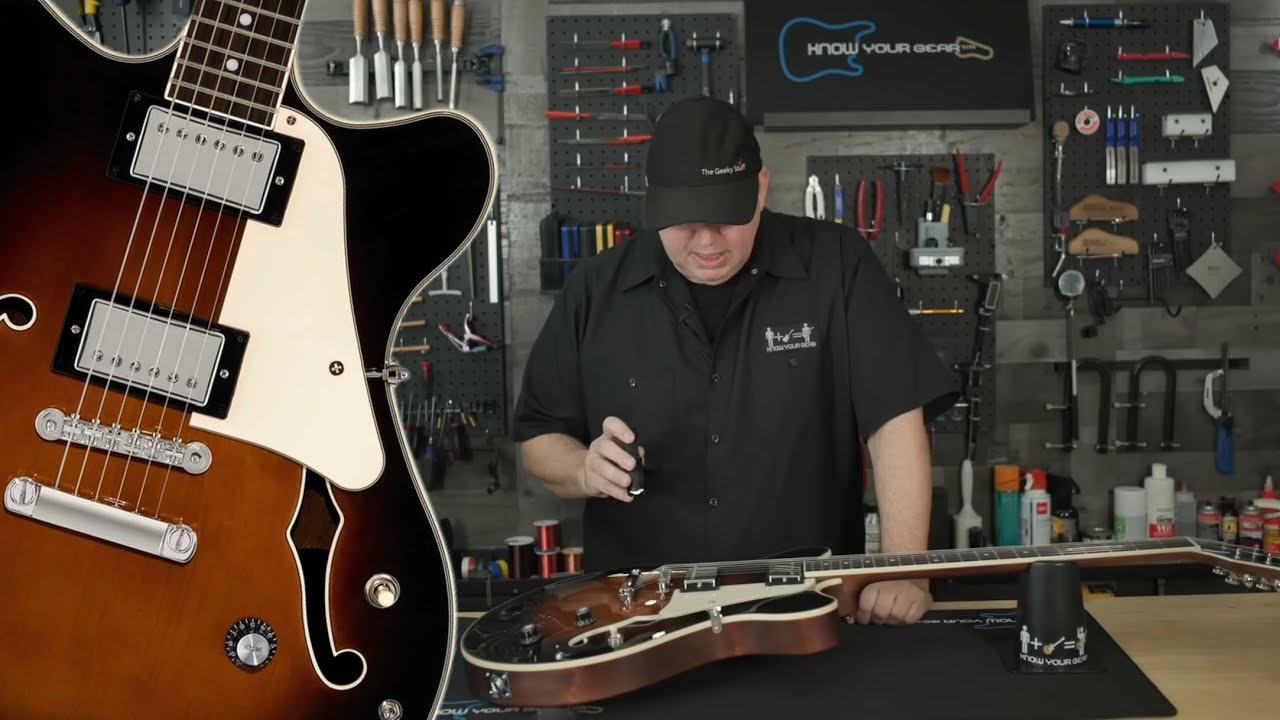
introduction to the Clementine
Orangewood’s inaugural electric guitar venture was anything but conventional for a brand rooted in acoustics; the introduction of a thinline baritone guitar took manny by surprise. As confirmed by my colleague Matt Mcracken’s review, the Orangewood Del Sol exceeded expectations. Now, the Los Angeles-based brand has unveiled another intriguing offering.
The Clementine is a semi-hollow guitar with a 24.75″ scale length, priced nearly twice that of the Del Sol, but it boasts superior specifications. Its design pays homage to the brand’s acoustic heritage more distinctly.
While the affordable semi-hollow guitar segment has evolved considerably over the past decade due to advancements in manufacturing, the market segment were the Clementine resides-crafted in china at Cortek’s Dalian facility-remains competitive yet less saturated. This model is positioned above some of epiphone’s Inspired By Gibson Custom semi-hollows and all PRS SE Indonesian models, with Eastman being a closer competitor. What unique offerings does Orangewood bring to the table, and will it resonate with players?
Specifications

- launch price: $1,495
- Manufactured in: China
- Type: Six-string chambered double-cut electric guitar
- Body: Solid mahogany with a solid maple top
- Neck: Mahogany, C-shape
- Fingerboard: Rosewood, 16″ radius
- Scale length: 24.75″ / 628mm
- Nut width: Graph Tech / 43mm
- Frets: 22 medium jumbo frets
- Hardware: Grover Roto-Grip locking tuners, tune-o-matic bridge
- String spacing at bridge: 51mm
- Electronics: Seymour Duncan Seth Lover humbuckers, 3-way toggle switch, mini toggle switch for coil-splitting
- Weight of test guitar: 7lb/3.17kg
- Left-handed options: No
- Finishes: Americano, Bluebird (as reviewed), evergreen polyurethane gloss tops
- Included cases: Hard case
- Contact: Orangewood
Construction Quality

Build Quality Rating: ★★★★☆
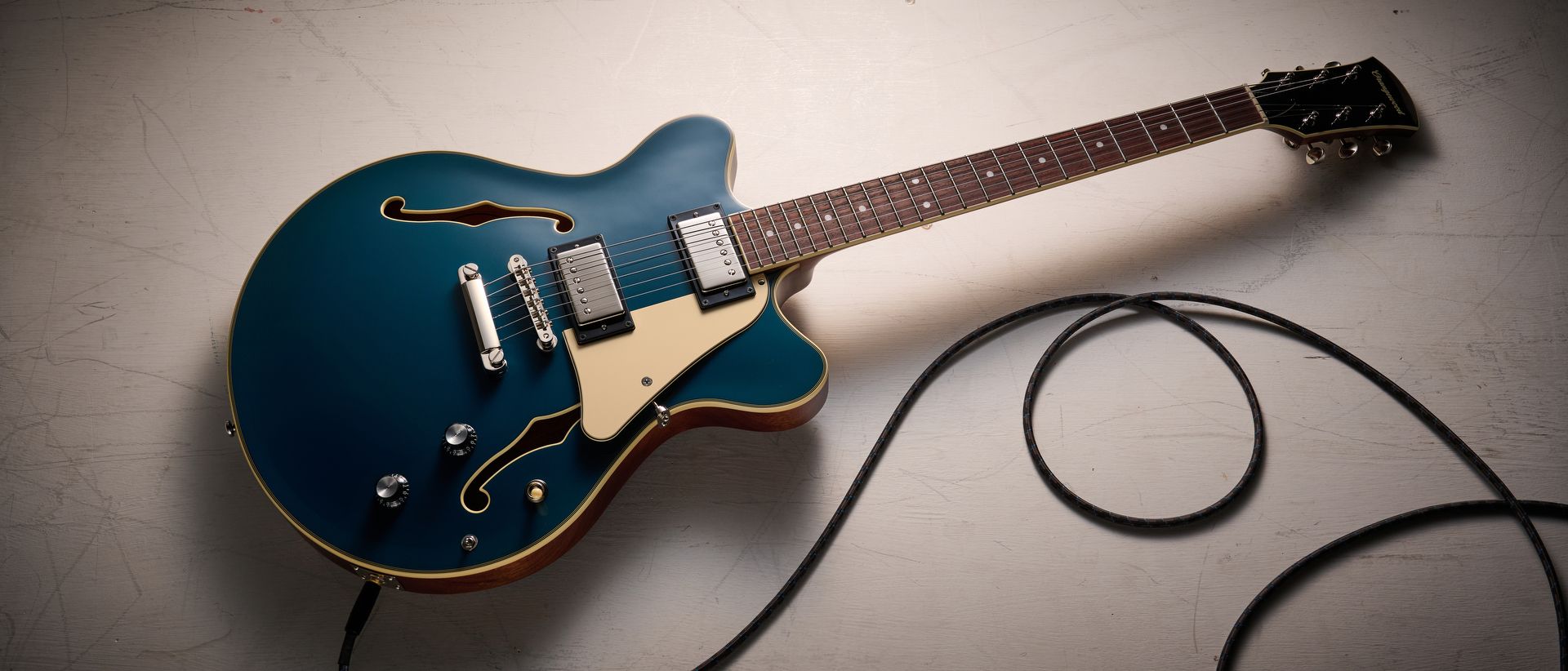
With a compact double-cut body measuring just over 15″ wide, the Clementine draws comparisons to models like the Hofner Verythin and certain Gretsch Junior variants, making it appealing for players who find larger models cumbersome. though, there’s much more to appreciate.
The Bluebird finish on our test guitar is a standout choice, with two additional options: Evergreen and the classic dark sunburst Americano. the gloss denim blue of the maple top is slightly darker then depicted online, framed beautifully by cream binding and a pickguard (a black pickguard is also included in the hard case). The f-holes are also bound,which is a nice touch.
The rest of the guitar, apart from the sleek gloss black headstock, features a smooth satin natural mahogany finish. This aesthetic resonates with contemporary acoustic guitars-specifically, my own mahogany Sigma dreadnought.The craftsmanship is impressive, and it would be great to see more electric guitars embrace this design philosophy.
Additional surprises await at the back with a belly carve and a control cavity cover for easy access to wiring-an uncommon feature in most semi-hollow designs. This test Clementine is also pleasantly lightweight at 7lbs.
The construction is classified as a ‘chambered’ body, featuring carved mahogany and a maple cap. The mahogany neck includes a scarf joint at the headstock for optimal angling.

The binding and joins are immaculate,but under close inspection,I noticed subtle indentations across the Bluebird finish-too small to feel and challenging to photograph. It appears to be a characteristic of the polyurethane finish rather than the maple texture beneath.While this is onyl noticeable under radiant light at certain angles, it’s a minor blemish on an otherwise well-executed design.
I anticipated needing to adjust the truss rod after shipping, but the guitar was perfectly set up right out of the box. This is one of the best-prepared guitars I’ve encountered in recent reviews. The frets are polished, and my rocker confirms thay are level across the board. The action is impressively low, measuring 1.3mm from the low E string and 0.75mm from the high E on the 16″ radius rosewood fretboard-yes, 16 inches, more on that shortly.

Notable high-spec features include Grover Roto-Grip locking tuners and Seymour Duncan Seth Lover humbuckers, a design favored by guitarists like joe Perry, closely based on the original PAF pickups.
While there isn’t a conventional dual tone and volume control setup, a mini switch for coil-splitting is included, which I find more practical during play than a push-pull on the volume pot.
Playability

Playability Rating: ★★★★
This was our first original electric guitar design, so throughout product progress we where really intentional about reflecting our acoustic background.
Gerald Ignacio, Product Lead, Orangewood
In a surprising twist, Orangewood has opted for a 16″ fretboard radius, a rarity outside of shred guitars and D’Angelicos. This is a significant departure from the more common 12″ radius found in many semi-hollow guitars.
“Our acoustic guitars feature a similar 16-inch fretboard radius, so we intentionally carried that specification over to the Clementine,” explains Gerald Ignacio, Orangewood’s Product Lead, when asked about this choice.
“This was our first original electric guitar design, and we aimed to reflect our acoustic roots throughout the development process,” Ignacio adds. “The chambered body with a solid carved top is the most obvious nod to our acoustic heritage, but we also incorporated subtler elements, like the satin back, neck, and sides that mirror our popular acoustic collections.
“It was crucial for us that these guitars felt agreeable and familiar to our long-time players while also venturing into new territory.”
This approach demonstrates Orangewood’s commitment to carving out a unique identity in the electric guitar market. Transitioning from my own 00 acoustic workhorse, the Auden Julia-with its notably low action-to this guitar feels seamless. The action is so low and the string tension so accommodating that it doesn’t feel jarring compared to my SG or even Mustangs. It makes me reconsider my long-held preferences-could John Mayer be onto something regarding fretboard radius?
Ultimately, this may vary by individual, but it’s clear that playability encompasses more than just radius. The Orangewood Clementine exemplifies this principle.

(Image credit: Matt Lincoln / future)
The belly contour on the back of the guitar significantly enhances the playing experience-it’s a revelation for a guitar of this type.
Throughout my sessions with the Clementine, the low action and modern C-shape neck prevented any finger fatigue. I noticed that my lead playing became cleaner with the flatter fretboard. The rolled edges, a neck depth of 23.5mm at the 12th fret, and medium jumbo frets made it easy to play, unlike my SG special, which has a more cumbersome neck. I believe players who typically shy away from this radius will be pleasantly surprised by the Clementine.
The belly contour on the back of the guitar is a noteworthy feature that enhances the overall playing experience. I found it to be a game-changer for semi-hollow guitars.In the past,I struggled with the size of semi-hollow models,but this contour truly complements the smaller body,bringing the guitar closer to me whether I’m seated or standing. It creates a connection with the instrument that I haven’t experienced with other semi-hollow guitars.
Sound quality

Sound Quality Rating: ★★★★
Let’s address the coil-splitting feature first; while it’s often seen as a nice addition, it typically doesn’t replace the full-bodied sound of humbuckers. Here,it provides a thinner,lower-fidelity tone that can be useful for dynamic playing,but it’s not a substitute for a Telecaster. It serves more as a complementary option rather than the main attraction.
The primary sound is robust and satisfying. One reason you might not need to use the coil-split on the bridge Seth Lover humbucker is its inherent high-end clarity and the airy quality contributed by the Clementine’s body. The Alnico 2 magnets ensure the sound remains smooth without becoming overly sharp. I found it to be highly responsive for rhythmic soul playing through a Deluxe Reverb set just below breakup, and it sounds gloriously thick when pushed through a Mesa/Boogie MkII capture via a Neural DSP Nano Cortex into my Line 6 Powercab.

Neck humbuckers truly benefit from the hollow characteristics that semi-hollow guitars provide.
The neck humbucker delivers the smooth, thick low-end I expect, with sustained mids and crisp highs. The hollow quality of semi-hollow guitars enhances the sound, making it particularly appealing for clean tones with effects like phaser or flanger. The middle position is ideal for ’60s rock chord progressions,balancing airiness and jangle.
You can explore a wide range of musical styles with the controls without needing an overdrive pedal. What stood out to me was the sonic clarity and comfort I experienced in the higher register with the stock Ernie Ball Slinky 10s, which are incredibly rewarding for solos and high-register chords.
Final Thoughts

The feel and performance of the Clementine align perfectly with my expectations for this price range.
A guitar priced just under $1,500 from a brand still establishing its reputation in the electric guitar market may seem like a bold proposition. However, considering Orangewood’s history in acoustic design and cor-Tek’s expertise in realizing their vision, my experience with this guitar tells a different story.
Aside from a minor gloss finish issue on this test model, I find the Clementine’s feel and performance to exceed my expectations for its price point. It’s a guitar I genuinely enjoy playing, whether plugged in or not. Is it a guitar that could win over those hesitant about semi-hollows? Absolutely!
Its lightweight design, combined with the satin mahogany and gloss finish, creates a distinct and compelling aesthetic and playing experience. Now, Orangewood’s challenge as a US-based company primarily selling online will be to get this guitar into the hands of players so they can discover its merits for themselves.
Guitar World Verdict: Orangewood’s journey into electric guitars is proving to be impressive, with unexpected elements that highlight their commitment to standing out. The Clementine feels both innovative and classic in design and playability, with Seth Lover pickups delivering excellent sound quality. while it’s not the cheapest option,it offers a premium playing experience.
|
Test |
Results |
Score |
Header Cell – Column 3 |
|---|---|---|---|
|
Build Quality |
The combination of gloss and satin natural finishes is visually appealing, though there are minor indentations in the gloss that are only noticeable up close. |
★★★★☆ |
Row 0 – Cell 3 |
|
Playability |
The 16-inch radius may not appeal to everyone, but it proves surprisingly comfortable in this model. |
★★★★ |
Row 1 – Cell 3 |
|
Sound Quality |
The reliable Seymour Duncan Seth Lover pickups perform well, even though the coil-splits feel less crucial. |
★★★★ |
Row 2 – Cell 3 |
|
Overall |
While it’s priced slightly higher than expected for a Cort-Tek build, the Clementine truly impresses. |
★★★★ |
Row 3 – Cell 3 |
Also Consider
Hands-On videos
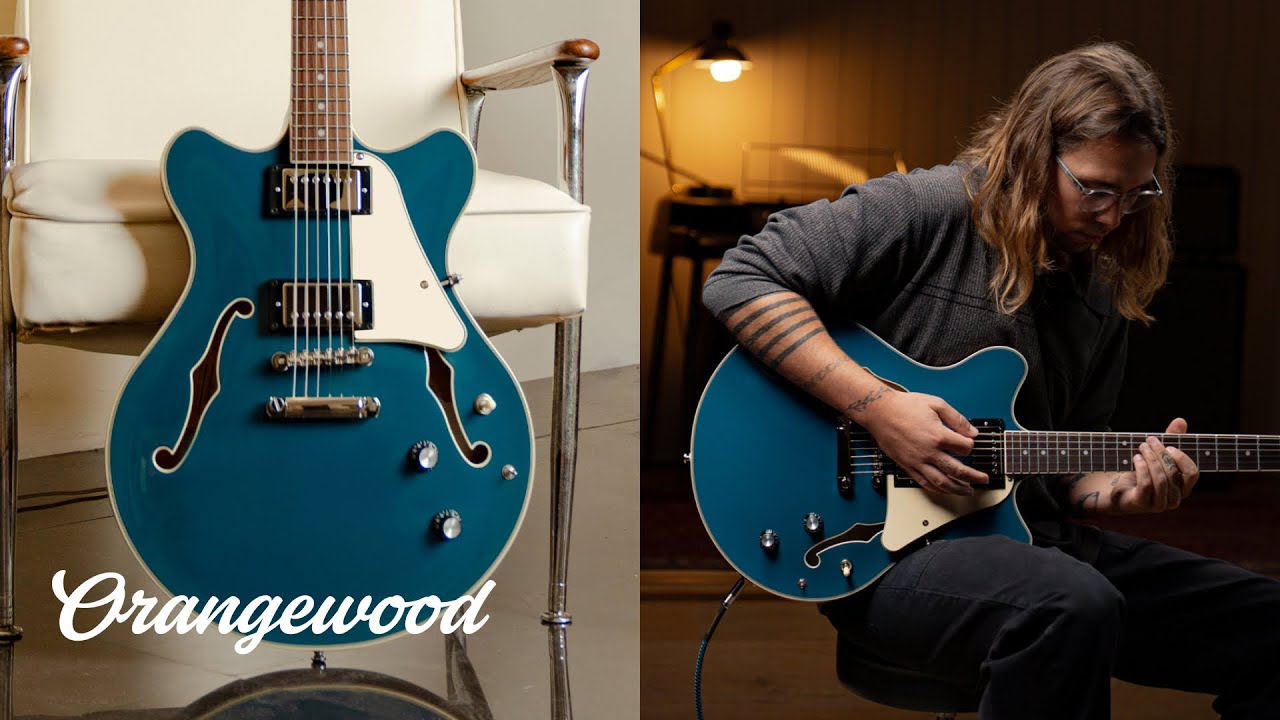
Orangewood
Watch On
399 6.564-8.496 9.845-15.291 9.845-4.71 0-8.185-1.543-10.425-4.633-2.24-3.087-3.359-7.915-3.359-14.48V34.23h15.985v52.126c0 3.168.348 5.426 1.043 6.776.695 1.353 1.853 2.027 3.475 2.027 1.39 0 2.722-.423 3.996-1.275 1.274-.849 2.22-1.928 2.838-3.241V34.229h15.986m81.995.001v71.007h-12.511l-1.391-8.688h-.345c-3.402 6.564-8.498 9.845-15.292 9.845-4.711 0-8.186-1.543-10.426-4.633-2.24-3.087-3.358-7.915-3.358-14.48V34.23h15.985v52.126c0 3.168.347 5.426 1.041 6.776.696 1.353 1.855 2.027 3.476 2.027 1.391 0 2.723-.423 3.996-1.275 1.275-.849 2.22-1.928 2.839-3.241V34.229h15.985″/>