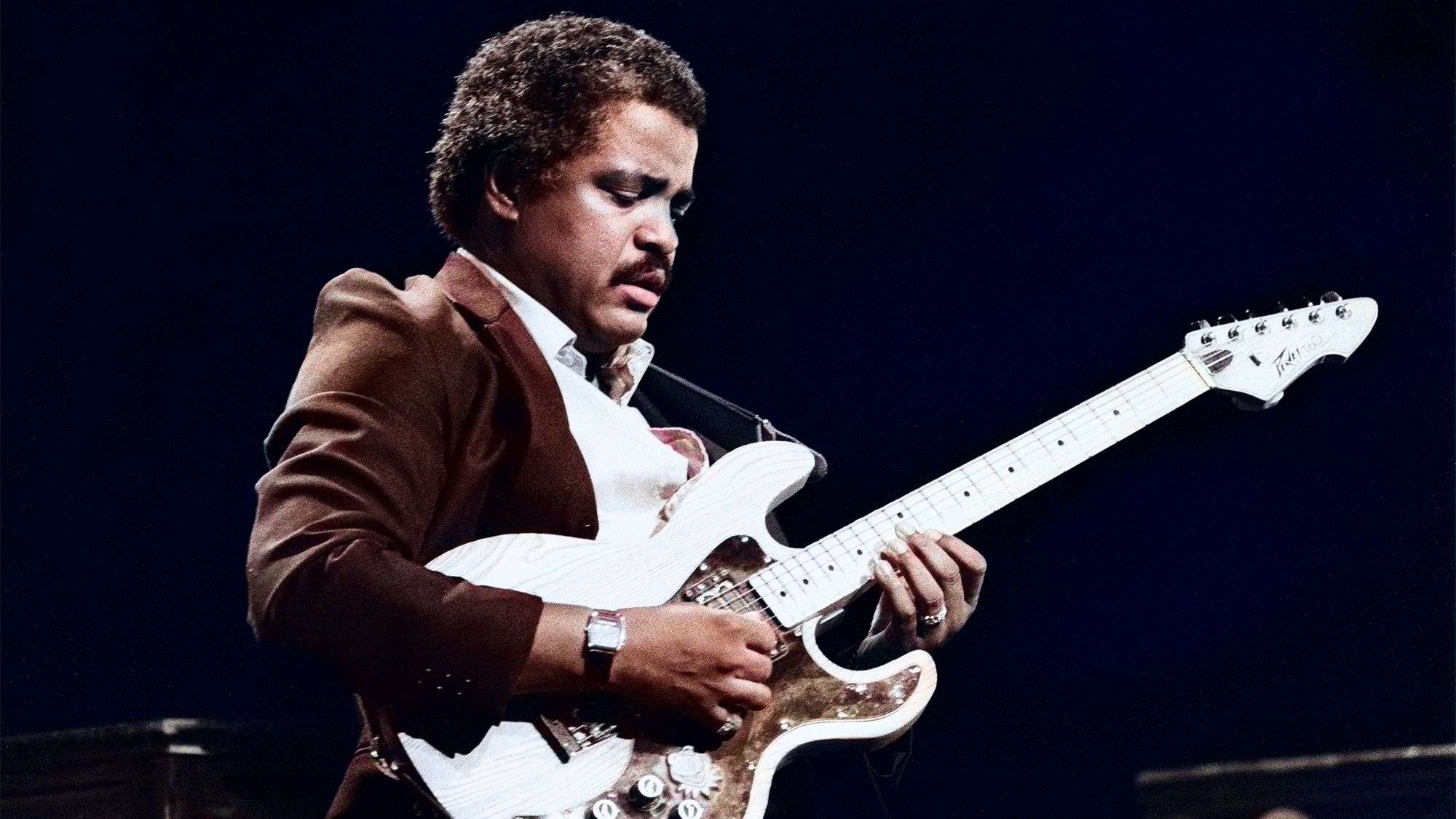
Celebrating the Legacy of Phil Upchurch: A Guitar Icon in Jazz and Beyond
During a live performance, jazz legend Joe Pass took a moment to acknowledge a notable figure in the audience. “Uh oh, phil Upchurch just walked in,” he remarked, revealing his own nerves in the presence of the esteemed guitarist.
Phil Upchurch emerged from Chicago’s vibrant R&B scene of the 1950s and 60s, initially performing with groups like the Spaniels and the Delis. He soon made a name for himself as a solo artist with his 1961 hit “You Can’t Sit Down.” His collaborations with George Benson in the 1970s led to Grammy-winning masterpieces such as Breezin’ and Weekend In LA.
A Journey Through Musical Excellence
By the time Guitar Player featured him in their February 1985 issue, Upchurch had solidified his status as a respected musician with 13 solo albums and a wealth of experience as a session guitarist for icons like Michael Jackson, Leon Russell, Muddy Waters, and Booker T. & the M.G.s. His unique ability to blend blues, jazz, and funk created some of the most soulful sounds in pop music.
Despite his impressive resume, Upchurch remained humble about his achievements. Following his passing on November 23, 2025, his legacy continues to inspire musicians worldwide.
“I don’t like to boast about my collaborations,” he once stated. “In most cases, it’s the producer who reaches out, not the artist. It’s more meaningful when opportunities arise organically, like when I happened to visit Quincy Jones in the studio, and he invited me to play on Michael Jackson’s Off the Wall.
Crafting a Unique Musical Identity
Phil Upchurch was not only skilled on the electric guitar but also on the bass. He preferred to be recognized for his distinctive style rather than as a jack-of-all-trades. “I appreciate the financial rewards of session work, but I want to be sought after for my unique sound,” he explained.”If someone wants a different style, they should hire a guitarist who specializes in that.”
Reflecting on his work with George Benson, Upchurch recalled, “Last year, I contributed to a track for George, and he was so thrilled that he exclaimed, ‘It sounds so good now that I feel like jumping on top of this console and dancing!’ Moments like that remind me of the joy of creating music.”
From Humble Beginnings to Musical Stardom
Born on July 19, 1941, in Chicago, Upchurch was introduced to music at a young age by his father, a pianist. He began playing the ukulele at 11 and transitioned to guitar two years later.His early exposure to music honed his exceptional ear, allowing him to master the guitar swiftly.
His talent quickly gained attention, leading to a call from blues artist Otis Rush to play bass. “I agreed, but I didn’t own a bass guitar, so I had to buy one. That night, Otis loved my performance,” Upchurch reminisced.
While still in high school, he played with popular local bands, including the Cool Gents and the Dells, which opened doors for numerous recording opportunities, including Jerry Butler’s hit “He Will Break Your Heart.”
In 1961, Upchurch released the instrumental sensation “You Can’t Sit Down,” showcasing his rhythmic, blues-infused style. Though, he turned down multiple agent offers, feeling too young and inexperienced to lead a band on tour.
His service in the Army Special Services from 1965 to 1968 allowed him to continue pursuing music full-time. After his discharge, he joined Chicago’s Chess Records as a staff guitarist, collaborating with blues legends like Howlin’ wolf and Muddy Waters, even contributing fuzz guitar solos to Waters’ Electric Mud.
Collaborations and Musical Milestones
Throughout his career, upchurch recorded several solo albums and worked with renowned musicians such as Dizzy Gillespie, Cannonball Adderley, Grover Washington, and Ramsey Lewis. In the early 70s, he released the acclaimed album Darkness Darkness and collaborated with composer Richard Evans and Quincy Jones.
His long-standing partnership with George Benson began in 1974 with the album Bad Benson. The two had been friends as the early 60s, first meeting when Benson performed with organist brother Jack McDuff. “Hearing George play made me realize I needed to practice harder,” Upchurch admitted.
Before recording Bad Benson, Benson visited Upchurch seeking material, ultimately incorporating two of Upchurch’s compositions and an arrangement of the Dave Brubeck classic “Take Five,” which Benson initially hesitated to include. “It was a proud moment to hear my arrangement performed by one of my favorite guitarists,” Upchurch shared.
In 1976, Upchurch played rhythm guitar throughout Benson’s Grammy-winning album Breezin’, contributing bass on two tracks. “We expected it to sell around 300,000 copies, but the success of ‘This Masquerade’ transformed his career,” he noted. At that time, Benson was contemplating retirement to focus on his faith as a Jehovah’s Witness.
Defying Criticism and Embracing Versatility
Many jazz guitarists, including Benson, faced criticism from purists for embracing more commercial sounds. However, Upchurch held a different perspective. “Critics disapproved when Wes montgomery began incorporating popular tunes with orchestral arrangements,but I viewed it as a notable milestone. Musicians need to earn a living, and jazz alone doesn’t attract enough listeners for many of us to thrive,” he argued.
During his interview with Guitar player, Upchurch expressed his desire to enhance his reputation as a solo artist while remaining engaged in various projects. He also worked as the west coast sales manager and national public relations representative for Polytone Musical Instruments.
“In recent years, I’ve appeared in commercials for Coors beer and Pacific Telephone, and I’d love to pursue more opportunities like that. I aspire to achieve the level of success that artists like Earl Klugh and George Benson have attained, but I also want to continue session work and explore producing. Staying active in diverse projects keeps my creativity sharp,” he concluded.