Exploring the Legendary Gibson Les Paul ‘Bursts: A Night to Remember
Experiencing a genuine vintage Les Paul Standard from the iconic years of 1958 to 1960 is a rare treat for any guitarist.
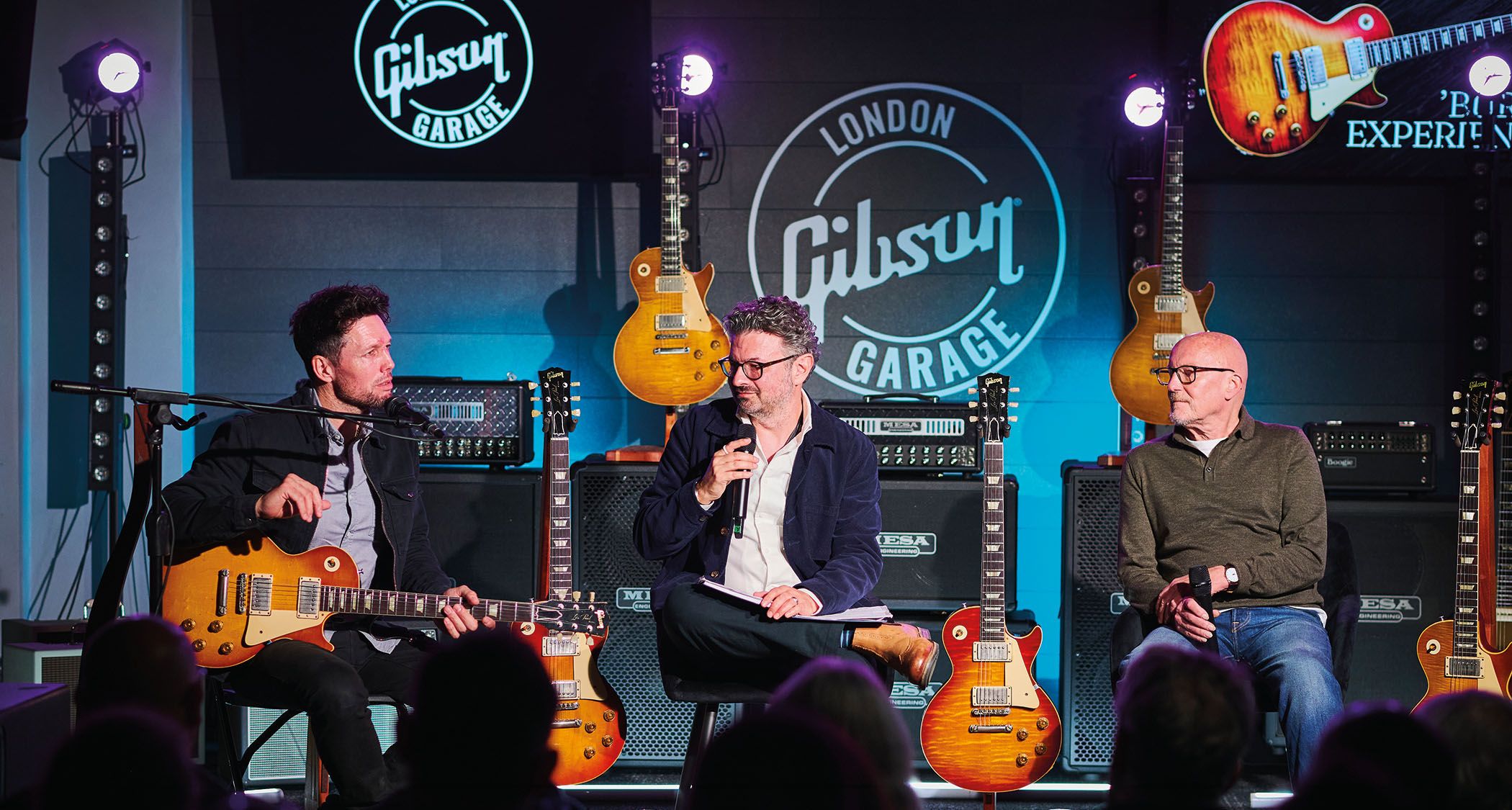
In October, Guitarist teamed up with Gibson Garage London for a special event dedicated to the legendary ‘burst. To our astonishment-and a hint of apprehension-we managed to gather not just one, but seven of these remarkable guitars, much to the delight of a packed audience of guitar enthusiasts.
Leading the musical showcase was the talented blues guitarist Aynsley Lister, who, despite returning from a grueling European tour just hours earlier, graced the stage to mesmerize the crowd with his remarkable playing. and let’s be honest, the instruments he had at his disposal were nothing short of extraordinary.
The Lineup of Legends
On stage, we had an extraordinary collection: two ’58 models, an ex-Mick Taylor ’59, the stunning ‘Minnesota’ ’59 ’burst, the renowned ‘Grainger’-a 1960 ‘Burst crafted to ’59 specifications-and a unique Bigsby-equipped 1960 model.
For comparison, we also featured a ’54 Goldtop, allowing us to explore the tonal differences between the Patent applied For pickups of the ‘Bursts and the soapbar P-90s of the Goldtop. Additionally, we showcased a very special guest guitar, Gary Moore’s iconic ‘Stripe’ ’59 ‘Burst, courtesy of Bonhams auction house.
Amplifying the experience
As our gracious host, Gibson provided a Mesa Fillmore 50 combo amp for the evening. This amp, powered by a pair of 6L6 tubes, delivers a clear and vibrant sound, perfectly suited to bring these legendary guitars to life.
much like the classic Marshall Bluesbreaker combo from the ’60s, this amp shines when pushed, either through its volume control or with a touch of overdrive from a pedal, which is precisely how Aynsley chose to utilize it.
Aynsley kicked off the evening with a stunning ’58 ‘Burst, which was in remarkably pristine condition, showcasing a vibrant cherry sunburst that had retained its brilliance over the years.
The Allure of Cherry Sunburst
The vivid cherry hue, particularly prominent in ’58 models, was achieved using a dye-based colorant with a hint of blue to deepen its tone. This cherry finish was layered over a base coat of lacquer and yellow pigment-based colorant. The distinction between pigment and dye lies in the size of their particles; pigments are larger and thus more resistant to fading.
Interestingly, the yellow pigment in the base coat, along with the final nitro topcoat-which also yellows with age-remains more stable than the cherry dye, leading to the phenomenon of ‘Unbursts’-original Les Paul Standards that have faded to a uniform honey color.
In a bid to combat fading, Gibson altered its finishing formula in 1960, eliminating the dye-based colorant and the blue component from the cherry sunburst. This change resulted in many 1960 ‘Bursts exhibiting a distinctly different finish tone, often referred to as ‘Tangerineburst.’
Sounding Off with the ‘Bursts
As Aynsley played the two ’58s, including one owned by Guitarist contributor Bob Wootton, we were captivated by the fierce howl of the Patent Applied for pickups, which delivered a biting tone without any harsh frequencies. It’s truly one of the most exhilarating sounds imaginable.
Before the event, we spoke with Stuart Robson from Sunbear Pickups, who shared insights on the original pickups, primarily made with Alnico II and Alnico V magnets, with some instances of III and IV. He noted that the output of these hand-wound pickups varied, but surviving examples typically ranged between 7k and 9k.
The Enigmatic ‘Minnesota’
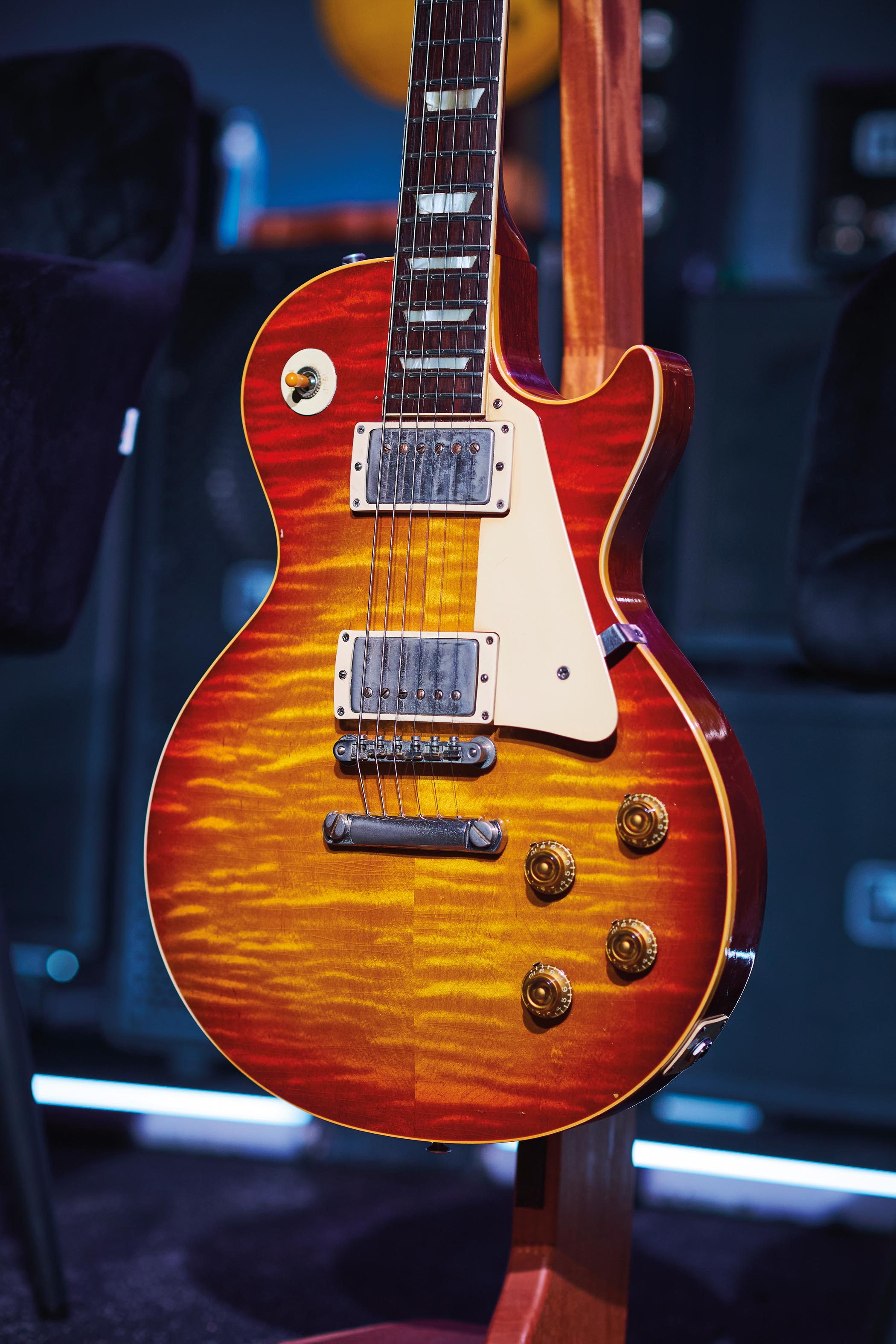
Transitioning to the ’59 models,starting with the ex-Mick Taylor ‘Burst followed by ‘minnesota,’ it was intriguing that Aynsley noted minimal differences in neck profiles,which are often said to be chunkier on the ’58s compared to the ’59s.
In terms of sound, the sweet yet aggressive bite from the Patent Applied For pickups remained consistent across the guitars, with subtle variations. As an example, the ex-Mick Taylor ’59 had a particularly chewy, gritty voice, while the first ’58 Aynsley played offered a crisp yet warm clarity.
Interestingly, of the estimated 1,200 ‘Bursts produced between 1958 and 1960, less than a third featured any visible figuring in the top, and only a small fraction displayed striking flames or vivid patterns in the maple cap. This rarity made ‘Minnesota,’ with its beautifully figured top,a true gem at our event.
Moreover, the other uniquely figured ’59 we showcased was Gary Moore’s ‘Stripe’ Les Paul. While we couldn’t play it, Claire Tole-Moir from Bonhams shared its captivating history and its significance in the Final Encore sale of Gary’s guitars.
Contrasting Sounds: The 1954 Goldtop
As a surprise addition,owner Paul Johns brought along his 1954 Goldtop equipped with soapbar P-90s,which many beleive inspired the design of the Patent Applied For pickups (minus the hum). Though, the P-90s proved to be a bit punchier and plummier when compared side by side with the ’Bursts, yet Aynsley declared it his favourite sound of the night!
the evening was a resounding success, and we extend our gratitude to everyone who attended, our wonderful host Gibson Garage London for providing the perfect venue for our ‘burst Experience, Bonhams for sharing Gary Moore’s amazing ’59, and the generous ‘Burst owners who made this event possible: Andrew Raymond, Peter Hall, Simon White, Paul johns, and Bob Wootton.
Let us know if you’d like to see another event like this in the future, and perhaps we can gather the ‘Bursts once more!