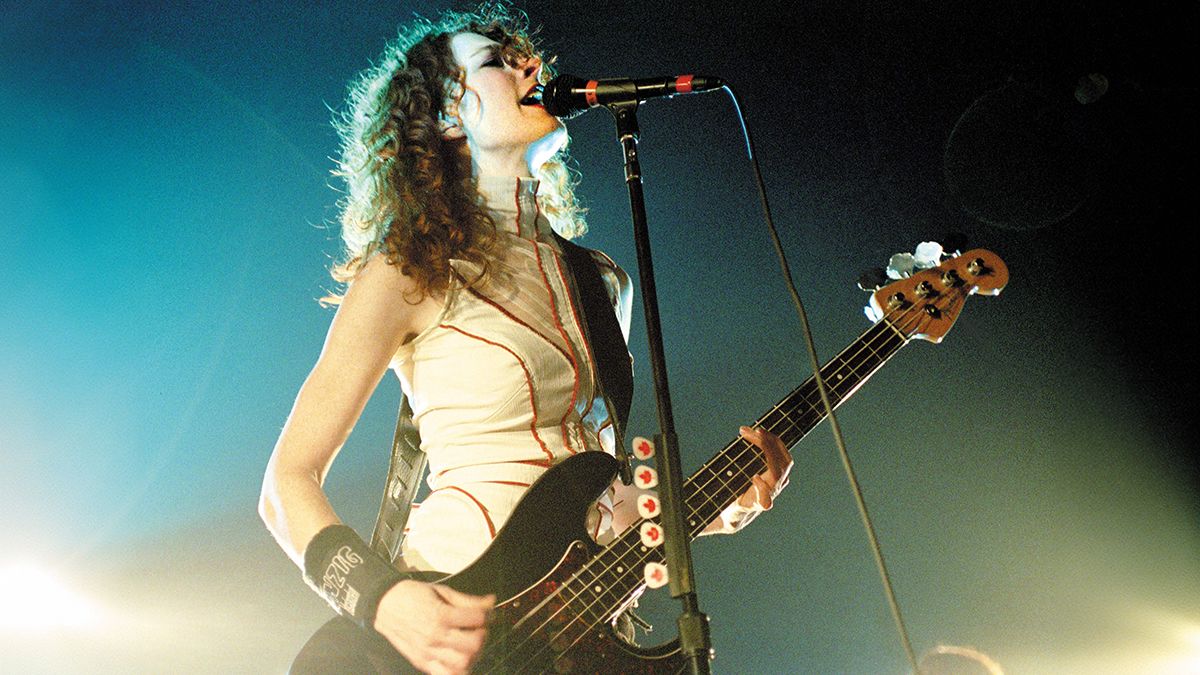
From Grunge to Glory: Melissa Auf der Maur's Iconic Bass Journey with Hole and Smashing Pumpkins
0 reactions
5 months ago
Beatbounty
Melissa Auf der Maur: A Journey Through Grunge and Empowerment
In her newly published memoir, Even the Good Girls will Cry, Melissa Auf der Maur reflects on the tumultuous yet familiar world of Courtney Love and Hole. The narrative captures her remarkable transition from performing in small Canadian venues to sharing the stage with Love in front of a staggering 65,000 fans at the UK’s Reading Festival in 1994, just weeks after the heartbreaking losses of Hole’s bassist Kristen Pfaff and Kurt Cobain.
“I found solace in the chaos,” Auf der Maur shares. “My upbringing prepared me perfectly for life in a rock band, and despite being the new member, I felt an immediate connection.”
A Grunge Cinderella Story
Auf der Maur’s memoir is a testament to her grunge Cinderella story, filled with serendipitous encounters. A chance meeting with Billy Corgan at a dimly lit punk venue in Montréal ignited her passion for the Smashing Pumpkins, leading to her eventual proposal to join Hole and later tour with the Pumpkins. This journey culminated in her solo career at the dawn of the new millennium.
“The introduction of my book, which focuses on the Reading Festival, is aptly titled ‘Through the Looking Glass,’” Auf der Maur explains during a conversation with Bass Player. “It felt surreal, like stepping into another realm. I transitioned from a small town to a global stage, surrounded by grief, chaos, and conversion.”
The Bass: A Connection to Humanity
When awarded Female Bass Player of the Year by Gibson,Auf der Maur began to articulate her deep connection to the bass. “I realized that the bass is the mother of all instruments,” she states. “It serves as the glue that binds the singer, drummer, audience, rhythm, and melody together. It takes you on an emotional journey; you truly feel the bass.”
Reflecting on her early experiences, she recalls, “Even during my time with Hole, despite having played only a handful of concerts, I felt at ease with the bass. I had just five days to rehearse with the band, and I didn’t make a single mistake. It just felt natural.”
Finding Connection Through Rhythm
“Playing bass connects me to a profound sense of human interaction,” Auf der Maur explains. “The magic happens when you’re jamming with a drummer and a band in front of an audience. Alone with my bass, it means nothing to me; it’s all about the connection.”
Her journey began with borrowed instruments from local musicians while she worked as a DJ.”When I turned 21, my friends insisted it was time for me to get my own bass. I found a vintage Squier Precision that matched my hair color, and that became my instrument in Hole untill I was sponsored by Fender.”
Adapting to Grief and Fame
Joining Hole amidst profound grief was a challenge, but Auf der Maur adapted quickly. “I was raised in a non-traditional environment, surrounded by radical thinkers. I understood the fragility of fame and how it affected those around me,” she reflects. ”I was not a drug addict, but I witnessed how money and fame impacted those from broken backgrounds. Their band became their family.”
Her gear during this time was simple yet effective: an Ampeg SVT tube amp and a Fender Precision bass. “I didn’t use distortion until later, but I loved phaser and chorus effects,” she adds.”Geddy Lee even gifted me some of his signature pedals.”
Collaborating with Legends
Auf der Maur’s rhythm evolved substantially while playing with Hole’s drummer Patty Schemel. “We had a natural chemistry,” she recalls. “However, adapting to Jimmy Chamberlin of the Smashing Pumpkins was a different story. His jazz-prog style was a wild ride, and it took time to learn how to keep up with his dynamic playing.”
“Playing with the Pumpkins was like earning a Master’s in Music,” she says. “It transformed my musicianship and expanded my understanding of what I could achieve on the bass.”
Empowerment Through Music
Throughout her career, Auf der Maur has felt a strong sense of responsibility towards feminism in music. “The industry recognized that women were a powerful force,and I wanted to continue my mother’s legacy of empowerment,” she explains.”I saw myself as part of a new wave of feminism, and I still feel that urgency today.”
She reflects on the evolution of female portrayal in music, noting, “In the ’90s, we had a unique opportunity to express ourselves in a male-dominated industry. Today, while there are many talented women in music, I often find myself as the only woman on the bill.”
A Message to Her Younger Self
Looking back at her life-changing moment at the reading Festival, Auf der Maur would tell her 22-year-old self, “You’re on the right path. Trust your instincts and follow your wildest dreams.”
“I’ve experienced so much, and now I aim to ride the waves of life, sharing my perspective and love with others,” she concludes.
From Grunge to Glory: Melissa Auf der Maur’s Iconic Bass Journey with Hole and smashing Pumpkins
From Grunge to Glory: Melissa Auf der Maur’s Iconic Bass Journey with Hole and Smashing Pumpkins
The Rise of Melissa Auf der Maur
Melissa Auf der Maur, a name synonymous with the grunge era, carved her niche as a bassist for two of the most influential bands of the 1990s: Hole and the Smashing Pumpkins. Her journey from the underground music scene in Canada to the global stage is a testament to her talent and resilience.
early Life and Musical Influences
Born on March 17, 1972, in Montreal, Canada, Auf der Maur was raised in a family that encouraged artistic expression. Her father, a journalist and politician, and her mother, a visual artist, instilled in her a passion for creativity.This environment laid the groundwork for her future in music.
Discovering the bass
Melissa’s journey with the bass guitar began in her teenage years. Initially drawn to the instrument while DJing at local bars, she quickly realized that the bass was her calling. She borrowed instruments from local musicians until her friends gifted her a vintage Squier Precision bass for her 21st birthday, marking the beginning of her professional career.
Joining Hole: A Turning Point
In 1993, Auf der Maur joined Hole, replacing the late Kristen Pfaff.This transition came at a tumultuous time for the band, following the tragic deaths of Pfaff and Kurt Cobain. Despite the chaos, Auf der Maur found her place within the group, contributing to their distinctive sound.
Performing at the Reading Festival
One of the defining moments of Auf der Maur’s career was her performance at the 1994 Reading Festival. This event showcased her talent to a massive audience of 65,000 people, solidifying her status as a prominent figure in the grunge scene.
Musical Style and Contributions
Melissa auf der Maur’s bass playing is characterized by its melodic depth and rhythmic precision. Her ability to blend seamlessly with the band’s sound while adding her unique flair has made her an influential figure in rock music.
Signature Sound
Melodic bass Lines: Auf der Maur often incorporates melodic elements into her bass lines, creating a rich sonic landscape.
Dynamic Rhythms: Her collaboration with drummers like Patty Schemel and Jimmy Chamberlin showcases her adaptability and rhythmic prowess.
Influence on Songwriting: Auf der Maur’s contributions to songs like “Celebrity Skin” highlight her role in shaping the band’s musical direction.
Transition to Smashing Pumpkins
After her time with Hole, Auf der Maur joined the Smashing Pumpkins as their touring bassist. this prospect allowed her to further expand her musical horizons and collaborate with one of the most iconic bands of the era.
Collaborative Dynamics
Working with Billy Corgan and the rest of the band presented both challenges and rewards. Auf der Maur adapted to the complex rhythms of drummer jimmy Chamberlin, enhancing her skills and musicality.
Solo Career and Artistic Exploration
In the early 2000s, Auf der Maur embarked on a solo career, releasing her debut album, Auf der Maur, in 2003.This project allowed her to explore her artistic identity beyond the confines of her previous bands.
Musical Themes and Collaborations
Her solo work delves into themes of empowerment, identity, and personal growth. Collaborating with artists like Josh Homme of Queens of the Stone Age, Auf der Maur crafted a sound that resonated with her experiences and artistic vision.
Impact on the Music Industry
Melissa Auf der Maur’s contributions to the music industry extend beyond her bass playing.As a female musician in a predominantly male-dominated genre, she has paved the way for future generations of women in rock music.
Empowerment and Feminism in Music
Auf der Maur’s journey reflects a broader narrative of female empowerment in the music industry.She has consistently advocated for women’s rights and portrayal, inspiring countless artists to embrace their individuality and pursue their passions.
Benefits of Following Melissa Auf der Maur’s Journey
Inspiration: Her story serves as a powerful reminder of resilience and determination in the face of adversity.
Musical Education: Aspiring musicians can learn valuable lessons from her unique approach to bass playing and songwriting.
Empowerment: Auf der Maur’s advocacy for women in music encourages others to break barriers and challenge societal norms.
Practical Tips for Aspiring Bassists
Find Your Unique Sound: Experiment with different styles and techniques to develop your own musical identity.
Collaborate with Others: Work with musicians from various genres to expand your musical horizons.
Stay True to Yourself: Embrace your individuality and let it shine through your music.
Case Study: The Evolution of Melissa Auf der Maur
Year
Milestone
Impact
1993
Joined Hole
Gained recognition in the grunge scene
1994
Performed at Reading Festival
Solidified her status as a prominent bassist
2000
Joined Smashing Pumpkins
Expanded her musical repertoire
2003
Released solo album
Explored personal artistic identity
First-Hand Experience: Melissa’s Reflections
In interviews, Auf der Maur frequently enough reflects on her journey, emphasizing the importance of authenticity and connection in music. She encourages aspiring musicians to embrace their unique voices and pursue their passions relentlessly.
“The bass is the mother of all instruments,” she states. “It connects the singer to the drummer, the audience to the rhythm. It’s about feeling and creating a journey through music.”
For those inspired by her journey,consider joining the Beatbounty platform to connect with other musicians and share your own experiences. Create an account today and submit an ad to showcase your talent!