steve DiGiorgio: Crafting the Testament Sound in ‘Brotherhood of the Snake’
Recording Testament’s 2016 album, Brotherhood of the snake, was a swift yet challenging endeavor for bassist Steve DiGiorgio. Reflecting on the experience, he shared, “There were definitely some struggles involved. It wasn’t as profound as it sounds; some band members preferred a more leisurely approach, but time constraints made that unachievable.”
“Certain members are accustomed to exploring various ideas at their own pace, which created a bit of friction during the sessions,” he added.
Despite the tension, DiGiorgio’s return to the band in 2013 contributed to what many consider testament’s moast powerful album in years.The opening track, along wiht songs like The Pale king and seven Seals, showcases the band’s relentless old-school thrash style, with DiGiorgio firmly in his element.
His aggressive bass lines and robust tone seamlessly integrate with the band’s extraordinary lineup, featuring Alex Skolnick and Eric Peterson on guitars, Gene Hoglan on drums, and Chuck billy on vocals.
DiGiorgio’s approach involved prioritizing the “Testament bass sound” over his personal style. “When we recorded The Gathering in 1998, I came in with my fretless Carvin 5-string and played as I usually do. The band was satisfied,but this time I aimed to adapt to the project. I wanted to challenge myself to fit in even better and embody the Testament bass role,” he explained.
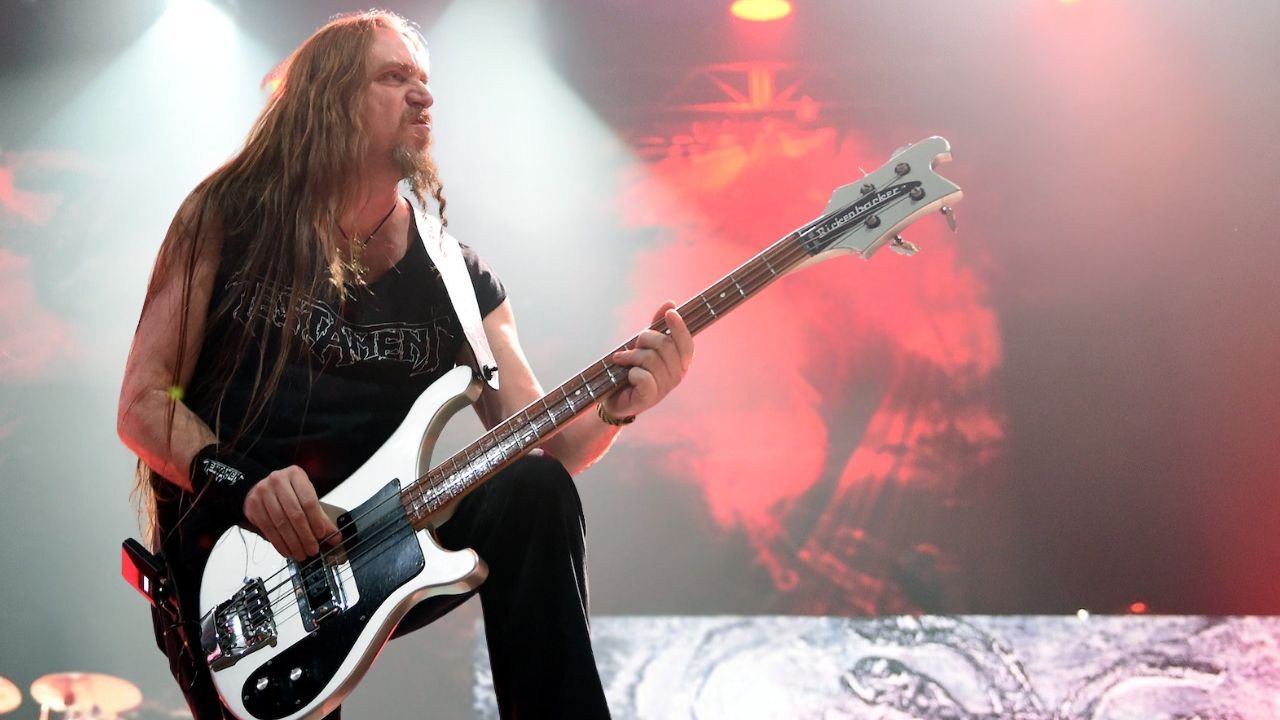
“I experimented with various bass guitars in my studio, recording the same riff on each to see how they blended within the songs.Ultimately, I chose a 1978 Rickenbacker 4001, fully stock, with no modifications. Its tone had the right balance of punch and fullness.”

Brotherhood of the Snake stands as a significant achievement in Testament’s long-standing career, while also marking a pivotal change in DiGiorgio’s approach, emphasizing a return to fundamentals.
Adapting to the Studio Environment
“As a seasoned session musician, I thrive in environments where I can quickly learn material, record it, and add my unique touch to make it sound like I’ve been part of it for years,” he noted. “The challenge wasn’t in the technicality of the songs, but in capturing the right tone and finding that quintessential Testament bass sound.”
DiGiorgio explained that his tendency to play aggressively often led to sound distortion during recording.”In the past, pushing the limits was acceptable, but I had to temper my attack to achieve a solid sound wave. We even coined the term ‘self-compressing’ in the studio.”
“The key is to get the job done. While the riffs may not be technically demanding, they require a convincing performance. It’s about having the right attack, tone, and groove.”
Recording Techniques and Equipment
For the recording process, DiGiorgio utilized two direct signals: one clean for potential re-amping and another processed with a Darkglass B7K for added grit. He also favored an EBS MultiComp for its recording capabilities.

The recording engineer also utilized a Kemper profiling amp to adjust the EQ for a more dynamic room sound.”Achieving a balanced, passive bass tone with a controlled attack took some time, but it was worth it,” he remarked.
Technique and Influences
DiGiorgio identifies as a three-finger player, using his thumb for accents while maintaining a fluid playing style. “I don’t slap, but I let my natural instincts guide my playing,” he explained.
His influences are diverse, with Jethro Tull’s Dave Pegg being a significant one. “While many might not see the connection, Pegg’s work with Tull, especially on albums like A and Broadsword and the Beast, is remarkable,” he noted.
“Playing fretless in metal offers a unique flavour. I realized early on that striving to be the best is futile; instead, I focus on being distinct in my approach.”
DiGiorgio’s musical journey has been shaped by various artists, including Stanley Clarke, whose influence he absorbed before diving into metal. “Listening to Return to Forever inspired me to blend different styles, creating a unique sound,” he shared.

DiGiorgio’s commitment to playing an unlined fretless bass has undoubtedly honed his intonation skills. “While I rely on side markers for visual cues,my ear plays a crucial role in ensuring accuracy,” he explained.
“ultimately, muscle memory is key. Repeated practice leads to enhancement, and there’s no substitute for experience,” he concluded.