The Hidden Gem of Fender’s Tweed Amplifiers: The 5G9 Tremolux
Once overlooked in Fender’s classic tweed amplifier collection from the 1950s, the 5G9 Tremolux only gained recognition when enthusiasts, collectors, and vintage amp lovers pieced together its history. Even though no one has definitively documented a 1×12 Tremolux combo from 1959-’60 featuring a “5G9″ tube chart, a schematic does exist, showcasing notable differences from its predecessor, the 5E9-A Tremolux.
Having owned two original 5G9 models, both of which had 5E9-A tube charts inside their solid-pine cabinets, I can attest to their unique characteristics.
despite its elusive status, the 5G9 Tremolux was rediscovered a few years back and has sence been hailed by many players as the “best-sounding tweed Fender,” a claim that certainly sparks lively discussions.
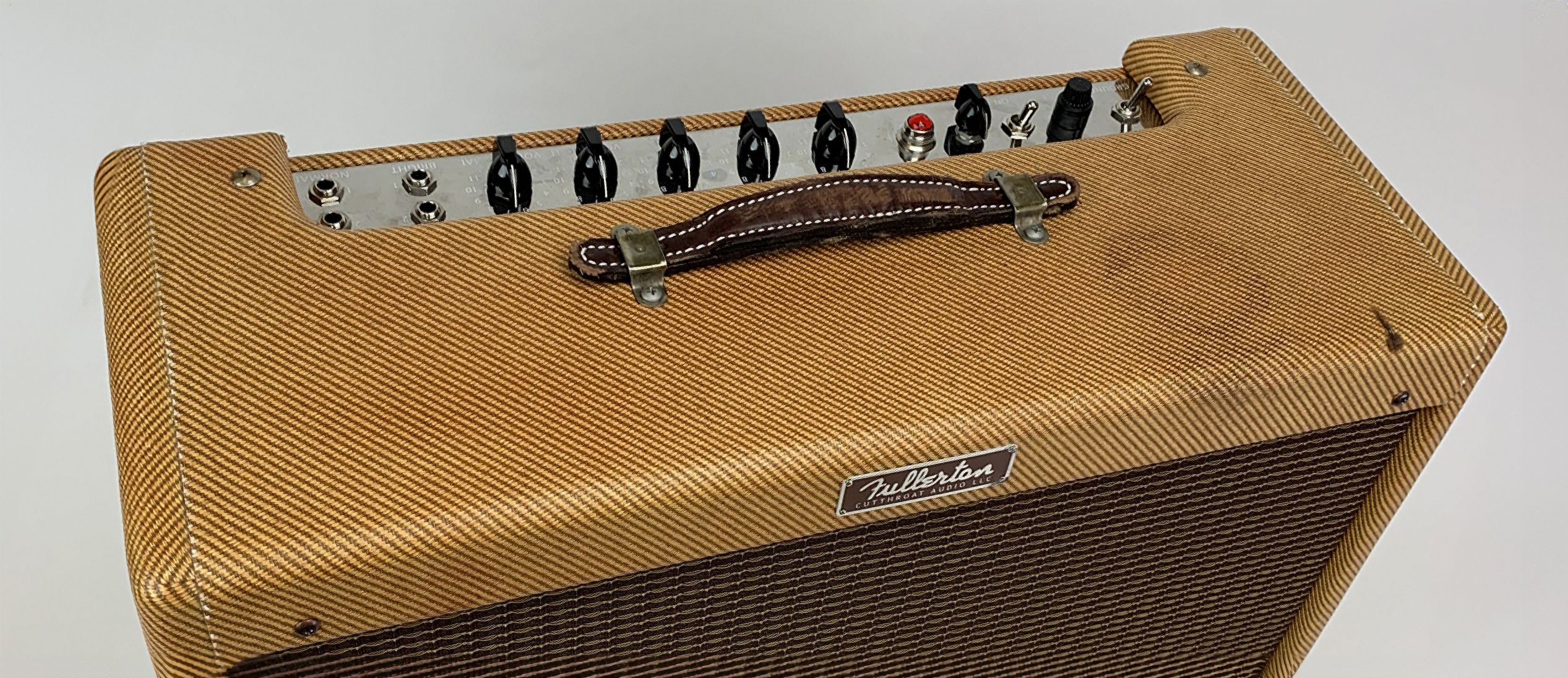
With original models becoming increasingly expensive,Ron Westwood of Cutthroat audio channeled his passion for this late-era tweed marvel into crafting the Fullerton 5G9 Tremolux combo.
Before transitioning to hand-wired amplifier production, Cutthroat Audio focused on premium instrument, speaker, and patch cables. westwood’s meticulous attention to detail in tone-enhancing components is evident in this tribute to the 5G9.
The Fullerton closely mirrors the original design while incorporating modern conveniences for today’s musicians.
The Fullerton adeptly replicates the core elements of the original design while integrating features that enhance usability for modern players, all while preserving the vintage essence and performance. This 18-watt, dual-6V6 combo is available in a lightly aged lacquered tweed cabinet.
A Unique Place in Fender’s History
the 5G9 Tremolux stands out in Fender’s amplifier lineup, often described as ”the largest small Fender tweed amp” or “the smallest big Fender tweed amp.” The original 5E9 Tremolux, introduced in 1955, was fender’s first amp to feature tremolo, closely resembling a 5E3 Deluxe with the effect integrated. However, important changes were on the horizon.

The amp initially featured a larger cabinet, similar to that of the dual-6L6 Pro Amp, and underwent significant circuit updates to incorporate features found in Fender’s larger models.
While it includes the lower-gain 12AY7 in the Bright channel, a higher-gain 12AX7 can also be swapped into the circuit.
The 5G9 retains the straightforward dual-volume preamp with shared tone control from the tweed Deluxe, but it also incorporates the long-tailed-pair phase inverter and fixed-bias output stage utilized by the iconic 5F6-A Bassman. This makes the Tremolux the only 6V6-equipped amp from the ’50s to feature these characteristics.Additionally, it employs a more robust 5U4GB rectifier tube compared to the softer 5Y3 found in the Deluxe.
Although the phase-inverter circuit modification reduced the 5G9’s gain stage compared to the 5E3, it significantly increased clean headroom, resulting in a tight low end and ample clean power.
In addition to these features, Cutthroat has integrated several innovative elements seen in their previously reviewed Down Brownie and Francene combos. The Bright channel includes the original lower-gain 12AY7 preamp tube, while a higher-gain 12AX7 can be swapped in via a push-pull switch on the channel’s volume control.

The Normal channel, typically seen as redundant, has been revoiced with a circuit inspired by the Marshall JMP50 Lead, utilizing the unused half of the 12AY7 in V1 to introduce an extra gain stage. This can be accessed via a push-pull on the tone control for added grit. The popular technique of jumpering the two channels with a short cable is simplified with a third push-pull on the Normal channel’s volume pot, allowing for easy internal coupling of Bright and Normal.
The tremolo effect is of the bias-modulating type, affecting the output tubes’ bias point and known for its lush, warm throb.
The tremolo effect, a hallmark of the amp, is of the bias-modulating variety, which influences the output tubes’ bias point, creating a rich, warm throb. This feature has been slightly enhanced to allow for even slower speeds.
Cutthroat has also introduced additional modifications, including a post-phase-inverter master volume control (located where the standby switch would typically be, with standby achieved through a three-way power switch), and a three-position negative-feedback-loop switch that provides standard, reduced, and no feedback for varying degrees of gain. A switch for tube/solid-state rectification is also included.
Lastly, there’s a switch to select between four, eight, or 16-ohm speaker outputs.Unlike the 5E3 Deluxe, the 5G9 requires re-biasing when changing output tubes, a process made easier with a bias pot located on the underside of the chassis.

Upon removing the upper back panel, you’ll find a carefully hand-wired circuit utilizing premium components such as jupiter yellow and “Red Astron” signal capacitors, carbon-comp resistors, and other high-quality materials. The chassis also houses custom-wound Heyboer power and output transformers, along with a hammond choke, while the cabinet features a 12-inch Weber Alnico 12A125 30-watt speaker, a faithful reproduction of the original Jensen P12Q.
The Fullerton 5G9 instantly reminded me of the originals I had previously owned, delivering a robust clean tone that withstands significant pushing before breaking up.
When tested with a Fender Telecaster and a Gibson ES-335, the fullerton 5G9 quickly brought back memories of the original models I had owned, showcasing a powerful clean tone that remains intact even under heavy playing, complemented by that rich, thick tweed sound that pairs beautifully with both single coils and lower-wind humbuckers.
With the master volume set to maximum (effectively bypassing it),pushing the Bright channel with the 12AY7 engaged requires considerable effort to achieve any breakup,but when it does,it’s dynamic and responsive. At this point, the amp is quite loud for an 18-watt model, making it suitable for venues with a capacity of 100 or more.
For smaller spaces or when a more manageable grind is desired with the volume cranked, the post-phase-inverter master volume effectively controls the output without compromising the amp’s character, making it a valuable addition.

From this point, there are numerous gain options to explore, whether individually or in combination, through the 12AX7 setting (which offers a significant increase in volume and breakup without being overwhelming), the additional gain stage on the tone control’s push-pull, the Marshall-inspired Normal channel, or by jumpering the two channels together with all features activated. Dialing in this setting and adjusting the master volume yields a wealth of expressive, touch-sensitive overdrive, providing endless enjoyment.
The Fullerton 5G9 pays tribute to an underappreciated original that has recently gained recognition, proving to be a versatile and portable combo.
In my experience, the tremolo effect shines best at cleaner or edge-of-breakup settings, where it delivers a sweet, rounded, and atmospheric quality. This exemplifies why many musicians regard tube-driven bias-modulated tremolo as the pinnacle of this effect. When applied to heavier drive settings, it produces wild and evocative sounds, offering a wealth of expression, notably in swamp-blues contexts.
With the added versatility of the negative-feedback switch and switchable rectifier, this unassuming tweed combo conceals a surprising range of tonal possibilities. it pays homage to an overlooked original that has recently stepped into the limelight, proving to be a rich-sounding and portable amplifier that many players are likely to appreciate.
SPECIFICATIONS
CONTACT: Cutthroataudio.com
PRICE: $3,195 retail
CHANNELS: 2
CONTROLS: Bright Volume, Normal Volume, Tone, Tremolo speed and Depth, master Volume; switches for 12AY7/12AX7 Ch1, channel jumpering, added gain stage
POWER: 18 watts
TUBES: One 12AY7, three 12AX7s, two 6V6GTs, one 5AU4GB rectifier
EXTRAS: Footswitch for tremolo, solid-state/tube-rectified switch, three-way negative feedback switch, switch for 4/8/16Ω speaker output
SPEAKERS: One 12″ Weber Alnico 12A125
WEIGHT: 35 lbs
MADE IN: USA
PRO: An exceptional tribute to the final iteration of the tweed Tremolux, enhanced with several clever modifications that significantly boost its versatility.
CON: While it comes at a premium price, it is justified by the quality of components and craftsmanship.