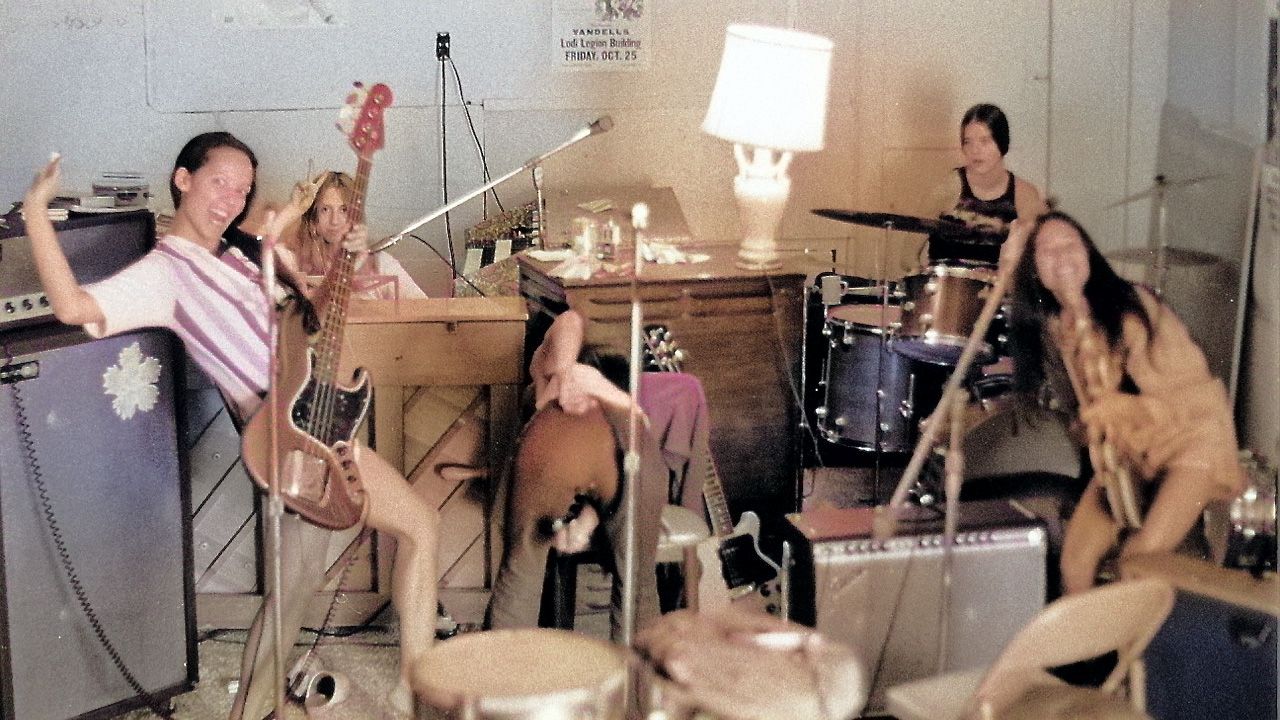
Fanny: The Trailblazing All-Female Band That Rocked the World!
0 reactions
3 hours ago
Beatbounty
Fanny: The Pioneering All-Female Rock Band That Shook the Music Scene
While they may not have dominated the charts, Fanny captured the admiration of iconic artists like The Beatles, David Bowie, Barbra Streisand, Todd Rundgren, and Lowell George.The Millington sisters,June and Jean,originally from San Francisco and Manila,were destined to redefine the music landscape.
As co-founders of one of the earliest all-female rock bands, they secured a multi-album contract with Reprise Records, a label established by Frank Sinatra. Their distinctive blend of technical skill and art-rock, infused with blues, resonated with audiences across the United States, Europe, and beyond.
June recalls the humble beginnings with a “handmade, small guitar from the southern Philippines,” a gift from their mother. “When we arrived in the U.S., hootenannies were all the rage, and Jean and I participated in many of those gatherings,” she reminisces.
For June, music was more than just a passion; it was a means of social connection. “While many guys pursued rock and roll for sex, drugs, and fame, we simply wanted to make friends.Our love for music was innate; being Filipina,musicality is deeply embedded in our culture.”
fanny Live @ The Beat Club 1971 – YouTube
A casual invitation from a drummer at a local high school led to a pivotal moment: their mother took them to a music store, despite their father’s initial reluctance.”my mom didn’t say much, but she took us to get real instruments, and that changed everything,” June fondly recalls. “She bought Jean an electric bass and an amp, while I got an electric guitar and an amp. We were inspired by The Beatles and wanted their gear.”
Fast forward to the early 1970s, Fanny-comprising June on guitar, Jean on bass, keyboardist Nickey Barclay, and drummer Alice de Buhr-recorded at the legendary Apple Studios in London, working with renowned engineer Geoff Emerick.
“We were fully committed,” June states. “We recorded daily and even flew to Germany for the Beat-Club show. Our schedule was packed with gigs around London, and every day was a whirlwind of activity.”
(Image credit: June Millington/Fanny)
“We were young and driven, often sacrificing sleep for our passion,” she adds. “We had worked tirelessly to reach that point.”
Active from 1969 to 1975, Fanny toured extensively, releasing five studio albums and earning respect from the music elite. Though, as June and Jean millington shared with Guitar World, their journey was fraught with challenges, including the pervasive misogyny of the era, alongside their bond as sisters and musical innovators.
“Do you remember the disdain we faced from the boys?” june asks Jean.
“For a long time,we had to prove our abilities,” Jean replies. “People would doubt me for the first ten minutes until they realized we could actually play. That skepticism lingered for quite a while.”
“We had something unique,” June asserts. “Every performance was a triumph. failure was not an option; we were paving the way for future generations.”
(Image credit: Ian Dickson/Getty Images)
In 1965, you formed the Svelts, and the decision on who would play bass was made by a coin toss. How significant was that choice for your sound?
June: Jean’s bass lines are electrifying and essential. Playing bass requires a serious commitment; it’s a powerful instrument that demands both simplicity and complexity.
Jean: You have to customize your parts. I did.Plus, many bassists don’t sing. I was the lead vocalist for many songs, so balancing bass and vocals was a real challenge.
How did the Svelts evolve into Fanny?
June: Wild Honey, the band before Fanny, signed with reprise. After we secured the deal, our lead guitarist left, and I had to learn lead guitar in just a year.
I didn’t survive the terrible misogyny. I had to leave the band to learn how to become a real person. I didn’t know how to grow up.
June Millington
Jean: June’s transition to lead guitarist in such a short time was remarkable. She practiced daily, learning from cassettes-an amazing feat!
June: Richard Perry, our producer, informed us about the deal in late ’68. By May ’69, we moved into Fanny Hill, our shared house, ready to start rehearsing. I even wrote to my mom about our first rehearsal with Richard.
What gear were you using back then?
June: I believe I had my Gibson ES-355 by then. I traded my previous guitar with a player from a San Jose band. The 355 became the signature sound of Fanny, paired with a Fender amp. What about you, Jean? your final bass was found under a chair at a studio, right?
Jean: Yes! I kicked something and discovered my Precision bass, which I’ve kept ever since. I played a Jazz Bass for a while, but once I switched to the P-bass, I truly connected with that sound.
(Image credit: Ian Dickson/Getty Images)
Fanny: The Groundbreaking All-Female Rock Band That Defied the Odds
While fanny may not have reached the top of the charts, they garnered admiration from legends like David Bowie, The Beatles, and Barbra Streisand. The Millington sisters, June and Jean, originally from San Francisco and Manila, were destined to challenge the norms of the music industry.
Innovative Beginnings
Fanny was one of the first all-female rock bands to sign with a major label, Reprise Records, founded by Frank Sinatra. Their unique sound, a blend of rock, blues, and technical skill, captivated audiences across the globe.
June recalls their humble beginnings with a “handmade guitar from the southern Philippines,” a gift from their mother.”When we arrived in the U.S., hootenannies were all the rage, and Jean and I participated in many of those gatherings,” she reminisces.
Creating Their Own Sound
“We didn’t have pedals or tuners; we crafted our own sounds,” June explains. “My Gibson 355 was a stereo guitar,but I’m deaf in one ear,which is why I always positioned myself on the left side of the stage.”
In 1970, while in the studio, Richard Perry brought back a tape featuring George Harrison’s solo from Let It Be, recorded through a Leslie speaker. “I was blown away,” June recalls.”I immediately told our roadies we needed to incorporate a Leslie into my setup, which was unique at the time.”
We shouldn’t have read the reviews. There was always so much condescension. We literally stopped listening to what people were saying becuase it wasn’t helping.
June Millington
Facing Challenges in a male-Dominated Industry
“We learned to ignore the negativity,” June states. “The condescension was overwhelming, and I eventually had to step away from the band to find myself. It was a tough decision, but I felt it was necessary for my well-being.”
Leaving Jean and the band was heart-wrenching, but June’s mother was concerned for her health. “I was struggling to eat and sleep, and I felt grief over our lack of success. We should have had at least four hits by the time Fanny Hill was released in 1972,” she reflects.
(Image credit: Tom Hill/Getty Images)
Despite releasing four acclaimed albums, Fanny never achieved a top 30 hit, which left them out of the history books. “What matters is that we existed and were talented, even if we were overlooked for so long,” June reflects.
Collaborations and Notable Experiences
Fanny also worked as session musicians, recording with Barbra Streisand. “Richard produced her, so we got the gig. She was an incredible vocalist and very respectful of us,” Jean shares.
By the time we met the Beatles, they were thrilled to meet us. They liked us in part because we were women who could play, and we knew what we could do well.
June Millington
June recalls, “When we recorded at Apple Studios, Geoff Emerick was ecstatic to see that we could play and knew how to record.” Their time at Apple was a pivotal moment in their career.
Ain’t That Peculiar (Live) – YouTube
Memorable Moments and lasting Impact
By 1971, Fanny had honed their skills significantly. “Geoff Emerick was amazed by our progress,” June recalls. “He was the most enthusiastic engineer I’ve ever worked with, running around to set up mics for us.”
In January 1973, they recorded Mothers Pride with Todd Rundgren, which led to a busy touring schedule with Chicago shortly after its release. “We were at the peak of our game,but it still felt like it wasn’t enough,” June admits.
Fanny is finally broken up, then the phone rings, telling Jean she had a hit and had to come back to LA because they could now make some money on the road.
June Millington
After leaving the band in October, June reflects on their European tour that summer. “We never failed, but it was never enough. That’s where it broke me,” she says.
Meeting David Bowie
“we met David Bowie in Liverpool, where we were both performing on the same night,” June recalls. “I didn’t even know who he was at the time, but he had sent us his first record as a fan.”
After their gig,they received an invitation to a party at his penthouse. “It was a lovely gathering, not wild at all, and that’s how we met him,” June shares.
(Image credit: June Millington/Fanny)
Final Success and Reflections
In 1975, Fanny released Butter Boy, which peaked at No. 29, just as the band was nearing its end. “Jean was in my living room when we got the call about the hit,” June recalls. “It was almost cinematic how it all unfolded.”
despite the challenges they faced, june reflects on the highlights of their career, especially their performance at the Troubadour in 1968, where the audience erupted in excitement. “That was the pinnacle of our career,” she states. “If only the radio stations had recognized that energy.”
“The tragedy is that we were overlooked for so long due to ignorance and misogyny,” she concludes, emphasizing the importance of their legacy in the music industry.
fanny: the Iconic All-Female Band That continues to Inspire
(Image credit: June Millington/Fanny)
Reuniting After Decades: The Experience of Recording Again
In 2018, Fanny reunited to create Fanny Walked the Earth. what was it like to perform together again after so many years?
June: The experience was exhilarating; it felt as if we were 17 again, playing in an intimate club setting. We were enveloped in our own world on stage, just like old times.
The miracle of our reunion was unexpected-three of us, Jean, myself, and Brie Howard-Darling, one of our original drummers, came together in our late 60s and early 70s to create music again.
There is only one Fanny, and our essence is irreplaceable. We forged our identity independently, without the influence of a record label or a group of men. We shaped ourselves and continued to evolve in Los Angeles,which is why our music still resonates with audiences today.
Fanny: The Trailblazing All-Female Band That Rocked the World!
Fanny: The Trailblazing All-Female Band That Rocked the World!
The Origins of fanny
Fanny, formed in 1969, is celebrated as one of the first all-female rock bands to gain significant recognition in the music industry. The band was co-founded by sisters June and Jean Millington, who were born in the Philippines and later moved to the United States. Alongside drummer Alice de Buhr and keyboardist Nickey Barclay, Fanny carved a niche in a male-dominated genre, showcasing their musical prowess and unique sound.
Breaking Barriers in Rock Music
Fanny’s journey was marked by their determination to challenge societal norms and stereotypes. They signed with Reprise Records, a subsidiary of Warner Bros., becoming one of the first all-female bands to secure a major record deal. Their self-titled debut album, released in 1970, featured a blend of rock, pop, and blues influences, setting the stage for their groundbreaking career.
Key Milestones
1970: Release of their debut album, Fanny.
1971: The band recorded at the iconic Apple Studios in London.
1972: Release of their critically acclaimed album, Fanny Hill.
1975: The band disbanded after releasing their fifth album, Mothers Pride.
2018: Fanny reunited to release Fanny Walked the Earth.
musical Style and Influence
Fanny’s music is characterized by its rich harmonies, intricate guitar work, and powerful lyrics. They drew inspiration from various genres, including rock, folk, and blues, which allowed them to create a distinctive sound that resonated with audiences. Their songs frequently enough addressed themes of empowerment, love, and personal struggles, making them relatable to many listeners.
Notable Songs
Song Title
Album
Year Released
Charity
Fanny
1970
Butter boy
Mothers Pride
1975
I’ve Had It
Fanny Hill
1972
Wild Honey
Fanny
1970
Challenges Faced by Fanny
Despite their talent and groundbreaking achievements, Fanny faced numerous challenges throughout their career. The music industry was predominantly male, and the band frequently enough encountered sexism and skepticism. Critics frequently dismissed their music, focusing instead on their gender rather than their artistry.
Overcoming Misogyny
June Millington has spoken about the misogyny they faced, stating, “We had to prove ourselves constantly. It was exhausting.” The band chose to focus on their music and creativity, which ultimately led to their lasting legacy.
Legacy and Impact
Fanny’s influence extends beyond their music. They paved the way for future generations of female musicians, inspiring artists like The Go-Go’s, The Runaways, and more recently, artists such as Haim and CHVRCHES. Their story is a testament to resilience and the power of women in rock music.
Recognition and Honors
Inducted into the Rock and Roll Hall of Fame in 2021.
Featured in various documentaries highlighting women in music.
Continued influence on contemporary female rock artists.
First-Hand Experiences
Many fans and musicians have shared their experiences with Fanny’s music. A notable example is a quote from a fan who attended one of their early concerts: “Seeing Fanny perform was electrifying.They were not just a band; they were a movement.”
Benefits of Fanny’s Music
Listening to Fanny’s music offers several benefits:
Empowerment: Their lyrics frequently enough promote self-confidence and resilience.
Connection: Their music resonates with listeners, creating a sense of community among fans.
Practical Tips for Aspiring Musicians
If you’re inspired by Fanny and want to pursue a career in music, consider the following tips:
stay Authentic: Embrace your unique sound and style.
Collaborate: Work with other musicians to expand your creativity.
Persevere: Don’t let setbacks discourage you; keep pushing forward.
Join the Beatbounty community
Are you an aspiring musician or band looking to make your mark in the music industry? Create an account at Beatbounty and submit an ad to connect with other artists and industry professionals.Join a community that celebrates creativity and collaboration!