Linda Perry: Beyond ‘What’s Up?’ – A Journey of Musical Exploration
For a period, the music scene may have labeled Linda Perry as a fleeting star, primarily known for the iconic 1993 anthem, What’s Up? by 4 Non Blondes. However, her creative prowess extends far beyond that single hit.
After making the bold choice to leave the band at the height of their success,Perry transitioned into a prolific songwriter,crafting chart-topping hits for artists like Christina Aguilera,Pink,and Gwen Stefani,among others.
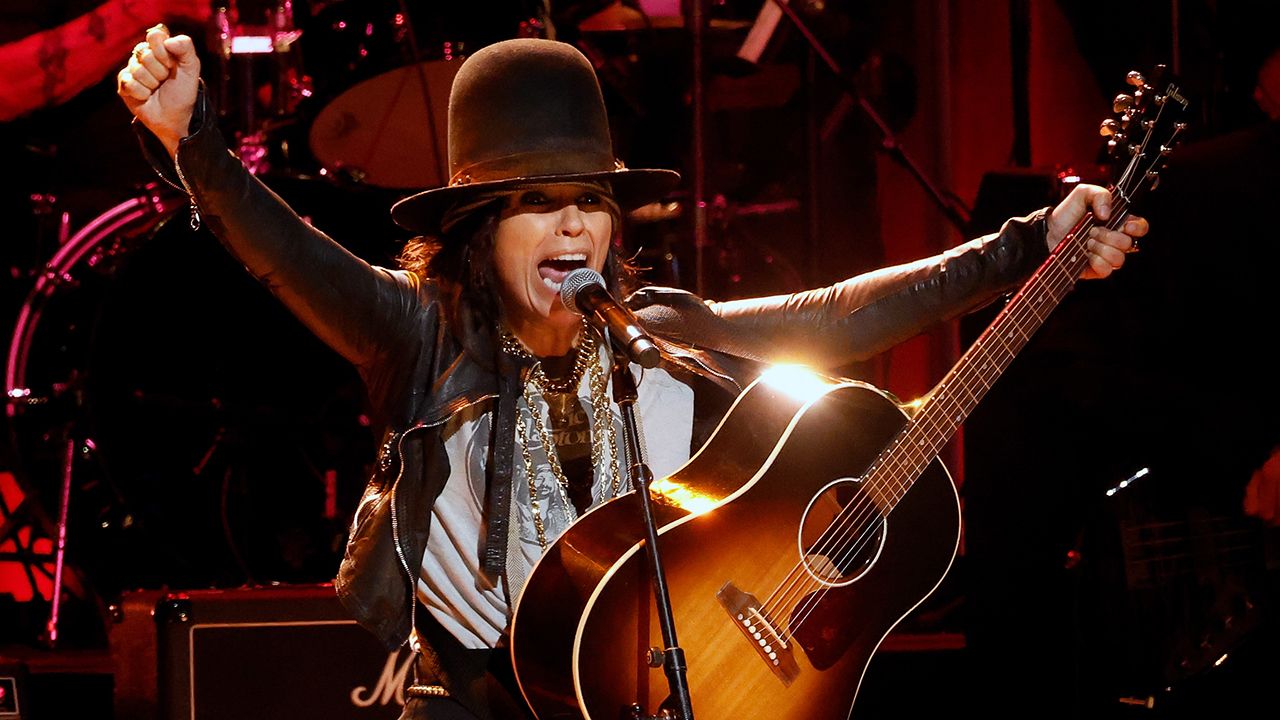
At her essence, Perry identifies as a guitarist, but one with a thoughtful approach. “Exploration is key,” she shares with Guitar world. her latest album, Let It Die Here, marks her first release in 25 years and showcases her extensive musical journey. This album, which accompanies a documentary of the same name, comprises 17 diverse tracks that reflect her artistic evolution.
“Watching the documentary was a profound experience for me,” she reflects. “I was grappling with my identity as a songwriter and producer; I felt lost. Many can likely relate to that struggle.”
While creating tracks like Let It Die Here and Mourning, as well as reimagining Beautiful, the classic hit she wrote for Christina Aguilera, Perry rediscovered herself through her guitar. “I always advise people, ‘If you’re unsure how to play, try an open tuning, and I guarantee you’ll create something,’” she explains. “I typically compose on acoustic guitar or piano, were I can let my creativity flow without overthinking.”
“Interestingly, a song might already exist in my mind; I just know it. Then I sit down, and the song unfolds. I have a collection of hundreds of guitars, and I’ll select one based on the sound I’m envisioning, thinking, ‘This is the tone I need.’”
At 61, Perry shows no signs of slowing down. Future solo projects are on the horizon, along with more songwriting for othre artists. Currently, she’s focused on the long-awaited second album from 4 Non Blondes, which she enthusiastically declares “is absolutely incredible.”
“Progress is what drives me,” she states. “What I take the most pride in is my constant feeling of inadequacy. It’s a double-edged sword; I was raised to feel that way, but that little dark gift from my mother has turned into a treasure.”
The Guitar: A Lifelong Companion
“What does the guitar mean to you?”
“I primarily write on guitar, but I dabble with piano as well. The guitar is my go-to instrument; it’s always within reach. It serves as my security blanket. I know I can experiment with it, create something unique, and explore new sounds.”
“The piano offers a similar comfort, but with the guitar, I can just strum away, use unconventional tunings, and create without knowing exactly what I’m doing. The possibilities are endless.”
Early Days with the Guitar
“How did yoru journey with the guitar begin?”
“As a child, I was eager to play guitar. My dad promised to get me one, but it never happened. Then my mom returned home with a $15 nylon-string guitar, and I was thrilled!”
“I quickly learned to play by experimenting. Despite our financial struggles, I enrolled in a school guitar class.”
Memorable Experiences in Class
“What was that experience like?”
“I remember sitting in class, and the teacher asked, ‘Do you have a guitar?’ I replied, ‘No, but I really want to be here!’ A fellow student, who I wish I could remember by name, offered to lend me his extra guitar for the next class.”
“When he brought it,I was overjoyed! I didn’t know how to read music,so I listened closely to the lessons and picked things up by ear.”
“One day, the teacher asked if I understood the lessons. I said, ‘I think so.’ he was surprised I wasn’t reading music and asked how I was doing it. I told him,’I’m figuring it out by ear.’ He just nodded and let me continue.”
A Treasure Trove of Guitars
“Looking at your current collection, do you have a standout favorite?”
“I own a music store filled with guitars, including a 1953 gibson Les Paul Gold Top that’s wholly original. I purchased it in the ’90s for $2,200, and now it’s worth a fortune!”
“Interestingly, Slash once expressed interest in it! He visited my studio and offered me a ample amount, but I declined. He asked me to promise that if I ever decided to sell it, he’d be the first to know. I agreed!”
Crafting Unique Sounds
“What’s your approach to guitar and amp tones?”
“I feel fortunate that when I visit a guitar store, if I plug into an amp and love the sound, I have to take both the guitar and amp home. There’s something special about a Gibson ES-335 paired with a Supro amp; certain vintage sounds are just iconic.”
“If I’m not playing guitar myself, I look for a guitarist with a unique style-someone who doesn’t just play mindlessly or use a generic tone. I’m drawn to musicians who have a distinct sonic identity.”
“On my album Let It Die Here, there’s a track called Mourning that features an epic transition. I told Eli, ‘Bring every influence of ’80s power rock you can think of!’ The result was phenomenal!”
“I believe the best thing a producer can do for an artist is to allow them the freedom to explore. Don’t impose references; let them discover their own sound.”
Reimagining ‘Beautiful’
“You’ve recently re-recorded Beautiful, a major hit for Christina Aguilera in 1999. How was that process?”
“I took on most of the roles myself, playing bass, piano, guitar, and Mellotron. I wanted an additional guitar style, so I called Nick mayberry, who added a whimsical touch.”
“to me, this version feels like my song. It’s what I would have created back then if I had more production skills.I’ve grown considerably as a producer and musician as the original recording.”
Reflecting on ‘What’s Up?’
“Do you ever get tired of performing What’s Up??”
“That song will always resonate. Even after I’m gone, it will continue to live on-it’s just that kind of song. Its relatability stems from the fact that there’s always something going wrong in the world.”
“I needed to create a record that people could instantly connect with and sing along to.”
“I vividly remember the recording process. The initial version was disappointing-the drum sounds were thin, the guitars overly compressed, and the overall tone felt conservative. I couldn’t let that version stand.”
“So, I brought the band to The Plant studio in Sausalito, California, and insisted we re-record it. I had never done anything like that before, but the engineer encouraged me to take creative liberties.”
“Once I realized I could move microphones and adjust sounds, I asked the drummer to lower her snare, and she happily obliged.”
“We recorded with minimal equipment-a black Les Paul through a marshall,a Martin acoustic,and an Excalibur bass. The producer arrived unexpectedly, and I was frustrated. He informed us we had to finish that night for mastering.”
“I sang the song three times, added background vocals, and just like that, the version we all know was born.”
Looking Ahead: New Music from 4 Non Blondes
“What can you share about the long-awaited second album from 4 Non Blondes?”
“It captures the essence of a fantastic ’90s record. We didn’t record it in the studio; instead, we started playing it live. My goal was to write songs that people could easily jump in and sing along to.”
“As the songs began to emerge, they carried a vibrant live energy, inviting everyone to join in. We’re currently in the studio wrapping up the album,and it’s been an absolute blast. Guitars and amps are everywhere!”