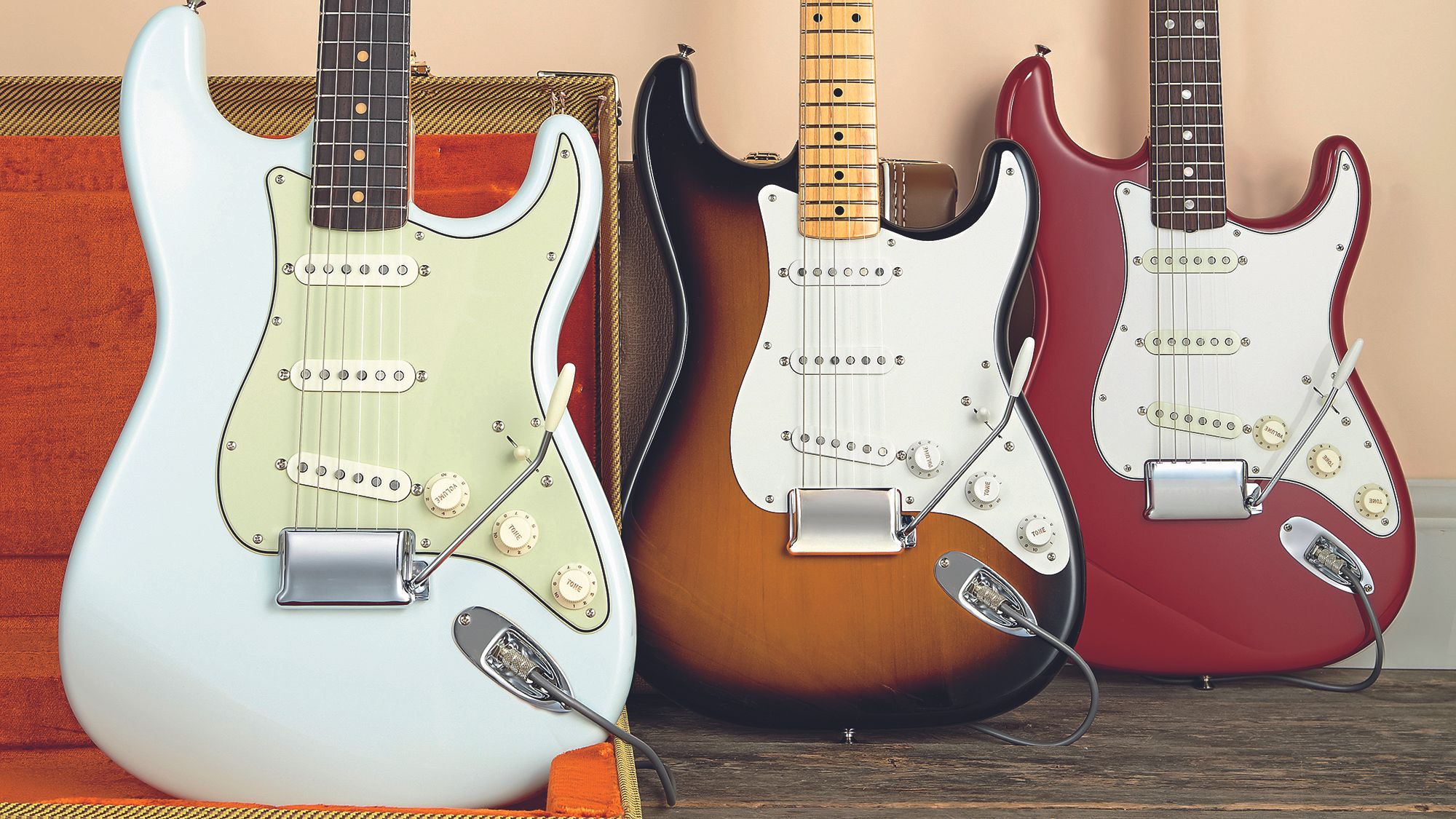
The time has elapsed for companies to reply to Fender’s cease-and-desist notifications regarding the manufacturing of S-style guitars, and the responses reveal critical insights into how Fender’s legal stance may falter.
Following a default judgment from the Regional Court of Düsseldorf earlier this year, Fender commenced sending cease-and-desist letters through Bird & Bird attorneys to various companies it accused of infringing on its alleged copyright of the Stratocaster body design.
Among those targeted were LsL Instruments, a small U.S. guitar manufacturer, which received demands to cease production, recall products, and destroy existing inventory.
These letters set a deadline of May 25 for the companies to respond. Guitar World has obtained a redacted version of a response letter from the Tone Nerds YouTube channel, which outlines significant weaknesses in Fender’s legal approach.
Notably, the response was crafted by Fox Rothschild and signed by Ronald Bienstock, the attorney who successfully defended Suhr and other builders against Fender’s previous trademark claims regarding the Stratocaster in the late 2000s.
Bienstock’s expertise positions him uniquely to challenge this case, and his involvement is crucial. It remains unclear which companies he represents in this response, or if he is defending multiple entities that received cease-and-desist letters.
Nonetheless, the response letter emphasizes several arguments that could lead to Fender’s defeat. Below, we outline six key points that challenge Fender’s cease-and-desist actions.
1. Lack of Legal Precedent from the Default Ruling
Bienstock argues that the default ruling from the Düsseldorf court lacks any binding legal precedent, asserting that Fender is misrepresenting it in this very way when it holds no authority outside that specific case, especially in the U.S.
He points out that the default ruling was granted solely because the defendant, a Chinese instrument manufacturer, did not appear in court. Bienstock contends that had Fender faced stronger opposition, the outcome would likely have been different, and the ruling would not withstand rigorous legal examination.
“We are concerned that yoru client [Fender] has misled the public and our client into believing that this ‘judgment’ is a binding precedent for any party other than the absent defendant in that case,” Bienstock cautions.
2. Misrepresentation of Facts by Fender
Bienstock claims that the Düsseldorf ruling was based on significant misrepresentations by Fender, whose evidence presented a distorted narrative of the history of the Fender brand and the stratocaster guitar.
he highlights that Fender’s portrayal of the Stratocaster’s creation as solely the work of Leo Fender is misleading. in reality, several individuals, including Rex Gallion and Freddy Tavares, played crucial roles in its advancement, as acknowledged by Fender’s own website.
Bienstock argues that Fender’s omission of these contributors was intentional, aimed at presenting Leo Fender as the sole creator to meet EU copyright standards. This misrepresentation undermines the validity of Fender’s case in Düsseldorf and the questionable legal precedent it established.
3. Variability in Stratocaster Designs
the Düsseldorf ruling classified the Stratocaster not as a trademark but as a copyrighted artistic work, which introduces specific criteria. However, Bienstock points out that not all Stratocasters are manufactured uniformly.
He argues that the inconsistency in shapes and contours makes it difficult to claim artistic value for specific designs. The failure to maintain the exact curves and contours of the original 1954 Strats means Fender cannot enforce a singular “Stratocaster body shape,” as such a concept does not exist.
Coupled with the subtle variations in third-party S-style guitars, Bienstock asserts that the Stratocaster cannot be protected by copyright, especially when supported by a dubious default ruling.
4. Ancient Legal Setbacks
The defense also highlights Fender’s past failures to secure intellectual property rights for the Stratocaster body shape, which Fender allegedly did not disclose to the German court, potentially influencing the ruling.
Significantly, a previous U.S.ruling deemed the Stratocaster body shape ”generic in the largest guitar market in the world.” This indicates that Fender has attempted and failed to establish legal protection for the Strat through the United States Patent and Trademark Office.
Bienstock emphasizes that the Düsseldorf ruling cannot overturn this prior decision, and any competent court would likely agree with the outcome of that case.
5. Acknowledgment of Strat Copies
Fender has a long history of recognizing and even embracing the existence of Stratocaster copies, particularly in its marketing campaigns. Bienstock argues that this acknowledgment undermines Fender’s ability to enforce legal protection over the body shape after so many years.
In various advertisements, Fender has used slogans like, “why Buy A Copy When you Can Afford The Original?” and “The Most Imitated Guitar in the World.” Bienstock asserts that these statements indicate Fender’s awareness of third-party manufacturers and suggest that they have waived any rights to claim against them for such “copies.”
6. Too late to Enforce Rights
The crux of the argument mirrors points made in the 2009 lawsuit: Fender has waited too long to enforce its intellectual property rights, rendering the Stratocaster body shape unprotectable. For 70 years, third-party production of S-style guitars has flourished, making it too late for Fender to reverse this trend.
“Third parties have built businesses around them, employing thousands and investing millions in advertising and sales,” bienstock notes.
“Enforcing copyright protection for the Strat body shape based on a default ruling is a hollow measure,” he asserts. “Granting retroactive copyright protection to a mass-produced generic guitar body shape after 71 years would undermine trademark law, which requires such guitar bodies to serve as indicators of the manufacturer.”
Conclusion: A Legal Battle Ahead?
Bienstock concludes his response by demanding a complete retraction of Fender’s cease-and-desist claims, affirming that his unnamed client retains the right to continue selling S-style guitars.
Whether this response will dissuade Fender remains uncertain, but if Fender persists, Bienstock has made it clear that his firm is prepared to defend this right vigorously.
“Efforts by your client to intimidate competitors through misrepresentations are anti-competitive. Shoudl your client continue these actions, our client will seek all available remedies, including attorneys’ fees and costs,” he warns.
The next move is now in Fender’s hands, and the guitar community eagerly anticipates its response and whether it will escalate this matter to court. Stay tuned for updates as this story unfolds.