The Unexpected Journey: How a $175 Rickenbacker Shaped peter BuckS Musical Legacy
Peter Buck never set out to become a legendary guitar figure of the 1980s. In the early days of R.E.M. in Athens, georgia, he was still finding his footing as a guitarist.
“I was really struggling to master the F chord,” Buck shared with Guitar Player. “I had a handful of chords and just stuck with them.”
At that time, Buck played a Fender Telecaster, drawn to its aesthetic appeal, a preference that remains unchanged.
“Then my Telecaster got stolen,” he recalls. “I had to find a replacement quickly.”
During a visit to Chick Piano, a quaint local shop, Buck stumbled upon a blond Rickenbacker 360 strung with flat-wound strings.
“That’s the one that’s been on every R.E.M.record. It’s still my go-to guitar every day.It has incredible tonal clarity.”
– Peter Buck
“I walked into that piano shop looking for a used guitar at a bargain price, and I found a Rickenbacker for just $175. I played it, and it felt too good to be true, so I bought it.”
This spontaneous purchase became the foundation for one of the most distinctive guitar sounds in alternative rock: bright, chiming, and rhythmically percussive, intentionally steering clear of the conventional guitar hero mold.
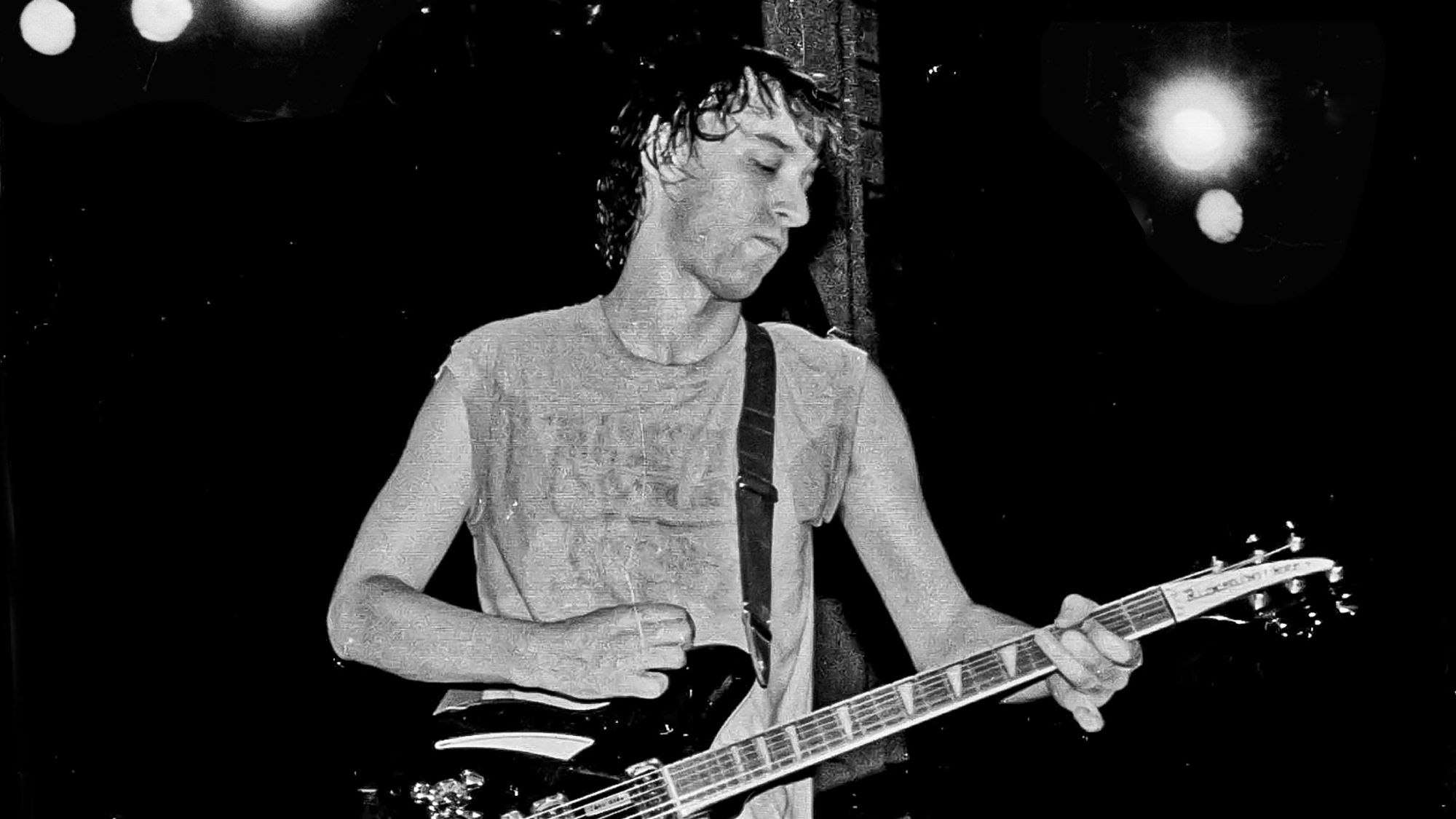
When that guitar was stolen in 1981, Buck was so captivated by its sound that he replaced it with another Rickenbacker, this time a black 360.
“That’s the one featured on every R.E.M. record except our first single, and I take it to nearly every session,” he told Reverb. “It remains my daily guitar. Its tonal clarity is unmatched.”
Despite this attachment, Buck has never sought to elevate the guitar to mythic status.
“I can achieve the sound I want with any guitar,” he explained to Guitar Player. ”It’s all about finding the right feel and comfort.”
With no formal training or shredding skills, Buck relied on instinct and a supportive band to carve out his path.

Listeners familiar with early R.E.M. albums like Murmur and Reckoning recognize how Buck transformed that instinct into a unique and captivating sound: rhythmic, interlocking guitar parts that avoided conventional lead playing.
At a time when guitar shredding was in vogue, Buck never aspired to be a shredder.
“I consider myself a solid rhythm guitarist with a good sense of timing and how to play against it,” he stated.”I can create concise lines that are both melodic and rhythmic.”
This approach set him apart from the guitar heroes of his time. No lengthy solos or flashy displays-just intricate, hypnotic rhythms that meshed seamlessly with Mike Mills’ bass and Bill Berry’s drums.
His influences were far from the shredding elite. Buck admired guitarists like Chuck Berry, Steve Cropper, and Zal Yanovsky from the Lovin’ Spoonful, all infused with a dose of Velvet Underground’s ethos.
“I really admire Steve Cropper,” he noted. “He plays these rhythmic lines, which is something I aimed to incorporate into my style.”
This influence is evident in R.E.M.’s early work-ranging from their debut releases to 1980s hits like “The One I Love.” Their sound doesn’t resemble typical rock guitar albums; instead, it feels like a cohesive unit where every element complements the others, with Buck’s guitar serving as the glue.
The band’s recording style further emphasized this ideology. They often recorded tracks quickly, sometimes before fully rehearsing them.
“We just went in and played,” Buck explained. ”Many times, we recorded songs we hadn’t even played through wholly.”
“For instance, when we recorded ‘Talk About the passion’ from Murmur, we hadn’t played it all the way through before. It was essentially a rehearsal take, and [producer] Mitch Easter said, ‘That’s good enough.’”

In this context, the $175 Rickenbacker was the perfect tool at the perfect moment. affordable, unexpected, and entirely unpretentious, it played a crucial role in crafting one of the decade’s most influential guitar sounds.
Yet, Buck remains skeptical about attributing success to gear or talent alone.
“I beleive that anyone with my musical background, if they picked up an instrument and joined a band, would likely play in a similar style to mine,” he remarked.
Perhaps so,but few have purchased a $175 guitar and inadvertently helped shape an entire genre.