Revolutionizing Guitar Comfort: The Veteran Innovating Ergonomic Design
With the emergence of brands like Strandberg, the conversation around guitar ergonomics has gained significant traction. The focus on body contours and playability has become essential for manufacturers, prompting a wave of redesigns across the industry.
For Ryan Wizner, a former Special operations Ranger and now a CNC machine expert, the term “ergonomics” holds profound meaning. As one of the first American soldiers to set foot in Afghanistan post-9/11, his experiences have left a lasting impact on his body.
“When I returned home, my back was in ruins,” he recalls. “I dealt with a bulging disc and spinal misalignment.For the past 25 years, I’ve focused on self-care, developing various stretching and exercise routines that have helped alleviate much of the pain, but it’s always lurking, ready to incapacitate me for days.”
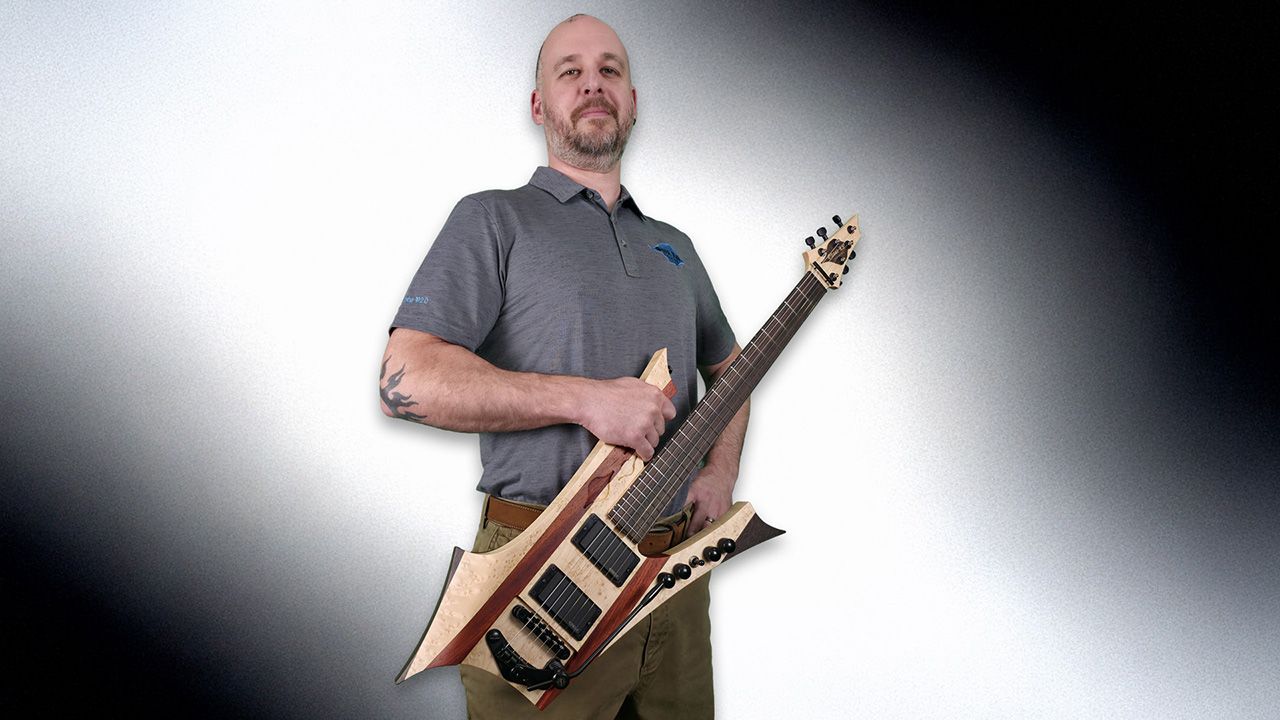
For Wizner, playing guitar transcends mere enjoyment; it’s a vital aspect of his mental well-being. However, he can only endure about 45 minutes of playing before the discomfort becomes unbearable. Persistent to find a solution, he created the striking Ghost Lab Acoustics HyperNova 2.0, a groundbreaking electric guitar.
“As an avid cyclist, I’ve learned to be meticulous about muscle engagement,” he explains. “I applied that same principle to guitar design. I’ve tried various ergonomic guitars, including Strandbergs, but none felt quite right.”
His quest for a better solution intensified after covering Preston Reid’s Blasting Cap, a track that demands intricate finger work and tapping techniques. The HyperNova 2.0 is designed to address common posture problems and muscle tension that many guitarists overlook, which can lead to wasted energy.
Using a Brother printer to create cardboard templates, Wizner had his wife record him “playing” to analyze his posture. He discovered that angling the guitar 15 degrees away from the body aligns the shoulder and elbow correctly. Keeping it too close can pull the elbow behind the shoulders, causing unneeded tension.
“When your elbow aligns with your shoulder’s centerline and your arms are at or below 90 degrees, everything falls into place,” he notes.

“I want to clarify that the hypernova isn’t meant to replace my other guitars. I still cherish my collection and dream of owning a PRS and a genuine Les Paul someday. However, when it’s time to dive into a new song for hours, I want to rely solely on my fine motor skills and fingers. That’s where this guitar shines.”
At the core of Wizner’s design is a dual-leg support system that ensures stability when resting between the legs, promoting proper posture for various body types. the lowered string plane minimizes shoulder strain, while the forward-positioned volume and tone controls are conveniently placed for easy access during play.
“I understand the desire for quick access, but I thought it best to let the left hand handle that work, allowing the right hand to make adjustments mid-performance,” he explains.
This model is not wizner’s first attempt; he recalls, “The initial prototype was a complete failure! That’s the nature of engineering. Within minutes of playing, I knew it wasn’t right, so I returned to the drawing board.” His dedication and meticulousness are evident in the final product.
Version 2.0 has transitioned from carbon fiber to more traditional woods after Wizner realized he had introduced too many innovations for the market. The guitar is crafted from 32mm-thick blocks sourced from a local sawmill, featuring birdseye maple for the neck and body, complemented by padauk, wenge, and purpleheart for the armrest contour and upper bout. Thes materials are bonded using the same adhesive employed by Formula 1 teams.
Wizner believes that the combination of hardwoods enhances the guitar’s sustain: “When you strike a note,the vibrations travel through the instrument,interacting with the natural knots in the wood,creating a unique and lasting sustain.”
“Session musicians and beginners alike would greatly benefit from this design. It’s so pleasant that you can focus entirely on making music.”
The neck is modeled after Ibanez’s fast-playing wizard III, and the guitar is equipped with EMG 81X/60AX humbuckers, which can be replaced without soldering. Wizner opted for Sperzel tuners and a Guyker tremolo after a previous brand failed to meet durability standards.
“The finish wore off within weeks, while the Guyker components have proven to be much more resilient,” he states. “I also use Thomastik-Infeld strings and Duracell batteries. Every component is of the highest quality I can source.”

The inverted V design allows for easy part swapping, encouraging players to customize their instruments. For example, switching from a hardtail bridge to a tremolo can be done effortlessly.
However, at a price point of $3,299, it may deter some potential buyers. With 30 hours of labor invested in each guitar and the premium quality of components, Wizner admits that his profit margins are “razor thin.”
“I want to make this accessible to musicians,” he emphasizes, revealing plans for acoustic guitars, extended-range models, and even a cello in the future.
“This guitar isn’t just for those with back problems; it addresses an issue that many musicians face but often overlook,” he adds. “It’s designed for session musicians and beginners alike, allowing them to focus on their craft without discomfort.”