What is it?
What began as an innovative concept over a decade ago, the Revstar series-Yamaha’s first new guitar lineup in over ten years-has proven its staying power. This is no small achievement in the ever-changing guitar landscape.
While the series underwent a complete redesign four years back, it retained its original Café Racer inspiration. Many players appreciated the earlier iterations, but the Mk II models feel more refined and mature.
The latest designs incorporate advanced technology, including a passive transformer-based focus Switch for midrange enhancement, and a slightly larger body crafted through Yamaha’s Acoustic Design process, resulting in a chambered structure that selectively amplifies or attenuates certain frequencies.
Graphite reinforcement contributes to the chambered bodies (available only in japanese models), while dual graphite rods are integrated into the necks of both Japanese and Indonesian models, excluding the entry-level Element series.
Additionally, the japanese guitars undergo Yamaha’s IRA (Initial Response Acceleration) process post-assembly, which Yamaha claims helps the instrument mature and resonate better as the tensions between the wood, finish, neck, fingerboard, and hardware are released, enhancing sound quality and playability. In our experience, this process yields noticeable improvements in sound and performance.
Following the introduction of the new Revstars, Yamaha also revived the classic Pacifica, which, while still available, had been in need of a modern update.The 2024 Pacificas and their SC (T-style) models, launched earlier this year, are generating buzz for their thoughtful, contemporary, and player-focused designs.

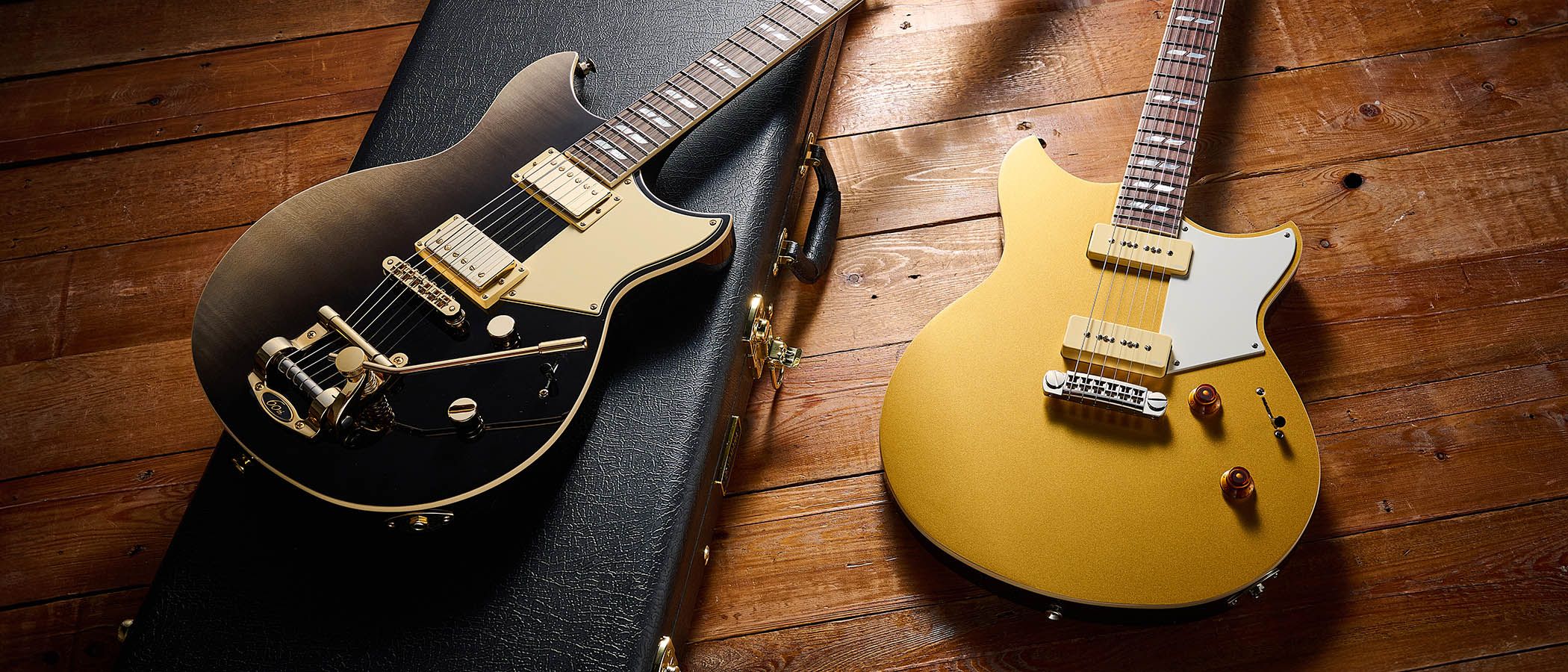
Looking ahead, at this year’s NAMM Show, Yamaha unveiled the stylish Yamaha 60th Anniversary Revstar, featuring the RSP20B 60th and the Chris Buck RS02CB. these two new Revstars cater to different audiences and price points. Let’s explore them further.
Specifications
Yamaha 60th Anniversary RSP20B

- PRICE: $3,699 | £2,403 | €2,299 (includes case)
- ORIGIN: Japan
- TYPE: Double-cutaway,solidbody electric
- BODY: Chambered 2-piece mahogany with a thin flamed-maple cap and graphite reinforcement
- NECK: 3-piece mahogany with carbon graphite reinforcement,glued-in
- SCALE LENGTH: 629mm (24.75″)
- NUT WIDTH: Bone/42.5mm
- FINGERBOARD: Single-bound rosewood with pearloid bar inlays, 304mm (12″) radius
- FRETS: 22, jumbo stainless-steel
- HARDWARE: Tune-o-matic-style bridge with Göldo G5 vibrato tailpiece, Gotoh SG301 MG-T tuners – gold-plated
- STRING SPACING, BRIDGE: 52mm
- ELECTRICS: Yamaha VH5B (bridge) and VH5N (neck) Alnico V loaded humbuckers, 5-position lever pickup selector switch, master volume, master tone
- WEIGHT (kg/lb): 3.86/8.49
- OPTIONS: None
- RANGE OPTIONS: The other MIJ Professional models (all at £1,599) include the twin-humbucking RSP20 and the RSP20X in rusty Brass Charcoal, and the RSP02T
- LEFT-HANDERS: Not available for this model
- FINISHES: noble Black Burst (as reviewed) – gloss polyurethane body with satin polyurethane neck back
Yamaha RS02CB chris Buck

- PRICE: $1,299 | £1,254 | €1,199 (includes gig bag)
- ORIGIN: Indonesia
- TYPE: Double-cutaway, solidbody electric
- BODY: Chambered, thin maple cap
- NECK: 3-piece mahogany with carbon graphite reinforcement, glued-in
- SCALE LENGTH: 629mm (24.75″)
- NUT WIDTH: PPS/42.3mm
- FINGERBOARD: Single-bound rosewood with pearloid bar inlays, 304mm (12″) radius
- FRETS: 22, jumbo stainless-steel
- HARDWARE: TonePros AVT2 wraparound bridge, die-cast tuners - nickel-plated
- STRING SPACING, BRIDGE: 52mm
- ELECTRICS: Yamaha VP5b (bridge) and VP5n (neck) alnico III loaded soapbar single coils, 3-position lever pickup selector switch, master volume, master tone
- WEIGHT (kg/lb): 3.52/7.74
- OPTIONS: None
- RANGE OPTIONS: The Revstar series begins with the Element models (£439). The Standards (£659) offer dual humbuckers or soapbar single coils, graphite neck reinforcement, and a wide array of colors
- LEFT-HANDERS: Element RSE20L (£439) and Standard RSS20L (£659) with humbuckers
- FINISHES: Honey Gold (as reviewed) – gloss polyurethane body with satin polyurethane neck back
- CONTACT: Yamaha
Build Quality, Usability, and Sound

If you seek evidence of Yamaha’s remarkable craftsmanship,look no further than the 60th Anniversary model. The Revstar design exudes angular sophistication, notably in this tuxedo-inspired finish. The Noble Black coating is a solid gloss across the body, transitioning to a light gray on the bass side, revealing the subtly figured maple top.
The precisely single-bound top edge of the body sharply defines its silhouette; a gentle forearm contour enhances comfort on the or else flat top, while the back features a larger radius chamfer that reduces the bulk of the 42mm-thick body.
what remains hidden is the intricate chambering of the mahogany back beneath the maple top, along with the dual graphite rods. While chambering typically reduces weight, Yamaha’s primary goal is to fine-tune the frequency response, which is further supported by the dual carbon graphite rods in the maple neck.

“The carbon rods integrated into both the neck and body are designed to mitigate excessive bass frequencies,” explained Takashi Yamashiro, Yamaha’s Guitar Development Manager, during our assessment of the redesign in 2022. “Despite the chambering, we aim for the body to resonate more like a solidbody rather than a typical semi-hollow.”
“The carbon rods positioned around the bridge stabilize the body’s vibrations, reducing unwanted bass while enhancing the midrange. The neck rods certainly add stability, but the thoughtful design of the neck and body allows for a harmonious vibration between the two.”

The three-piece mahogany neck is painted black, contrasting with the satin finish of the body’s gloss. The body heel features a subtle point, and there’s a slight volute behind the nut on the elegantly angled three-a-side headstock.
The tune-o-matic bridge has a slight rocking motion when the vibrato is engaged, and once the new strings settle, the tuning stability is remarkable, feeling fluid and responsive. Exceptional.
Similar to the body and headstock, the rosewood fingerboard is single cream bound, featuring split bar inlays.Our only concern lies with the chunky stainless-steel frets, which have been left somewhat angular, suggesting they may require further finishing for a smoother feel.
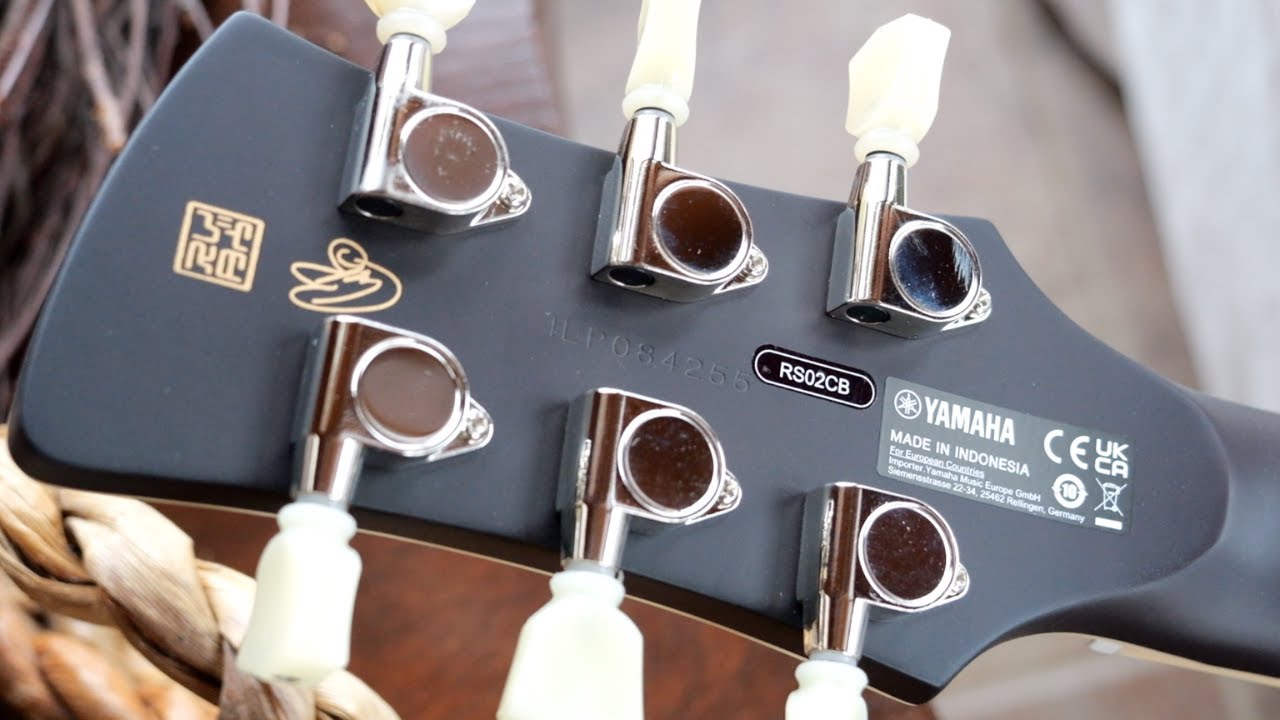
though, the hardware is commendable. Gotoh’s rear-lock tuners provide a solid feel and an elegant appearance, while the Göldo G5 vibrato is an enhanced Bigsby-style unit, offering easier stringing, a smooth operation, and a 360-degree rotatable arm that can be adjusted to your preference. The tune-o-matic bridge lightly rocks as the vibrato is engaged, and once the new strings settle, the tuning stability is solid, feeling fluid and responsive. Exceptional.
At nearly half the price of the 60th Anniversary model, the highly anticipated Chris Buck model forgoes the celebratory aesthetics and focuses on functionality. It is based on the Indonesian-made Standard RSS02T but features several modifications.
The chambered mahogany body with a maple top (lacking graphite rods) and the three-piece mahogany neck with carbon reinforcement remain, but the tune-o-matic bridge and the stylish ‘racing tailpiece’ have been replaced with a Tone Pros AVT2 wraparound.

The VP5 soapbar pickups have switched from Alnico V to III magnets, while the chrome knobs have been replaced with vintage-style amber top hats. The model dose not include Yamaha’s high-pass Dry Switch or Focus Switch passive boost features, and the pickups are selected via a straightforward three-way lever. Additionally, the split-bar inlays now resemble genuine pearl, enhancing the aesthetic compared to the standard models.
Now, let’s address the elephant in the room: these modifications effectively double the price of the Chris buck model compared to the standard RSS02T.
The Revstar series has a distinct feel, particularly the Mk II versions, which feature slightly wider, flat-front bodies reminiscent of a less chamfered Gibson SG or a subtly offset version of Yamaha’s classic SG. the scale length and overall playability are more akin to Gibson guitars,and with their lightweight design,they balance well whether standing or seated,making them easy to adapt to.

From our testing, the neck shapes have been fairly consistent, but these two models present slight variations. The nut width measures 42.4mm, with an average depth of 21mm at the first fret and 23.5mm at the twelfth. The profile is distinct, featuring a slightly flat back with a noticeable shoulder, and both 2026 guitars feel similar to our previous 2022 Standard reference.
While we noted the slightly sharp fret ends, our earlier model had nicely rounded fret ends, making them feel more comfortable.However,the frets on these guitars are well-sized and conducive to bending.

When played unplugged, there is a noticeable difference. While both guitars exhibit a similar smoothness and evenness, the 60th Anniversary model has a fuller sound. Both instruments, however, are lively and vibrant.
The 60th Anniversary model does not aim for contemporary sounds; instead, its lightly potted humbuckers evoke a classic tone reminiscent of the late ’50s. There are no complaints regarding the sound quality, especially in positions 1, 3, and 5 on the five-way switch (bridge, both, and neck).
the 60th Anniversary model offers a fuller and thicker sound compared to the RSS20, which is equipped with the same VH5 humbuckers (with similar DCRs), but the Professional Japanese craftsmanship of the 60th model clearly delivers a more expansive sound.
Additionally, positions 2 and 4 provide classic ‘in-between’ single-coil tones, which are excellent for clean and funky playing or adding texture to lead lines.
The Focus Switch, a pull-switch feature, adds thickness and a level boost without overwhelming the sound. The vibrato enhances the overall tonal palette, particularly excelling in producing a rich, clean sound that the 60th Anniversary model is known for. Adding reverb can further enhance this effect.
Conclusion
Rating: ★★★★

While our second Revstar required some setup and intonation adjustments, the Chris Buck model stands out in terms of sound quality. Neither soapbar pickup is overwound; in fact, both have the same amount of wire. This results in a refined, jangly tone that is reminiscent of traditional single coils rather than the aggressive midrange found in hotter Gibson models.
Though, it still possesses a punchy character. A slight level boost and a slight roll-off on the tone yield excellent results. The neck pickup delivers a rich,fuller single-coil sound,while the mix position shines with a beautiful sparkle,depth,and all the bounce needed for dynamic playing.
Guitar World’s verdict: It’s not just about the pickups; these Revstars are well-crafted instruments. They exhibit a smoothness that enhances the overall sound, and the pickups are not overly potted, providing an attractive and lively tone as you increase the gain. While the initial setup could use some attention, once adjusted, this model presents a valid, almost minimalist Revstar with a classic-oriented sound.
Video Demonstrations
Chris Buck

Watch On