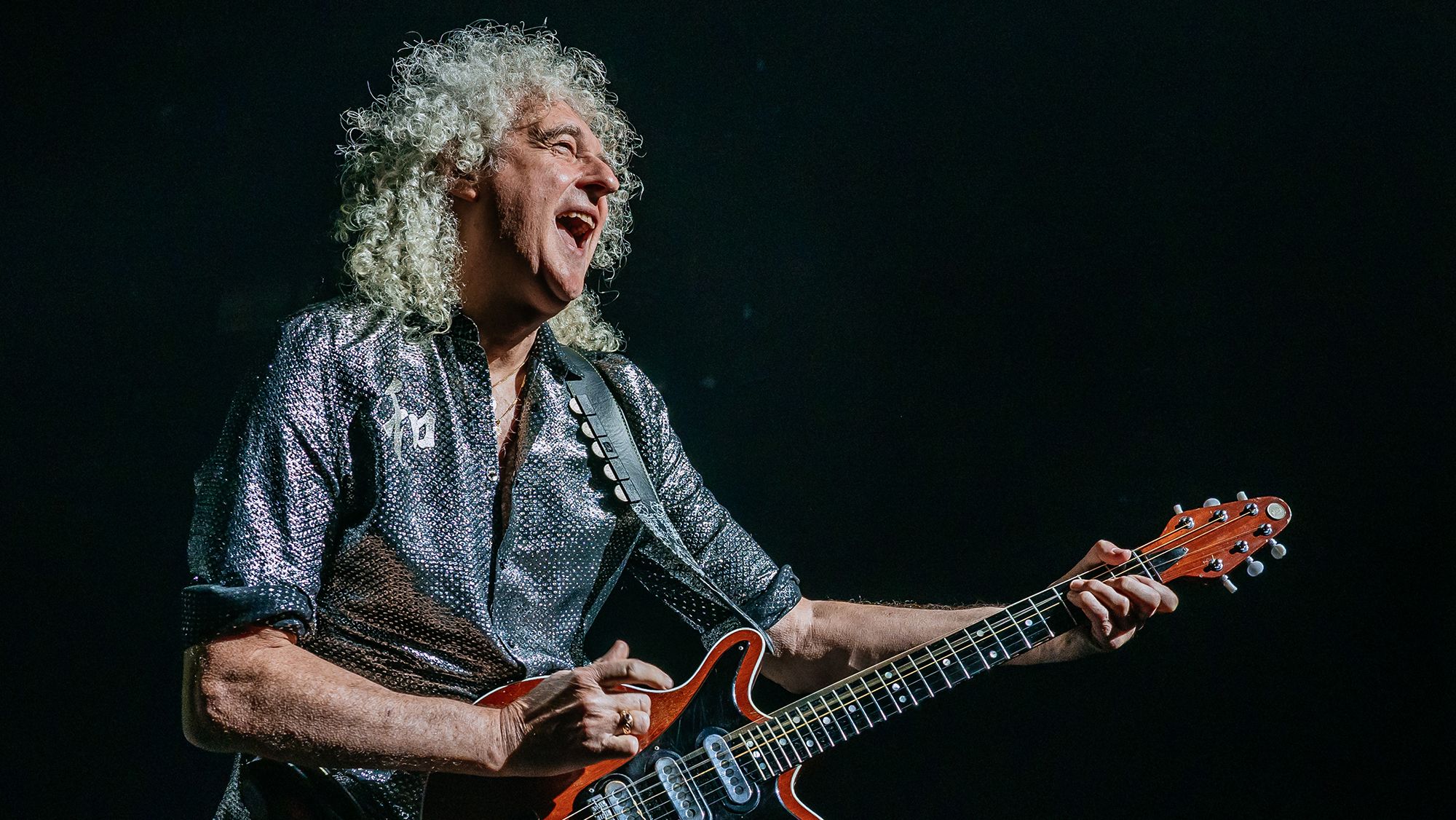
Brian May: The Guitar Icons Who Shaped His Musical Journey
Long before he became a legendary figure in rock music,Brian May was just a young boy in southwest London,searching for his unique sound. Like many aspiring guitarists of his generation, he found inspiration in the vibrant club scene, but it was two particular artists who would profoundly influence his approach to the guitar: Eric Clapton and Jimi Hendrix.
Early Musical Influences
Reflecting on his teenage years with a band named 1984, May shared memories of performing soulful renditions of tracks by Sam & dave and Otis Redding. However, the landscape of music shifted dramatically with the rise of psychedelia.
“We played a blend of soul adaptations,” he reminisced. ”It was just before the psychedelic wave hit. We attempted to create some original songs, but then Pink Floyd, Cream, and Jimi Hendrix emerged, and we began incorporating their styles.”
Clapton’s Transformative Influence
the first notable turning point for May came from Eric Clapton during his time with the Yardbirds. “Clapton was remarkable, so vibrant and fluid,” May recalled. “He shifted my viewpoint away from the Shadows style and drew me back to the blues legends like B.B. King and bo Diddley.”
Initially, may had a narrow view of the blues, perceiving it as a repetitive genre. “I thought it was just the same 12-bar structure over and over,” he admitted. “I didn’t grasp the depth and emotion until I witnessed Clapton’s performance.It made the genre feel accessible to me.”
Motivated by Clapton’s artistry, May began to explore the roots of the British blues movement, diving into the records that had influenced Clapton himself. “I studied Clapton closely and also listened to Mike Bloomfield from the Paul Butterfield Blues Band’s debut album,” he noted.

Beck’s innovative techniques
May was equally mesmerized by Jeff Beck, Clapton’s successor in the Yardbirds, who took guitar playing to new heights. “I was astonished by his capabilities,” May recalled. “I remember seeing him create feedback and play an entire song without even touching the fretboard. That was my first encounter with a les Paul guitar.”
He vividly remembers a performance at the Marquee where Beck played, and Clapton joined him for a jam session. “That was an unforgettable experience,” he said.
Hendrix: A Game Changer
Though, the combined influence of Clapton and Beck was nothing compared to the revelation that was Jimi Hendrix. ”When I first saw Hendrix, I thought, ‘Oh my God. This guy is doing everything I’ve been trying to achieve,’” May reflected, feeling both inspired and intimidated.
“He made me feel like I couldn’t play,” he admitted. “It’s unsettling when you think you understand everything, and then someone comes along who seems to be doing things you never even considered.”
Initially, may speculated that some of Hendrix’s extraordinary sounds were merely the result of studio magic. However, that doubt vanished when he witnessed Hendrix live at the Savoy Theater in London, opening for The Who. “He completely blew me away,” may said. “I thought, ‘He’s the one.’”

Lasting Lessons from Legends
the impact of Hendrix was so profound that May felt even the biggest acts of the time struggled to keep up. “The who couldn’t follow him back then,” he remarked. “Anyone in the world would find it hard to follow Hendrix.”
The lessons May learned from Clapton and Hendrix became integral to his own musical identity. From Clapton,he grasped the emotional depth and nuance of blues guitar,even if he once earned Clapton’s ire for a blues jam he and Eddie Van Halen dedicated to him,which Clapton deemed “horrible.” From Hendrix, he discovered the vast expressive potential of the guitar.
These influences ultimately helped forge the unique sound that May would develop with Queen-a style that could sing, soar, and, as he always envisioned, make the guitar truly speak.