Jazz Legends Al Di Meola and Julian Lage: A Conversation Across Generations
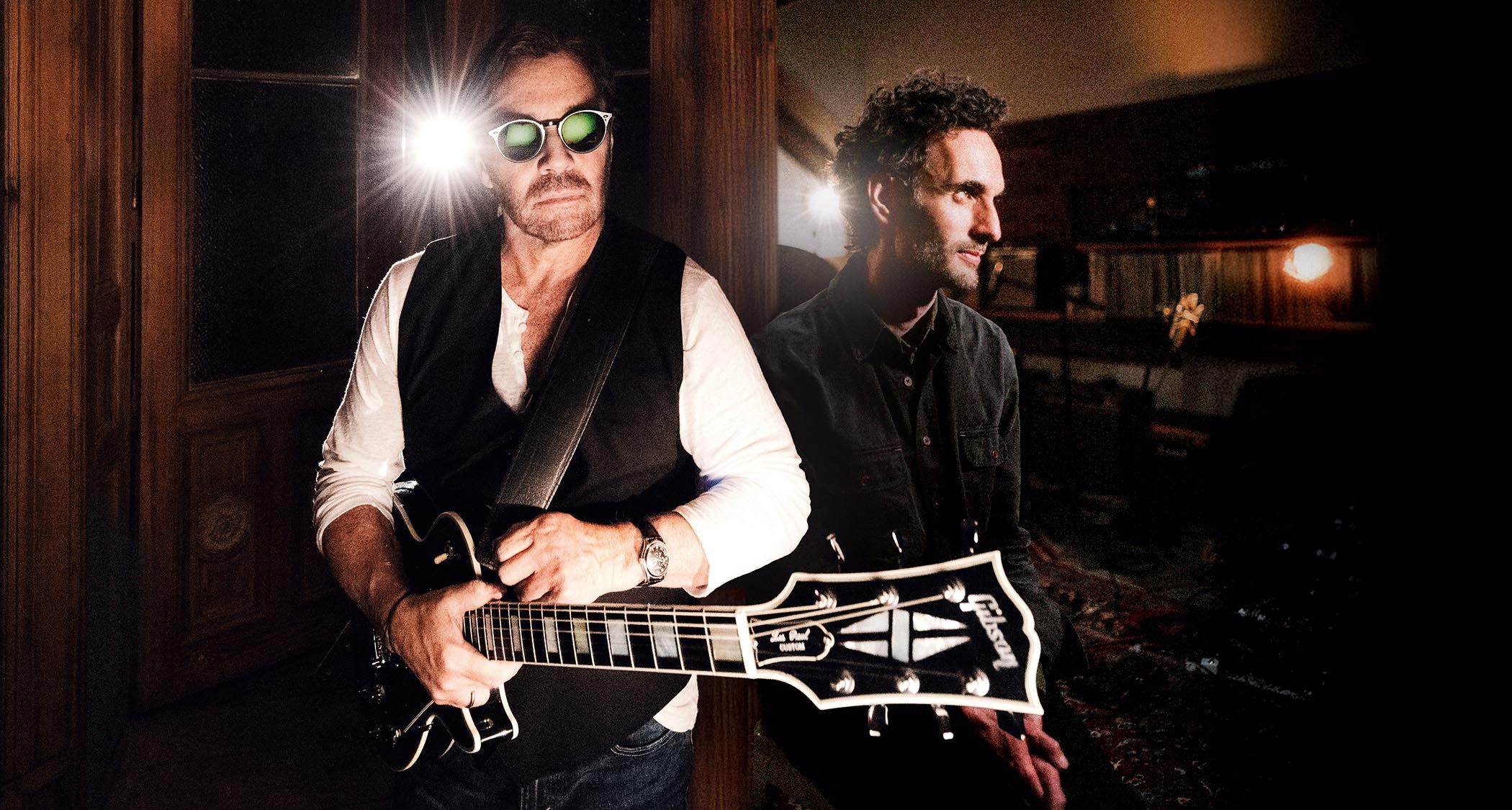
Engaging in round-table discussions with musical icons can be a gamble. You can set the stage, dim the lights, but if the synergy isn’t there, it can feel as awkward as trying to get two cats to share a space. Thankfully, the mutual respect between Al Di Meola and Julian Lage, two titans of american jazz, ensures that the conversation flows effortlessly. At 71, Di Meola embodies the classic New Jersey grit, infused with a sense of nostalgia for the golden days of the music industry, while 38-year-old Lage brings a fresh, abstract perspective to the art form.
With the stage set, all that remains is to hit record, spark a discussion on topics ranging from the rise of YouTube guitarists to the future of the instrument, and watch the sparks fly.
The Evolution of Guitar: Is There Still a Frontier?
Al Di Meola: ThereS a new wave of extraordinary guitarists emerging today. However,I sometimes feel a tinge of sadness for them,as they’re missing out on the golden era of the recording industry. Despite their talent, many of their remarkable works go unnoticed. It’s almost like saying, “You missed the best part,” because while their skills are remarkable, I struggle to connect them with a specific album or piece of music. Back in the mid-’70s, we had iconic albums like Heavy Weather by Weather Report that defined our generation.
There are more talented musicians now than ever before,and I’m relieved I’m not starting my career in this era! I’ve built a legacy with over 30 albums,and I’m grateful for that.
Julian Lage: I can’t speak to the glory days of the recording industry, but I believe that trends tend to cycle. While I don’t expect the industry to revert to its former self, I sense a resurgence in the desire for music consumption akin to how we experienced it in the past.
Challenges Facing Today’s Guitarists
Di Meola: one significant issue that often goes unaddressed is the distraction of modern technology. in the past, before smartphones and computers, we dedicated ourselves to practise. I recall recording an album about 15 years ago at the Power Station in New York. After we finished a track,everyone rushed out to check their phones. I thought, “This isn’t right.” We even had to instruct the receptionist to hold all calls.
Back then,our focus was unparalleled. During my first tour with The Guitar Trio alongside John McLaughlin and Paco de Lucía,we spent our downtime practicing in our hotel rooms,knowing we had to be at our best. There was no temptation to check our phones. Listening to those recordings, I realize I can’t replicate that level of performance today, and honestly, I don’t want to. My focus has shifted more towards composition.
Constraints vs. Freedom in Music Creation
Di Meola: My record label allowed me unlimited time on my last album, which was both a blessing and a curse. In the past,deadlines forced us to complete our work,which frequently enough led to a more focused creative process.without that pressure, it’s easy to get lost in experimentation and lose sight of the original vision.
Lage: I’ve never spent more than a few days recording an album. It’s usually one or two days, or three if the budget allows. I’ve even re-recorded albums when I wasn’t satisfied with the initial outcome. my perception of what constitutes a limitation or a freedom isn’t always clear.Sometimes, I find myself in challenging situations that later reveal themselves as liberating, and vice versa.
The Dual Nature of Virtuosity
Di Meola: Virtuosity is a delicate balance. If a performance is solely about speed,it can become overwhelming. While I’ve been accused of prioritizing speed in the past,it’s essential to weave a narrative within the music. Back in the ’70s, there was a heavy emphasis on speed, but I was fortunate to collaborate with Chick Corea, where we focused on substantial compositions while showcasing our youthful energy.
It’s crucial to have a composition that resonates. If a guitarist plays impressive licks without context, it loses its importance. Over the years, I’ve shifted my focus from technique to composition, as that’s what captivates an audience. The worst feeling is when a brilliant idea in your head doesn’t translate well when played.Technical proficiency is vital to avoid that disappointment.
Lage: My understanding of virtuosity has evolved. In my generation, there’s often a reluctance to showcase virtuosity, as it may come off as too assertive. I’ve experienced moments where I had the skills to play something but chose not to, missing an possibility to enhance the music. I’ve learned that anyone who serves the music with their skills is doing so beautifully. As Al mentioned, it’s about the space as much as it is indeed about speed or complexity.
Connecting with the Essence of Music
Lage: I draw inspiration from various traditions that emphasize the physical experience of playing guitar.players like Derek Bailey and Robert Fripp create sound through unique gestures, which resonates with me. I’m not one for extensive warm-ups; I prefer to play and let things unfold.After a good session, I feel transformed, but if something isn’t clicking, I’ll take a moment to work on it without overthinking.
In my earlier years,I practiced obsessively,which was beneficial,but I noticed a difference in my playing compared to those I admired,who seemed to embody a natural flow. I decided to ease up, allowing my music to breathe rather than sound overly rehearsed.
The Acoustic vs.Electric Guitar Debate
Di Meola: The acoustic guitar offers a different rhythmic approach compared to the electric. The electric guitar serves as a voice,allowing for more lyrical expression,while my compositions frequently enough require the intricate rhythms of my nylon-string guitar. Over the past three decades, I’ve gravitated more towards acoustic ensembles, which have deepened my music as I’ve matured.
Lage: I identify primarily as an acoustic player. My electric work is an extension of that sound.The electric guitar frequently enough implies collaboration, where my role is more about orchestration within a group. Acoustic playing allows for a broader range of frequencies, creating a richer sonic experience. I’ve always desired the electric guitar to be an unleashed voice, but I prefer the subtleties of acoustic sound.
Reflections on the London Music Scene
Di meola: I haven’t performed in London for five years, so I’m eagerly anticipating my upcoming show. London holds a special place in my heart; recording a tribute to The Beatles at Abbey Road was a career highlight. The experience was surreal, and I was determined to capture that classic sound.
After recording, I returned to New York but struggled to replicate the magic. I rented a house in the Hamptons to focus on arranging the remaining pieces, and coincidentally, my neighbor was Paul McCartney. We struck up a conversation, but I hesitated to reveal my identity, fearing he wouldn’t recognize me.
The following year, I returned with the finished album.My wife encouraged me to write a note to McCartney about the impact of The Beatles on my life. She took the initiative to deliver it, creating a cherished memory I’ll always treasure.