How Tom Petty Persuaded Mike Campbell to Embrace the Iconic 'American Girl' Riff
0 reactions
13 hours ago
Beatbounty
The Creative Journey Behind Tom Petty’s ‘American Girl’ riff
Mike Campbell recently reminisced about the creation of the iconic track “American Girl” by Tom Petty and The Heartbreakers, highlighting the pivotal role of his beloved 1951 Fender Broadcaster in shaping its sound.
Every musician has that one instrument they hold dear, and for Campbell, it’s undoubtedly his Broadcaster. This guitar has not only defined the signature sound of Tom Petty and The Heartbreakers but has also been instrumental in various other musical endeavors.
Acquired for $600 back in 1975 from Nadine’s Music in Hollywood, Campbell’s investment in the Broadcaster has proven to be invaluable over the years.
From 12-String Dreams to Guitar Reality
Among the many tracks featuring this guitar, “American Girl” stands out as one of Petty’s most celebrated songs, a true classic in the rock genre. Released in February 1977, the original vision for the track included a 12-string guitar. Though, neither Petty nor Campbell had one available at the time, leading to a creative solution.
“We wanted a 12-string sound for the song, but we didn’t have one,” Campbell shared in a recent interview with Guitar World.
“So, I took my Broadcaster and played octaves. A 12-string produces multiple notes and octaves on a single string, so I aimed to replicate that sound throughout the riff.The triplet section at the end was a last-minute addition.”
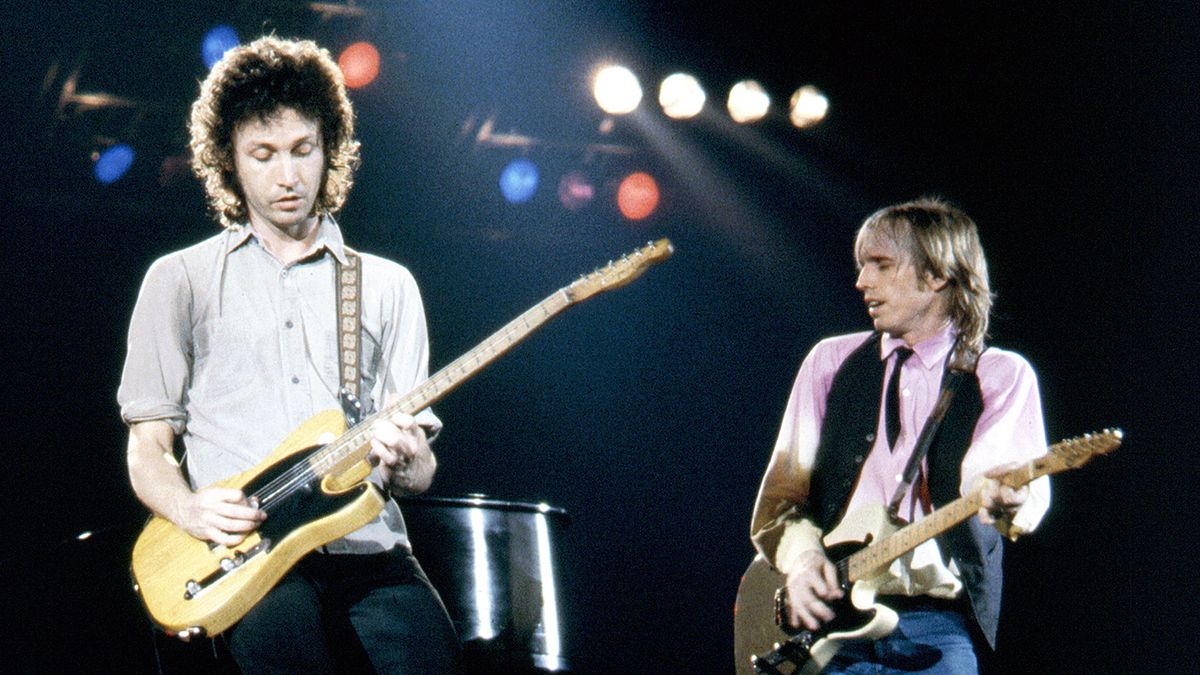
Mike Campbell with his 1951 Fender Broadcaster in 1977(Image credit: Keith Morris/Redferns/Getty Images)
Embracing the Sound
Despite his initial reservations about the approach, Campbell was encouraged by petty to fully commit to the riff. “I wasn’t fond of it at first,” Campbell admitted,”but Tom insisted it was fantastic and urged me to double it. That decision ultimately shaped the conclusion of the song.”
According to Campbell, “American Girl” perfectly encapsulates the essence of his Broadcaster. “The interplay between the rhythm and the Broadcaster’s tone created the Heartbreakers’ signature sound,” he explained.
Campbell has continued to utilize the Broadcaster on numerous tracks, including “Here Comes My Girl” (1980), “Mary Jane’s Last Dance” (1993), and ”You Wreck Me” (1994).
The Timeless Appeal of the Broadcaster
While Campbell has a collection of Telecasters that he enjoys, he acknowledges that the 1951 Broadcaster remains his top choice. “It still has a bright sound with a rich midrange. There’s a warmth to it that sets it apart from other Telecasters,” he remarked.
In recent updates, Campbell shared that he is currently using an old amplifier from the early days of the Heartbreakers, further connecting him to the band’s roots.
For more insights from Mike Campbell, along with interviews featuring John Osborne and John 5, be sure to check out the latest issue of Guitar World available at Magazines direct.
How Tom Petty Persuaded Mike Campbell to embrace the Iconic ‘American Girl’ Riff
How Tom Petty Persuaded Mike Campbell to Embrace the Iconic ‘American Girl’ Riff
The Birth of a Classic
In the realm of classic rock, few songs resonate as deeply as Tom Petty’s American Girl. Released in 1977, this track has become a staple of the genre, showcasing not onyl Petty’s lyrical prowess but also the distinctive guitar work of Mike Campbell. The story behind the creation of the iconic riff is as compelling as the song itself, revealing the creative dynamics between Petty and Campbell.
The Instrument That Made It Possible
at the heart of the American Girl riff is Campbell’s beloved 1951 Fender Broadcaster.This guitar has been instrumental in shaping the sound of The Heartbreakers and has a rich history that dates back to its purchase in 1975 for $600 from Nadine’s Music in Hollywood. The Broadcaster’s unique tonal qualities allowed Campbell to experiment and innovate, ultimately leading to the creation of the unforgettable riff.
Why the Broadcaster Stands Out
Luminous Sound: The Broadcaster is known for its bright, cutting tone, which perfectly complements Petty’s vocal style.
warm Midrange: This guitar offers a warm midrange that adds depth to the overall sound.
Versatility: The Broadcaster has been used in various genres, making it a versatile choice for many musicians.
The Creative Process Behind the Riff
Initially, Petty envisioned American Girl featuring a 12-string guitar to achieve a fuller sound. Though, neither he nor Campbell had access to one at the time. This limitation led to a creative breakthrough when Campbell decided to use his Broadcaster to simulate the desired sound.
Campbell’s Innovative Approach
“We didn’t have a 12-string, but we wanted one on the song,” Campbell explained. ”So, I took my Broadcaster and played octaves, trying to replicate the 12-string effect.” This innovative approach not only solved the immediate problem but also contributed to the song’s unique character.
Tom Petty’s Influence on the Riff
Despite Campbell’s initial reservations about his approach, Petty was adamant that the riff was perfect as it was. “I didn’t like it,” Campbell admitted, “but Tom said, ‘No, it’s great.Now you’ve got to double it.’” this encouragement from Petty pushed Campbell to fully embrace the riff, solidifying its place in rock history.
The Impact of Collaboration
The collaboration between Petty and Campbell exemplifies the power of creative partnership in music. their ability to challenge and inspire each other led to the development of a sound that would define a generation. The American Girl riff is a testament to their synergy,showcasing how collaboration can lead to unexpected and groundbreaking results.
Benefits of Embracing Creative Limitations
The story of how Petty convinced Campbell to embrace the American Girl riff highlights several key benefits of working within creative limitations:
Encourages Innovation: Constraints can lead to innovative solutions, as seen with Campbell’s use of the Broadcaster.
Fosters Collaboration: Working together to solve problems can strengthen creative partnerships.
Enhances Problem-Solving Skills: Navigating limitations can improve a musician’s ability to think outside the box.
Case Studies of Iconic Riffs
Many legendary songs have emerged from similar creative processes. Here are a few notable examples:
Song
Artist
Creative Limitation
Outcome
Smoke on the Water
Deep Purple
Limited recording equipment
Iconic guitar riff that defined rock music
Seven Nation Army
The White Stripes
Minimalist approach
Instantly recognizable bass line
Sweet Child O’ Mine
Guns N’ Roses
Improvised riff
One of the most famous guitar intros in rock history
First-Hand Experience: Mike Campbell’s Reflections
In interviews, Campbell has often reflected on the significance of the American Girl riff in his career.He notes that the song encapsulates the essence of The Heartbreakers’ sound, blending rhythm and melody in a way that resonates with audiences. “It was the harmonics between the rhythm and the Broadcaster on top of it. That became the Heartbreakers’ sound,” he explained.
Practical Tips for Aspiring Musicians
For musicians looking to create their own iconic riffs,consider the following tips:
Experiment with Your Gear: Don’t be afraid to use unconventional instruments or techniques to achieve your desired sound.
Collaborate with Others: Work with fellow musicians to gain new perspectives and ideas.
Embrace Limitations: Use constraints as a springboard for creativity rather than a hindrance.
Join the Beatbounty Community
If you’re passionate about music and want to share your own experiences or ads, consider creating an account at Beatbounty. This platform allows musicians to connect, collaborate, and promote their work in a vibrant community.