Unveiling the Legacy of Suzanne Vega’s ‘Luka’: A Personal Anthem of Resilience
Suzanne Vega never anticipated that her poignant track “Luka” would emerge as a hallmark of the late 1980s music scene. even more surprising is her recent revelation about the deeply personal roots of the song.
The Birth of a Powerful Narrative
Crafted in 1984, “Luka” narrates the harrowing tale of an abused child from a first-person perspective. Initially, Vega was skeptical about its commercial potential when her manager suggested it could resonate with a wider audience.
“It’s a modest song about a boy facing abuse,” she shared with Guitar Player. “I honestly didn’t envision it climbing the charts. However, my manager insisted it carried a meaningful message.”
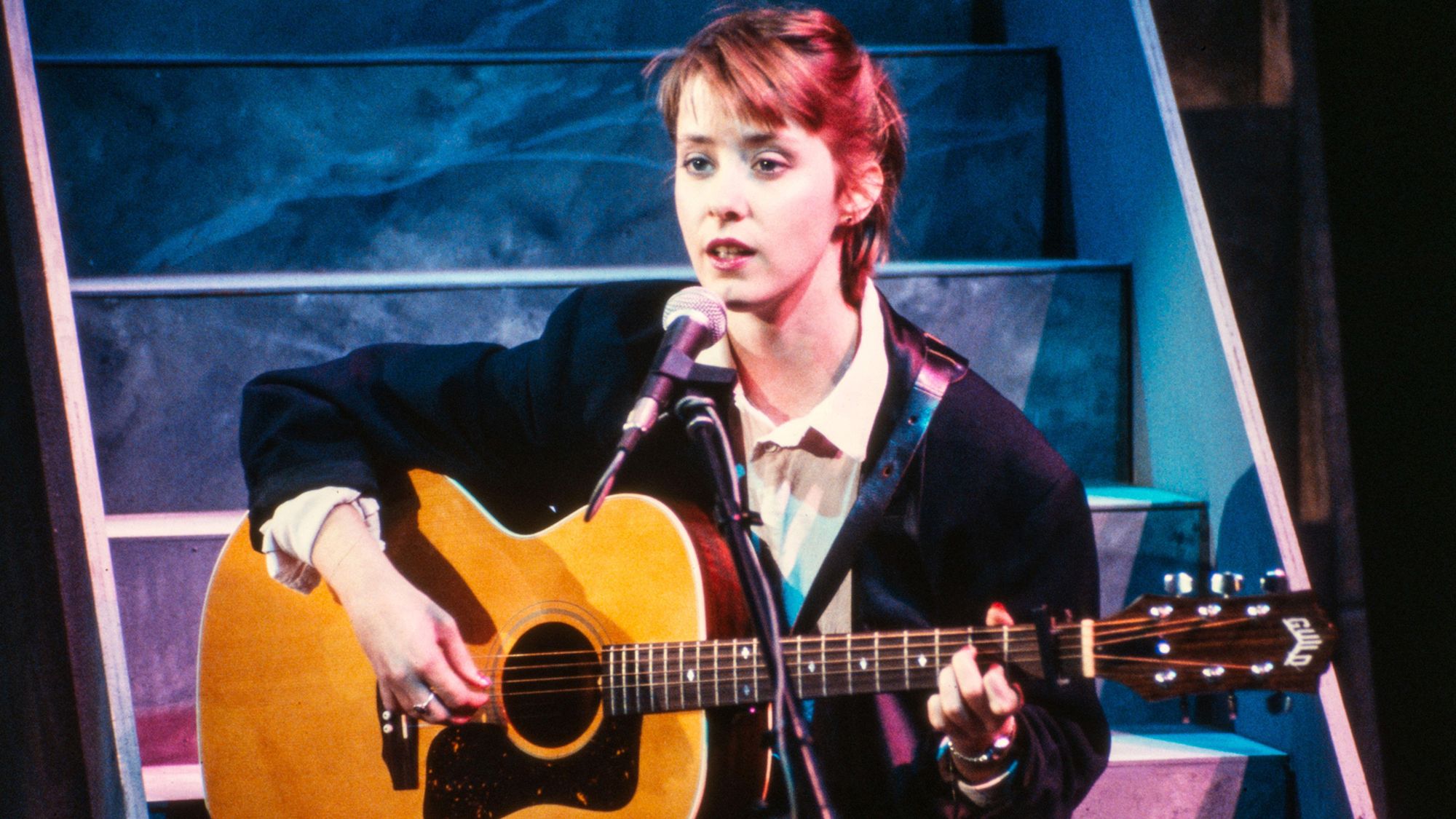
(Image credit: Eric CATARINA/STILLS/Gamma-Rapho via Getty Images)
Transforming a Simple Melody into a Chart-Topping Hit
This conviction led to an extensive studio journey that polished Vega’s raw acoustic piece into a refined recording, which ultimately soared to number three on the Billboard Hot 100 in 1987.
“The production process was the most challenging aspect,” she recalls. “Once my manager convinced me of its potential, I thought, ‘Alright, go for it.’ We dedicated significant time to ensure it fit the radio-friendly mold.”
I was to afraid to reveal myself. I didn’t want people to know that it was about me.
– suzanne Vega
Producer Steve Addabbo and Lenny Kaye, guitarist for Patti Smith, were enlisted to help adapt the song for radio while maintaining its intimate essence.
“We meticulously worked on various elements, including the drum arrangements,” Vega reflects. “Anton Sanko’s opening synthesizer chords created an ear-catching introduction before my guitar came in. The synthesizer, drums, and Jon Gordon’s electric guitar solo, reminiscent of U2’s sound, made it radio-friendly. Once it hit the airwaves, it resonated everywhere, almost like an overnight sensation.”
The Art of Studio Craftsmanship
Despite its seemingly effortless final form, Vega emphasizes that the song’s creation was a laborious process.
“I recorded my guitar part repeatedly because Steve was incredibly detail-oriented,” she explains. “He’s an exceptional engineer. I thrive in live performances, but in the studio, I needed to refine my takes.”
“Now, when I hear ’Luka’ on the radio, it sounds rich and vibrant. It doesn’t feel overworked, thanks to Steve’s expertise.”
A Mentor’s Influence
Vega credits Addabbo not only for his production skills but also for mentoring her in the recording process.
“He guided me on how to navigate the studio environment,” she shares. “When I first collaborated with him in my early twenties, I was inexperienced. He would keep me in the studio until I got it right, frequently enough bringing me into the control room to listen to my work. If it wasn’t quite right, I’d have to redo it.”
Somewhere, somebody has my Yamaha from when it was taken from the front of my building.
– Suzanne Vega
“He taught me essential guitar techniques, how to control my voice with the microphone, and the importance of balance in my singing. He was a patient and skilled teacher.”
During the recording sessions, Vega used her Guild F-47 acoustic guitar, which she favored during that period.
“I started with the Guild,then transitioned to Taylor,and at one point,I had a Yamaha. Interestingly, someone from Yamaha showed up at my hotel one day and gifted me a guitar, which I gratefully accepted.”
“I also owned a custom Yamaha guitar that was stolen from outside my apartment in Tribeca. I still can’t believe it hasn’t resurfaced, especially since it had my name in mother-of-pearl inlays.Somewhere out there, someone has my Yamaha.”

Cultural Impact and Personal Connection
“Luka” achieved remarkable success, reaching number three on the Billboard Hot 100, marking Vega’s highest-charting single in the U.S. Its cultural importance was further solidified when it was featured in an episode of The Simpsons years later.
“It was such an unexpected and out-of-context moment,” Vega chuckles. “I remember seeing a character driving under a bridge while singing it. I was genuinely touched that they chose to include my song.”
However, the song’s most profound impact transcended charts and television appearances; it resonated deeply with listeners who found solace in its message.
“I was addressing a deeply personal issue, so I never anticipated that so many others would relate to it,” she reflects. “I received countless letters from individuals sharing their own stories and experiences.It was cathartic for me,as I realized that I had inadvertently provided a voice for many.”

(Image credit: Tomas Tkacik/SOPA Images/LightRocket via Getty Images)
Revelations and Reflections
For many years, Vega maintained that “Luka” was inspired by a child she observed playing near her home. It wasn’t until 2021 that she disclosed the song’s true origins, rooted in her own childhood experiences.
“I was too scared to expose myself, so I kept my story hidden,” she admits. “I had concealed the abuse for most of my life and never spoke about it. Being recognized for that was strange, but I felt justified in creating luka’s character as a way to shield myself.”
Reflecting on nearly four decades as its release, Vega perceives “Luka” as more than just a hit song; it represents a significant chapter in her life.
“The success of ‘Luka’ stands out as one of the most rewarding experiences of my life,” she concludes. “Ultimately,it transcended being merely a pop song; it was something I was destined to create.”