While most guitars boast six strings or even twelve, the tenor guitar stands out with its unique four-string design. This instrument gained immense popularity during the jazz era, championed by legends like Tiny Grimes and Eddie Condon. Its influence continued into the folk movement, with notable figures such as Nick Reynolds from the Kingston Trio showcasing a distinctive Martin tenor guitar.
Over time,however,the tenor guitar became somewhat of a niche instrument,embraced by a select few artists like David Grisman,ani DiFranco,and Neko Case. Recently, a revival has emerged, fueled by a passionate community of tenor guitar aficionados. Each year, many enthusiasts gather in Astoria, Oregon, for the Tenor Guitar Gathering, an event organized by the Tenor Guitar Foundation, a non-profit founded by the late mark Josephs in 2009. To delve deeper into the tenor guitar’s culture and meaning, we spoke with TGF president John Halovanic and board member Donna Josephs, Mark’s sister, who provided valuable insights into this unique instrument.
THE ESSENCE OF THE TENOR GUITAR
The Tenor guitar Foundation’s motto, “Fostering musicianship four strings at a time,” encapsulates their philosophy. They align more closely with players of the ukulele, bass, and tenor banjo than with traditional guitarists. While tenor guitars share four strings,they come in various shapes and styles,including flattop acoustics,resonators,hollowbody archtops,and solid-body electrics.
A GLIMPSE INTO TENOR GUITAR HISTORY
The tenor guitar emerged from the early 20th-century mandolin and banjo craze. It features a guitar body combined with a tenor banjo neck, typically with a scale length of around 23 inches. This design appealed to banjo players seeking a warmer tone and mandolinists desiring a deeper,single-string sound,essentially creating a guitar version of a mandola.Interestingly,the tenor guitar’s popularity surged during Prohibition,offering a quieter alternative for banjo players that wouldn’t attract unwanted attention during secret gatherings.
EXPLORING TENOR TUNINGS
The three primary tunings for tenor guitars are standard, Irish, and Chicago. The standard tuning, from low to high, is C G D A, mirroring the tuning of the tenor banjo, mandolin, and violin.
Irish tuning, a fourth lower than standard, resembles an octave mandolin, tuned G D A E. Halovanic notes, “I prefer this tuning as it brings you closer to a regular guitar, allowing you to play almost any guitar piece with just a few adjustments.”
Some players, especially those transitioning from six-string guitars, opt for Chicago tuning, which mirrors the top four strings of a guitar: D G B E. Halovanic mentions, “Many players moving from six-string guitars find Chicago tuning more familiar.”
DISTINCTIVE TENOR TONES
The tuning in fifths and the four-string configuration create open-sounding chords with fewer overlapping notes. This setup allows for more linear single-note runs,often played on a single string,enhancing the instrument’s range. Techniques like droning an open string while playing a melody on an adjacent string are common, similar to mandolin playing. The tenor guitar’s sound can complement a six-string, akin to having a second guitarist using a capo.
In a recent interview with Guitarist, Ani DiFranco described the tenor guitar’s sound as “midrange,” adding, “it creates a unique space that inspires me to explore different musical ideas.”

THE TENOR GUITAR EXPERIENCE
Halovanic likens the experience of playing a tenor guitar to driving a sports car compared to a truck. “Most chords require only three or four notes. When strumming on a six-string, you frequently enough repeat notes.We refer to those as the training strings. You can eliminate them; everything you need is on the four-string neck, which feels incredibly smooth and inviting. After playing a tenor, returning to a six-string feels cumbersome,” he explains.
CONTEMPORARY TENOR GUITAR MAKERS

As per the Tenor Guitar Foundation, Eastwood stands as the largest contemporary manufacturer, having collaborated to produce the PG-150 Archtop Electric Tenor. Gold Tone is known for its exquisite acoustic models, while Blueridge maintains a reputation for high-quality acoustics. Craven Tenor Guitars specializes in handcrafted instruments, and kala, renowned for its extensive ukulele collection, offers the tenor KA-GTR acoustic in various wood combinations.

Ibanez previously produced two tenor models, with the AVT1 Artwood vintage Tenor Parlor Acoustic being a standout find online. Collings has also introduced a range, including the 2H Tenor launched in 2016. Fender released a unique Tenor Tele in their 2019 Alternate Reality Series, even though it has as been discontinued and is now hard to find. Soares’y Guitars has been crafting remarkable tenors for years, though their availability is limited. While Martin and Gibson no longer manufacture tenor guitars, vintage models from these esteemed brands are often more affordable than their six-string counterparts.
CONTEMPORARY TENOR PLAYERS

The renewed interest in tenor guitars is attracting musicians of all ages and genres. While many older players are drawn to its rich history in jazz and folk, Halovanic notes, “A lot of younger musicians at the Tenor Guitar Gathering are pushing the boundaries with rock and roll.”
Neko Case is known for her diverse tenor guitar collection, including a unique tenor Gibson SG that she employs in folk-rock tracks like “Lady Pilot.” Originally from her 2002 album Blacklisted, this song has gained over a million streams on Spotify and is featured in the 2022 compilation Wild Creatures. Check out her recent performance of “Lady Pilot” featuring the tenor SG.

Peter Harper, a tenor guitar enthusiast, follows in the footsteps of his Grammy-winning brother ben Harper. Growing up in the renowned Folk Music Center,Peter was exposed to a variety of instruments,ultimately choosing the tenor guitar as his primary tool for songwriting.
Mandolin virtuoso David Grisman boasts an impressive collection of tenor instruments, including numerous tenor guitars.Last year, he released a new collection titled Tone Poems, featuring a diverse range of tenor instruments played by “Dawg” alongside Tyler jackson, who transitioned to tenor guitar from the banjo. Their collaboration on Grisman’s Acoustic Disc label is aptly named Tenor Madness. Jackson is a familiar face at the annual gathering in Astoria,Oregon.
THE TENOR GUITAR GATHERING

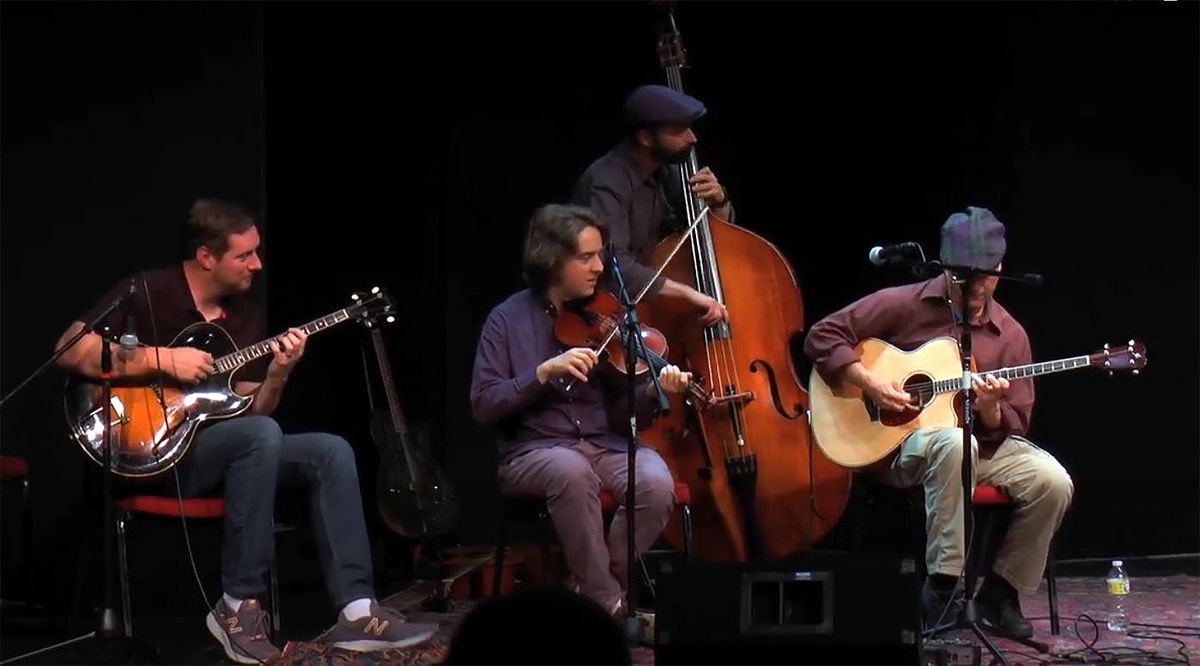
The Tenor Guitar Gathering serves as a vibrant hub for tenor players of all skill levels. The upcoming event, scheduled for the last weekend of May 2025, will feature a lineup that includes Nashville’s Tim May and Grant Flick, who is known for his innovative five-string instrument.
This year marks the 15th Tenor Guitar Gathering, taking place in Astoria, Oregon. Josephs describes the event as a blend of concerts, workshops, jam sessions, and even a fun trolley ride through town where participants can sing and play together. Attendees will enjoy gourmet lunches accompanied by tenor guitar performances and the local Tenor Guitar orchestra at the Astoria Sunday market.
The atmosphere is incredibly welcoming, with seasoned players eager to assist newcomers in joining the open jams that extend late into the night on Friday and Saturday. Kala generously donates a tenor guitar to a deserving student for the Rising star Award, while Gold Tone and D’Addario contribute instruments and strings. Stay tuned for updates on this year’s Tenor Guitar Gathering by checking the foundation’s website, YouTube channel, and the Gathering’s Facebook page. Enjoy the magic of making music with four strings!