The Lasting Influence of Rory Gallagher on Alex lifeson: A Journey Through Music
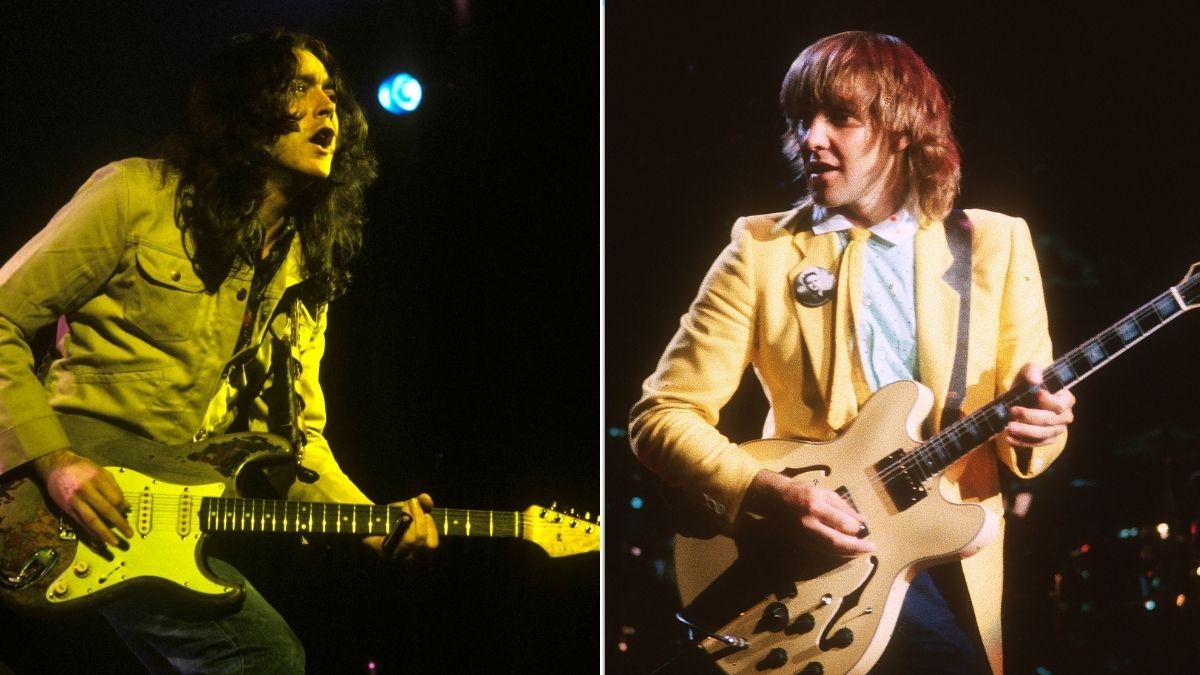
While Rush is celebrated as a cornerstone of progressive rock, their roots are deeply embedded in the blues genre. For guitarist Alex Lifeson, Rory Gallagher stands out as a pivotal influence among blues musicians.
Early Inspirations: The Guitar Legends
In his formative years, Lifeson was captivated by the guitar work of Eric Clapton, particularly admiring his solo in Cream’s “Spoonful,” which marked the first solo he ever mastered.He also held Jimmy Page in high regard, expressing that their eventual meeting lived up to his expectations. Though, Gallagher’s impact on Lifeson is uniquely profound.
Discovering Rory Gallagher
Lifeson first encountered Gallagher’s music during his time with the band Taste, which preceded Gallagher’s solo career.he recalls being “truly impressed” by Gallagher’s sound.
“His music was rooted in blues,” Lifeson explains in an interview with Gallagher’s YouTube channel. “Yet, he was an exceptional rock guitarist, brimming with energy. He defied the typical blues mold.”
“His playing style was distinctly his own,” he adds. “It was a true reflection of his spirit. The combination of his vocals and guitar created something remarkably special, a rarity in the music world.”
Rush’s Early Days and Touring with Gallagher
Before Rush became a household name, thay were honing their craft as a supporting act for major bands like Aerosmith, thin Lizzy, and even Kiss. The Canadian rockers released their debut album in March 1974 and soon found themselves on their first tour, opening for Gallagher that fall.
“Touring with Rory was an unbelievable experience,” lifeson reminisces. “We were just 20 years old, navigating our first tour. It was thrilling, yet we were unsure of our place, trying to remain respectful and not overstep.”
“from the start, Rory and his band were incredibly welcoming,” he continues. “I watched him perform every night,returning to the dressing room inspired to play.His passion was infectious.”
“Witnessing him lose himself in his music was a sight to behold. There was a purity in his performance that was truly remarkable.”
A Shift in Fortune
Fast forward six years, and Rush had skyrocketed to fame with their album Moving Pictures, now hailed as one of the greatest progressive rock albums of all time. This time, it was Gallagher who opened for them.
“We were on a roll, and when the opportunity arose for Rory to join us on tour, we jumped at it,” Lifeson recalls with a smile. “That’s when I really got to know him. We spent countless hours together during our downtime, often sharing drinks and stories.”
Bonding Over Literature and Life
Family and political discussions became common ground between the two musicians. Gallagher shared his experiences growing up during the Troubles in Ireland, while Lifeson, with his Yugoslavian roots, found parallels in their histories. This connection led Gallagher to gift Lifeson a copy of Flann O’Brien’s novel, The Third Policeman.
“He insisted I read it, praising O’Brien’s wit and humor,” Lifeson shares. “I enjoyed it and later mentioned it to him.”
“After a brief break, he returned from Ireland with the entire series of O’Brien’s works for me,” Lifeson adds. “It was never just about the music with him; he was genuinely thoughtful and kind. Beyond his immense talent, he was a remarkable human being.”
Learning from a Master
Lifeson acknowledges that Gallagher’s influence on him began early in his career. He feels privileged to have toured with his idol, particularly during that first tour in 1974, where he picked up a crucial technique that woudl resonate throughout rush’s music.
“Rory had this unique way of producing harmonics with a guitar pick that I had never encountered before. I was amazed by it,” he reflects. “I thought, what an effective technique! I incorporate that trick into my own playing regularly, and I owe it all to him.”
While Lifeson doesn’t delve into specifics, Gallagher’s technique likely refers to pinch harmonics, a style that Leslie West discussed in a 1972 interview with Guitar Player.
Legacy and Remembrance
Gallagher passed away in 1995, and his iconic gear was preserved by his family, who lent it to museums and musicians until recently. The sale of his legendary ‘61 Stratocaster for an astonishing $1.16 million sparked outrage among fans, leading to campaigns aimed at keeping it in Ireland as a cultural symbol. The guitar has as been donated to the National Museum of Ireland.
This year, Gallagher was honored with a statue in Belfast, Northern Ireland, although some details of the tribute raised eyebrows.
Current Endeavors of Alex Lifeson
Meanwhile, lifeson is busy with his Lerxst gear brand, recently reissuing his beloved Hentor Sportcaster as the Grace model. Additionally, he is set to release his second album with his new band, Envy of None, in April.