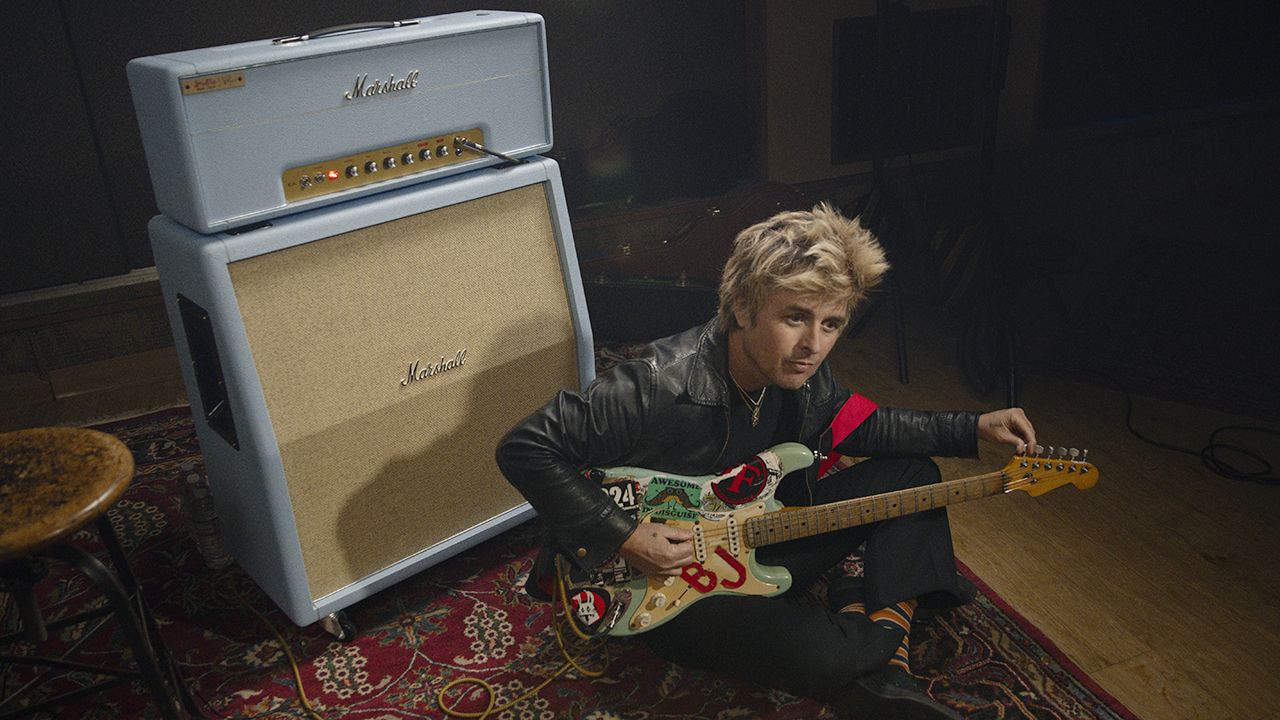
billie Joe Armstrong and Marshall: A Sonic Collaboration 14 Years in the Making
When you hear the iconic line, “Do you have the time to listen to me whine?” it’s hard not to instantly think of Billie Joe Armstrong’s signature palm-muted sound, crafted through his modified Marshall amp.Since its release in 1994,Green Day’s Dookie has not only become a cultural phenomenon but also a defining moment in rock tone history.
The album represents the perfect fusion of producer Rob cavallo’s rock aesthetic and Armstrong’s powerful guitar riffs, resulting in one of the most recognizable sounds in contemporary music.
It’s no wonder that Armstrong has partnered with Marshall to create a custom handwired signature amplifier-the 1959BJA Billie Joe Armstrong Artist Signature. This amp features a color scheme inspired by Armstrong’s legendary Fernandes Stratocaster, known as Blue.
A New Era for Marshall Amplification
What’s particularly intriguing is the timing of this collaboration. after years of stagnation, Marshall is experiencing a renaissance, thanks in part to its successful home audio division. Steph Carter, Director of Culture Marketing, and Jon Magill, Director of R&D for Amplifiers, share insights into the creation of Marshall’s first signature amp in over a decade.
Why Now? The Genesis of the Signature Amp
carter: Our journey began when Billie participated in one of our campaigns for the Monitor headphones. The overwhelming response from fans was,”This is fantastic! Where’s the Dookie amp?” That feedback inspired us to move forward.
We thought, “What better way to reignite our signature product line?” This amp has been discussed in various contexts, representing a band that has evolved from punk rock roots to mainstream success.
Rebuilding the Framework
Magill: Indeed, many of the individuals who previously worked on signature products had moved on, so we had to start from scratch. We needed to determine how things were done in the past and how we coudl implement those processes to create a high-quality product efficiently.
Designing the 1959BJA: A Journey of Iteration
Magill: Our design process began with schematics and photographs provided by Billie’s team.We focused on ensuring that we included all the essential components, such as specific capacitors.
one of billie’s amps was based on an older SLP reissue, which utilized the ST1 PCB board. we weren’t sure how much that influenced the sound,so we built an amp using that design and compared it to others.
Ultimately, we created several variations, and once we narrowed it down to one, we prepared it for production. The entire process took about three to four months, which was quite efficient.
Comparing the Original to the New Model
Magill: If you were to open the original amp and the new one side by side, they wouldn’t look identical inside. while one of Billie’s amps is based on the ST1 board, he preferred the handwired version over the older PCB design, which aligns well with our current production methods.
We could have taken either route, but the handwired option was favored, resulting in a product that not only looks aesthetically pleasing but also boasts high-quality craftsmanship-handwired in the UK, reflecting the essence of the original amp.
Feedback from Billie Joe Armstrong
After presenting the amp to Billie, he immediately connected with it. He plugged in, played a Green Day riff, and exclaimed, “It sounds like Green Day!” This was a meaningful moment for us, confirming that we had achieved our goal.
Billie later plugged in and played When I Come Around, affirming, “That’s the sound.” His enthusiasm for the amp was palpable, and it delivered precisely what we aimed for.
The Future of Marshall’s Signature series
Carter: It’s been an incredible experience.We understand the brand’s potential and what we can accomplish. The last few years have seen remarkable progress since the formation of the Marshall Group, and we’re just getting started.
Magill: Being part of projects that resonate with significant moments in music history is fulfilling. We’re excited to create products that inspire guitarists and allow them to connect with their musical heritage.
What Lies Ahead?
Carter: There’s a lot of love for the Marshall brand,and as we continue to engage with musicians,we’re exploring new ideas and possibilities. We have exciting plans in the pipeline, and I can’t wait to see what we come up with.
As for a more affordable option, that remains to be seen. We’re focused on delivering high-quality products,but we’re always open to exploring new avenues.
while the 1959BJA is rooted in the legacy of Dookie, it stands as a versatile amplifier in its own right, capable of producing a wide range of sounds that can cater to various musical styles.