Bob Daisley: The Wild Ride of Rock 'n' Roll with Ozzy Osbourne
0 reactions
3 months ago
Beatbounty
the Unforgettable Journey of Bob Daisley with Ozzy Osbourne
Despite the myths that have circulated, Bob Daisley was the driving force behind the bass lines, lyrics, and overall direction of Ozzy Osbourne’s initial two solo albums after Black Sabbath: the iconic The Blizzard of Ozz released in 1980 and the follow-up Diary of a Madman in 1981.
While his official membership status in Ozzy’s band fluctuated, Daisley’s contributions remained crucial. He played a notable role during the recording of several albums throughout the 1980s, including Bark at the Moon (1983), the Ultimate Sin (1986), No Rest for the Wicked (1988), and No More Tears (1991)-a period often referred to as the Prince of Darkness’ golden age.
Shifting Dynamics in the Band
Though, the chemistry among the band members evolved over time. Daisley reflects, “it felt like I was working for Blizzard of Ozz, the band I’d helped create. The dynamics had shifted considerably.” Iconic tracks such as Bark at the Moon, The Ultimate Sin, Magic Man, and Mama, I’m Comin’ Home owe much of their essence to Daisley’s lyrical prowess and bass contributions.
His songwriting and experience where invaluable for the young guitarist jake E. Lee, who stepped in after the tragic passing of Randy Rhoads, and later for Zakk wylde, who joined after Lee’s departure in 1987. Sadly, after the release of No More Tears, which many fans regard as a high point that rivals the Rhoads era, Daisley’s collaboration with Ozzy came to an end.
Reflections on Musical Legacy
“as for No More Tears being ‘better’ than our first two albums with Randy-absolutely not,” Daisley asserts. “No More Tears wouldn’t exist without the groundwork laid by our earlier albums. They were the foundation.”
Addressing the crediting issues surrounding Diary of a Madman, Daisley expresses his frustration: “Just ask me what I thought of Rudy Sarzo being credited on Diary of a Madman! It was a travesty, a true injustice against Lee kerslake and me. I poured my heart into that album-every note, every lyric, every production detail.”
“To see my hard work attributed to someone who had no involvement was devastating; the same goes for Lee. I remember the day we first saw those incorrect credits-it felt like a punch to the gut. I hope to see proper recognition for that album before I leave this world.”
Consistent Contributions to Ozzy’s Sound
“My role remained unchanged-I co-wrote music, penned all the lyrics, arranged the songs, and provided overall inspiration. Bark at the Moon was no exception. When Ozzy and Sharon repeatedly urged me to consider replacing Lee with Tommy Aldridge during the UK tour in 1980 and again in 1981, I stood firm in my decision.”
“Eventually, they let both of us go, only to invite me back six weeks later to work on another album with Randy, Ozzy, and Tommy, which was set to be written and recorded in 1982.I agreed, but then tragedy struck when Randy was killed in March of ’82, and that project was shelved.”
Collaborating with Jake E. Lee
When it came time to work on the third album, Bark at the moon, Ozzy invited me to perform at the US Festival just before we began writing and rehearsing. That was my first encounter with Jake-an incredibly talented guitarist who quickly proved himself capable of filling randy’s shoes. Jake managed to make the songs his own while still capturing the essence of Randy’s style.
After the festival, we all flew to New York to start writing for the album, and the process went exceptionally well. One day, Ozzy walked into the studio while Jake and I were brainstorming ideas and exclaimed, “I’d forgotten how much you contributed to the writing.” I remained silent, noting how quickly his “convenient amnesia” had resurfaced.
Ozzy’s Struggles and the Band’s Future
During this tumultuous time, Ozzy was grappling with substance abuse, but Sharon was vigilant in keeping him in check. The loss of Randy affected everyone deeply, though I wasn’t present during the tragic plane crash, which I’m grateful for.
Ozzy was once asked how he managed to create such a miracle. His response was, “With one finger on a piano.” oh dear!
“Jake was a solid choice to step in for Randy.While no one coudl truly replace him, Jake was an excellent guitarist who brought fresh ideas and riffs to the table. He certainly fit the bill.”
Contributions to Iconic Tracks
“I played bass on the entire album, co-writing every track, including bonus songs like Slow Down and Spiders.”
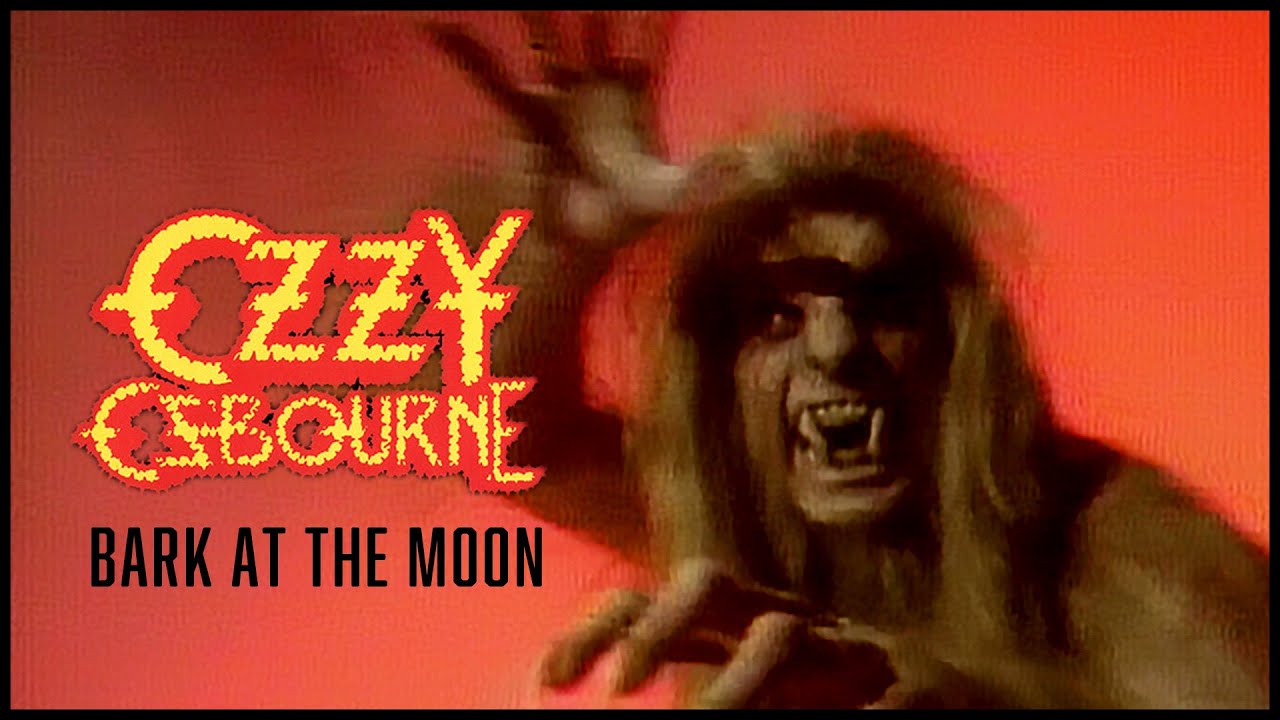
ozzy Osbourne – Bark at the Moon (Official Music Video) – YouTube
watch On
Ultimately, my contributions to the album were extensive, and I co-wrote every track, ensuring that my musical fingerprints were all over the project.
Bob Daisley: The Unsung Hero Behind Ozzy Osbourne’s iconic Sound
Bob Daisley, a pivotal figure in rock music, played a crucial role in shaping the sound of Ozzy Osbourne’s early solo career. He was not only the bassist but also the lyricist and bandleader for Ozzy’s first two albums after leaving Black Sabbath: the groundbreaking The Blizzard of Ozz in 1980 and the follow-up Diary of a Madman in 1981.
The Evolution of Daisley’s Role
While Daisley’s official status within the band fluctuated over the years, his contributions remained indispensable. He was instrumental during the recording of several albums throughout the 1980s,including Bark at the Moon (1983),The Ultimate Sin (1986),No Rest for the Wicked (1988),and no More Tears (1991)-a period often regarded as the zenith of Ozzy’s solo career.
Though, the dynamics within the band shifted over time. Daisley recalls, “It felt like I was working for Blizzard of Ozz, the band I had helped create.The atmosphere had changed significantly.” Iconic tracks such as Bark at the Moon, The Ultimate Sin, Magic Man, and Mama, I’m Comin’ Home owe much of their success to Daisley’s lyrical genius and bass lines.
Contributions and Collaborations
daisley’s songwriting and experience were vital for the young guitarist Jake E. Lee,who took over after the tragic death of Randy Rhoads,and later for Zakk Wylde,who joined after Lee’s departure in 1987. Unfortunately, after the release of No more Tears, which many fans consider a high point that rivals the Rhoads era, Daisley’s collaboration with Ozzy came to an end.
“As for No More Tears being ‘better’ than our first two albums with Randy-absolutely not,” Daisley asserts. “No More Tears wouldn’t exist without the groundwork laid by our earlier albums. They were the foundation.”
Credit Issues and Frustrations
Addressing the crediting issues surrounding Diary of a Madman, Daisley expresses his frustration: “Just ask me what I thought of Rudy Sarzo being credited on Diary of a Madman! It was a travesty, a true injustice against Lee Kerslake and me. I poured my heart into that album-every note, every lyric, every production detail.”
“To see my hard work attributed to someone who had no involvement was devastating; the same goes for lee. I remember the day we first saw those incorrect credits-it felt like a punch to the gut. I hope to see proper recognition for that album before I leave this world.”
Songwriting and Recording Experiences
When it came to the track So Tired, Daisley utilized a rare 1966 Fender Hybrid bass, while for Spiders, he played a Guild fretless bass through an Ampeg SVT rig. He credits drummer Tommy Aldridge for the initial drum pattern that inspired Spiders.
“I would have given him a writing credit, but no one received credit on that album-all songs were attributed to Ozzy for reasons I won’t delve into here. During an interview with International Musician,Ozzy was asked how he,as a non-musician and non-lyricist,managed to create such a masterpiece. His response was, ‘With one finger on a piano.’ Oh dear!”
Collaboration with Jake E.Lee
Reflecting on his collaboration with Jake E. Lee, Daisley notes, “I didn’t get involved in other people’s business affairs; my own were intricate enough! But considering how much Jake and I contributed, the way we were treated was unfair and disrespectful.”
When Ozzy sought Daisley’s help again for the Ultimate Sin, he was not on bass. “Jake and I put the music together in Palm Springs while Ozzy was in the Betty Ford Clinic. I wrote all the bass lines while we were co-writing the music. After we demoed four songs in London, Ozzy and I had a clash because he hadn’t been attending rehearsals.”
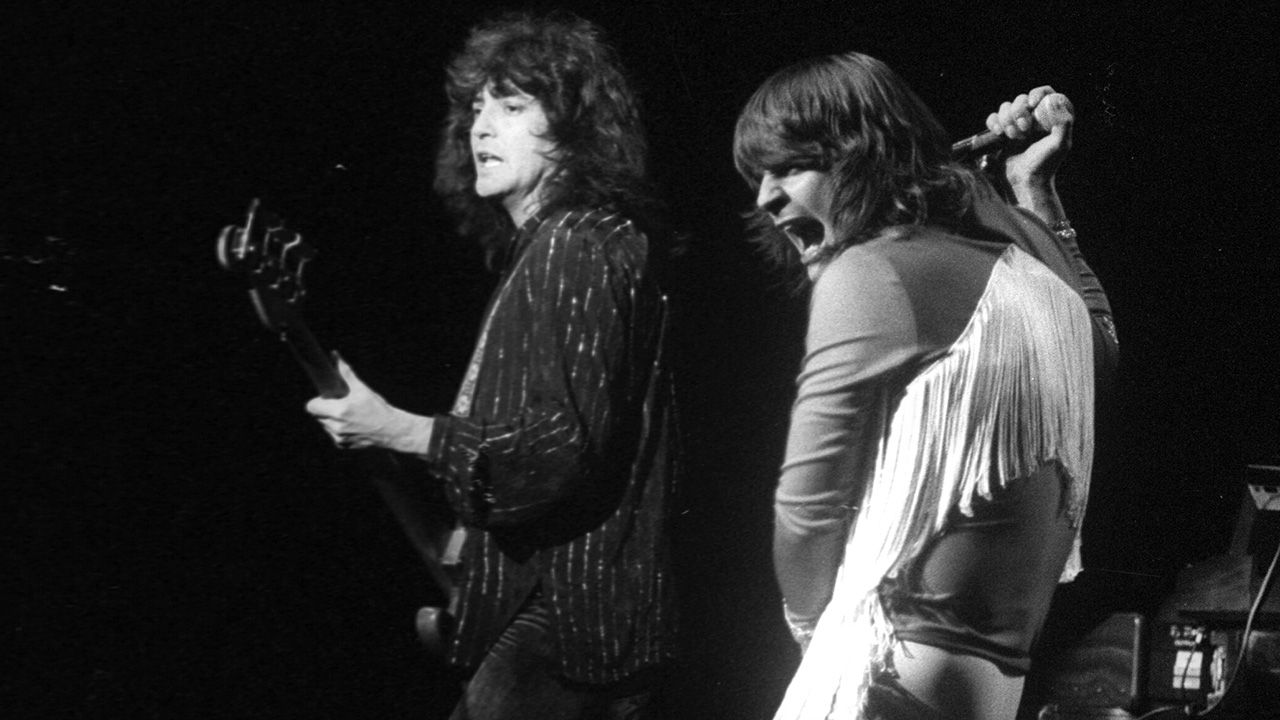
(Image credit: Watal Asanuma/Getty Images)
“When we had to record those four songs in just two days, he began drinking and smoking pot and wanting to change parts. I told him that he should have come to rehearsals and that it was too late to start changing things now.”
After that, Daisley received a call informing him he was out. A couple of weeks later, Ozzy asked him to write the lyrics for the entire album. “Because I had already invested so much into it, I agreed. I wrote the lyrics at home in the garden and took them to Ozzy in London.”
Reflections on Zakk Wylde and Future Collaborations
“Zakk was only 20 or 21 when he joined, but he was already a talented songwriter; we collaborated well together. He was a bit inexperienced at first, but he quickly matured!”
Daisley returned to play bass on No Rest for the Wicked, enjoying the process of writing lyrics and co-writing music for the album. He particularly enjoyed tracks like Miracle Man, which was inspired by Jimmy Swaggart, and Demon Alcohol. “I really liked what I did on fretless bass, especially on The Liar. John Sinclair did a fantastic job on keyboards; we always had a great time together.”
“For No Rest for the Wicked and the subsequent album, No More Tears, my rig remained consistent. I used an Ampeg SVT and an 8×10 cabinet. Nowadays,I prefer Markbass amps-they’re fantastic! The bass I used for most of No More tears was a 1955 Fender Precision,including on the title track.”
“By the time we recorded No More Tears, Zakk had really come into his own. I was brought in at the last minute to record that album, as Michael Inez had been on bass until then. I was supposed to write lyrics as well, but after we finished recording, I was let go. there were no issues-just a change of plans,I suppose.”
(Image credit: Getty Images)
During the recording of No More Tears in early 1991 at A&M Studios in Hollywood, Ozzy unexpectedly told Daisley, “You were right about Lee Kerslake,” a comment that came too late for Daisley to respond to.
“Michael Inez was a true gentleman about my involvement in the album. He would sometimes drop by the studio to watch me record, and he was always pleasant and respectful-a nice guy.”
Bob Daisley Reflects on His Impact in Ozzy Osbourne’s Musical Journey
What about Hellraiser?
The writing for No More Tears was largely completed in the studio, although the foundational elements were laid out prior to my arrival. The iconic opening bass riff originated from Michael Inez, but I restructured it by altering the placement of the “one” beat, giving it a fresh perspective.
I utilized a fretless bass for mama I’m Coming Home, which I believe was perfect for capturing the song’s emotional depth and atmosphere. The track Hellraiser always brings back fond memories of my time with John Sinclair; we would frequently enough share a laugh in the car on our way to the studio, singing the chorus in a playful french accent, ”hell razzairrr!”
assessing My Contribution to Ozzy’s Iconic Albums
When considering my role in what many regard as Ozzy’s finest albums, I firmly believe that Ozzy and I formed the core of that musical identity, regardless of which guitarist was featured. The success of The Blizzard of Ozz was a pivotal moment that set everything in motion. It felt like it was meant to be-fated, if you will-and I feel privileged to have been part of that journey. Once my collaboration with Ozzy came to an end, the essence of that music changed; it was never quite the same again.
Bob Daisley: The Wild Ride of Rock ‘n’ Roll with Ozzy Osbourne
Bob Daisley: the Wild Ride of Rock ‘n’ Roll with Ozzy Osbourne
The Early Years: A musical Foundation
Bob Daisley, born on 13th February 1950 in Sydney, Australia, is a legendary bassist and songwriter known for his pivotal role in shaping the sound of ozzy OsbourneS solo career. His journey in music began at a young age, influenced by the vibrant rock scene of the 1960s. Daisley’s early experiences laid the groundwork for his future collaborations with some of rock’s biggest names.
Joining Ozzy Osbourne: A New Era Begins
In 1980, after the dissolution of Black Sabbath, Ozzy Osbourne embarked on a solo career that would redefine heavy metal. Daisley joined Ozzy’s band, contributing not only his extraordinary bass skills but also his songwriting prowess.His first major project with Ozzy was the groundbreaking album The Blizzard of Ozz, which featured iconic tracks like “Crazy Train” and “Mr. crowley.”
Key Contributions to The Blizzard of Ozz
Songwriting: Daisley co-wrote many of the album’s lyrics, infusing them with depth and emotion.
Bass Lines: His innovative bass riffs became a defining characteristic of Ozzy’s sound.
Production Input: Daisley played a meaningful role in the album’s production, helping to craft its unique sound.
Defining Moments: Diary of a Madman
Following the success of The Blizzard of Ozz,Daisley continued to collaborate with Ozzy on the 1981 album Diary of a Madman. This album solidified their partnership and featured some of Ozzy’s most memorable tracks.
Highlights of Diary of a Madman
Track
Notable Elements
“Over the Mountain”
Powerful guitar riffs and Daisley’s driving bass lines.
“Flying High Again”
Catchy chorus and memorable lyrics co-written by Daisley.
“Believer”
Heavy themes and dynamic instrumentation.
The Golden Era: Collaborations and Innovations
Throughout the 1980s, Daisley remained a key figure in Ozzy’s band, contributing to several albums during what many consider the golden era of Ozzy Osbourne’s music. His work on albums like Bark at the Moon and No Rest for the Wicked showcased his versatility and creativity.
Innovative Techniques and Equipment
Daisley is known for his unique approach to bass playing, often utilizing fretless bass guitars to achieve a distinct sound. For exmaple,on the track Mama I’m Coming Home,he used a fretless bass to enhance the song’s emotional resonance.
Behind the Scenes: The creative Process
Bob Daisley’s creative process involved close collaboration with Ozzy and other band members. He often shared anecdotes about the fun moments in the studio, such as singing the chorus of Hellraiser in a playful French accent with keyboardist John Sinclair.
Collaborative Dynamics
Songwriting Sessions: daisley and Ozzy would often brainstorm ideas together, leading to some of the most iconic songs in rock history.
Studio Atmosphere: The camaraderie among band members contributed to a relaxed and productive recording environment.
Musical Experimentation: Daisley was not afraid to experiment with different sounds and techniques,pushing the boundaries of rock music.
Challenges and Changes: The End of an Era
Despite their successful partnership, Daisley’s relationship with Ozzy faced challenges. After the release of No More Tears, Daisley’s collaboration with Ozzy came to an end, marking a significant shift in the band’s dynamic.
Reflections on His Time with Ozzy
Daisley has often reflected on his time with Ozzy, stating that their collaboration was the nucleus of the music. He believes that the quality of Ozzy’s music declined after their partnership ended, emphasizing the importance of their creative synergy.
legacy and Impact on Rock Music
Bob Daisley’s contributions to rock music extend beyond his work with Ozzy Osbourne. He has collaborated with numerous artists and bands, leaving an indelible mark on the music industry. His innovative bass playing and songwriting have influenced countless musicians.
Notable Collaborations Beyond Ozzy
Rainbow: Worked with Ritchie Blackmore’s band, contributing to their classic sound.
uriah Heep: Collaborated with this legendary band, showcasing his versatility.
Gary Moore: Contributed to several projects with the renowned guitarist.
Practical Tips for Aspiring Musicians
For those looking to follow in Bob Daisley’s footsteps, here are some practical tips:
Experiment with Different Instruments: Don’t be afraid to try various instruments to find your unique sound.
Collaborate with Others: Work with fellow musicians to expand your creativity and learn new techniques.
stay True to Your Style: while it’s critically important to learn from others, always maintain your individuality in your music.
Join the beatbounty Community
If you’re passionate about music and want to connect with other artists, consider creating an account on the Beatbounty platform. You can submit ads, collaborate with fellow musicians, and showcase your talent to a wider audience.