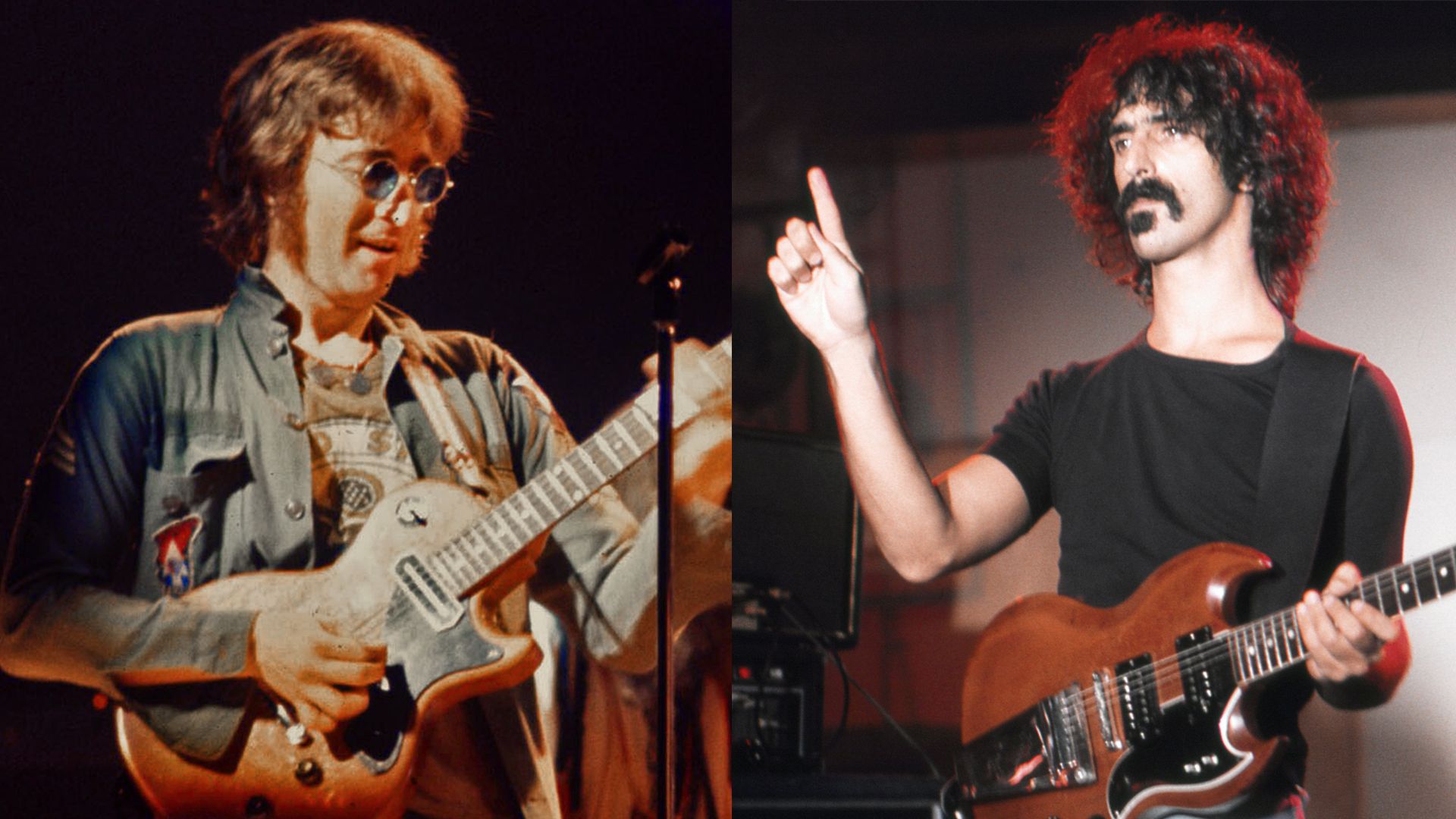
When John lennon Crossed Paths with Frank Zappa: A Tale of Artistic Tension
In the aftermath of the Beatles’ split, John lennon discovered an unexpected ally in the unconventional musician Frank Zappa.
Zappa, known for his avant-garde compositions and irreverent style, seemed an unlikely match for Lennon, who was primarily recognized as a pop songwriter. By 1971, when their paths first crossed, Lennon was preparing to unveil his poignant anthem for peace, “Imagine.”
Shared Artistic Values
Despite their differing musical styles, Lennon possessed an experimental streak, much like his wife and collaborator, yoko Ono. Beyond ZappaS unique sound, Lennon admired his bold approach to band leadership with the Mothers of Invention.
In a revealing 1970 interview with Rolling Stone, Lennon expressed his frustrations with the Beatles’ internal conflicts and his perceived misrepresentation in the media alongside Paul McCartney and George Harrison.
“I’m tired of reading that Paul is the musician and George is the philosopher. I often wonder where I fit in and what my contribution was,” he reflected.
“I’d rather be like Zappa, who boldly states, ‘listen, this is my work, and I don’t care if you like my attitude about it. I’m an artist, not a PR agent or a product of someone else’s imagination. I stand by my work, unlike before.”
A Memorable Meeting
Lennon and Zappa’s first encounter took place on June 6, 1971, in a rather unusual manner, as Zappa recounted in The Frank Zappa Interview Picture Disk released in 1984.
“A journalist knocked on my door in New York City, introducing me to John lennon, expecting me to be starstruck,” zappa recalled. ”I saeid, ‘Okay, come on in.’ He humorously remarked, ‘You’re not as ugly as I thought you would be,’ which made me invite him to jam with us at the Fillmore East.”
During a two-night engagement at the iconic New York venue, Zappa and the Mothers of Invention recorded their performances, which would later be released as Fillmore East – June 1971.
lennon and Ono joined the band for an encore on the second night, performing for half an hour. Their styles meshed well with Zappa’s eclectic approach, resulting in a memorable show.
Creative Differences and Controversy
Although zappa did not include the Lennon and Ono tracks in the original release of Fillmore East – June 1971, they later appeared on the couple’s 1972 double-album, Some Time in New York City.
This expansive album, inspired by their activism for peace and justice, divided Lennon’s fanbase. The first disc featured direct political commentary, while the second showcased their avant-garde side with recordings from a 1969 UNICEF concert and the Fillmore East performance.
However, the real controversy arose when Zappa discovered that Lennon and Ono had remixed one of the tracks from the Fillmore East show and claimed it as their own.
“I wrote a song called ‘King Kong’ that we performed that night,” Zappa explained. “I’m not sure if it was Yoko or John’s idea, but they renamed it ‘Jamrag’ and took writng and publishing credits without compensating me. It was clearly not a jam session piece; it had a melody and structure. It was a bit disheartening.”
In their remix, Lennon and Ono removed the vocals of Mothers members Mark Volman and Howard Kaylan, retaining only Ono’s distinctive wails.
“After our jam, we agreed that both of us could access the tapes,” Zappa noted. “He wanted to release his version, and I had the right to release mine, which is how that section came to be.”
Due to legal constraints, Zappa couldn’t release his version until 1992, when it appeared on Playground Psychotics, one of his final albums before his passing. This track was also included in the 2022 expanded edition of Fillmore East – June 1971.
“The first thing he said to me was, ‘You’re not as ugly as I thought you would be.’ I thought he had a pretty good sense of humor.”
– Frank Zappa
Shifting Collaborations
Despite their initial creative connection, the collaboration between Lennon and Zappa did not flourish. Lennon was eager to explore new partnerships, seeking to revitalize his career. Around this time, he approached Eric Clapton to form a band that would help him overcome his struggles with substance abuse and restore the edge in rock music.
In the years that followed, Lennon would engage in more fruitful collaborations, including his 1974 hit “Whatever Gets you Thru the Night” with Elton John, and the following year, he teamed up with David Bowie to write and record the hit “Fame” and a cover of “Across the Universe” for Bowie’s Young Americans album.