The Journey of Sam Dixon: From Hidden Gem to Studio Powerhouse
Sam Dixon, an exceptionally talented bassist, songwriter, and producer, has collaborated with renowned artists such as Noel Gallagher’s High Flying Birds, David Holmes, and Corinne Bailey Rae. In addition to his impressive session work, he has fostered a long-term songwriting collaboration with fellow Australian artist Sia Furler.
Chart-Topping Collaborations
One of their notable achievements includes co-writing and producing Christina Aguilera’s Bound to You,which garnered a nomination for Best Original Song at the 2011 Golden Globe Awards. Moreover, Dixon’s contributions to adele’s critically acclaimed album 25 earned him a Grammy Award when it won Album of the Year in 2017.
Musical Philosophy
In a conversation with Bass player back in March 2021, Dixon shared that his success as a session musician stems from his ability to set aside his musical ego. “As a bassist, it’s seldom about you. Your role is to serve the artist and the music. It’s akin to acting; you must know how to embody that character,” he explained.
From One Bass to Manny
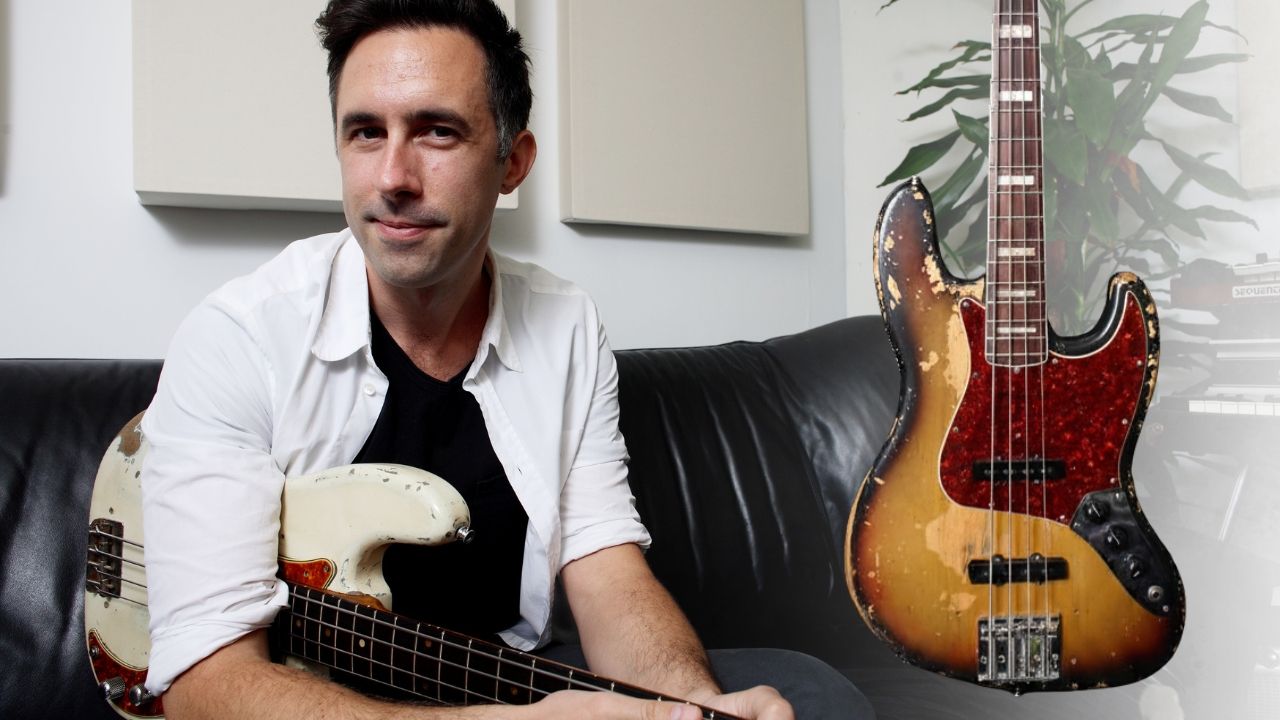
When he first arrived in London, Dixon brought only his trusty Fender Jazz Bass. Today, his collection has expanded to include a variety of vintage instruments, such as a Silvertone and a Harmony H2. “I’ve always aspired to have a range of basses to replicate the diverse sounds of the records and musicians I admire. I often say, ‘As a musician, this is your craft; you need quality instruments to excel in your work,’” he remarked.
Rediscovering a Classic
Dixon reminisced about his prized 1969 Fender Jazz Bass, which had an interesting backstory: “The previous owner was a schoolteacher, and it had been tucked away under her bed for 15 years in its case!”
Early Influences and Discoveries
Initially, Dixon started with more affordable Japanese-made basses but soon realized that his sound didn’t match the quality of other musicians he encountered in Sydney. Inspired by Bootsy Collins’ iconic sound with James Brown, he was fortunate to have a friend working at a bass guitar shop who helped him find his dream instrument in 1994.
The Versatility of the Jazz Bass
“This bass is incredibly versatile. It can mimic the sound of a Precision Bass or deliver a bright, zingy tone. It adapts beautifully to various playing styles and sounds fantastic with flatwound strings, as heard on the track Little Black Sandals,” he noted. “There’s something special about this instrument; it can produce a modern, clean sound while still retaining the character of a classic from the late ’60s.”
Jazz Bass vs. Precision Bass
Despite the Precision Bass’s legendary status, Dixon believes the Jazz Bass is the preferred choice for many recording bassists across generations. “Sometimes, I sense that the Jazz Bass is viewed as less cool than the Precision, but it’s an incredibly adaptable instrument, and it appears on more records than many realize,” he stated. “I’m convinced that McCartney used it on most of the White Album, and Joe Osborn crafted his signature sound with a Jazz Bass.”
Signature Tracks
Dixon has utilized his ’69 Jazz Bass on tracks like Sia’s Clap Your Hands and Corinne Bailey Rae’s put Your Records On.

“It’s amusing because this is the one bass I consistently return to. I may take breaks from it, and it might not always be the ideal choice for a particular track, but I inevitably find myself playing it again,” he shared.
Other Favorites in Dixon’s Collection
While the Jazz bass is a staple, Dixon acknowledges that there are occasions when only a Precision Bass will suffice. In those instances, he reaches for his pre-CBS 1960 Precision, which he describes as “well-loved but possessing that amazing played-in feel that only a well-used Fender can have.”
His collection also features a 1969 Fender Mustang, a 1967 Silvertone Dolphin Bass, and a 1964 Harmony H22. “The Harmony brand produced more guitars than Fender and Gibson combined in the ’60s, and they were designed for mass-market appeal,” he explained. “While they may feel lighter and less robust compared to Fenders or Gibsons, they offer a unique tonal quality that sets them apart.”
“I’ve used the Harmony on tracks like Ludlow Street by Suzanne Vega and Sing Me To Sleep by Fran Healy,” he added.
“The Silvertone brand was associated with Sears, which marketed instruments, amplifiers, and hi-fis from the 1930s to the early ’70s. my Silvertone, made by Danelectro, features a semi-hollow masonite body, a wood-saddled bridge, and a lipstick pickup, giving it a distinct, resonant tone. Its short scale and light strings make it a joy to play,” he concluded.