The Rise of Angine de Poitrine: Crafting a Unique Double-Neck Guitar with Godin
In the realm of Chinese astrology, 2026 marks the year of the horse. However, in the world of guitars, it signifies the emergence of Angine de Poitrine and their extraordinary double-neck guitar/bass hybrid.
The band’s recent performance on KEXP in March, promoting their sophomore album, Vol. II, whent viral, showcasing their innovative microtonal guitar as the star of the show. With over 17 million views, their popularity is soaring like a balloon released into the sky. Yet, this rapid ascent brings its own challenges.
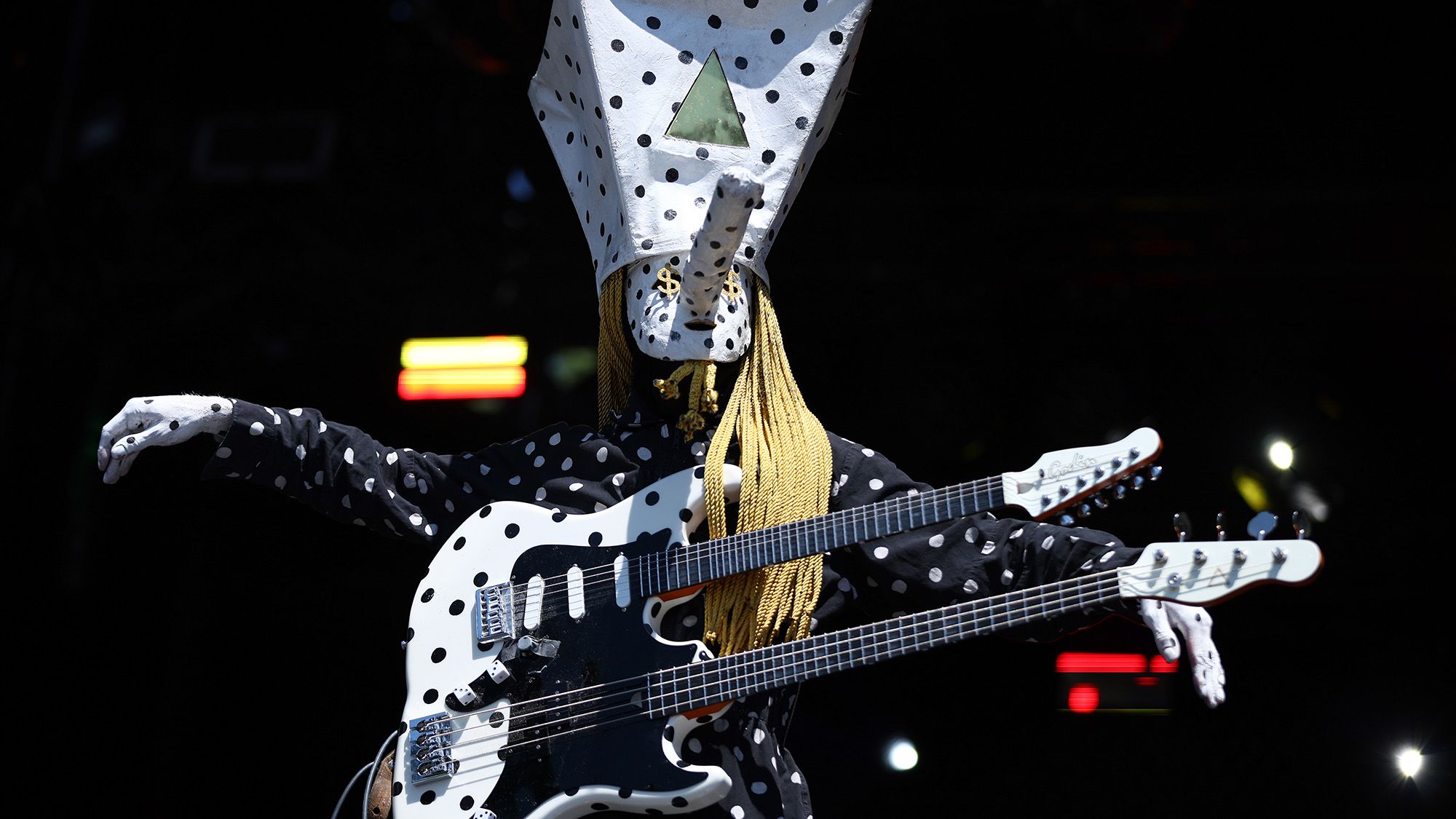
Initially, their foray into microtonal music was a playful experiment, as they humorously added extra frets to a standard guitar. This led them to collaborate with renowned French-Canadian luthier Raphaël Le Breton, who crafted the iconic polka dot double-neck guitar that has become synonymous with their sound. The band never anticipated such swift success.
As their touring schedule intensified, they realized the need for a second guitar. When Le Breton was unavailable,they found a willing partner in Godin,a Quebec-based guitar manufacturer that had already reached out to them.
“A friend introduced me to their music, so we contacted their manager to express our interest in building them a guitar,” recalls Simon Godin, CEO of Godin. “Just two weeks later, they were visiting our factory.”
The band’s visit coincided with a performance in Richmond, close to one of Godin’s five Canadian production facilities. “They were amazed by our equipment and the scale of our operations,” Godin shares. “They said, ‘We’re both from Quebec; let’s collaborate.’”
This local connection was crucial, especially since Godin has previously crafted signature guitars for notable Canadian musicians like Alex Lifeson and Michel Cusson. However, the urgency of the project was equally important.
“They requested the guitar to be completed within a month,” Godin explains. “Typically, a standard production guitar takes about eight weeks.” This was no ordinary request. “It seemed impractical, but we redirected our resources and had a dedicated team working on it.” Remarkably, they delivered in just 38 days.
This project marked Godin’s first venture into both double-neck and microtonal guitars, with specific requirements from the band.The new instrument had to be significantly lighter, considering the original design was essentially two guitars fused together, and it needed to address various playability concerns.
“Due to their busy schedule, I only had one hour with the original guitar,” Godin reveals. “We took measurements and weighed it, and that was our starting point.” The final product consisted of two guitars, each featuring distinct pickups, and was largely a product of godin’s innovative design.
To enhance visibility on the fretboard, guitarist Khn requested glow-in-the-dark markers on the back of the neck: white lines for the dotted frets and black for the others, while the microtonal frets remain unmarked.
The guitar’s body was crafted from basswood with a chambered center, significantly reducing its weight while improving upper fret access. Godin also introduced several enhancements.
“The six-in-a-row headstock design provided more attack and dynamic range due to increased string tension,” he explains. “The reverse headstock creates a triangular shape with the bass headstock. It features locking tuners, and the necks are reinforced with carbon fiber for added stability.”
The guitar retains its dual inputs, allowing Khn to split the guitar and bass signals between a Roland Jazz Chorus JC-120 and a Hartke HA2500. The inputs are now positioned side by side, ensuring that the Strat-like input for the guitar, located on the upper neck, is far from the lower neck, addressing a significant inconvenience of the original design.
The guitar boasts a 25.5″ scale length with a flat Godin bridge, while the bass features a 34″ scale length with a Hipshot bridge. Both instruments are equipped with Graph Tech nuts and Richlite fretboards, featuring 37 stainless-steel frets on the guitar and 35 on the bass.
The first 15 frets are quarter-tone, transitioning to standard half-tone frets up to the 22nd fret. Godin notes that the installation of the quarter-tone frets was straightforward, requiring “a formula that can be executed in Excel.”
In terms of electronics, the guitars are outfitted with unbranded noise-canceling pickups sourced from leading manufacturers. Godin assures,”We used only the highest quality components.”
Additionally, the guitars include several unique touches. ”They requested three of everything,” Godin confirms. “The knobs are all set to three, and even the serial numbers end with 333.”
Previously, Khn had used a sleeping bag as a makeshift guitar case, which led to complications during air travel. To remedy this, Montreal’s Boblen crafted custom cases. The guitar now enjoys its own seat on flights, with the necks removed for compactness. The case is designed to be discreet,as the band wanted to keep a low profile.
“Counterfeit products, such as vinyl and merchandise, pose a significant issue. Many are just trying to capitalize on trends. Do you want to support that with your purchases?”
Godin emphasizes, “If something were to happen to this guitar, you can’t just walk into a music store and buy a replacement.” When GW jokingly suggests their shopping list would include two guitars, extra frets, and a lot of glue, Godin laughs and adds, “It’s not that simple…”
The pressing question remains: will there be a signature model? “I get asked that daily,” he responds. “I’m in discussions with their team. It’s not a definitive yes or no. Everything has escalated rapidly, and this is the instrument they envisioned.”
“Perhaps this is why they prefer to keep it exclusive for now. If we do create a signature version, it won’t be mass-produced; it will be more of a collectible piece for display.”
“One thing is certain: we aim to develop single-neck microtonal guitars and basses for those who desire that unique sound but prefer a more manageable instrument.”
Other brands,such as Eastwood,have begun to release polka dot-themed guitars inspired by angine de Poitrine. For Godin, their collaboration with the band is a point of pride, despite the unfortunate side effects of their rising fame.
“Counterfeit items are a significant concern for them,” says Vincent Cléroux, the project manager overseeing the builds. “many counterfeiters are simply chasing trends for speedy profits. Do you want to endorse that with your spending?”
Khn first showcased the guitar in Joliette, Canada, on June 20, performing in front of 20,000 fans. Just a week later, they played to an audience of approximately 100,000 at the Montreal Jazz Festival. Godin and Cléroux were among the spectators, witnessing a historic moment with a guitar they had crafted.
“When I presented the guitar to Khn,he didn’t say much; he just kept playing it. I could tell he loved it,” Godin recalls.”Watching them perform on that stage with our guitar gave me chills. It was surreal.”
“Of course, we’re biased, but I believe our guitar sounds superior,” Cléroux adds. “We take immense pride in this achievement. It was a remarkable experience.”