Marcus Deml’s Solo Debut: A Journey Through Sound and Emotion
If you appreciate the artistry of blues-rock guitarists who masterfully wield the whammy bar, such as Jeff Beck and Michael Lee Firkins, then you’re in for a treat with Pure, the latest album from Marcus Deml, a guitarist originally from Prague and now based in Hamburg.
This album features nine tracks that showcase an remarkable array of guitar techniques and styles, seamlessly blending various influences while maintaining a distinct musical identity.
Exploring Cultural inspirations
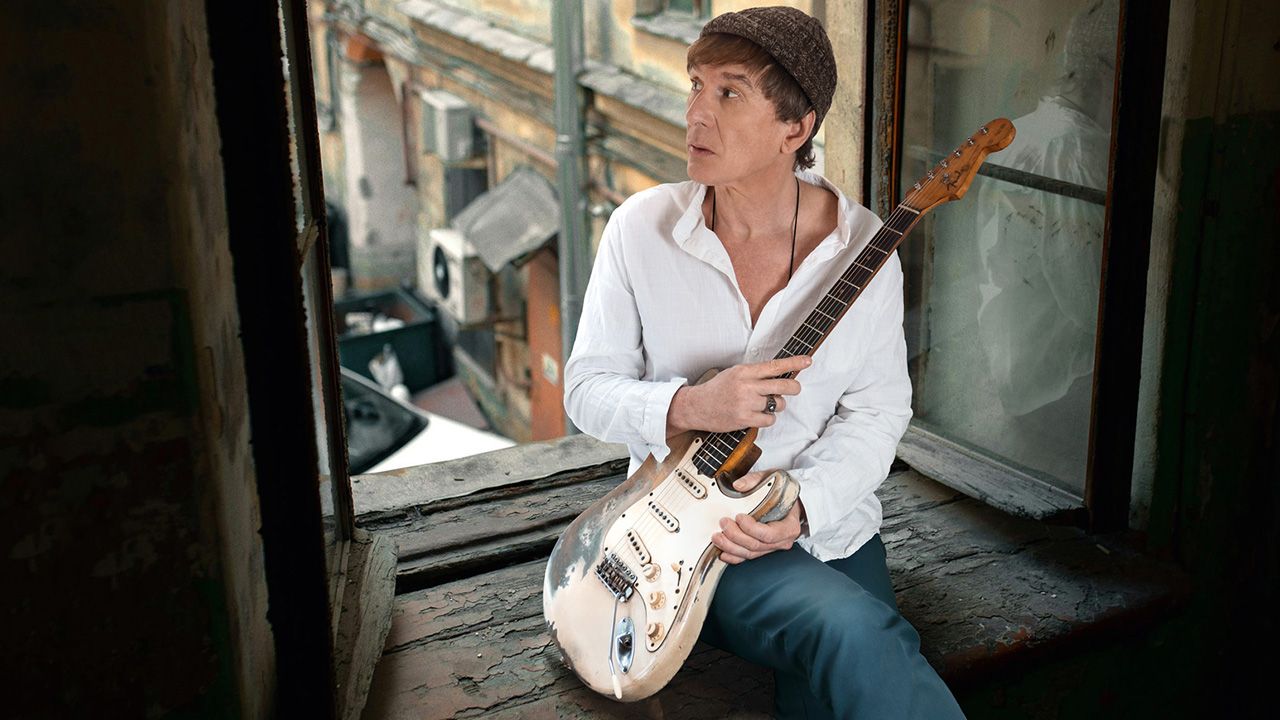
The opening track, Budapest, invites listeners to experience the vibrant essence of one of Europe’s cultural hubs, where rich traditions coexist with modern innovation. Deml’s expressive Stratocaster melodies evoke the poetic spirit of the city that inspired this piece.
In contrast, the electrifying vintage sound of Persecución channels the energy of guitar legends like Yngwie Malmsteen, Ritchie Blackmore, and Gary Moore, while Rise of the King offers a melodic quality reminiscent of Steve Vai’s more ethereal compositions. This album is poised to be one of the standout instrumental releases of 2025.
“Music should evoke emotions and transport you to another place,” Deml shares. “For instance, I aim to take listeners on a journey to the stunning city of Budapest. My favorite moment on the album is the third solo in Persecución.”
A Multifaceted Musician
It quickly becomes evident that Pure is the product of a well-rounded artist-someone who draws inspiration from diverse musical and geographical sources. “I’ve delved into the harmonic richness of composers like Satie and Debussy,” Deml explains. “I’ve studied their note choices and rhythmic placements, and also the techniques of guitarists like Larry Carlton, Allan Holdsworth, and B.B. King.”
Deml’s interest with bending notes has been a lifelong passion, influencing nearly every piece he has played, from subtle half-steps to bold fourths.
From Student to Session Musician
Deml honed his skills at the Guitar institute of Technology in Los Angeles during the peak of the shred era, alongside notable peers such as John Frusciante and Shane Theriot. Under the mentorship of guitar legends like Paul Gilbert and Scott Henderson, he immersed himself in music, dedicating 10 to 12 hours daily to practice and performance.
“I used my black vintage reissue, the guitar I learned on. It may not hold much monetary value, but it has accompanied me through countless concerts and recording sessions,” he reflects.
“I learned that achieving seemingly unattainable goals requires the right approach and relentless practice. If you can’t reach it, it’s either a matter of insufficient practice or incorrect methods. This principle still guides me today.”
Throughout his career, deml has collaborated with a wide range of artists, from Bobby Kimball of Toto to the iconic Phil Collins’ son, Simon. He has also been involved in various bands, including Errorhead and The Blue Poets.

“Being a session musician has been an invaluable education,” he states. “I’ve contributed to over 500 albums across various genres. However, I’ve come to realize that I want to create and perform my own music.Pure would not exist if I had continued solely as a session guitarist.”
The Pursuit of Perfect tone
When discussing the captivating sounds on his album, Deml emphasizes his dedication to tone, describing it as his guiding principle. “If the sound isn’t right, I’m simply not interested,” he asserts.
“I primarily play vintage Strats,” he notes, mentioning his cherished 1963 Strat and a black vintage reissue from 1987, the guitar that marked the beginning of his journey. “The amps I used were mainly non-master Marshalls, like the Super lead and Super Bass, while the clean tones came from custom amps crafted by the late Nils Thomsen.”
Along with his guitars and amps,Deml utilized his signature Angry Gorilla distortion pedal,inspired by the preamp of his Tube Thomsen signature amp,and his Sweet Elephant overdrive,which he describes as a blend of a Klon and a TS9 with enhanced gain and a unique EQ curve.
“While I considered using my ’56 Les Paul or ’66 335 for some tracks, I ultimately feel more at home with a Strat,” he admits. “My approach is instinctive. Even though I understand music theory, I focus on expressing myself rather than impressing other guitarists. Otherwise, I’d still be practicing!”