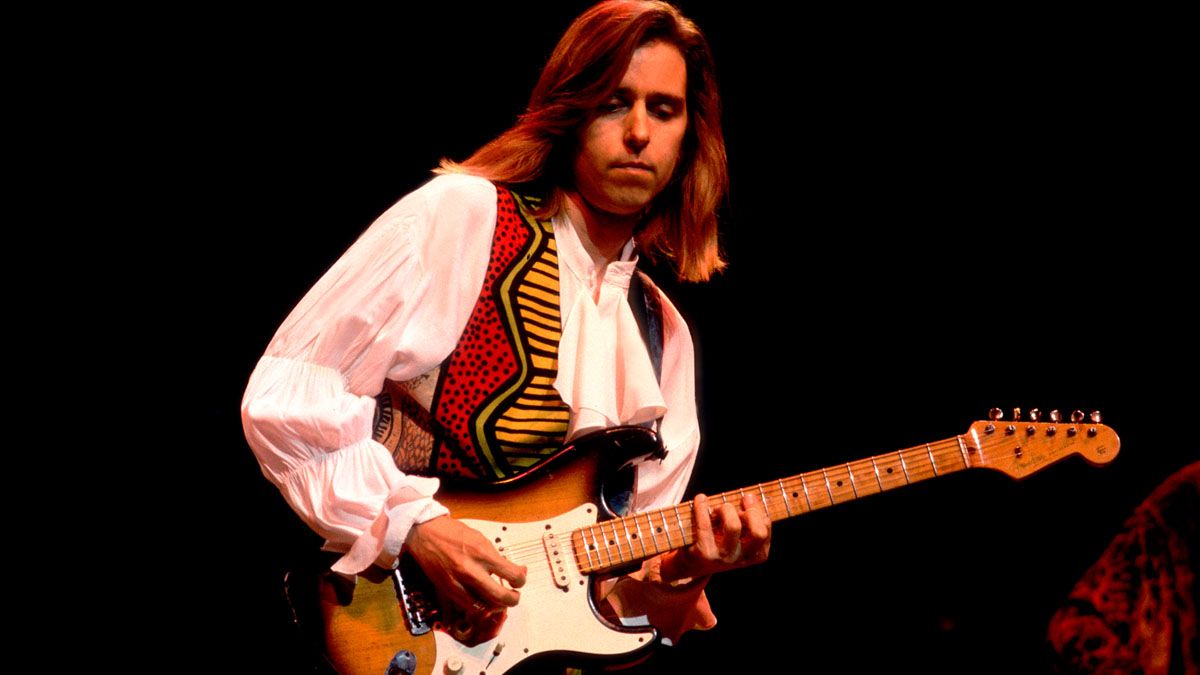
The Transformative Journey of Eric Johnson’s 1954 Stratocaster: Crafting the Sound of ‘Cliffs of Dover’
While some guitarists depend purely on their innate skills,others elevate their passion for music by customizing their instruments. This dedication to modification can lead to groundbreaking sounds and unforgettable performances.
Innovative Spirits: Eddie Van Halen and eric Johnson
Take Eddie Van Halen, for example. He was known for his relentless experimentation with guitars, creating iconic models like Bumblebee, Shark, and Frankenstein. His inventive D-Tuna system for Floyd Rose tremolos showcased his ingenuity and commitment to achieving the perfect sound.
Eric Johnson shares this innovative spirit. His modifications to a 1954 Fender Stratocaster played a crucial role in the success of his renowned track,”Cliffs of Dover.” Without these enhancements, the song might not have resonated as powerfully with audiences.
The Birth of ‘Virginia’
Early in his career, johnson swapped a Gibson guitar for a 1954 Stratocaster, which he affectionately named Virginia. This name came from a piece of masking tape he discovered in the pickup cavity, a remnant from the factory workers who often signed their creations in the 1950s. Virginia was crafted by one of the first employees hired by Leo Fender, adding a layer of history to the instrument.
This Stratocaster featured a two-piece, offset-seam body made from sassafras, a tonewood that Fender utilized in his early builds. It boasted a classic two-tone sunburst finish and a one-piece maple neck, making it a visually stunning instrument.
Modifications That Made a Difference
To enhance Virginia’s sound, Johnson replaced the original pickups with late-1950s single-coils, which provided a hotter output, especially in the bridge position. He also upgraded to a 500k volume pot, doubling the output compared to the standard factory pots.
in a nod to the trends of the ’70s and ’80s, he planed down the neck and installed larger frets. A custom wiring setup allowed him to fine-tune the tone of the bridge pickup, which was the most powerful of the three.
However, the most significant modification was to the bridge itself. Johnson was dissatisfied with the sustain and volume of his high E string, particularly when playing chords. He replaced the original string saddle with a block saddle from the 1970s,modifying it by removing metal from the midsection and substituting it with hard plastic to mellow its bright tone.
Later on, he transitioned to Graphtec saddles, which incorporate graphite, showcasing his forward-thinking approach to solving Virginia’s tonal challenges.
Perfecting the Sound
To further enhance the guitar’s performance, Johnson raised the pickup height on the treble side, which balanced the attack response across all strings and improved sustain on the higher notes.
His first two solo albums, Tones (1986) and Ah Via Musicom (1990), solidified his reputation as a masterful guitarist. The latter featured “Cliffs of Dover,” a track that exemplified the importance of addressing Virginia’s high-E string issues to elevate the overall sound.
A Timeless Classic
“Cliffs of Dover” has earned its place in music history, ranking 16th on Guitar Player’s list of the Greatest Guitar Solos of All Time, nestled between eric Clapton’s “Crossroads” and Prince’s “Purple Rain.”
Reflecting on the song’s creation,Johnson remarked,”I don’t even know if I can take credit for writing ‘Cliffs of Dover.’ It was just there for me one day.” He described the writing process as a spontaneous moment of inspiration, stating he “literally wrote it in five minutes,” viewing it as a “gift from a higher place” that anyone can access if they remain open to it.
The solo is celebrated for its “exquisitely tasteful guitar playing and jaw-dropping tones.” Johnson achieved this sound using a 100-watt Marshall Super Lead, an Echoplex delay pedal, and a BK Butler Tube Driver, all of which contributed to his signature smooth, violin-like tones and warm sustain.
The Legacy of Virginia
During the unveiling of Fender’s 2020 replica model of Virginia, Johnson expressed, “It was one of my favorite guitars I’ve ever owned. It was a real career guitar for me. I recorded with it and toured with it endlessly.” Even though the original Virginia has been retired after years of service, the replica captures its “magic and soul,” serving as a worthy successor.