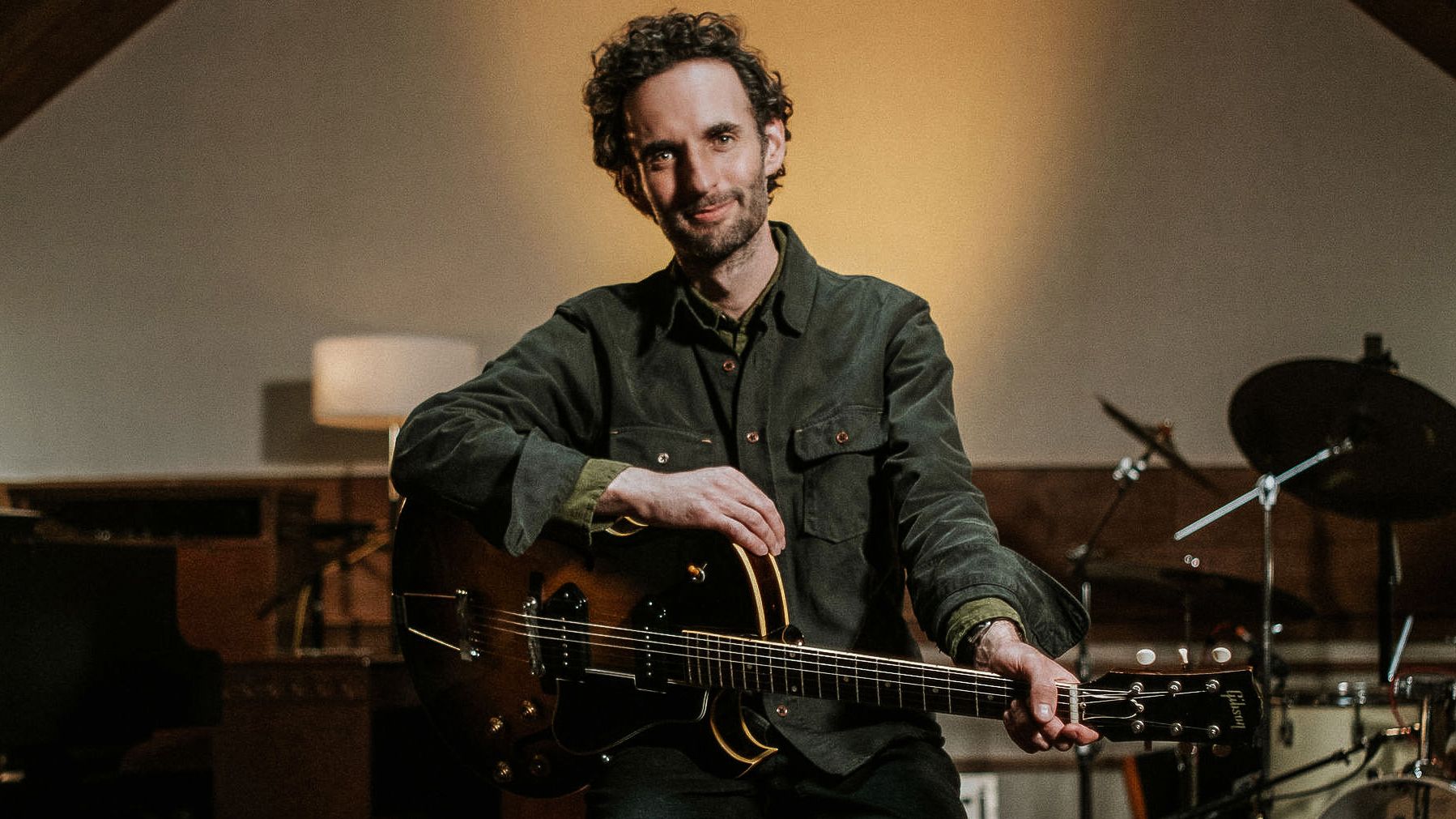
Julian Lage’s Electric Evolution: Unpacking ‘Scenes From Above’
After the acclaim of his Grammy-nominated acoustic project, Speak to Me, jazz virtuoso Julian Lage shifts gears with his upcoming Blue Note release, Scenes From Above. This time, he embraces a predominantly electric sound, collaborating once again with producer joe Henry (known for his work with Bonnie Raitt and Ramblin’ Jack Elliott). The album features the exceptional organ talents of John Medeski (of Medeski, Martin & Wood fame), alongside the seasoned rhythm section of bassist Jorge Roeder and drummer Kenny Wollesen.
A Dynamic Response to Acoustic Roots
Lage describes Scenes From Above as a direct response to his previous work, emphasizing a shift from acoustic to electric instrumentation. “This album is about creating a band dynamic that feels fluid,where each member can explore freely,” he explains. “In contrast, Speak to Me was more structured, with my trio supported by orchestral elements that came and went.”
He elaborates, ”The new album’s structure demanded a stronger presence from me, as the sound was very much about spontaneity. The organ’s rich tones through a Leslie speaker were crucial; I wanted to ensure that the energy remained high when the guitar entered. The organ’s continuous presence made the electric guitar feel like the ideal partner, while acoustic moments were used to enhance specific sections.”
Guitar Choices and Studio Challenges
Interestingly, while one might expect Lage to use his signature Collings 470 JL, he opted for a Gibson ES-225 during live performances, and recorded with a Les Paul. “I brought several guitars to the session, including a ’55 Les Paul goldtop with P90s, which I was eager to use,” he shares.”Though, I also had a few Les Pauls with humbuckers to experiment with.”
He recounts a significant challenge during recording: “the radio interference from the Empire State building nearby was so intense that single-coil pickups were unusable due to the 60-cycle hum. This issue has intensified in New York City with the rise of 5G towers. Ultimately,the only guitar that remained silent was the humbucker-equipped Les Paul,which I had to adapt to quickly.”
Finding the Right Sound
Lage faced difficulties in achieving the desired guitar tone, noting, “Initially, the sound was too compressed for my liking.I wasn’t accustomed to that level of restriction.” After experimenting with various amplifiers, he settled on a unique combination: a vintage marshall half-stack paired with a modified Bassman head, alongside an old Benson Electronics amp reminiscent of Howard Roberts’ gear.
“It was a journey. It’s very humbling when there is a vision, and you can see we’re not there yet.”
– Julian Lage
He also utilized a treble boost pedal designed by Austen Hooks, which significantly shaped the album’s sound. “This pedal is straightforward-just plug in and out-but it enhances treble frequencies dramatically, contributing to the final tone you here on the record.”
Collaborative Inspirations and New Directions
Reflecting on his collaboration with Medeski, Lage notes, ”The Meters have always influenced my music. Their groove is something I aspire to as an instrumental guitarist.” He mentions that while writing “Talking Drum,” he drew inspiration from Moroccan and North African music, aiming for a unique groove that diverged from traditional funk.
“The melody and harmonic structure fit beautifully with the rhythm, but it wasn’t a purposeful attempt to create a groove song,” he clarifies. “I wanted to explore the poetic interplay between organ and guitar, with John’s soulful playing shining through, especially in the ballads.”
Exploring New Musical Landscapes
As for the album’s lyrical ballad “Opal,” Lage explains, “I was influenced by calypso music from the ’50s and ’60s, which inspired the gentle, propulsive beats. The song’s structure is simple, allowing it to flow beautifully without the need for extensive soloing.”
Another track, “Ocala,” pays homage to folk influences, particularly those of Leo Kottke. “I wrote it while on tour with him,capturing the essence of folkloric music that balances melancholy with hope,” he shares.”It’s a tribute to leo’s unique rhythmic style, albeit in a slower, more reflective form.”
Looking Ahead: Live Performances and Future Collaborations
With the album now complete,Lage is eager to take the music on the road. ”We’ve only scratched the surface of what these songs can become in a live setting,” he states. “There’s so much room for interpretation, and I’m excited to see how the music evolves as we perform it.”
As he prepares for upcoming shows, Lage reflects on the journey of creating Scenes From Above and the collaborative spirit that has fueled his artistic growth. “This album is just the beginning, and I can’t wait to explore where it leads us next.”