Revolutionizing Sound: The Maestro PS-1 Phase Shifter's Impact on Popular Music
0 reactions
2 hours ago
Beatbounty
The Maestro PS-1 Phase Shifter: A Game-Changer in Music History
In the vibrant music scene of the late 1960s, Tom oberheim became a prominent figure among Los Angeles musicians, renowned for his innovative ring modulators. These devices found their way into the hands of various artists, from the avant-garde electronic band the United States of America to film composer Leonard Rosenman, who utilized Oberheim’s creation in the score for the 1970 film Beyond the Planet of the Apes.
By 1969,Oberheim Electronics had partnered with Gibson’s Maestro division to produce the Maestro RM-1A,a commercial version of his ring modulator. While the ring modulator had a niche appeal,notably after the U.S. government’s crackdown on LSD in 1970, Oberheim’s next invention would capture the inventiveness of musicians everywhere: the PS-1 phase Shifter, launched in 1971.
The Birth of the PS-1 Phase Shifter
Although the PS-1 was not the frist phase shifter to hit the market-preceded by the Shin-ei/Univox Uni-Vibe-it was the first to be officially labeled as a “phase shifter.” It also introduced the smooth, sweeping effect that has become synonymous with phase shifting in music today.
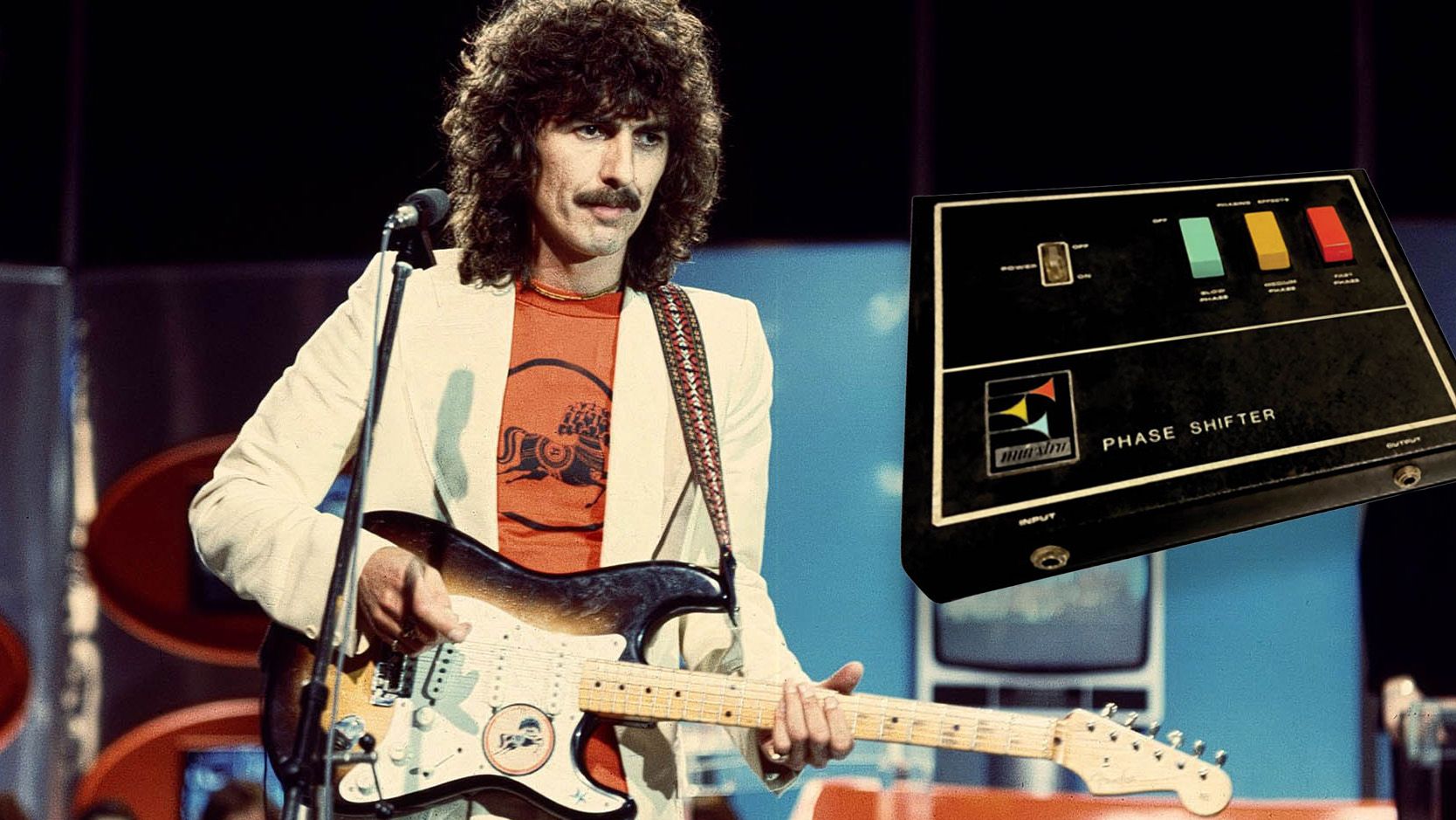
Designed as a compact alternative to the Leslie rotating speaker cabinet, the PS-1 featured a large, boxy design with three prominent rocker switches on the top panel, allowing users to select slow (blue), medium (yellow), and fast (red) sweep speeds.
Unique Features and Popularity
One of the standout features of the Maestro PS-1 was its low-frequency oscillator (LFO) speed, which gradually ramped up or down to the chosen rate, mimicking the mechanical behavior of a Leslie speaker. Although the unit lacked a bypass switch, an optional foot controller allowed for bypass and speed adjustments via footswitches.
Despite its keyboard-centric design, the PS-1 quickly became a favorite among guitarists, who were captivated by the rich, swirling textures produced by its six-stage circuit, utilizing six JFETs to create a cascading all-pass filter network.
Versions and Variants
Maestro released three iterations of the Phase Shifter: the original PS-1, the PS-1A, and the PS-1B.the PS-1A improved upon the original by addressing an issue with the input buffer amplifier that caused unwanted popping sounds. The PS-1B introduced a variable speed knob, a valuable enhancement, but due to its late introduction in Oberheim’s contract with Maestro, these units are rare and frequently enough fetch high prices in the vintage market.
Legacy and Modern Relevance
During its brief production run, an estimated 60,000 units of the Maestro PS-1 were sold to both guitarists and keyboardists. However, as smaller, more portable phase shifter pedals emerged around 1974, the bulky Maestro unit quickly fell out of favor.
“It still sounds fantastic today and is perfect for studio work.”
Even now, the PS-1 is celebrated for its unique sound quality, making it a sought-after tool for studio applications. For those who prefer a modern solution, the Heptode Virtuoso offers a contemporary take on the classic tones of the Maestro.
Influential Users
Notable early adopters of the Maestro Phase Shifter included Ernie Isley, who used it alongside an Electro-Harmonix Big Muff to create the synth-like lead sound on the Isley Brothers’ classic track That Lady. Alex Lifeson incorporated the PS-1 on the first four Rush albums, including the iconic 2112.George Harrison utilized a PS-1A on his albums Extra Texture and Thirty Three & 1/3, while Waylon Jennings featured it on several outlaw country hits in the mid-1970s. Other notable users included John Cipollina, Steve Howe, and Terry Kath.
Revolutionizing Sound: The Maestro PS-1 Phase Shifter’s Impact on Popular Music
Revolutionizing Sound: The Maestro PS-1 Phase Shifter’s Impact on Popular Music
The Birth of the Maestro PS-1 Phase Shifter
In the early 1970s, the music industry was on the brink of conversion, and one of the key players in this revolution was the maestro PS-1 Phase Shifter. Developed by Tom Oberheim, this innovative device was designed to create a unique sound that would change the way musicians approached their craft.
What is the Maestro PS-1 Phase Shifter?
The Maestro PS-1 is a phase shifter effect pedal that produces a sweeping sound effect by altering the phase of the audio signal. It was introduced in 1971 and quickly became a staple in the gear of manny musicians, especially guitarists and keyboardists.
Key Features of the Maestro PS-1
Six-Stage Circuit: The PS-1 utilizes a six-stage circuit with JFETs that create a cascading all-pass filter network, resulting in rich, swirling textures.
Variable sweep Speeds: Musicians can choose from slow, medium, and fast sweep speeds, allowing for a wide range of sound manipulation.
Foot Controller Compatibility: An optional foot controller enables musicians to switch between bypass and different speed settings hands-free.
Unique LFO Behavior: The low-frequency oscillator (LFO) ramps up or down smoothly, mimicking the mechanical function of a Leslie speaker.
Impact on Popular Music
The Maestro PS-1 Phase Shifter had a profound impact on popular music, influencing various genres and artists.Its unique sound became synonymous with the psychedelic rock movement and beyond.
Influential Artists and Their use of the PS-1
artist
Notable Tracks
Impact
Ernie Isley
That Lady
Created a synth-like lead tone using the PS-1 with a Big Muff.
Alex Lifeson
2112
Incorporated the PS-1 in the first four Rush albums.
George Harrison
Extra Texture
Used the PS-1A on multiple albums, enhancing his sound.
Waylon Jennings
Various Mid-’70s Singles
Featured the PS-1 in outlaw country music.
Benefits of Using the Maestro PS-1 Phase Shifter
The Maestro PS-1 offers several benefits that make it a valuable addition to any musician’s toolkit:
Versatility: Suitable for various genres, from rock to jazz and beyond.
Unique sound: Produces a distinctive swirling effect that can enhance any musical composition.
Creative Freedom: Allows musicians to experiment with sound in ways that customary effects cannot.
Practical Tips for Using the Maestro PS-1
To get the most out of your Maestro PS-1 Phase Shifter, consider the following tips:
Experiment with Settings: Try different sweep speeds and combinations to find your unique sound.
Layering Effects: Combine the PS-1 with other effects like reverb or delay for a richer sound.
Live Performance: Use the foot controller to switch settings seamlessly during performances.
Case Studies: The Maestro PS-1 in Action
many artists have shared their experiences with the Maestro PS-1, highlighting its versatility and unique sound. Here are a few notable examples:
Ernie Isley and the isley Brothers
Ernie Isley famously used the PS-1 to create the iconic lead sound in That lady. By pairing it with an electro-Harmonix big muff,he achieved a synth-like tone that became a defining characteristic of the track.
Rush’s Alex Lifeson
Alex Lifeson incorporated the PS-1 in the recording of 2112, using its sweeping effects to enhance the progressive rock sound that Rush is known for. The PS-1 allowed Lifeson to explore new sonic territories, contributing to the band’s innovative style.
first-Hand Experiance: Musicians Share Their Thoughts
Many musicians who have used the Maestro PS-1 Phase Shifter rave about its impact on their sound:
“The PS-1 opened up a whole new world of sound for me.It’s not just an effect; it’s a creative tool that allows you to express yourself in ways you never thought possible.” – A Professional Guitarist
The Legacy of the Maestro PS-1
Despite being discontinued, the Maestro PS-1 Phase Shifter continues to influence musicians today. Its unique sound and innovative design have left a lasting mark on the music industry.
Modern Alternatives and Replicas
for those looking for a modern take on the maestro PS-1, several companies have created pedals that replicate its sound while offering more compact designs. The Heptode Virtuoso, for example, captures the essence of the PS-1 while fitting seamlessly into contemporary pedalboards.
Join the Beatbounty Community
If you’re passionate about music and wont to connect with like-minded individuals, consider creating an account on the beatbounty platform. Share your experiences, submit ads, and engage with a community that celebrates the art of sound.