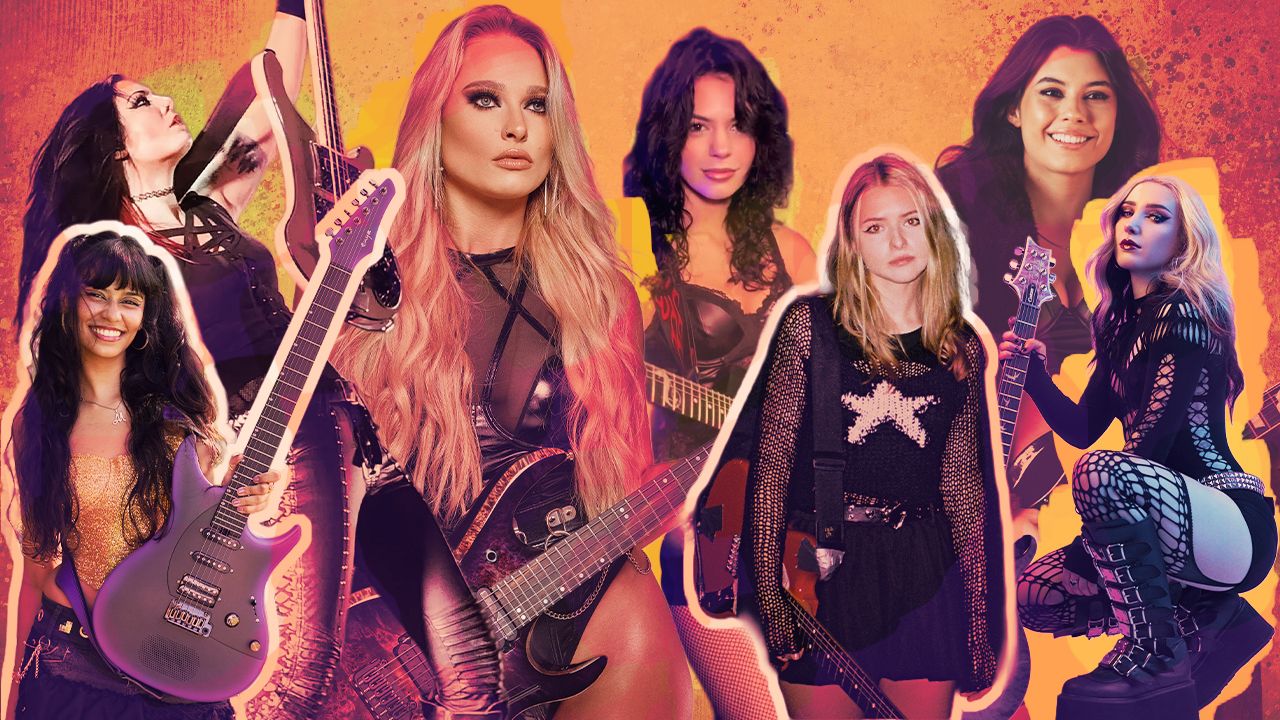
The AI Takeover: Guitarists Face Identity Theft and Scams
The emergence of generative AI has sparked a significant conversion in the music industry, leaving artists and fans alike grappling with the challenge of distinguishing between authentic performances and artificial creations.
What was once a concern over whether a musician was using a backing track has evolved into a more complex issue: Is the guitarist on your screen even a real person, or merely a product of sophisticated algorithms?
Guitarist and influencer sophie Burrell experienced this unsettling reality firsthand. “I was scrolling through tiktok when I stumbled upon a video of a ‘girl’ playing guitar,” she recalls. “It was eerily similar to my own setup-same camera angle, same room, same guitar, and even the same movements.It took me mere seconds to realize it was my video, but with an AI-generated character in my place.”
Initially amused, Burrell’s laughter quickly turned to frustration as she recognized that audiences were engaging with these AI-generated videos, undermining her hard-earned reputation and years of dedication.
“It honestly feels like a Black Mirror episode,” she reflects. “It’s remarkable that instead of honing their craft, some people would rather appropriate someone else’s work, tweak it with AI, and claim it as their own.”
Burrell expressed her anger over the unauthorized use of her content, stating, “It’s infuriating that individuals can hijack my work without my permission, replace me with AI, and repost it without giving me credit, all while profiting from it-often by promoting inappropriate products.”
Feeling powerless as social media platforms failed to respond, Burrell decided to share her experience in a viral video. Her situation turned out to be part of a larger trend, with numerous AI-generated videos targeting female guitarists and their followers.
Another prominent guitarist, Sophie Lloyd, has also faced similar challenges. With millions of views on her videos and a thriving career, she has become a target for scammers who use AI to impersonate her. “I’ve received countless emails from individuals claiming they’ve been in video calls with me for months-clearly, these are scammers utilizing AI impersonation,” she explains. “Some of these cases are truly heartbreaking, with victims losing significant sums of money.”
“The notion that our music and content can be so easily stolen is disheartening. We depend on our interactions for visibility, monetization, and opportunities. it’s our livelihood at stake, and platforms need to recognize that,” Lloyd adds.
Brazilian sensation Larissa Liveir shares similar frustrations. She has also encountered the disheartening reality of reporting these fraudulent videos, only to find that they proliferate without any repercussions for the offenders. “I felt violated when I realized that anyone could manipulate my image, even in ways that contradict my values,” she states. “They can depict me in outfits I would never wear or create sexualized poses that I would never choose.”
Liveir has witnessed alterations to her image that expose more of her body and drastically change her features, all without her consent.”TikTok often claims there’s nothing wrong with accounts using my name and photos, along with AI-generated content, leading to private conversations where people can be manipulated and scammed,” she laments.
In some instances, malicious actors have gone further, damaging the reputations of these guitarists. Tanya Yakimova, a Ukrainian guitarist with over 1.7 million Instagram followers, reports that scammers have used fake videos to gain trust with her fans, attempting to defraud them. “I’ve seen screenshots where scammers, posing as me, solicited money or requested Apple gift cards,” she reveals.
Yakimova’s team recently uncovered Telegram groups dedicated to AI-generated explicit content featuring her likeness in pornographic videos,GIFs,and images without her consent. “Some of these groups contain hundreds of pieces of content,” she explains,adding that personal details about her is being shared in these spaces,raising further concerns.
The alarming trend of AI-generated content disproportionately affects female guitarists, suggesting a troubling intersection of technology and misogyny. “The rock and metal scenes remain heavily male-dominated, and it’s evident that many of these profiles target women to attract male attention,” Burrell observes.
Becky Baldwin, bassist for Mercyful fate, has also experienced her image being misused in deepfakes and AI-generated videos aimed at defrauding fans. “Social media companies seem uninterested in protecting women,” she notes. “Female musicians draw significant attention on these platforms, frequently enough attracting a male audience.”
As the issue of AI-generated content continues to escalate,many artists are calling for social media platforms to take responsibility. “The problem isn’t the technology itself, but how we choose to use it,” says Mari Zaghete, a 19-year-old Brazilian guitarist who has also been targeted. “AI can be a fantastic tool, but it needs to be regulated and supervised.”
While some artists advocate for a complete boycott of platforms that fail to protect creators,others see potential in AI when used responsibly.”AI can enhance creativity and learning, but it must be regulated to protect original creators,” Lloyd emphasizes.
As the landscape of AI-generated content evolves, the need for robust copyright laws and protections becomes increasingly urgent. In the U.S., recent legislative efforts like the TAKE IT DOWN Act and the DEFIANCE Act aim to address non-consensual imagery and deepfakes, but critics argue that these measures fall short of comprehensive solutions.
Across the Atlantic, the European Union has enacted the Artificial Intelligence Act, yet it has faced criticism for its lack of specific rules regarding the copyrightability of AI-generated works. The struggle for artists to gain recognition and protection in this new digital age continues.
ultimately, the solution to this growing problem remains complex. Provided that AI-generated content can be monetized without consequences, the prevalence of fraudulent material will persist.”If AI-modified content were prohibited from being monetized, we would see a significant decline in this type of material,” Zaghete concludes.
Guitar World reached out to Meta for comment on their efforts to protect artists in the age of AI. A representative stated, “We want users to be aware when they encounter AI-generated posts. In 2024, we introduced a new approach to labeling AI-generated content.” TikTok did not respond to our inquiry.
- Have you encountered similar issues with AI-generated guitar videos or been a victim of scams? Reach out to the guitar World team at [email protected] to share your story.