The Rising Tide of Celebrity Guitar Auctions: What’s Fueling the Frenzy?
Imagine unzipping a worn flight case, the scent of rock history wafting through the air as you lay eyes on your idol’s guitar, and you can’t help but think, “This is mine!” For many years, acquiring a famous instrument seemed nearly unachievable. There were traditionally two routes: either you could scour the globe for vintage guitar dealers, hoping for a rare private sale, or you could resort to less-than-honest methods, like sneaking into a star’s dressing room to make off with their prized possession (a fate that befell legends like Eric Clapton’s “Beano” Les Paul and Joe Satriani’s “Pearly” Ibanez).
However, as the new millennium dawned, a third option emerged for those who were eager, ethical, and affluent enough to seek more than just a standard signature model.
The Evolution of Rock Star Guitar Auctions
“The trend of auctioning rock star guitars isn’t a recent development,” explains Amelia Walker, the head of private and iconic collections at Christie’s in London. “these instruments have been fetching remarkable prices for around 25 years. The first major auction that set the stage was Eric Clapton’s sale in 1999, where he donated proceeds to the Crossroads Foundation. His ’57 Brownie Strat fetched half a million dollars, breaking records and igniting interest in celebrity guitars.”
Walker notes that Clapton’s success paved the way for others.”Jerry Garcia’s Tiger guitar sold shortly after for nearly double that amount, at $957,500. Then, during Clapton’s second Crossroads auction in 2004, his Blackie guitar surpassed Tiger’s record, selling for nearly a million dollars. The trend of record-breaking sales has continued, especially for guitars linked to iconic musicians from the ’60s and ’70s.”
“As an example, Bob Dylan’s 1964 Sunburst Strat from Newport sold for just under a million dollars in 2013, while John Lennon’s Gibson J-160E fetched even more in 2015. The pinnacle was David Gilmour’s Black Strat, which shattered all previous records by selling for nearly four million dollars in 2019.”
Who’s Buying These Legendary Instruments?
When we see these staggering figures, it’s easy to picture a tech billionaire as the typical buyer, hoarding these iconic guitars in glass cases, flaunting them at exclusive gatherings. Equally troubling is the thought of these instruments being acquired by investors who see only their monetary value, devoid of any gratitude for their historical meaning.
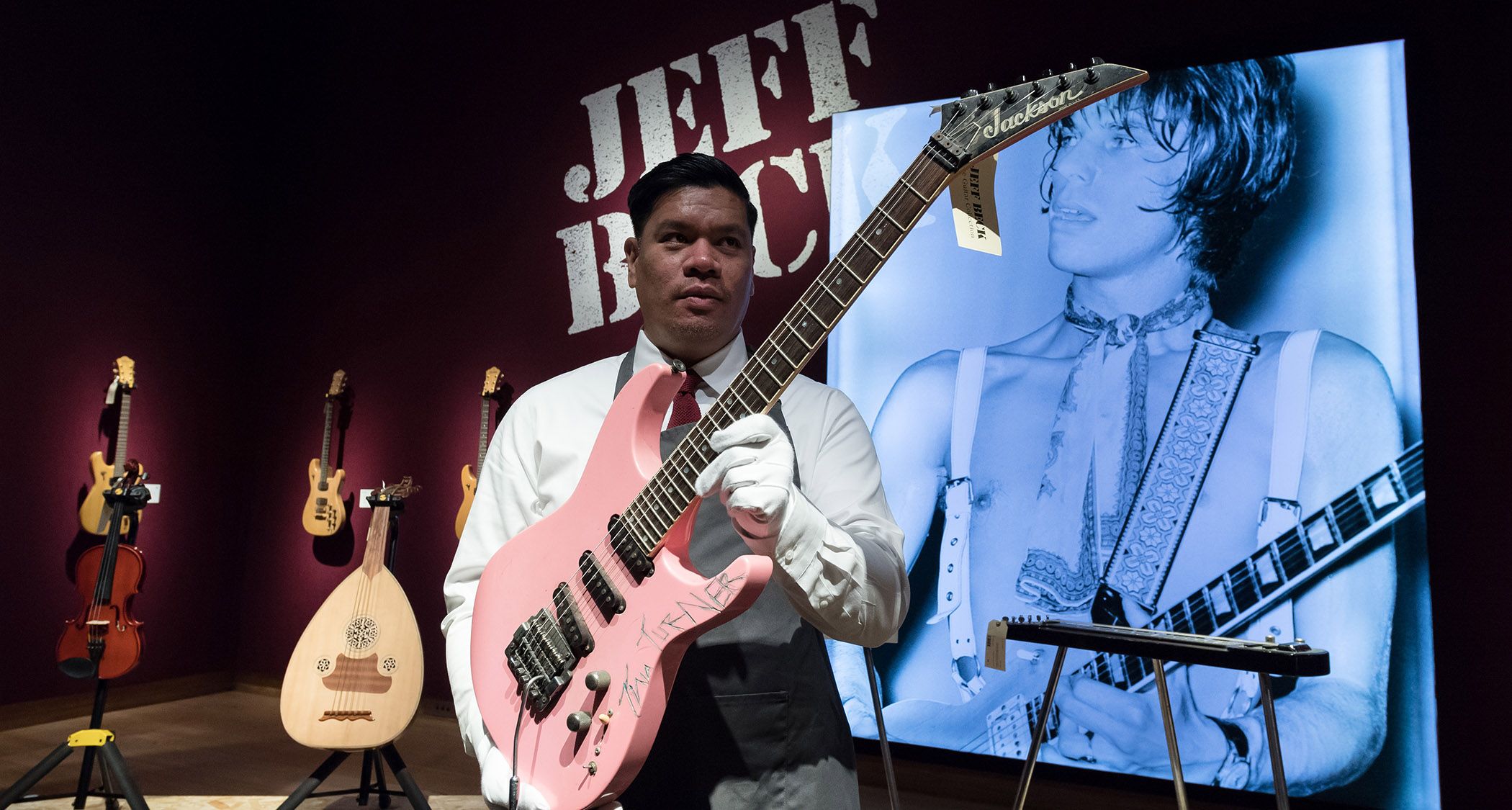
However, Walker counters this notion, sharing insights from her experiences with recent auctions, including those for Mark Knopfler and the late Jeff Beck. “What’s fascinating is the diverse backgrounds of the successful bidders and their genuine passion for music,” she reveals. “Buyers come from all walks of life-museums, high-end collectors, and musicians alike.”
“The driving force behind these purchases is the emotional connection to the music,” Walker continues. “At the Mark Knopfler auction,I witnessed people moved to tears,sharing how his music had impacted their lives. Many buyers seek a tangible link to these legendary artists, whether to play the guitars or simply to honor their legacy. Artists want their instruments to be played, not hidden away, and the charitable contributions from these sales are unparalleled.”
The Future of Guitar Auctions
Looking ahead, Walker has a wish list of iconic instruments she hopes to see at Christie’s, including Jimmy Page’s Number 1 Les Paul, Bruce Springsteen’s Telecasters, and Brian May’s Red Special. “John Lennon’s Rickenbackers and Paul McCartney’s Höfner bass, which he was recently reunited with, are also on my radar.The Beatles hold a unique place in the hearts of many, making their instruments particularly sought after.”
As the supply of legendary instruments dwindles, will the auction market for guitars also decline? Walker remains optimistic, suggesting that as time passes, instruments from more contemporary artists will begin to surface at auctions. “It’s not just about ’60s and ’70s musicians anymore. We’re starting to see interest from later generations, reflecting the demographics of today’s bidders, who aren’t solely baby boomers.”
“In the past five years, we’ve witnessed remarkable prices for guitars from later artists. Kurt cobain’s guitars, including his martin from MTV Unplugged and the Mustang from Smells Like Teen Spirit, currently hold the top auction records.Guitars from Britpop icons like Noel Gallagher have also fetched high prices, and even Taylor Swift’s signed guitar sold for a notable amount, despite not being played at a concert.”
Investing in Musical History
So, if you had a million dollars to invest, would it be wise to purchase a celebrity-owned guitar? “That’s a complex question,” Walker admits. “It really depends on the artist and the instrument. There are numerous factors to consider. But the key takeaway for anyone thinking about bidding at auction is to ensure you have a genuine connection to the item. If you don’t love it, you won’t want it in your home.”