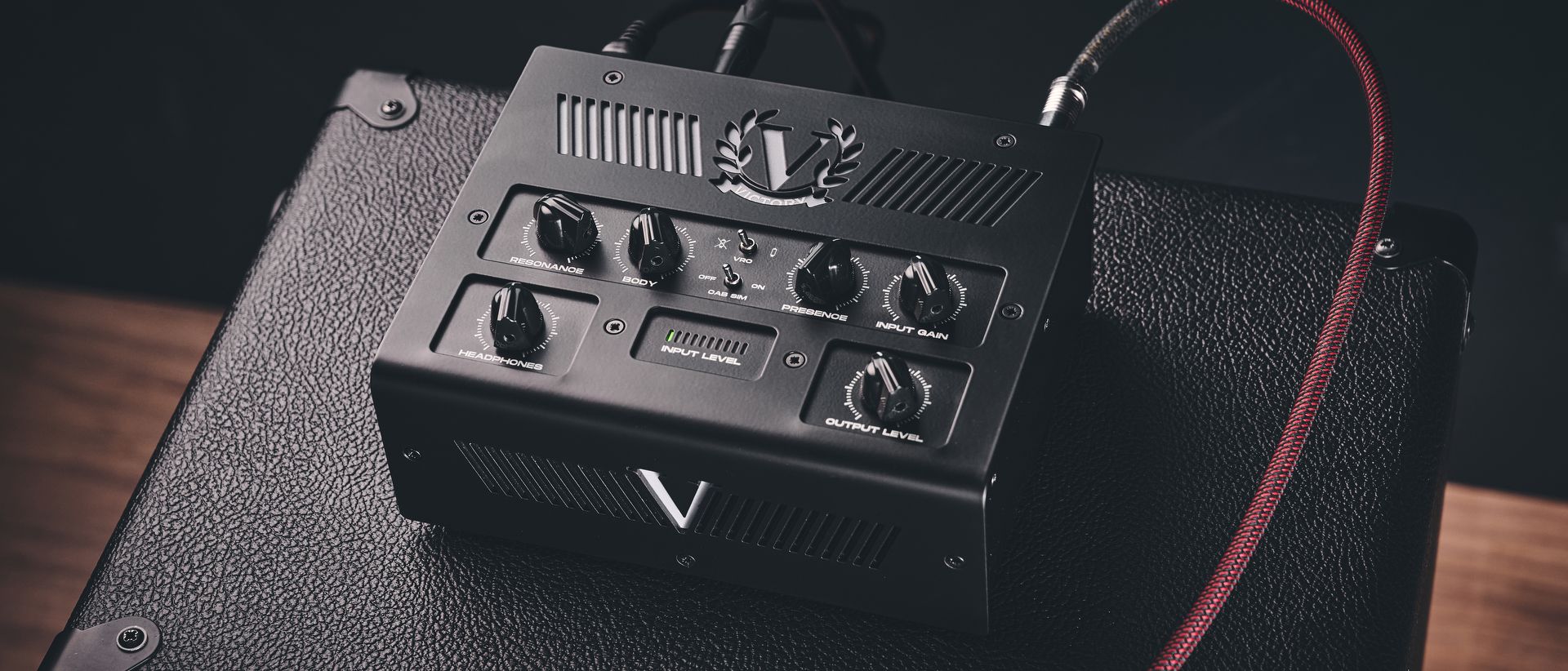
What is the PowerValve 200?
Enter Victory’s PowerValve 200, a power amplifier designed to bridge this gap. It enables the use of traditional guitar cabinets with digital setups while incorporating a genuine tube (an EF91) to infuse some of that coveted tube warmth and character. This innovation may just entice analog enthusiasts to explore the digital realm.

The PowerValve 200 is a hybrid amplifier, combining tube and solid-state technology, primarily intended to complement a digital preamp from your preferred modeler. Tho, if you’re using one of Victory’s V4 series valve-driven preamps or a device like the Tone King Imperial Preamp, this coudl be the perfect solution for routing those tones through a real cabinet.
Equipped with Resonance, Body, and presence controls for EQ adjustments, along with Input Gain, Output Level, and Headphone dials for level management, an onboard cab simulator, and a Valve React circuit (more on this later), it’s a power amp that offers a few extra features beyond the basics.
A hybrid power amplifier designed to integrate seamlessly with your digital preamp of choice.
The input/output configuration includes a balanced input, speaker output, headphone output, XLR cab sim output, and an IEC power socket.
As someone who frequently toggles between modeled tones and authentic tube amplifiers based on gig requirements,I appreciate the distinct experiences each offers in terms of sound and feel. If the PowerValve 200 delivers on its promises,it could substantially bridge that divide.
Specifications

- Launch Price: $599 | £499 | €579
- Type: Class D Power Amplifier
- Origin: United Kingdom
- output: 200W RMS at 4 Ohms, 100W RMS at 8 Ohms, 50W RMS at 16 Ohms
- Channels: 1
- Controls: Resonance, Body, Presence, Input Gain, Headphones, output Level, VRC, Cab sim
- Connectivity: Balanced input, speaker output, headphone output, XLR cab sim output
- Weight: 1.9kg
- Dimensions: 191x90x150mm / 7.5″x3.5″x5.9″
- Contact: Victory Amplification
Construction Quality

Build Quality Rating: ★★★★★
Weighing in at 1.9kg, the PowerValve 200 is robust, as one would expect from a tube-equipped power amplifier. Its metal chassis conveys a sense of industrial-grade durability, ensuring it can withstand the rigors of a busy gigging schedule.
The knobs and switches feel equally sturdy, as dose the I/O on the back of the unit. It features a Neutrik XLR output jack, a welcome addition given Neutrik’s reputation for reliability. This level of quality is what we’ve come to expect from Victory.
Visually, the amplifier sports a simple, solid black finish. Personally, I find this minimalist aesthetic appealing, as I prefer a straightforward look in a power amp. However, I did anticipate the Victory logo and grilles to illuminate when powered on, which they do not-this would have added a nice visual flair.
Functionality and Features

Functionality and Features Rating: ★★★★
The LED input meter is a especially useful feature.
One of the advantages of traditional guitar amplifiers is their straightforward usability, especially when compared to modern digital modeling amps. Given the tube-based design of the Victory PowerValve 200, I anticipated a user-pleasant experience, and I was not disappointed.
Simply connect an output from your modeler or capture device to the PowerValve 200’s input. Then,plug the clearly labeled speaker output into your cabinet using a speaker cable. It’s that simple-just remember to disable the cab sim on your modeler.
To achieve the desired volume,adjust the Input Gain control until the Input Level meter flashes red during your hardest playing,then increase the Output Level to your preferred volume. The LED input meter is particularly helpful, allowing you to find the sweet spot for tube compression.

The three EQ controls are intuitive and feature notches at the center position to indicate a flat response.
The VRC switch activates the Valve React Circuit, while the Cab Sim switch toggles the cab simulation on or off. The cab sim is routed through a separate XLR output, which is also clearly labeled, as is the headphone output.
One minor point of confusion is that the cab sim output level is adjusted using the Headphones level knob.This isn’t indicated on the front panel, so while I figured out that I needed to increase this to get volume from the sim, it wasn’t promptly clear.
there’s not much complexity to navigate, but what more could a player want from a power amplifier? Especially as the PowerValve 200 is designed to work with modelers, which frequently enough already include all the intricate routing and features one might need.

Victory’s website claims the PowerValve 200 is pedalboard-friendly, but I would argue that this might be an exaggeration.
Considering the features of the PowerValve 200, the built-in cab simulator might seem somewhat redundant, as most modelers already include this functionality and can operate independently from the unprocessed output sent to the PowerValve.
However, for devices like Universal Audio’s amp pedals that lack this routing capability, the cab sim could prove beneficial.
Victory’s promotional material claims that the PowerValve 200 is designed to fit seamlessly on a pedalboard.While I believe this may be a bit of an exaggeration, it is indeed a compact and portable unit for a power amplifier, especially one that incorporates a genuine tube. It will be intriguing to see how this segment of the market evolves as pedalboard setups continue to gain popularity.

I would gladly place this on top of my cabinet at the back of the stage.
However,pedalboards are primarily designed for pedals. With dimensions of 191x90x150mm and a weight of 1.9kg, the PowerValve 200 is significantly larger and heavier than your typical pedal, meaning most users will need to rearrange their setups to accommodate it.
Personally, I don’t view this as a drawback. Since a modeler handles the bulk of the tonal shaping, I won’t be adjusting the PowerValve frequently during performances. I would be perfectly content having it positioned on my cabinet at the back of the stage.
Sound Quality

Sound Quality Rating: ★★★★
A real cabinet provides a raw guitar sound, while the modeled version tends to have a more polished, studio-like quality.
Before diving into the sound characteristics, it’s crucial to differentiate between a physical cabinet and an impulse response (IR) or cabinet emulation. as previously mentioned,the latter requires a microphone to capture the sound,meaning it simulates a mic’d cabinet rather than the cabinet itself.
these two experiences are inherently different. Playing through a real cabinet offers a distinct sensation compared to using an emulation monitored through a full-range flat-response (FRFR) speaker.
This isn’t necessarily a matter of superiority; a real cabinet delivers a visceral guitar sound, while the emulated version can provide a more refined, studio-like finish. Your preference may vary, but this distinction is often why some players struggle with digital setups. The PowerValve 200 seeks to address this by allowing musicians to connect to a traditional guitar cabinet while benefiting from the warmth of a real tube.

Watch on
In a video overview of the PowerValve 200, Martin Kidd, Victory’s Chief Designer and expert in guitar amplification, explains that the EF91 tube was selected to provide that sought-after tube warmth without interfering with the tone that users have likely spent considerable time perfecting on their modelers.
Adjusting the input gain until the LED meter begins to flash red (as indicated in the manual) creates a plush, compressed sensation that is truly inspiring to play.
During my testing with a Fender Telecaster and a Line 6 Helix preset that I frequently use in live settings, I can confidently say that the PowerValve 200 excels in this aspect. The core of my tones remains intact, enhanced by a touch of warmth from the tube and a vibrant sound from the Zilla 1×12 cabinet I’m utilizing.
By setting the input gain to where the LED meter starts to flash red, I achieve a cushioned, compressed feel that is incredibly motivating to play. The overall volume can then be adjusted using the Output Level control.

The Valve React Circuit (VRC) switch allows users to bypass the tube in the circuit,resulting in a thinner tone. This could be useful if you find the PowerValve 200 is muddying your sound, but personally, I would prefer to maintain that tube warmth and adjust any muddiness through the EQ settings.
Thanks to the three onboard EQ controls, I can effectively shape my sound. The Resonance control adjusts the low-end thump, Presence manages the airy highs, and Body fine-tunes the midrange frequencies.

Each control offers ample range to tailor the sound to suit the cabinet or room you’re playing in. However, be cautious not to overdo it, as excessive adjustments can lead to a loss of good tone.
The final aspect to consider is the cab simulator available via a separate XLR output. While it’s not the worst cab sim I’ve encountered, it lacks some low-mid punch and tends to sound a bit fizzy. In most scenarios, you’ll likely achieve better results using the more customizable cabinet simulations found in most digital amp modelers. Therefore, if you require a direct output, it’s advisable to route it from your modeler when possible.
Final Thoughts

the powervalve 200 delivers on its promise, providing a digital preamp with the warmth and feel of a tube amplifier while allowing for the advantages of using a traditional cabinet on stage.
However, its limitations lie in features that may seem somewhat unneeded. For instance, the cab simulator, while not entirely useless, is primarily beneficial in specific scenarios where a separate emulated output is needed for the mixing desk, particularly with modelers like Universal Audio’s amp pedals that lack this routing capability. Additionally, the Valve React Circuit (VRC) switch arguably detracts from the PowerValve 200’s main selling point-the EF91 tube.

A notable consideration is the necessity of purchasing both a modeler and a power amplifier to utilize a traditional guitar cabinet. Why not simply opt for a conventional amplifier? The primary advantages of digital setups include their portability and the ability to maintain a silent stage. Introducing cabinets and FRFR speakers can compromise these benefits.
Power amplifiers are fundamentally straightforward devices, and the Victory PowerValve 200 excels in its function.
Still, the advantages of modeling gear extend beyond mere convenience.The ability to access a wide array of effects, amplifiers, and presets, all switchable at the tap of a footswitch, provides invaluable versatility for musicians needing to cover diverse sounds during a single performance.Additionally, the reliability and consistency of digital preamps are noteworthy.
If these advantages appeal to you, but you find the overly polished feel of digital rigs unappealing (which is not necessarily a drawback for many), the PowerValve 200 could be the essential analog component to enhance your amp modeling setup.
Final Verdict: Power amplifiers are inherently simple devices, and the Victory PowerValve 200 effectively fulfills its purpose. For those seeking to incorporate tube warmth, character, and the authentic sound of a real guitar cabinet into their digital setups, this amplifier is an ideal solution.
|
Test |
Results |
Score |
|---|---|---|
|
Build Quality |
Exceptional UK craftsmanship that promises durability. |
★★★★★ |
|
Usability and Features |
the powervalve 200 is user-friendly. The headphone output also controlling the cab sim output without clear labeling is the only minor drawback. |
★★★★ |
|
Sound Quality |
Provides tube warmth and character to a digital setup, along with the advantages of a real cabinet. However, the cab sim could be improved. |
★★★★ |
|
Overall Rating |
A fantastic piece of equipment that effectively bridges the gap between digital and analog setups. |
★★★★ |
Also Consider
Hands-On Video Reviews
John Nathan Cordy

Watch on
To summarize, the PowerValve 200 effectively fulfills its promise by adding tube warmth and character to digitally modeled or captured preamps, while also providing the advantages of using a real cabinet on stage.
However, its limitations are evident in certain features that may seem somewhat extraneous. As an example, the cab simulator, while not entirely ineffective, is primarily useful in specific situations where a separate emulated output is required for the mixing console, particularly with modelers like Universal Audio’s amp pedals that do not support this routing. Additionally, the Valve React Circuit (VRC) switch may detract from the PowerValve 200’s main selling point-the EF91 tube.
A key consideration is the necessity of purchasing both a modeler and a power amplifier to utilize a traditional guitar cabinet. This raises the question: why not simply choose a conventional amplifier? The primary benefits of digital setups include their portability and the ability to maintain a silent stage. Adding cabinets and FRFR speakers can compromise these advantages.
Power amplifiers are fundamentally straightforward devices, and the Victory PowerValve 200 excels in its function.
Nonetheless, the advantages of modeling gear extend beyond mere convenience. the ability to access a wide array of effects, amplifiers, and presets, all switchable at the tap of a footswitch, provides invaluable versatility for musicians needing to cover diverse sounds during a single performance. Additionally, the reliability and consistency of digital preamps are noteworthy.
If these benefits resonate with you, but you find the overly polished feel of digital rigs unappealing (which is not necessarily a drawback for many), the PowerValve 200 could be the essential analog component to enhance your amp modeling setup.
Final Verdict: Power amplifiers are inherently simple devices, and the Victory powervalve 200 effectively fulfills its purpose. For those seeking to incorporate tube warmth, character, and the authentic sound of a real guitar cabinet into their digital setups, this amplifier is an ideal solution.
|
Test |
Results |
Score |
|---|---|---|
|
Build Quality |
Exceptional UK craftsmanship that promises durability. |
★★★★★ |
|
Usability and Features |
the PowerValve 200 is user-friendly. The headphone output also controlling the cab sim output without clear labeling is the only minor drawback. |
★★★★ |
|
Sound Quality |
Provides tube warmth and character to a digital setup, along with the advantages of a real cabinet. Though, the cab sim could be improved. |
★★★★ |
|
Overall Rating |
A fantastic piece of equipment that effectively bridges the gap between digital and analog setups. |
★★★★ |
Also Consider
Hands-On Video Reviews
John Nathan Cordy
Watch On
Unleashing Sonic Brilliance: A deep Dive into the Victory PowerValve 200
Overview of the Victory PowerValve 200
the Victory PowerValve 200 is a groundbreaking power amplifier designed to enhance the sound of digital modeling rigs. By integrating a real EF91 tube, it delivers the warmth and character that many guitarists crave, while also providing the versatility to connect to customary guitar cabinets. This hybrid approach allows musicians to enjoy the best of both worlds: the convenience of digital technology and the rich tonal qualities of analog gear.
Key Features
- Tube and solid-State hybrid: Combines the warmth of a tube with the reliability of solid-state technology.
- Power Output: Delivers 200W RMS into 4 Ohms, 100W RMS into 8 Ohms, and 50W RMS into 16 Ohms.
- Cabinet Simulation: Onboard cab sim for direct outputs,ideal for recording or live performances.
- Compact Design: Weighs only 1.9kg, making it easy to transport.
- Multiple Controls: Features Resonance, Body, and Presence controls for tailored EQ adjustments.
Specifications
| Specification | Details |
|---|---|
| Launch Price | $599 | £499 | €579 |
| Type | Class D Power amplifier |
| Origin | United Kingdom |
| Weight | 1.9kg |
| dimensions | 191 x 90 x 150 mm |
Benefits of the Victory PowerValve 200
The Victory PowerValve 200 offers numerous advantages for guitarists looking to enhance their sound:
- Enhanced Tone: The EF91 tube adds a layer of warmth and depth to your sound,making it more dynamic and expressive.
- Versatility: Compatible with various digital modelers, it allows for seamless integration into any rig.
- Portability: Its lightweight design makes it easy to transport,perfect for gigging musicians.
- real Cab Experience: Connect to traditional cabinets for an authentic playing experience.
Practical Tips for Using the PowerValve 200
to get the most out of your Victory PowerValve 200, consider the following tips:
- Optimal Gain Settings: Adjust the input gain untill the LEAD meter flashes red for a compressed, cushioned feel.
- Utilize EQ Controls: Experiment with the Resonance, Body, and Presence controls to find the perfect tonal balance for your setup.
- Monitor Your Cab Sim: While the onboard cab sim is useful, consider using your modeler’s cab simulations for better results in most cases.
Firsthand Experience
Many musicians have shared their positive experiences with the PowerValve 200. for instance, a guitarist using a Fender Telecaster and a Line 6 Helix noted that the PowerValve maintained the integrity of their tones while adding a desirable warmth from the tube. The combination of the PowerValve with a Zilla 1×12 cabinet resulted in a full, lively sound that enhanced their live performances.
Case Studies
Here are a couple of case studies showcasing the versatility of the powervalve 200:
- Live Performance: A band used the PowerValve 200 in a festival setting, connecting it to their digital modelers. They reported that the tube warmth significantly improved their overall sound,making it more engaging for the audience.
- Studio Recording: A recording artist utilized the PowerValve 200 to capture rich guitar tones for their album. The ability to run through a traditional cabinet allowed them to achieve a more authentic sound compared to using only digital emulations.
Why Choose the victory PowerValve 200?
For guitarists who want to bridge the gap between digital and analog, the Victory PowerValve 200 is an excellent choice. It offers the warmth and character of a tube amplifier while maintaining the flexibility and convenience of modern digital technology. Whether you’re performing live or recording in the studio, this power amplifier can elevate your sound to new heights.
Join the Beatbounty Community
Ready to take your music journey to the next level? Create an account at Beatbounty and submit an ad to connect with other musicians and explore new opportunities!
Become a valued member of Beatbounty platform.
Start selling and connect with fellow musicians – LOGIN or REGISTER!