What is it?
For those in the amp modeling world, the Line 6 Helix needs no introduction. Released in 2015, it is indeed arguably one of the pieces of gear that made digital amplifier modeling technology a common sight in the rigs of professional guitar players. Ten years on and now with a lot more competition, Line 6 brings out the long-awaited sequel – the Line 6 Helix Stadium XL Floor.
With a lineage in amp modelling that stretches all the way back to the ‘90s, it’s hard to exaggerate the impact Line 6 has had in this area. Starting with a couple of digital combo amplifiers - the AxSys 212 and Flextone, it is perhaps the POD – originally released in 1998 – that was the biggest indicator of what was to come.
Compact, lightweight, and kidney bean-shaped, it boasted full amp and cabinet simulations and thus removed the need to carry around a hefty speaker. Just plug in a set of headphones or go straight to a mixing desk and play.
Line 6 developed the POD into the POD HD series, wich is more reminiscent of the floorboards that we now see adorning many stages. However, the release of the Helix in 2015 stepped things considerably and put the tones on a level that more professionals were happy to use.
The biggest competition at the time was the Fractal Axe FX series and Kemper Profiler. With Fractal only selling direct and Kemper’s technology being amp capture-based (Kemper calls it Profiling) rather than amp modeling, the Helix was in a good place to have a real impact.
However, fast forward ten years, and the landscape is a bit different. Not only are fractal and kemper still going strong, but consumers now have a range of options, including Neural DSP’s Quad Cortex, IK multimedia’s Tonex, and Boss’s GT-1000, just to name a few.Most of which are sporting modern features such as touch screens and wireless connectivity, which the original Helix does not have. It’s time for an update.
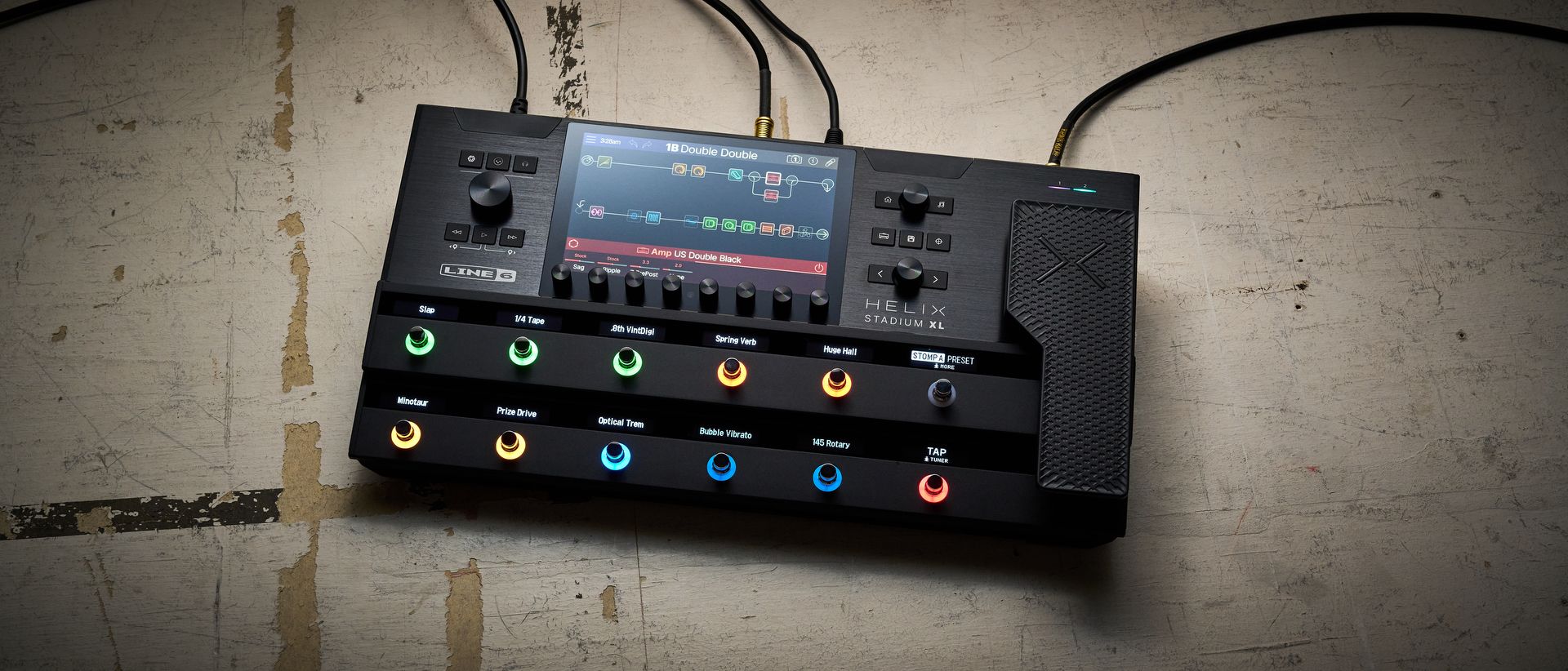
Enter the Helix Stadium XL Floor. Now with that touch screen and wireless connectivity, and also an updated user interface, improved I/O specs, more compact dimensions, and a host of other tweaks. The headline, however, is new amp modelling technology that Line 6 has named ‘Agoura’.
Before we get stuck in, there are a few things missing from the model I have in front of me at the time of writing.Most notably ‘Proxy’, which is to be Line 6’s amp capture tech, and ‘Showcase’, which is designed to allow the user to control many parts of a live show, such as backing tracks. These were both announced earlier in 2025 but are not ready for Stadium’s initial release, meaning we will be eagerly awaiting an update to check these things out.
Update: phase 1 of Showcase is now part of software version 1.2
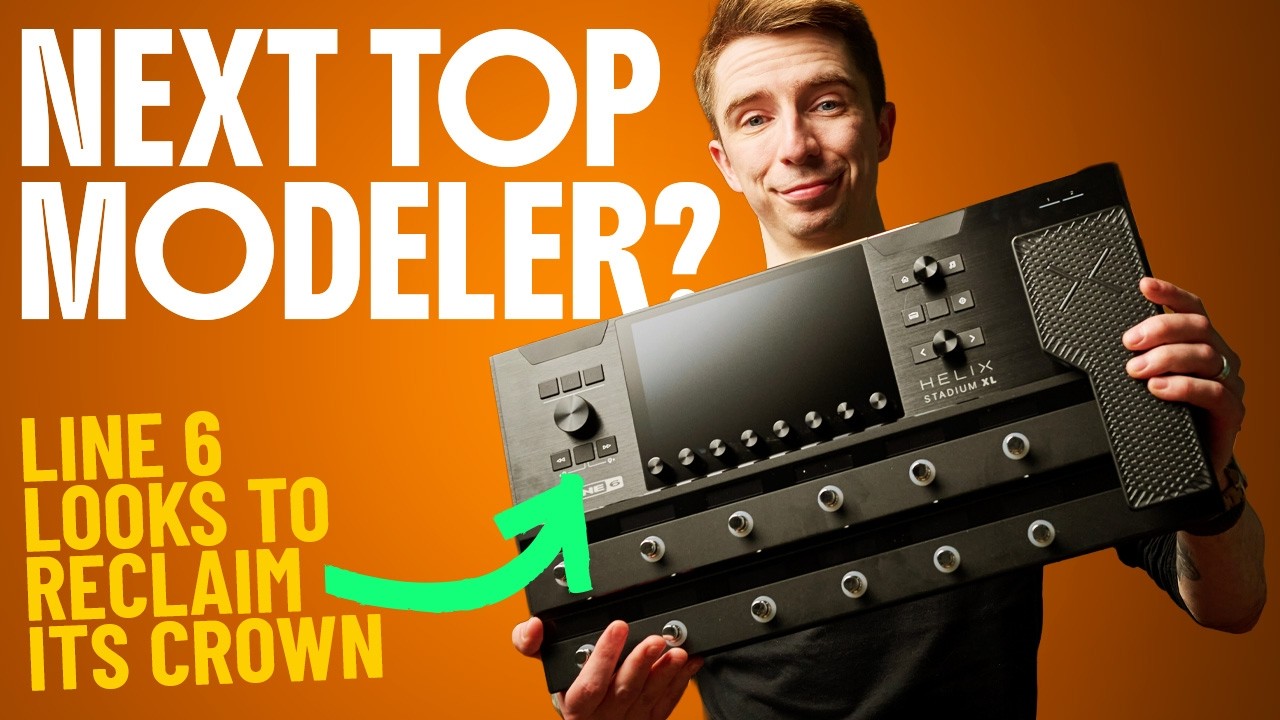
Guitar World video demo
Watch On
Specs

- Launch price: $2199 | €2299 | £1980
- Type: amp modeler and multi-effects
- Features: 8” high resolution touchscreen, scribble strips, capacitance sensing footswitches, Agoura amp models
- Connectivity: Bluetooth, WiFi, MIDI
- I/O: Two ” control outputs, two ” instrument inputs, XLR input, four effects loops (or two stereo effects loops), stereo XLR output, stereo ” output, ” headphone output, Nexus link, S/PDIF in and out, Micro SD slot, MIDI in and out, USB C, USB A
- Power: IEC
- Dimensions: 19.4”x10.1”x3.6”/493x257x92mm
- Weight: 11.5lbs/5.25kg
- Contact: Line 6
Build quality

Build quality rating: ★★★★★
It’s the Helix Floor that I’ve spent the most years using on stages in too many different venues to count
Having gigged the Helix LT and HX Stomp (and being a regular user of Helix Native), it’s the Helix Floor that I’ve spent the most years using on stages in too many different venues to count. From fancy theatre shows to wedding venues with hasty load-ins and the odd rowdy pub, it has seen its fair share of action. In a testament to its build, it has done so without a blink. My first impression of the Stadium is that it is indeed cut from the same cloth.
It has a similar tank-like brushed aluminium chassis, along with footswitches that boast a reassuring clunk and also knobs and buttons that turn and click with a resistance that inspires confidence in their longevity.
On the right of the board sits the expression pedal, with a textured finish that differs from the original, but it still feels equally as sturdy underfoot due to its chunky aluminium construction. An allen key is provided to adjust the resistance of the pedal,which is a nice touch.
The star of the show is the eight-inch touch screen, which is bright enough that I have no worries about it getting lost under stage lights. Each model/effect on the Stadium XL Floor has a picture with it too, and the screen is of a high enough resolution that all these images sport an remarkable level of detail.

The Scribble Strips have been improved as the text is now set in a high-contrast, OLED design. Meaning it is much easier to read against a black background compared to the original Helix’s blue-ish hue.
Around the back is an impressive array of I/O featuring two ” control outputs,two ” instrument inputs,an XLR input,four effects loops (or two stereo effects loops),stereo XLR output,stereo ” output,” headphone output,Nexus Link,S/PDIF in and out,Micro SD slot,MIDI in
The Helix Stadium XL Floor is equipped with a comprehensive array of I/O options,including USB C and USB A ports,ensuring that it meets all your connectivity needs.
One of the standout features is the Nexus Link, which allows for future expansion through additional modules that will be sold separately. The first of these, the Expand D10, will enable users of Line 6 Powercab and Variax to connect seamlessly to the Stadium XL Floor, ensuring that these users are not left behind in the evolution of this technology.
Similar to its predecessor, the original Helix, the Stadium XL Floor features an internal power supply, which means it operates using a robust and widely available IEC cable, setting it apart from some competing models.

Measuring 19.4″x10.1″x3.6″, the Stadium XL Floor is a substantial unit. While it is indeed smaller than its predecessor, which measured 22.05″x11.85″x3.58″,it is indeed still larger than competitors like the Quad Cortex (11.4″ x 7.5″ x 1.9″) and the Fender Tone Master Pro (14.6″x10.3″x 3.8″). However, the added size is justified by the inclusion of an expression pedal.
During one of my initial power-ups, the unit did crash, but a simple restart resolved the issue, and it has not happened again as.
Usability Overview

usability Rating: ★★★★★
anyone familiar with the Helix will feel right at home with the Stadium XL Floor.
Users of the Helix will find the Stadium XL Floor intuitive and familiar. It employs a block-based signal chain that distributes processing power across two paths, with the option to further split each path into two.
Tracking the signal flow through the various blocks is straightforward due to its left-to-right layout and connecting lines. The icons have been significantly enhanced to represent subcategories within each effect type, making it easier to understand the preset’s configuration.
As with the original model, routing between blocks is highly flexible, allowing for easy insertion of splits at any point. The capacitance-sensing footswitches have also been retained, enabling users to quickly select the block they wish to adjust by simply touching the corresponding footswitch.
Once a block is selected, the parameters appear at the bottom of the screen, aligning perfectly with the mini encoders below, creating a tactile experience akin to adjusting knobs on a conventional guitar pedal.

The Stadium XL Floor features eight mini encoders-two more than the original Helix. The footswitch flexibility remains, allowing users to choose whether they control Presets, Snapshots (which enable simultaneous changes to multiple parameters), or a combination of both, as well as Stomp Mode for toggling individual effects. the Stadium feels like an enhanced version of the original Helix.
The 8″ touchscreen is not only larger than the original Helix’s 6.2″ display but also surpasses the 7″ screens of competitors like the Neural DSP Quad Cortex and Fender Tone Master Pro.
A important upgrade is the introduction of a highly responsive touchscreen. Users can now drag and drop blocks and navigate menus using intuitive icons, reducing the need for excessive button presses and enhancing the overall user experience, making the stadium XL Floor feel much more contemporary.
This 8″ display allows for more facts to be presented on a single page, streamlining the process of creating and editing presets.
Additionally, the new Focus view feature enables users to adjust settings on individual models by dragging a cursor across five designated zones, rather than tweaking parameters one at a time. These zones are labeled with terms like Clean, Rock Rhythm, and Lead, and as the cursor moves between them, the parameters adjust to reflect the tone associated with each zone.

these parameters adjust in real-time, providing users with insight into how the sound is crafted and allowing for rapid transitions between vastly different tones across various amp or effect models.
Given the complexity of navigating through a multi-effects and amp modeling unit, Line 6 has introduced a Search tool that enables users to quickly find effects, amps, and presets using text queries, streamlining the process significantly.
Additionally, the new Clips function allows users to play pre-recorded audio through a preset, enabling them to hear how it sounds while browsing through options. This feature is a significant time-saver when searching for the perfect sound.

The addition of built-in WiFi and Bluetooth capabilities allows for direct updates via WiFi, eliminating the need to connect to a PC or Mac. Bluetooth connectivity enables users to connect devices for audio playback, such as jam tracks or other practice materials.
Using the Helix Stadium XL Floor is a seamless experience.
A desktop application is also available, mirroring the previous Helix software. This application allows users to edit and manage their presets, and also import third-party presets and impulse responses. However, the hardware interface is so user-kind, especially with the large touchscreen, that most editing will likely be done directly on the unit rather than through the app. the Helix Stadium XL Floor offers a smooth and enjoyable user experience.
Sound Quality

Sound Quality Rating: ★★★★☆
According to Line 6, the inputs on the Stadium XL Floor have been enhanced, with one of the key improvements being increased headroom. To test this, I connected my Helix Floor and set up my favourite model-the Grammatico GSG with a 1×12 Open Cast cab-alongside the same model on the Stadium XL Floor to see if the upgraded hardware made a noticeable difference.
These differences are subtle, yet significant. Once you’ve experienced them, it’s hard to revert.
The answer is a resounding yes.
The dynamics of playing are more accurately represented, allowing for a deeper connection to the sound. Notes within complex chords resonate with improved clarity, and the volume control cleanup is more convincing, as harmonics and overtones are better preserved when the control is turned down.
These differences are subtle, yet significant.Once you’ve experienced them, it’s hard to revert.
The same can be said for the Agoura amps, which utilize a new approach to amp modeling that Line 6 refers to as ”Sub Component Behavior Modeling.” This method enhances power stage and tube emulation, accurately reflecting interactions between components within a modeled circuit, and improving dialog between cab and Amp blocks to replicate real-world effects more effectively.

It responds exceptionally well to the dynamics of my playing.
This all culminates in a modeling experience that transcends a mere upgrade from previous HX models-it’s an entirely new approach.
Starting with the Essex TB30CC (a nod to the VOX AC30),the signature Vox midrange chime is faithfully reproduced,along with the bright high end that many players might want to tame a bit,just like the original.
The Helix Stadium XL Floor showcases enhanced accuracy compared to its predecessors. when I adjust the volume control, it cleans up beautifully, preserving the rich tonal qualities that initially attracted me to the amp model.
The improved dynamics are evident across all 16 Agoura guitar amp models. In addition to eight bass models, this brings the total to 24 at the time of writing. While this may seem limited, these models encompass a wide range of sounds, from the thick, luscious distortion of the Panama (Peavey 5150) models to classic rock tones with the Brit Plexi and Brit 2203 (Marshall Plexi and JCM800), as well as the scooped cleans typical of Fender amps. Essentially,all the essential tonal categories are well represented.

Modeling has consistently improved throughout the Helix’s evolution,making newer additions like the Brit 2203 (JCM800) much closer in quality to the latest Agoura models.
Some models require a bit of tweaking to achieve the desired sound. For instance, I often spend considerable time adjusting the cabinet settings on the higher-gain Marshall tones, as they initially sound somewhat thin compared to a UAFX Super Lead ’68 Lion that I currently have on loan.
Fortunately,the inclusion of legacy models in the Helix Stadium XL Floor allows for direct comparisons between the Agoura models and their HX predecessors on the same device. Some models show significant improvements, such as the previously mentioned AC30, while others, like the Marshall 2203 models, maintain a similar core tone.
This can be attributed to Line 6’s dedication to ongoing enhancements and updates. The quality of modeling has steadily progressed throughout the Helix’s lifespan, so newer additions like the Brit 2203 (JCM800) are now much closer to the quality of the latest Agoura models. Even in this case, the dynamic response to my playing is noticeably enhanced in the Agoura models, making them a step above.
These updates present an exciting chance. I encountered no DSP issues while creating sensible presets with the Stadium XL Floor, even when utilizing demanding effects like the Polycapo. The capacity here is impressive, and if Line 6 continues to deliver meaningful updates, the potential for tonal exploration is vast.

One feature that legacy amps lack is the hype control. This control shifts the model slightly away from an exact replica of the original, creating what Line 6 considers an idealized version. This is particularly transformative for the marshall amps.
It enhances the mid frequencies, giving them a fuller presence while taming the high end that I frequently enough found myself reducing. The result is still distinctly Marshall, but in a way that is more forgiving to play.
I also appreciated the vibrancy that Hype added to the Princess 76 model; though, on the Double Black (Fender Twin), it resulted in a more generic midrange that lost the appealing scooped character present when the Hype control is off. Therefore, it’s essential to evaluate this feature on a case-by-case basis and adjust according to personal preference.
Regarding effects,all have been carried over from the previous Helix model.I have previously noted that the drive effects felt somewhat lacking compared to the overall success of the unit, and this sentiment carries over to the stadium XL Floor.

For instance,the Screamer 808 delivers a satisfying mid-humped gain sound and effectively pushes driven amps into tight saturation,but it lacks the compressed feel of an authentic Tube Screamer pedal.
Simultaneously occurring,the Arbitrator Fuzz seems to have benefited from the input enhancements,feeling fuller and more rewarding on the Stadium XL Floor compared to the Helix Floor,though it still lacks the EQ adjustments typical of a Fuzz Face when the Level control is increased.
On the other hand, the delays, reverbs, and modulation effects have all been successfully retained from the previous Helix model. Line 6 had perfected these effects in the original Helix, so there’s no need to alter a winning formula.
Some of my personal favorites include the Hot Springs reverb, which captures that classic spring reverb sound with all the desired drip. the Transient Delay, a Line 6 original, emulates an analog delay’s tendency to darken on repeats while remaining unobtrusive in the mix. Additionally, the Plastichorus, another line 6 creation, adds a delightful wobble to the sound without interfering with your pick attack or burying your guitar in the mix.

The harmony effects tend to sound a bit thin, with the exception of the Pitch Wham.
There’s a lot of creative potential with the pitch and synth models, offering everything from smooth, ethereal sounds to gritty, aggressive tones. However, the tracking on some synth models can be inconsistent, so it’s advisable to blend in some dry signal when using them.
The harmony effects generally sound a bit thin, except for the Pitch Wham, which is modeled after the DigiTech Whammy pedal and retains the full richness of your guitar tone. The Polycapo is useful for unexpected key changes, but it can introduce subtle warbling artifacts on chords, even when set to unison. While still usable, I would reserve it for emergencies or lead lines.
While I’m highlighting some drawbacks, I’ve noticed an audible pop when switching between certain amp and cab models. For instance,in one preset,I have a high-gain Brit 2203 activated in one Snapshot and a clean Double Black in another. transitioning from the 2203 to the Double Black triggers this pop, though it doesn’t occur in the opposite direction.
I experienced similar issues with the previous Helix model. On both units, I mitigate this by briefly muting my strings during Snapshot changes. This workaround is not as intrusive or challenging as it may sound, but it’s still an issue that shouldn’t be present in a device priced in the four-figure range.
Live Performance

I particularly appreciated the full QWERTY keyboard for renaming Snapshots.
The best way to evaluate this gear is to put it to the test in a live setting, so I took the Stadium XL Floor to an ’80s-themed event I was performing at. This required a complex preset that utilized two Agoura models-the Double Black (Fender twin Reverb) and Brit Plexi (Marshall 1959 Super Lead)-along with eight Snapshots.
This setup covered a wide range of sounds, from bright cleans to saturated, synth-like leads. The large screen proved invaluable, making it quick and easy to set up sounds, and I especially appreciated the full QWERTY keyboard for renaming Snapshots.
While performing, the Scribble strips and LEDs made it easy to identify the unit’s status during the brief moments I glanced down.

Tonally, the setup was well-balanced from the start, with a nice scooped clean from the Double Black and plenty of rich gain from the 2203. I had the advantage of using in-ear monitors with a band I know well and a trusted sound engineer, allowing me to dial in the tones beforehand without needing to make adjustments during the performance.
However, if I needed to make changes, everything was easily accessible on the large touchscreen and the eight mini encoders located just below it. Coupled with a built-in expression pedal,I can confidently say that,in my experience,the Helix Stadium XL Floor is the most user-friendly modeler for live performances.
Final Thoughts

The delays, reverbs, and modulations sound as fantastic as ever.
…
the Helix Stadium XL Floor comes with a price tag of just under $2200/£2000,making it pricier than competitors like the Quad Cortex and Fender Tone Master Pro. However, with its larger touchscreen, built-in expression pedal, and upcoming features such as Showcase, it offers more functionality, which I believe justifies the additional cost.
This price point also demands remarkable sound quality, and fortunately, the Helix Stadium XL Floor delivers impressive tones. The new agoura amp models feel vibrant and responsive, while the delays, reverbs, and modulation effects maintain their high standard.
While I believe the Pitch and Synth effects could use some refinement, there is ample DSP available for enhancements. Given Line 6’s track record of providing consistent and meaningful updates, I am eager to see how they will evolve the Stadium platform.
Guitar World Verdict: Line 6 faced a significant challenge in following up the original Helix, which garnered a loyal fanbase.The sequel had a high bar to meet. With lively new amp models, enhanced processing capabilities, a large touchscreen, and a variety of features that modernize the Helix Stadium XL Floor, it not only surpasses its predecessor but also stands out as one of the most user-friendly devices available for working guitarists.
|
Test |
Results |
Score |
|---|---|---|
|
Build Quality |
Robust aluminum construction that feels durable and ready for any challenge. |
★★★★★ |
|
usability |
Usability was a strong point of the original Helix, and the Stadium XL Floor enhances this even further. |
★★★★★ |
|
Sound Quality |
Enhanced amp modeling with excellent delays, reverbs, and modulations; some work needed on pitch and synth effects. |
★★★★ |
|
Overall |
A fantastic-sounding unit and an excellent choice for any performing guitarist. |
★★★★ |
Also Consider
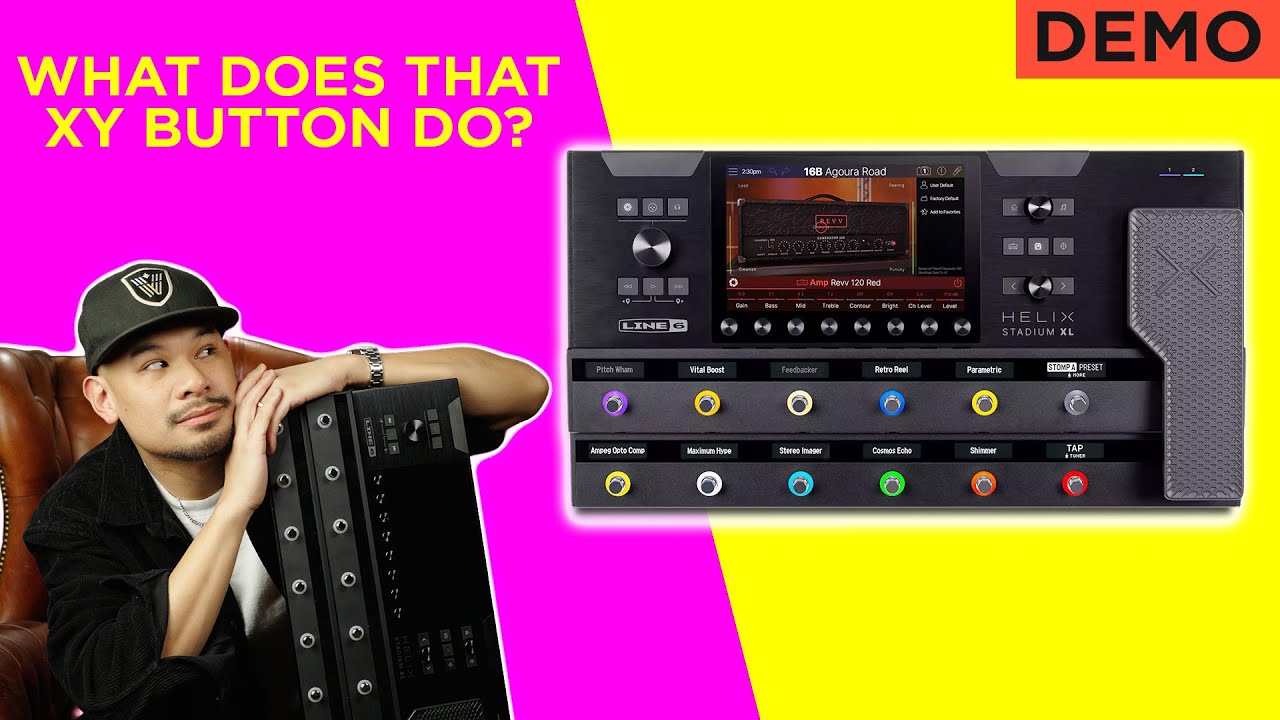
Hands-On Videos
Jay Leonard
Watch On
The Helix Stadium XL Floor is priced at just under $2200/£2000, making it pricier than alternatives like the Quad Cortex and Fender Tone Master Pro. However, with its larger touchscreen, integrated expression pedal, and upcoming features such as Showcase, it offers enhanced functionality that justifies the higher cost in my opinion.
This price point also necessitates exceptional sound quality, and fortunately, the Helix Stadium XL Floor excels in this area. The new Agoura amp models feel dynamic and responsive, while the delays, reverbs, and modulation effects continue to impress.
even though I believe the Pitch and Synth effects could benefit from further refinement, there is ample DSP available for future enhancements. given Line 6’s history of delivering consistent and meaningful updates, I am eager to see how they will develop the Stadium platform.
Guitar World verdict: line 6 faced a significant challenge in following up the original helix, which developed a dedicated fanbase. The sequel had high expectations to meet. With lively new amp models, increased processing power, a large touchscreen, and a variety of features that modernize the Helix Stadium XL Floor, it not only surpasses its predecessor but also stands out as one of the most user-friendly devices available for working guitarists.
|
Test |
Results |
Score |
|---|---|---|
|
Build Quality |
Sturdy aluminum construction that feels robust and ready for any challenge. |
★★★★★ |
|
Usability |
Usability was a strong point of the original Helix, and the Stadium XL Floor enhances this even further. |
★★★★★ |
|
Sound Quality |
Enhanced amp modeling with excellent delays, reverbs, and modulations; some work needed on pitch and synth effects. |
★★★★ |
|
Overall |
A fantastic-sounding unit and an excellent choice for any performing guitarist. |
★★★★ |
Also Consider
Hands-On Videos
Jay Leonard
Watch On
Unleashing Sonic Power: Why the Line 6 Helix Stadium XL Floor is the Ultimate Live Performance Game-Changer!
Overview of the Line 6 Helix Stadium XL Floor
The Line 6 Helix Stadium XL Floor is a cutting-edge multi-effects processor and amp modeler designed specifically for live performances. With its robust features and intuitive interface, it has quickly become a favourite among professional guitarists and performers. This powerful unit combines advanced technology with user-friendly controls,making it an essential tool for any musician looking to elevate their live sound.
Key Features of the Helix Stadium XL Floor
- Large Touchscreen: The 8-inch high-resolution touchscreen provides a clear and interactive interface, allowing for fast adjustments and easy navigation.
- Agoura Amp Models: Featuring 16 new Agoura amp models, the Helix Stadium XL Floor delivers a wide range of tones, from classic rock to modern metal.
- Built-in Expression Pedal: The integrated expression pedal allows for real-time control over effects and parameters,enhancing performance dynamics.
- Extensive I/O Options: With multiple inputs and outputs, including MIDI, USB, and S/PDIF, the Helix Stadium XL Floor can seamlessly integrate into any setup.
- Showcase Feature: Upcoming updates will include the Showcase feature, which will allow users to manage live performance elements like backing tracks and effects.
Benefits of Using the Helix Stadium XL Floor
The Helix Stadium XL Floor offers numerous advantages for live performers:
- Versatile Sound Options: with 24 amp models (16 guitar and 8 bass),musicians can easily switch between various tones to suit diffrent genres and styles.
- Enhanced Dynamics: The new amp models provide improved responsiveness, allowing players to express their playing style more effectively.
- Easy to Use: The intuitive layout and touchscreen interface make it simple for musicians to create and modify presets on the fly.
- Reliable Performance: Built with high-quality materials, the Helix Stadium XL Floor is designed to withstand the rigors of live performances.
Practical tips for getting the Most Out of Your Helix Stadium XL Floor
To maximize your experience with the Helix Stadium XL Floor, consider the following tips:
- Explore the Agoura Models: Spend time experimenting with the various amp models to find the perfect sound for your style.
- Utilize the Touchscreen: Take advantage of the touchscreen for quick adjustments during performances, allowing you to focus on playing.
- Save Presets: Create and save multiple presets for different songs or sections of your setlist to streamline your performance.
- Regular Updates: Keep your Helix Stadium XL Floor updated with the latest software to access new features and improvements.
Case Studies: Real-World Applications
Many musicians have successfully integrated the Helix Stadium XL Floor into their live setups. Here are a few examples:
- Rock Band Performance: A local rock band utilized the Helix Stadium XL Floor to switch between clean and distorted tones seamlessly during their set, impressing the audience with their dynamic sound.
- Solo Acoustic Artist: A solo artist used the Helix to create a full-band sound by layering effects and utilizing the built-in looper,enhancing their live performance.
- Metal Guitarist: A metal guitarist reported that the Agoura models provided the aggressive tones needed for their genre while maintaining clarity and definition.
First-Hand Experience with the Helix Stadium XL Floor
As a musician who has used the Helix Stadium XL Floor in various live settings, I can attest to its capabilities. The sound quality is exceptional, and the amp models feel responsive and alive under my fingers. The large touchscreen is a game-changer,allowing for quick adjustments without interrupting the flow of the performance.
Comparative Analysis: helix Stadium XL Floor vs. Competitors
| feature | Line 6 Helix Stadium XL Floor | Quad Cortex | Fender Tone Master Pro |
|---|---|---|---|
| Touchscreen Size | 8 inches | 7 inches | 6.5 inches |
| Built-in Expression Pedal | Yes | No | No |
| Number of Amp Models | 24 | 50+ | 10 |
| Weight | 11.5 lbs | 4.5 lbs | 10 lbs |
join the Beatbounty Community
Ready to take your music to the next level? Create an account on the Beatbounty platform and submit an ad to connect with other musicians and expand your opportunities!
Become a valued member of Beatbounty platform.
Start selling and connect with fellow musicians – LOGIN or REGISTER!