Exploring the Bartel Amplifiers Swingland 1×12 Combo
Since the inception of his previous brand, Tone King, marked by the launch of the Imperial combo in 1993, Maryland’s amp designer Mark Bartel has consistently taken a unique approach. His signature style is evident in the vintage aesthetics of his amplifiers and the innovative circuits that seamlessly merge classic American and British tones without replicating past designs.
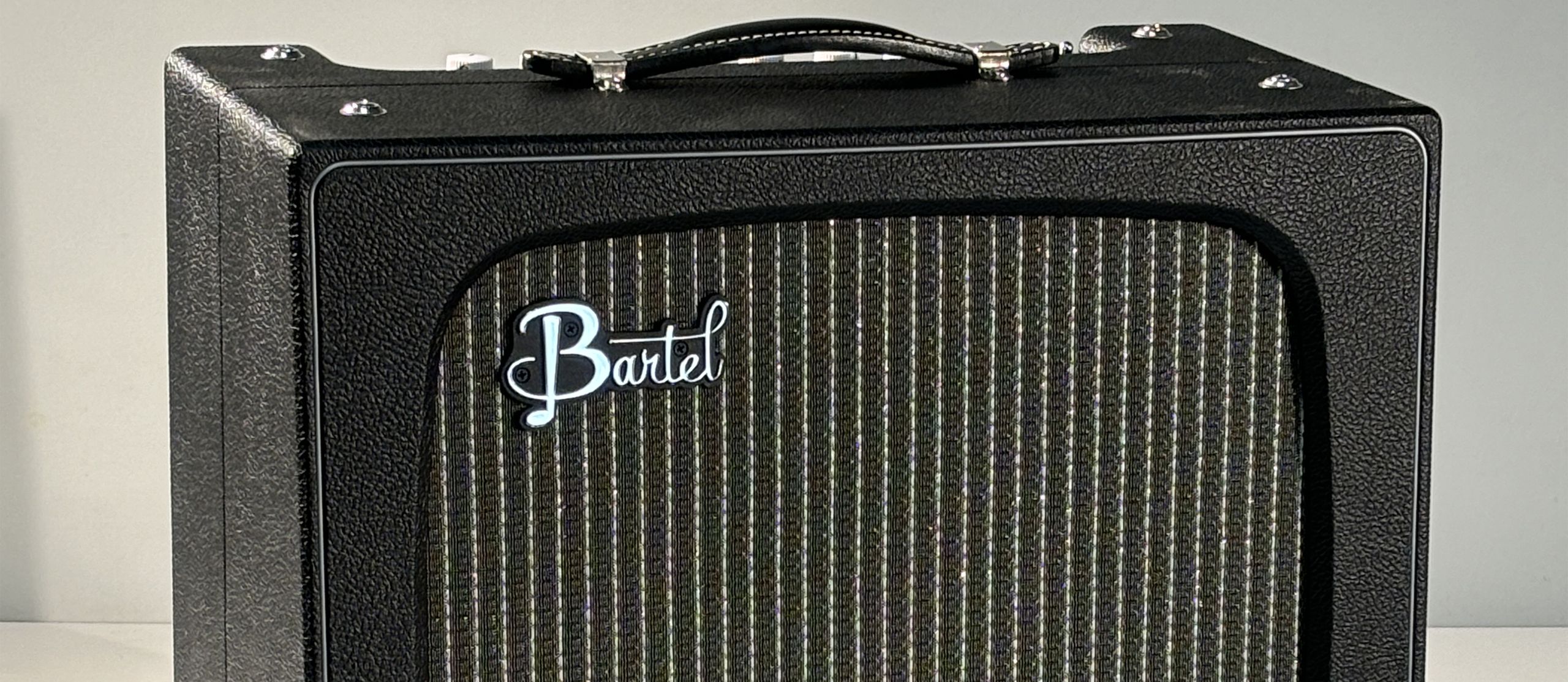
While Tone King amps have always been celebrated for their craftsmanship,Bartel’s recent creations under the Bartel Amplifiers label have elevated this reputation. The Swingland, like its predecessors-the Roseland, Starwood, and Sugarland-boasts a design so distinctive that the term “original” hardly does it justice. With its hand-wired circuitry and artisan-quality cabinet, the Swingland stands as a singular achievement in the world of guitar amplification.
innovative Design for Modern Musicians
The Swingland’s design ideology revolves around Bartel’s belief that it is indeed the first low-wattage guitar amplifier to deliver authentic high-wattage tone, feel, and body-if not sheer volume. After more than two and a half years of meticulous development, bartel asserts that the swingland is perfectly tailored for today’s quieter performance settings, all while maintaining the responsive dynamics of a traditional tube amp in an ever-evolving amplification landscape. Let’s hear from Bartel himself about his vision for this model.
“Many of my customers use my previous models primarily for home or studio settings,” Bartel explains. “These amps feature an excellent master volume circuit but are ultimately designed for both intimate settings and live performances. The Swingland is specifically crafted for studio and home use, offering a more advanced architecture for enhanced control over harmonic content and dynamics, allowing it to replicate the sound and feel of a vintage amp at lower volumes.”
“despite its low output, it’s a master-built amp filled with innovative design and practical features.”
– Mark Bartel
Technical Specifications and Features
In terms of specifications, the Swingland delivers three watts RMS, powered by a single octal-based 6SN7 tube driving a custom output transformer from Lenco Electronics, a US-based manufacturer, into a 12-inch Celestion Alnico Blue speaker. This dual-triode configuration, typically found in the preamp sections of vintage amps, enables a proper push-pull output stage.
This design choice brings Bartel closer to achieving the “big-amp feel” that contrasts with the single-ended setups commonly found in low-wattage amps like the Fender Champ and Vox AC4. The preamp and reverb stages are populated by one 12AX7, two 12AT7s, and one 12AU7, with controls for preamp volume, midrange, tone, reverb mix, dwell, master volume, and presence.

The midrange control on the Swingland is especially noteworthy,functioning differently than traditional amplifiers. When set to noon, it remains neutral, boosting midrange frequencies above that point while cutting them below, with varying response curves to dial in classic amp tones. The tone control acts more like a “tilt EQ,” brightening the sound when increased and darkening it when decreased, affecting bass and treble in tandem.
Additionally, a harmonic balance control located on the back panel fine-tunes the harmonic content of the overdriven signal, transitioning from shining and edgy to thick and creamy. The back panel also features a five-pin XLR jack labeled LOI (Line Out Interface), designed to connect with upcoming devices expected in mid-2026, which will enhance the Swingland’s capabilities with analog mic and cab simulation, an amp driver for traditional guitar amps, and an unprocessed line out for third-party IRs.

The Swingland’s uniqueness is further emphasized by its core tone,particularly in the overdrive section. Bartel dedicated significant effort to engineering this aspect, ensuring it captures the harmonic and dynamic behavior typically produced by output tubes and phase inverters in traditional vintage amps. This complex design involved cycling through 27 variations to achieve the desired sound.
Renowned for his meticulous cabinet design,Bartel’s Swingland features a compact 19 by 16 by 11-inch enclosure that took a year and numerous prototypes to perfect. The result is a combo that delivers a rich,full sound without the congested or “boxy” quality frequently enough associated with smaller amplifiers. Bartel notes, “I discovered a way to create a cabinet that offers an intimate, focused sound while still filling the room with an expansive sonic image.”

The Swingland’s chassis is assembled by Bartel’s small team,including Mike York and Nate White,utilizing Malory 150 signal capacitors,carbon comp and carbon film resistors,and other premium components hand-wired across sturdy turret strips. It’s no surprise that this build quality ranks among the highest I’ve encountered.
When tested with a fender Telecaster and a Gibson ES-335 semi-hollow body, the Swingland lived up to Bartel’s aspiring design goals, proving to be one of the most gratifying sub-10 watt amplifiers available. Its clarity, low noise floor, and the nuanced texture of its overdriven tones make it a standout performer.
Despite its straightforward control layout, the Swingland can produce a wide range of tones from clean to overdriven, emulating many classic sounds. Though, what truly impressed me was its distinct character. With its extensive EQ range and flexible gain staging, this amp can cater to various styles, particularly excelling in blues, classic rock, and roots rock.
While it excels at lower master volume settings, the Swingland can hold its own against moderate drummers in smaller venues when the master is maxed and the preamp volume is set high.
Moreover, the amp’s dynamics are exceptional. When configured for heavy overdrive, it transitions smoothly into distortion, revealing a spectrum of nuances as you gradually increase your guitar’s volume control. Unlike many amps that produce a usable clean sound at lower guitar settings when cranked for overdrive, the Swingland delivers a rich, full, and convincing clean tone even in this scenario.
While it comes with a premium price tag, the Swingland promises to deliver endless satisfaction and creative inspiration for those who need it.
Increasing the midrange also adds perceived gain to the signal, as the core frequency range of the guitar becomes more pronounced, making this control doubly effective. And let’s not overlook the reverb: it offers a spacious and immersive spring-based effect that can be pushed to its limits without introducing unwanted oscillation or artifacts.
Bartel Amplifiers has done an outstanding job with the Swingland. Although it carries a high price, it is sure to provide lasting satisfaction and inspire creativity for musicians who require such an exceptional amplifier.

specifications
CONTACT: Bartelamps.com
PRICE: $4,195 retail
CHANNELS: 1
CONTROLS: Volume, midrange, tone; reverb mix and dwell; master volume, presence, harmonic balance
POWER: 3 watts
TUBES: One 12AX7, two 12AT7, one 12AU7, one 6SN7
EXTRAS: Tube-driven spring reverb, 5-pin XLR for Line Out Interface (LOI)
SPEAKER: 12″ Celestion Alnico Blue
DIMENSIONS: 19″x16″x11″
WEIGHT: 32 lbs
MADE IN: USA
KUDOS: A thoughtfully designed and exceptionally constructed combo, delivering remarkable sonic versatility and engaging dynamics for its low-wattage output.
CONCERNS: While it comes with a premium price, this is a common trend in today’s market.