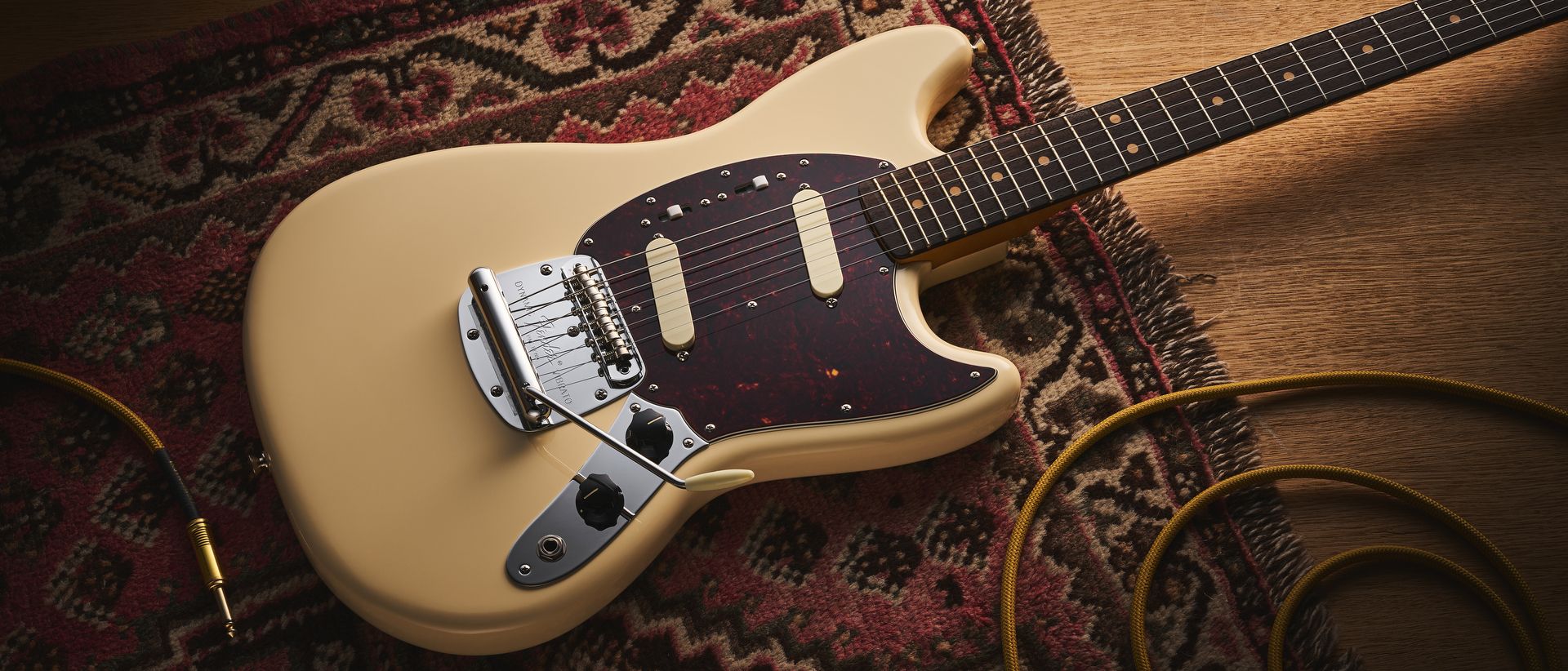
What is the Fender Vintera III Mustang?
Could it be a bold statement to claim that the Mustang is Fender’s most underrated guitar? Frequently overshadowed by its larger-bodied offset counterparts, the Jazzmaster and Jaguar, the Mustang holds a vital place in Fender’s legacy. Like the Jaguar, it features a short scale, but with a more compact single-cut body design.
originally crafted as a student guitar by Leo Fender and launched in 1964, its appeal to novice players remains strong due to its smaller size and the ease of string bending afforded by its 24″ scale, which is shorter than the 25.5″ scale found on the Strat, Tele, and Jazzmaster. The Squier Bullet and Sonic series Mustang models have showcased this enduring popularity, but for me, the Mustang transcends its label as a ‘beginner guitar’; it stands as my personal favorite among Fender’s offerings.
Both of my primary guitars are hardtail Fender Player Mustang models, and the proportions of Leo’s design resonate perfectly with me. Honestly, I wish I had embraced it sooner.
I’ve customized my guitars to suit my preferences, taking advantage of Fender’s modular design. When I learned about the Vintera III Mustang update, it presented an exciting chance to revisit a genuine Mustang that reflects the iconic specifications of the ’60s-a time long before Kurt Cobain’s influence brought the Mustang back into the spotlight.
Surprisingly, even within Fender’s own lineup, this model remains somewhat overlooked. At the time of writing this review, I was astonished to discover that with the Performer models discontinued, there is currently no US-made Mustang available in Fender’s production catalog. Isn’t that peculiar?
With such expectations placed on the Vintera III, what distinguishes this version from its predecessors?
We’re at the very genesis of the model that was launched in August 1964… mostly
In essence, it stays true to its roots. The Vintera III series now focuses on specific eras within the decade they draw inspiration from, which means the specifications reflect that authenticity. For a mid-’60s take on the Mustang, we are indeed at the very inception of the model that debuted in August 1964… mostly.
we’re not just sticking to the standard Mustang 24-inch scale and vintage 7.25″ radius with vintage-tall frets; this model also features ‘mid-’60s’ pickups and neck profile,along with authentic Fender decals that pay homage to the era.
The rosewood fingerboard features classic clay fret dots, enhancing its vintage aesthetic. As expected from a Mustang, there are numerous additional features to explore.
Specifications

- Launch Price: $1,249.99 | £1,029 | €1,199
- manufactured in: Ensenada,Mexico
- Type: Six-string solid-body single-cut electric guitar
- Body Material: Alder
- Neck: Maple,Mid ’60s C-shape,gloss urethane finish
- Fingerboard: Laminated rosewood
- Scale length: 24″ / 610mm
- Nut Width: 42mm / bone
- Frets: 22,Vintage Tall
- Hardware: vintage-style tuners with vintage white buttons,six-saddle vintage-style Mustang tremolo,four-ply tortoiseshell pickguard
- Electronics: Vintage-Style Mid ’60s Single-Coil Mustang bridge and neck pickups,master tone and volume controls,two on/off slide switches (one for each pickup)
- Weight of Test Model: 7lb/3.17kg
- Left-Handed Options: N/A
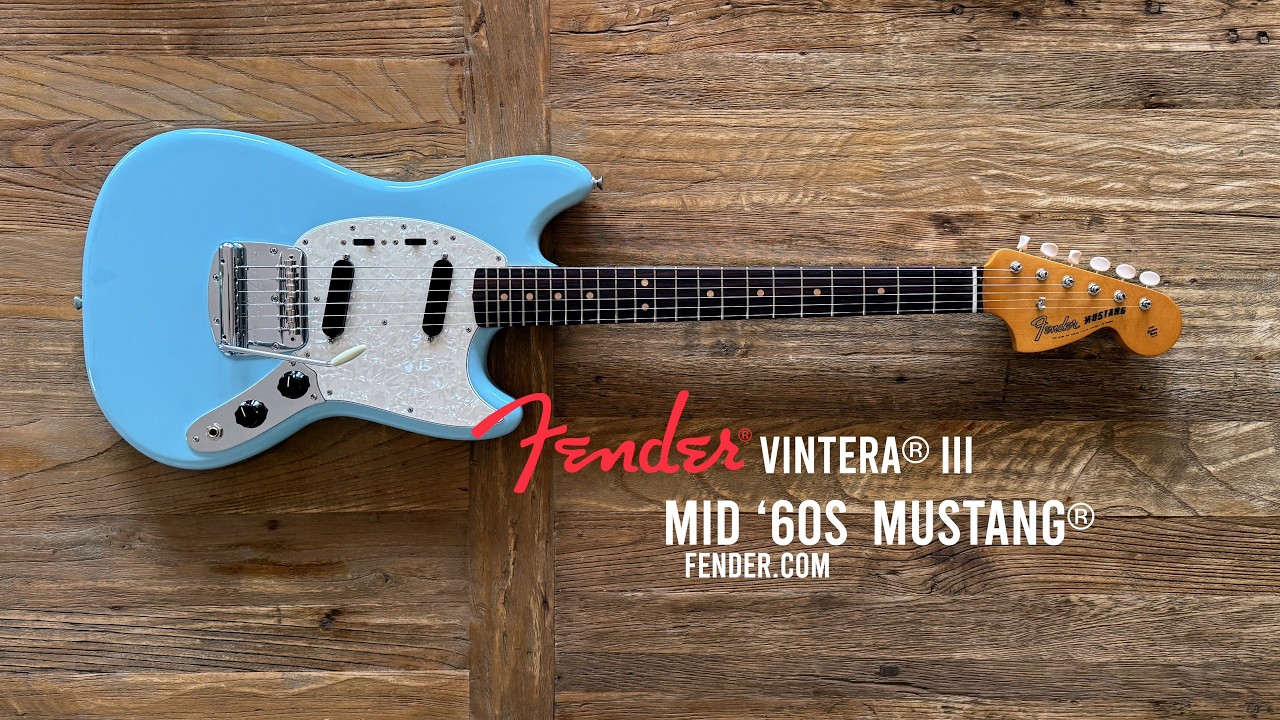
- Available Finishes: Dakota Red, Sonic Blue, olympic White (as reviewed)
- Included Accessories: Padded gig bag
- Contact: Fender
Build Quality

build Quality rating: ★★★★☆
In my opinion, this model offers the best finish of the three available options. The colors reflect the original trio introduced with the Mustang, with Sonic Blue now taking the place of the 1964 Daphne Blue, alongside Dakota Red and Olympic White. While traditionalists might argue that the pickguard shoudl be a brighter red for authenticity, I appreciate the darker burgundy tortoiseshell look. It gives the guitar a more vintage and well-loved appearance.
originally, Fender offered the Mustang in two scale lengths: 22.5″ (similar to the Duo Sonic and Musicmaster student models) and the Jaguar’s 24″, with the latter quickly becoming the preferred choice. the Fender logo here is the transitional style from that era, featuring gold with a black outline. While some may find the decal applied over the finish to be visually jarring, it is historically accurate, as are the off-white plastic tuner buttons.

The absence of the 1964 bridge cover is a minor detail, as there is little demand for it today, but aftermarket options are available. The nut is made of bone, a notable upgrade from the synthetic version found in the Vintera II. This choice aligns with vintage specifications.
The fingerboard is constructed from round-laminated rosewood rather than a slab, allowing for a consistent radius across the entire surface. this design results in less mass, which could theoretically make this Mustang sound brighter than its Vintera II counterpart. However, the multitude of variables in electric guitar sound makes definitive conclusions difficult in testing scenarios.
I am notably drawn to the dark rosewood and clay dot inlays, which provide the vintage aesthetic I desire, even though it could benefit from a treatment of lemon oil. While this is common for guitars that have been in storage under varying humidity conditions, the frets appearing in need of polishing is less acceptable. It detracts from the classic allure.
That rich, dark fretboard makes my Player II Mustang’s rosewood look disappointingly light by comparison.It’s truly beautiful.
The dot placement is inspired by the ’64 pre-CBS era, but the headstock reflects the larger shape from late ’65. Thus, the ‘mid-’60s’ designation captures a broader period rather than pinpointing a specific year. While this may not appeal to everyone,Fender is clear about the model’s naming.
Weighing in at 7lbs, this test model is right on target for an ideal alder Mustang weight. My Player II is slightly lighter, but that’s without a floating tremolo system. Currently, the stock at Sweetwater shows this model as one of the lightest available, though the difference is minimal.
Aside from the frets and a tremolo issue I will address shortly, the fit and finish are commendable. Would I have preferred a nitro finish for a more authentic vintage appearance and desirable aging over time? Absolutely, and it would likely increase the price, but I find it frustrating that nitrocellulose is currently only available on relic’d Road Worn Mexican-made models. Nevertheless, this Olympic White finish is well-executed and aligns closely with some vintage examples I’ve encountered.
Playability

Playability Rating: ★★★★☆
I tend to avoid sweeping generalizations regarding neck radius and their suitability for various playing styles.
there are numerous opinions on the effectiveness of a 7.25″ radius neck for different playing styles. Recently, John Mayer contributed to the discussion with some insightful points, but the reality is that our preferences, styles, and hand sizes vary widely. Thus, I refrain from making broad statements about radius suitability.
Though, I do experience an adjustment period when transitioning from my usual 9.5″ Mustang modern C necks to this vintage specification. My last experience was during the review of the Mike McCready Strat for our sister site MusicRadar, where I grew to appreciate the charm of a rounder radius. I found bending to be manageable.
The action on this test guitar is higher than I prefer, measuring 1.8mm clearance from the low E string and 1.85mm from the high E.After checking the truss rod relief and confirming everything is in order (thankfully, as this vintage spec requires neck removal for truss nut adjustments), I decided to lower the string action to my liking.
Unlike my Player Mustangs with individually adjustable block steel saddles,the six-barrel saddles on this model require adjustment of the entire bridge height using one of the three included allen/hex keys. This process is straightforward, even with a cautious approach to making small adjustments. Given the rounder 7.25″ radius, I was careful not to lower the action as much as I would with my 9.5″ Fender necks,ultimately finding a satisfying compromise.

Initially,the frets may feel a bit scratchy,but they quickly break in. It’s significant to note that the short scale and this radius may feel cramped for some players. Though, it can be a perfect fit for many, especially smaller-statured players with smaller hands. Ultimately, this is a vintage specification, and there are alternative options available.
While I prefer bending on a 9.5″ radius, I found myself creating more arpeggiated parts with this Mustang due to the ease of executing more complex shapes.The neck feels deeper and rounder than the modern Mustang necks I’ve played (at the first and 12th fret, I measured the depth at 21.3mm and 23.4mm on the Vinter III compared to 20.8mm and 22.4mm on my Player II’s Modern C carve), but the lighter 9-gauge strings it comes with certainly contribute to its playability. Most experienced players will likely switch to 10s or even 11s on a short scale like this.
My testing of the Vintera III Mustang coincided with an unusual weather period in the UK, ranging from 15 degrees to the hottest June day on record at 36 degrees. While my Player Mustangs with their hardtail bridges and relatively springy tensions with 10-gauge strings held up surprisingly well, this Vintera presented some challenges. This was with only light tremolo use-though that subtle wobble is what this type of tremolo is designed for, unless you want to be retuning between every song or even solo.

It’s likely that the floating tremolo system requires some calibration. This is a common issue with this design,and the visible tilt of the tremolo arm,as shown in the image above,indicates that adjustment is necessary. To access the strings’ tremolo plate for this adjustment, it must be removed. Proper calibration is essential to fully experience the sensitivity and excitement of the tremolo without the stress of constant tuning issues.
Additionally, it’s important to note that the floating design necessitates a hex key for fitting, adjusting, and removing the tremolo arm from the cigar bar. Keeping a spare hex key on hand is advisable!
Sound Quality

Sound Quality Rating: ★★★★★
Let’s recap the essential Mustang controls: the pickups are activated and deactivated using a pair of three-way switches located above them.In the center position,the pickups are off (no sound). When either switch is flipped left or right,the corresponding pickup is activated. If both switches are set to the same side, the pickups are in phase; if one is left and the other is right, they are out of phase.
Personally, I find the out-of-phase setting to be the least appealing option, but it still has its charm. The drop in low-end and reduced output create a lo-fi quality that can be useful for strumming, especially when contrasted with the other settings.

The Mustang’s tone is distinct and not merely a short-scale version of a Strat; it possesses its own character, which I find equally iconic as its more renowned counterparts. I would go so far as to say that the in-phase setting is my favorite ‘middle’ position on any fender guitar,and my experience with this model reinforces that sentiment.
Mustang single-coil pickups typically feature flat polepieces, unlike the staggered heights found in Strat and Tele pickups. This design results in a more balanced sound across the strings, which I find enhances the detail in chords, making them incredibly satisfying to play. I’ve also discovered that this pickup configuration pairs wonderfully with a P-90-sized Firebird bridge pickup in one of my Mexican Player models. However, it’s important to note that, unlike the Player models, the Vintera III is only routed for single-coil pickups.
Adding a hint of plate reverb and some subtle harmonic tremolo creates such an inspiring sound that it could easily win over newcomers to the Mustang.
Starting with the neck pickup, I was instantly impressed-there’s an added depth here that my Player II’s neck pickup lacks, and I already enjoy that pickup. The round, focused response is present, but it’s sharper and more vibrant. I’m quickly becoming a fan; the strings resonate beautifully for chords, and adding a touch of plate reverb along with some light harmonic tremolo creates an inspiring sound that could easily convert those new to the Mustang.
While it may not deliver the classic Strat spank, it offers an intriguing alternative that feels more versatile to my ears.This bodes well for further exploration.

I’ve frequently enough found that bridge pickups on some Mustangs can be quite challenging, requiring careful adjustments on the tone control and sometimes even the amplifier to achieve the best sound. While I opted to replace the bridge pickups on both of my Player Mustangs with Sunbear Soapbird P-90-sized Firebird humbuckers, my experience with the Vintera III has given me pause for thought.
This guitar would serve as a vibrant asset in a power trio or as a dynamic complement to a second guitarist using humbuckers.
the expected twang and snap are present, and while I do reach for the tone control to soften the high end slightly, I discover a richer voice under overdrive than I anticipated, especially through a clean Princeton amp and then a Neural Plexi model paired with my reliable Wampler Tumnus. The volume control is highly responsive in these setups, revealing a guitar that could be a lively addition to a power trio or a dynamic counterpart to another guitarist using humbuckers.
It’s no surprise that the standout feature is the ‘middle’ in-phase position. It produces a shimmering sound perfect for strumming chords, which responds beautifully to light modulation-think of the intro to Crowded House’s Don’t Dream It’s Over or Johnny Marr’s arpeggios. This setting offers a sublime and expressive experience, especially for fingerstyle playing reminiscent of Mark knopfler, responding with great sensitivity.
As previously mentioned, the out-of-phase setting provides a wiry, lo-fi sound with lower output. While it may not be the first choice, it can serve as a useful contrast in a mix or as an intro before transitioning back to one of the other three settings.
Final Thoughts

The third-generation enhancements make it unique and possibly the most refined Vintera Mustang we will encounter.
There’s much to appreciate about this latest addition to Fender’s more budget-friendly vintage-spec lineup, serving as a reminder of why it remains my favorite Fender model. The third-generation enhancements make it unique and possibly the most refined Vintera Mustang we will see unless the company decides to focus on specific years for future models.
despite a couple of setup issues with this test model, it effectively showcases Fender’s underappreciated gem for those seeking vintage specifications without the exorbitant price tag.
GuitarWorld Verdict: This model offers an authentic Mustang experience, with the new Mid ’60s pickups being a significant part of its appeal, alongside the nostalgic aesthetics and feel reminiscent of Fender’s golden era.
|
Test |
Results |
Score |
|---|---|---|
|
Build Quality |
Beautiful dark rosewood neck and off-white finish, slightly marred by frets needing a polish. |
★★★★☆ |
|
Playability |
The short scale and 7.25″ radius may not appeal to everyone, but it stays true to its era, and the deeper C shape aids in the transition. Tremolo springs required adjustment. |
★★★★☆ |
|
Sound Quality |
Extraordinary – the pickups could attract more players to the Mustang, with a wonderfully expressive middle position. |
★★★★★ |
|
Overall |
One of Fender’s strongest Vintera offerings to date, clearly a step up from Squier’s Classic Vibe. long live the Mustang! |
★★★★ |
Also Try
Hands-on Videos
Crutchfield

“`html
It’s likely that the floating tremolo system requires some calibration.This is a common issue with this design, and the visible tilt of the tremolo arm, as shown in the image above, indicates that adjustment is necessary. to access the strings’ tremolo plate for this adjustment,it must be removed. proper calibration is essential to fully experience the sensitivity and excitement of the tremolo without the stress of constant tuning issues.
Additionally, it’s important to note that the floating design necessitates a hex key for fitting, adjusting, and removing the tremolo arm from the cigar bar. keeping a spare hex key on hand is advisable!
Sound Quality
Sound Quality Rating: ★★★★★
Let’s break down the essential Mustang controls: the pickups are activated and deactivated using a pair of three-way switches located above them. In the center position, the pickups are off (no sound).When either switch is flipped left or right, the corresponding pickup is activated. If both switches are set to the same side, the pickups are in phase; if one is left and the other is right, they are out of phase.
personally, I find the out-of-phase setting to be the least appealing option, but it still has its charm.The drop in low-end and reduced output create a lo-fi quality that can be useful for strumming, especially when contrasted with the other settings.
The Mustang’s tone is distinct and not merely a short-scale version of a strat; it possesses its own character, which I find equally iconic as its more renowned counterparts. I would go so far as to say that the in-phase setting is my favorite ‘middle’ position on any Fender guitar, and my experience with this model reinforces that sentiment.
Mustang single-coil pickups typically feature flat polepieces, unlike the staggered heights found in Strat and Tele pickups. This design results in a more balanced sound across the strings, which I find enhances the detail in chords, making them incredibly satisfying to play. I’ve also discovered that this pickup configuration pairs wonderfully with a P-90-sized Firebird bridge pickup in one of my Mexican Player models. however, it’s important to note that, unlike the Player models, the Vintera III is only routed for single-coil pickups.
Adding a hint of plate reverb and some subtle harmonic tremolo creates such an inspiring sound that it could easily win over newcomers to the Mustang.
Starting with the neck pickup,I was immediately impressed-there’s an added depth here that my Player II’s neck pickup lacks,and I already enjoy that pickup. The round, focused response is present, but it’s sharper and more vibrant. I’m quickly becoming a fan; the strings resonate beautifully for chords, and adding a touch of plate reverb along with some light harmonic tremolo creates an inspiring sound that could easily convert those new to the Mustang.
while it may not deliver the classic Strat spank, it offers an intriguing alternative that feels more versatile to my ears. This bodes well for further exploration.
I’ve frequently enough found that bridge pickups on some Mustangs can be quite challenging, requiring careful adjustments on the tone control and sometimes even the amplifier to achieve the best sound. While I opted to replace the bridge pickups on both of my Player Mustangs with Sunbear Soapbird P-90-sized Firebird humbuckers,my experience with the Vintera III has given me pause for thought.
this guitar would serve as a vibrant asset in a power trio or as a dynamic complement to a second guitarist using humbuckers.
The expected twang and snap are present, and while I do reach for the tone control to soften the high end slightly, I discover a richer voice under overdrive than I anticipated, especially through a clean Princeton amp and then a Neural Plexi model paired with my reliable Wampler Tumnus.The volume control is highly responsive in these setups,revealing a guitar that could be a lively addition to a power trio or a dynamic counterpart to another guitarist using humbuckers.
It’s no surprise that the standout feature is the ‘middle’ in-phase position. It produces a shimmering sound perfect for strumming chords, which responds beautifully to light modulation-think of the intro to Crowded House’s Don’t Dream it’s Over or Johnny Marr’s arpeggios. This setting offers a sublime and expressive experience, especially for fingerstyle playing reminiscent of Mark Knopfler, responding with great sensitivity.
As previously mentioned, the out-of-phase setting provides a wiry, lo-fi sound with lower output. While it may not be the first choice, it can serve as a useful contrast in a mix or as an intro before transitioning back to one of the other settings.
Final Thoughts
The third-generation enhancements make it unique and potentially the most refined Vintera Mustang we will encounter.
There’s much to appreciate about this latest addition to Fender’s more budget-friendly vintage-spec lineup, serving as a reminder of why it remains my favorite Fender model. The third-generation enhancements make it unique and possibly the most refined Vintera Mustang we will see unless the company decides to focus on specific years for future models.
Despite a couple of setup issues with this test model, it effectively showcases Fender’s underappreciated gem for those seeking vintage specifications without the exorbitant price tag.
GuitarWorld Verdict: This model offers an authentic Mustang experience, with the new Mid ’60s pickups being a significant part of its appeal, alongside the nostalgic aesthetics and feel reminiscent of Fender’s golden era.
|
Test |
Results |
Score |
|---|---|---|
|
Build Quality |
Beautiful dark rosewood neck and off-white finish, slightly marred by frets needing a polish. |
★★★★☆ |
|
Playability |
The short scale and 7.25″ radius may not appeal to everyone, but it stays true to its era, and the deeper C shape aids in the transition. Tremolo springs required adjustment. |
★★★★☆ |
|
Sound Quality |
Exceptional - the pickups could attract more players to the Mustang, with a wonderfully expressive middle position. |
★★★★★ |
|
Overall |
One of Fender’s strongest Vintera offerings to date, clearly a step up from Squier’s Classic Vibe.Long live the Mustang! |
★★★★ |
Also Try
Hands-On Videos
Crutchfield
Watch On
Brent Kingman
Watch On
Brent Kingman
Watch On
Brent Kingman
Watch On
Unleashing Vintage Vibes: A Deep Dive into the Fender Vintera III mid ’60s Mustang
Overview of the Fender Vintera III Mid ’60s Mustang
The Fender Vintera III Mid ’60s Mustang is a stunning homage to the classic Mustang guitars of the 1960s.This model captures the essence of vintage aesthetics while incorporating modern playability and sound quality. With its unique features and specifications, it appeals to both seasoned musicians and newcomers alike.
key Features
- Body Material: Alder, known for its lightweight and resonant qualities.
- Neck: maple with a Mid ’60s C-shape profile, providing comfort and ease of play.
- Fingerboard: laminated rosewood with vintage-style clay dot inlays.
- Scale Length: 24 inches, ideal for effortless string bending.
- Pickups: Vintage-Style Mid ’60s Single-Coil Mustang pickups for authentic tone.
- Hardware: Vintage-style tuners and a six-saddle Mustang tremolo for enhanced tuning stability.
Specifications Table
| Specification | Details |
|---|---|
| Launch Price | $1,249.99 |
| Made In | Ensenada, Mexico |
| Frets | 22 Vintage tall |
| Weight | 7 lbs (3.17 kg) |
| Available Finishes | Dakota Red,Sonic Blue,Olympic White |
Sound Quality
The sound of the Fender Vintera III Mid ’60s Mustang is a defining feature that sets it apart from other guitars. The vintage-style pickups deliver a rich, warm tone that is perfect for a variety of musical genres, from rock to jazz. the unique pickup configuration allows for both in-phase and out-of-phase settings, providing versatility in sound.
Pickup Configuration
The mustang’s pickup system includes:
- In-Phase Setting: Produces a fuller, more robust sound, ideal for strumming and chord work.
- Out-of-Phase Setting: Offers a thinner, lo-fi tone that can be useful for specific styles or effects.
Benefits of the Fender Vintera III Mid ’60s Mustang
- Vintage Aesthetic: The classic design and color options evoke nostalgia and style.
- Playability: The short scale and pleasant neck profile make it accessible for players of all skill levels.
- Versatile Sound: the pickup configuration allows for a wide range of tones, making it suitable for various genres.
- Quality Build: Crafted with high-quality materials, ensuring durability and longevity.
Practical Tips for Using the Vintera III Mustang
- Regular Maintenance: Keep the guitar clean and polished to maintain its vintage look.
- tuning Stability: Regularly check the tremolo system and make necesary adjustments to avoid tuning issues.
- Experiment with Settings: Explore different pickup configurations to find the sound that best suits your style.
First-hand Experience
As a long-time Fender enthusiast, I had the chance to play the Vintera III Mid ’60s Mustang during a recent jam session. The moment I picked it up, I was struck by its lightweight feel and comfortable neck. The sound was incredibly vibrant, especially in the in-phase position, which delivered a rich, full-bodied tone that filled the room.
Switching to the out-of-phase setting provided a unique contrast, perfect for creating a lo-fi vibe during softer passages. The guitar’s responsiveness to dynamics made it a joy to play, whether I was strumming chords or picking intricate melodies.
Case Studies: Artists Who Love the Mustang
Many renowned musicians have embraced the Mustang, showcasing its versatility and unique sound:
- Kurt Cobain: The Nirvana frontman popularized the Mustang in the ’90s, using it to create iconic grunge sounds.
- John Frusciante: The Red hot Chili peppers guitarist has been known to use Mustangs for their distinctive tone and playability.
- kevin Parker: The Tame Impala frontman often incorporates Mustangs into his psychedelic rock sound.
Join the Beatbounty community
If you’re passionate about music and want to connect with fellow musicians, consider creating an account on the Beatbounty platform. Share your experiences, submit ads, and engage with a vibrant community of music lovers.
the Fender Vintera III Mid ’60s Mustang is not just a guitar; it’s a piece of musical history that continues to inspire players around the world. With its vintage vibes, exceptional sound quality, and comfortable playability, it stands out as a must-have for any serious guitarist.
Become a valued member of Beatbounty platform.
Start selling and connect with fellow musicians – LOGIN or REGISTER!