Crafting hits: Charlie Starr’s Guide to Elevating Simple Riffs into Memorable Songs
In this piece, I want to delve into the art of guitar playing as it intertwines with songwriting.For every guitarist, the essence lies in the riff!
Every iconic riff possesses an irresistible charm that instantly grabs the listener’s attention. This principle holds true across all genres of guitar-driven music. Classic tracks like (I Can’t Get No) Satisfaction, Purple Haze, and Walk This Way exemplify the undeniable strength of a well-crafted riff.
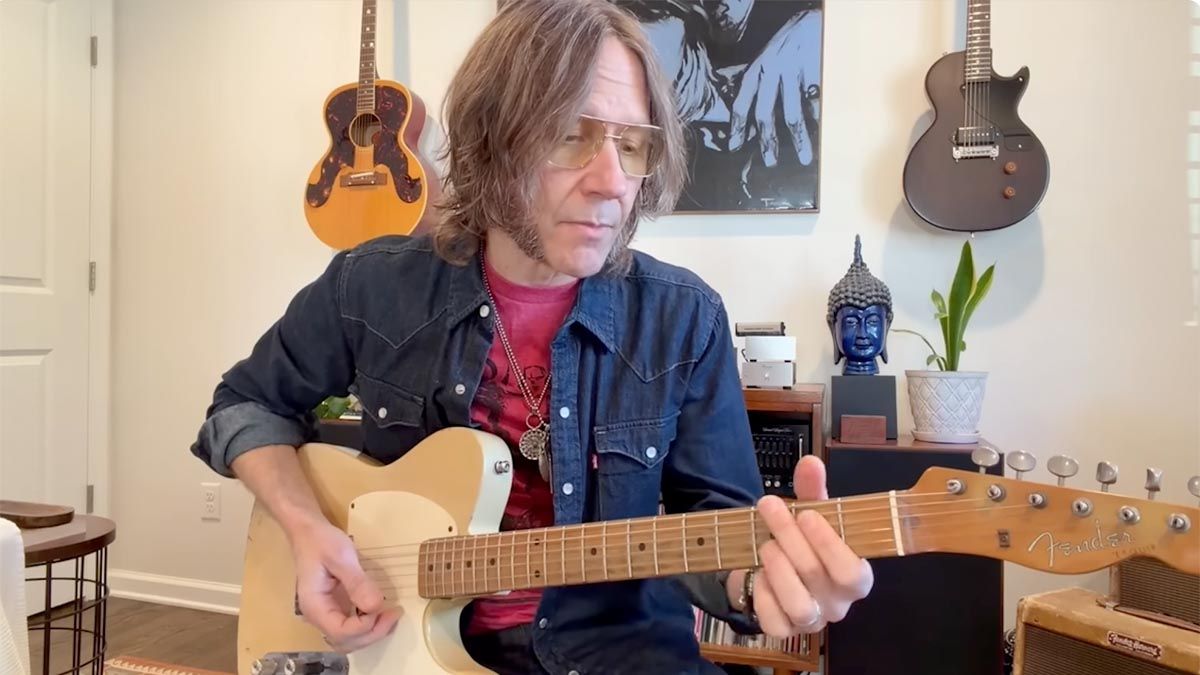
One of my own creations,Let It Burn,featured on our 2017 album Like an Arrow,originated from a straightforward yet catchy riff rooted in an open G chord. The inspiration struck during a soundcheck while I was playing a Fender Telecaster. I turned to our late drummer, Brit Turner, and said, “Let’s kick it off with that ‘train’ beat!”
I started playing what would become the main riff for Let It Burn. With my fingers positioned in a G chord shape, I began by emphasizing the low G root note in a syncopated rhythm, punctuated by bends on the G and B strings.
In these bends, the note on the G string is manipulated while the note on the B string remains fixed. following these bends,I incorporated single-note riffs derived from the G major pentatonic scale (G,A,B,D,E).
We jammed on this groove for about five minutes, establishing that classic “runka-runka” feel reminiscent of Chuck Berry’s rock and roll. Later, I returned home and crafted the verse section by layering vocals over the G5 – G6 rhythm. transitioning from the rock and roll figure to a resonant C/G chord, I then returned to the initial riff.
This process allowed me to weave together lyrics and melody, evolving the song from that initial riff concept. I mapped out the first half of the verse, which set the stage for the song’s progress.
The alternating G and C/G chords in the first five bars led me to introduce a D5 – C5 – D5 progression in bars six through nine. At this juncture, I felt the need to inject a harmonic twist. When blending rock and roll with unexpected elements, I believe three bands stand out: Rockpile, NRBQ, and, of course, The Beatles.
Inspired by their innovative approaches, I thought, “What would they do?” This led me to create a musical surprise starting on the relative minor chord, Em. I arpeggiated the chord and then chromatically descended from the E root note to D#, D, and C#, resulting in the progression Em – D#aug – G/D - A9/C#.
The verse section concludes with a return to the rock and roll vibe, setting the stage for the chorus. By this point, I had developed a narrative; the song’s protagonist was fed up with their surroundings and yearned to leave it all behind-preferably in flames, hence the vocal line, “Let it burn!”
The end of the chorus balances the rock and roll feel of the D5 – D6 chord movement with a heavier Bb – F figure, leading us back to the introduction.
With all the components in place,it was time to don my arranger/producer hat and structure the song effectively. This process highlights the delicate balance between initial inspiration and the creation of a polished,fully realized piece.