The Intriguing Journey of Hybrid Acoustic-Electric Guitars
As musicians continuously seek innovative ways to express themselves,its no wonder that artists like blake Mills,Molly Tuttle,Tim Henson,and Tosin Abasi are gravitating towards hybrid guitars to discover unique sounds and rich textures.
While the histories of acoustic and electric guitars are well chronicled, the fascinating realm of hybrid instruments-born from the fusion of these two worlds-has received less attention. This article aims to shed light on this captivating sub-genre.
The Birth of Hybrid Guitars
Driven by necessity, hybrid guitars were designed to provide players with the acoustic sound and feel they crave, while also offering the comfort and feedback resistance of solid or thinline bodies.
Among the early pioneers, the Danelectro Convertible 1959-a hollow Masonite guitar featuring a lipstick pickup in its soundhole-and the quirky burns Steer with its active electronics deserve recognition. However, the first true hybrid guitar emerged from a collaboration between Gibson and renowned fingerstyle guitarist Chet Atkins.
Atkins, frustrated with the limited amplification options for acoustic steel-string and classical guitars, approached Gibson with a groundbreaking idea: a solidbody guitar that could produce an acoustic tone at higher volumes. this vision materialized in 1982 with the release of the nylon-string Gibson Chet Atkins CE/CEC, followed by its steel-string counterpart, the SST, five years later.
Legacy and Influence
The Chet Atkins model has since become a favorite among guitar legends like mark knopfler, David Gilmour, Johnny Marr, Lindsey Buckingham, and Sting. Weighing in at around 7 pounds, it is lighter than a Les Paul, yet still feels bulky for those accustomed to customary acoustics.While its piezo-driven sound may not perfectly replicate an acoustic guitar, it fits seamlessly into a full band setting.
For years, the Gibson Chet Atkins was the sole option in a niche market. Although legendary luthier Rick Turner had designed the Model 1 for Fleetwood Mac’s Lindsey Buckingham in 1979, it wasn’t until later that he introduced a piezo bridge option and launched his Renaissance acoustic-electric model in the 1990s.
Revolutionizing the Hybrid Scene
The landscape of hybrid guitars shifted dramatically in 1993 with the introduction of the Parker Fly, created by the late Ken parker and Larry Fishman. This innovative instrument featured a carbon-fiber exoskeleton over a tonewood core and was arguably the first production electric guitar to integrate active piezo electronics alongside magnetic pickups.
Quickly embraced by artists like Eddie Van Halen, Joni Mitchell, and Reeves Gabrels, the Parker Fly was revolutionary.However, as Ken Parker noted, “We were making a $10,000 guitar and selling it for $3,000.”
Corporate Compromises and Innovations
Despite its groundbreaking design, the production version of the Parker Fly was a compromise. Ken Parker shared that his original 1987 prototype was considerably thinner, designed to be a resonant structure that would sustain sound effectively. However, corporate decisions led to the inclusion of heavier, outdated pickups, resulting in a thicker model than he had envisioned.
By the mid-1990s, other brands began to recognize the musical potential of hybrid instruments. Bridge-mounted piezo systems became increasingly common in guitars aimed at session musicians and experimental artists seeking new sonic textures. Major brands like Fender and PRS started to take notice.
In a departure from its traditional acoustic lineup, Taylor Guitars introduced the hybrid T5 model in 2005, which combined Taylor’s active electronics with lipstick pickups reminiscent of the old Dano Convertible. This model was later succeeded by the T5z, featuring a smaller body and still in production today.
Modern Innovations
One of the most unconventional hybrid designs of the early 21st century was the Line 6 Variax acoustic, a solidbody electric guitar with a soundhole that offered digitally modeled acoustic sounds, including banjo and sitar, along with altered tunings through pitch-shifting technology.
Yamaha also ventured into the hybrid realm with its Silent guitars, primarily aimed at quiet practice and travel, but they proved to be excellent hybrid instruments.For years, luthier-made options like Rolf Spuler’s Paradis model and Uli Teuffel’s Antonio were sought after by discerning players.
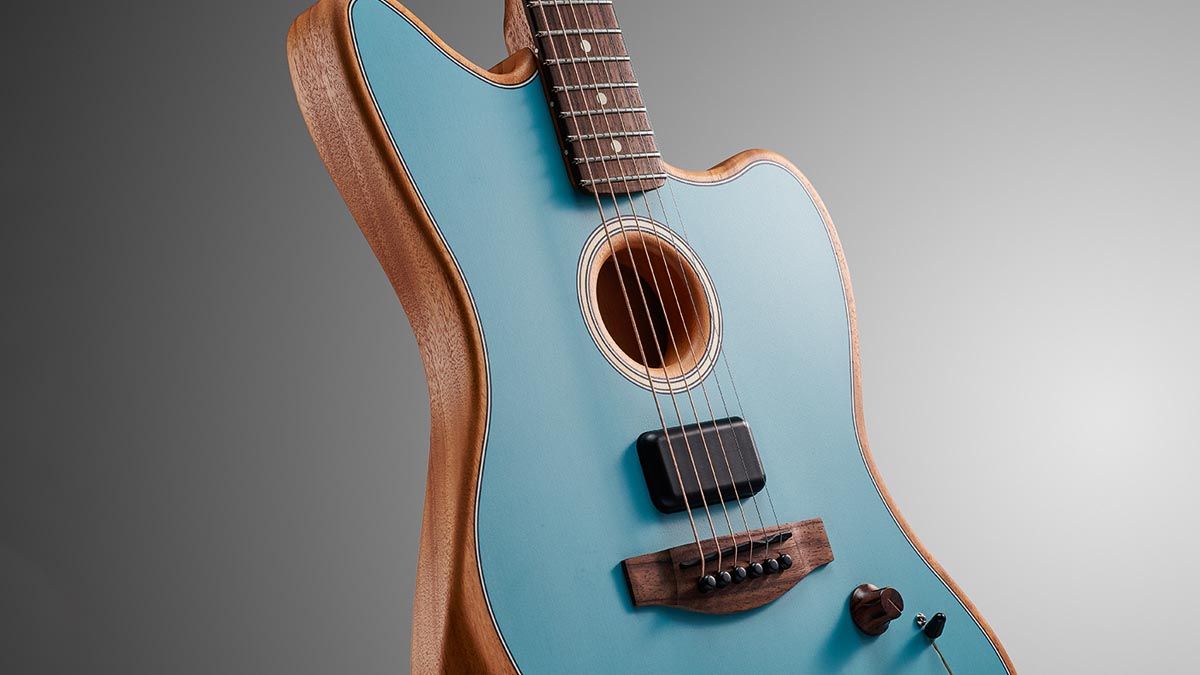
The game changed in 2019 when Fender launched the Acoustasonic Telecaster, followed by the Stratocaster in 2020 and the Jazzmaster in 2021. developed by a team that included Brian Swerdfeger, who played a key role in the original Taylor T5 design, these guitars feature various formats and often include modeled sounds and textures, some even with overdrive capabilities. The Acoustasonic series has quickly become a top choice for guitarists exploring the hybrid landscape.
Why Choose Hybrid Guitars?
At first glance, hybrid guitars may seem to have limited appeal-after all, not everyone desires to play a loud acoustic. However, those who embrace them find these instruments to be expressive and engaging, offering new and inspiring sounds. If you haven’t tried one yet, it’s time to explore the possibilities!
three hybrid Acoustic-Electric Guitars to Consider
Fender American Acoustasonic Jazzmaster – $1,999/£1,799
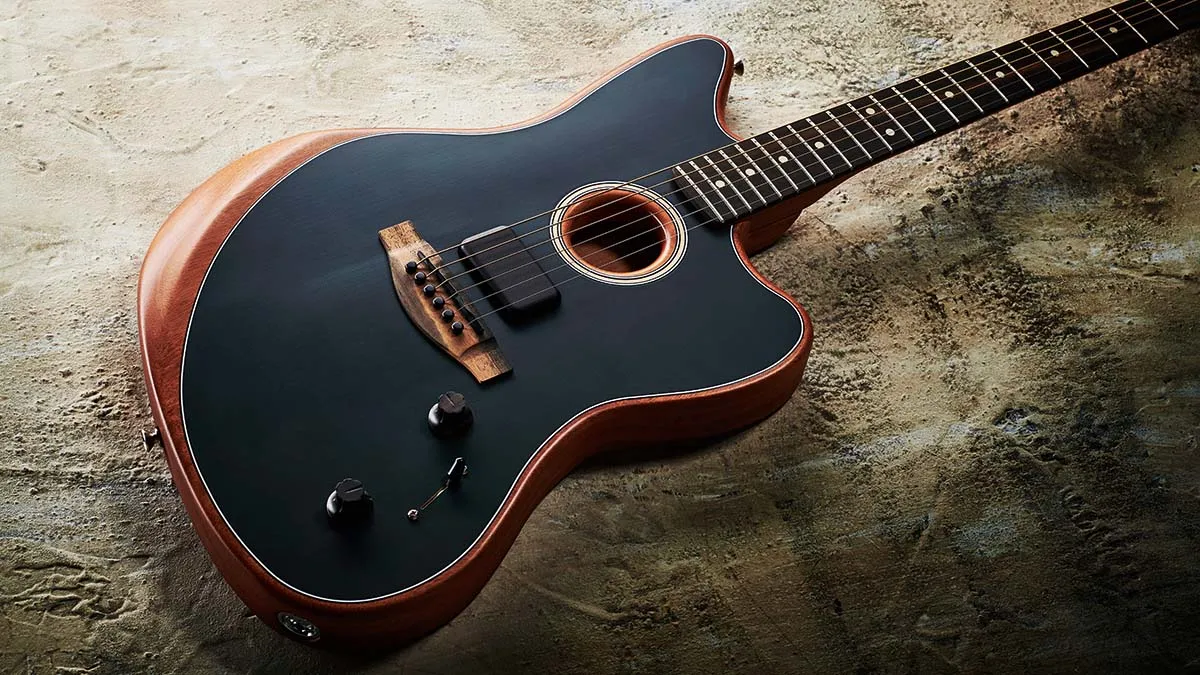
This model offers a unique offset design, featuring a triple active pickup system and a variety of acoustic voices, making it a fantastic choice for any guitarist.
Parker Fly - Approximately $3,000/£3,000

Now primarily available on the secondhand market due to the closure of Parker Guitars in 2016, the Fly epitomizes the hybrid guitar concept with its carbon-fiber exoskeleton and custom pickups, offering an acoustic sound with whammy bar capabilities.
Yamaha SLG200 Series Silent Guitar – Starting at $879/£716

Available in both nylon and steel-string configurations, Yamaha’s Silent guitars are more than just quiet practice tools; they are lightweight, well-crafted, and deliver excellent plugged-in sound with built-in reverb and chorus effects.
While a future update with Bluetooth connectivity would be a welcome addition, these guitars still provide an enjoyable playing experience.