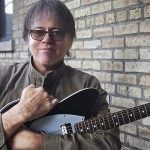
Louie Shelton,renowned as one of the most prolific guitarists in the music industry,has an impressive repertoire that includes iconic tracks from artists like Boz Scaggs (“Lowdown”),Whitney Houston (her breakout hit “Saving All My Love for You”),and Lionel Richie (“Hello”),among many others.
However, one particular performance resonated deeply-not for Shelton, but for the readers of Guitar player.
“I was performing at the Flamingo in Las Vegas with Seals & Crofts,” Shelton reminisces about his time with the popular soft-rock duo of the 1970s. “On that night, the guitarist from the other band we were alternating with had an unfortunate accident and broke his foot, which led to me stepping in for him.”
Years later, fate brought Shelton face-to-face with the guitarist he had replaced.
“I had no idea who he was untill a chance encounter at the Guitar Player magazine offices in Monterey, California,” he shares. “I introduced myself to the president,who then revealed,’You might not recall,but I’ve been following your career for years. You once filled in for me in las Vegas.’ It turned out to be Bud Eastman, the founder of Guitar Player magazine!”
Recently, Shelton shared insights about his recording experiences with the Monkees, along with stories from two other notable sessions: one celebrated and the other notorious.
The Story Behind Boz Scaggs’ “lowdown”
By the 1970s,Shelton had established himself as a sought-after session musician and decided to broaden his career by stepping into production. Over the following decades, he produced albums for various soft-rock artists, including his friends Seals & Crofts, Art Garfunkel, and England Dan & John Ford Coley. Nevertheless, his skills as a guitarist remained in high demand.
“During the recording of major hits like those for Boz Scaggs,Whitney Houston,and Lionel Richie,I wasn’t primarily a session guitarist,” he explains. “I would occasionally receive calls to join a session, and I’d agree to it.”
“At that time, I was officially producing Seals & Crofts and had enlisted future Toto members David Paich, Jeff Porcaro, and David Hungate for their records.”
In the autumn of 1975, Paich, Porcaro, and Hungate were busy working on Silk Degrees, Boz Scaggs’ 1976 album. After a dry spell without a hit,Scaggs was poised for a comeback with Silk Degrees,which would eventually achieve five-time Platinum status.
“When David landed the Boz Scaggs gig, he thought I would be a perfect fit for the group. He reached out to me to join them,” Shelton recalls.
One of Shelton’s standout moments was the fiery guitar solo he recorded for “Lowdown.” Scaggs has described the song-a simple two-chord progression from Em9 to A6-as “an accident” that had “no chance of becoming a hit.” Despite this, the team loved the track and decided to feature it as the opening song on side two of the album.
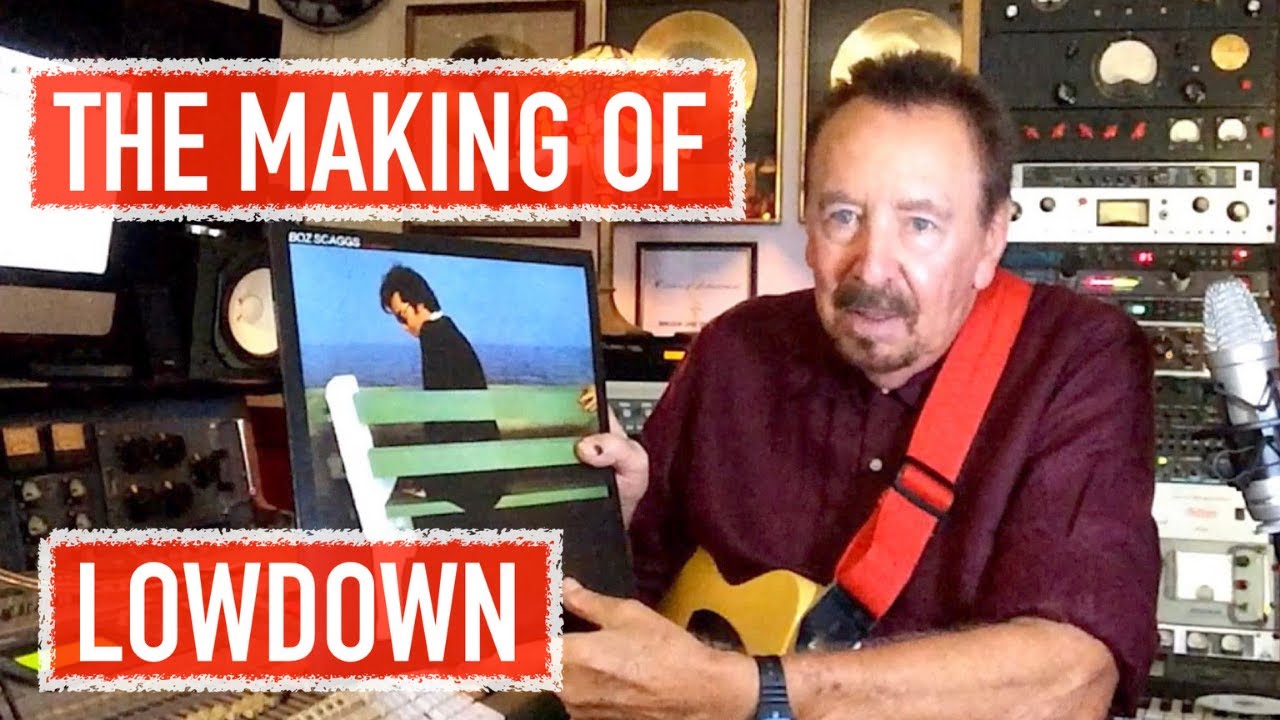
“The solo was wholly improvised; they simply asked me to fill in the gaps,” shelton explains.”We had a chord chart, and they directed me to start playing from bar 38 or so. Everything was spontaneous-nothing was premeditated. I was just listening to the track and following the chord chart, improvising as I went along.”
“and it was all done in one take. there was no going back for edits or planning the solo. I played a clean rhythm with my Telecaster through a ’69 Fender Princeton reverb amp for the entire song until it was time for the guitar lines.When it came to the solo, I used a simple distortion pedal, a basic Boss model that cost around $30, to add some flair.”
Shelton’s solo was the perfect touch that allowed the track to transition from disco to rock.When a Cleveland DJ decided to play “Lowdown” straight from the album-before it was even released as a single-it quickly gained traction with listeners, prompting other radio stations to follow suit. It became the album’s breakout hit, paving the way for Silk Degrees‘s chart-topping success.

the Chaos of john Lennon’s Rock ‘n’ Roll Album
Not every recording session is a triumph.Shelton was among a group of guitarists-including Larry Carlton-who were brought in to contribute to John Lennon’s 1975 solo album, Rock ‘n’ Roll. Produced by Phil Spector, the album was recorded over a year, from october 1973 to October 1974, during a period when Lennon was heavily indulging in partying and drinking.
The sessions were so chaotic that it’s unclear who played on which tracks.Carlton recalls that he and Leon Russell attempted to record “Bony Moronie” with Lennon, but the session was a disaster, yet both musicians received credit on the album.
shelton’s experience mirrored this disarray.
“The session was quite disorganized,” he reflects. “John didn’t have much input regarding the arrangements or anything else for that album. When he arrived for the session, Jim Keltner, the drummer, introduced me to him, and John was incredibly gracious.”

“spector, who was overseeing the session, arrived late, dressed in a black cape, top hat, and dark sunglasses.He was supposed to bring an old Stax R&B record that he and John wanted to cover, but he forgot it. They had to send his driver back to the hotel to fetch it.”
While waiting for Spector’s return,Shelton and Lennon engaged in conversation.
“We talked about my guitar work on the Monkees’ ‘Last Train to Clarksville,’” he recalls. “John complimented me on it, but I humbly mentioned that I was just emulating George Harrison!”

“It was a fantastic opportunity to converse with him, as I was a huge Beatles fan. Despite being a guitarist who admired jazz legends like Wes Montgomery, I would eagerly grab the latest Beatles record and immerse myself in it. so, I felt honored to have even participated in that one session with John.”
When Spector’s driver finally returned with the record, he instructed Shelton and the musicians to listen and figure out their parts by ear.
“We had a room full of musicians, but none of us received a chart,” the guitarist explains. “Typically, there’s at least a chord chart provided. With several musicians present, you’d expect to have a chord chart, but instead, we had to listen to the record and create our own charts.”
At the beginning of his session career, Shelton’s equipment was limited to a ’64 Fender Telecaster and a ’64 Fender Super Reverb combo. “Before I started getting session work, I could only afford one guitar as we weren’t making much money playing in clubs,” he explains. “If I wanted a different guitar, I had to trade my old one.”
“As sessions became more frequent, I was able to purchase an ES-335, a Fender Strat, a Gibson Byrdland, and several acoustic guitars. However, the Telecaster remained my primary electric guitar, and it still is to this day. The Tele can handle just about anything.”
for months following the session, Shelton heard nothing about the album, and no new Lennon release materialized. Spector had been taking the master tapes home at night, and they eventually “disappeared” after the sessions concluded.
“The master tapes from those sessions went missing, which led to a falling out between John and Phil,” Shelton reveals.”A couple of years later, after my session, Phil was involved in a car accident in L.A., and they discovered those tapes in the trunk of his car. That’s when the album, featuring the session I played on, finally saw the light of day.”