The Enigmatic Legacy of the 1960s Guyatone LG 350-T Sharp 5
Throughout history, guitar manufacturers have understood the marketing power of associating their instruments with renowned artists. Icons like Les Paul, Chet Atkins, and nick Lucas-who is often credited as the first guitarist to have a signature model-have had their names prominently displayed on various guitars.
Artist Collaborations in the Electric guitar era
As the electric guitar gained immense popularity in the 1960s, several brands continued to produce artist-specific models. Gibson introduced the Trini Lopez semi-hollow body, while Mosrite collaborated with the Ventures to create a dedicated model line.
The sharp Five and Their Signature Guitar
Meanwhile, in Japan, a surf band known as the Sharp Five was gifted a signature model by Guyatone: the LG 350-T Sharp 5 (the numeral was chosen over the word). The band featured the talented guitarist Nobuhiro Mine, who, at just 20 years old, played a pivotal role in designing the Sharp 5. Mine has since contributed to numerous iconic guitar designs and continues to perform actively.
Despite Mine’s groundbreaking contributions to Japanese surf rock, neither his band nor the guitar that bears their name gained traction in the U.S. market, which is unfortunate given their unique qualities and talents.
A Closer Look at the LG 350-T Sharp 5
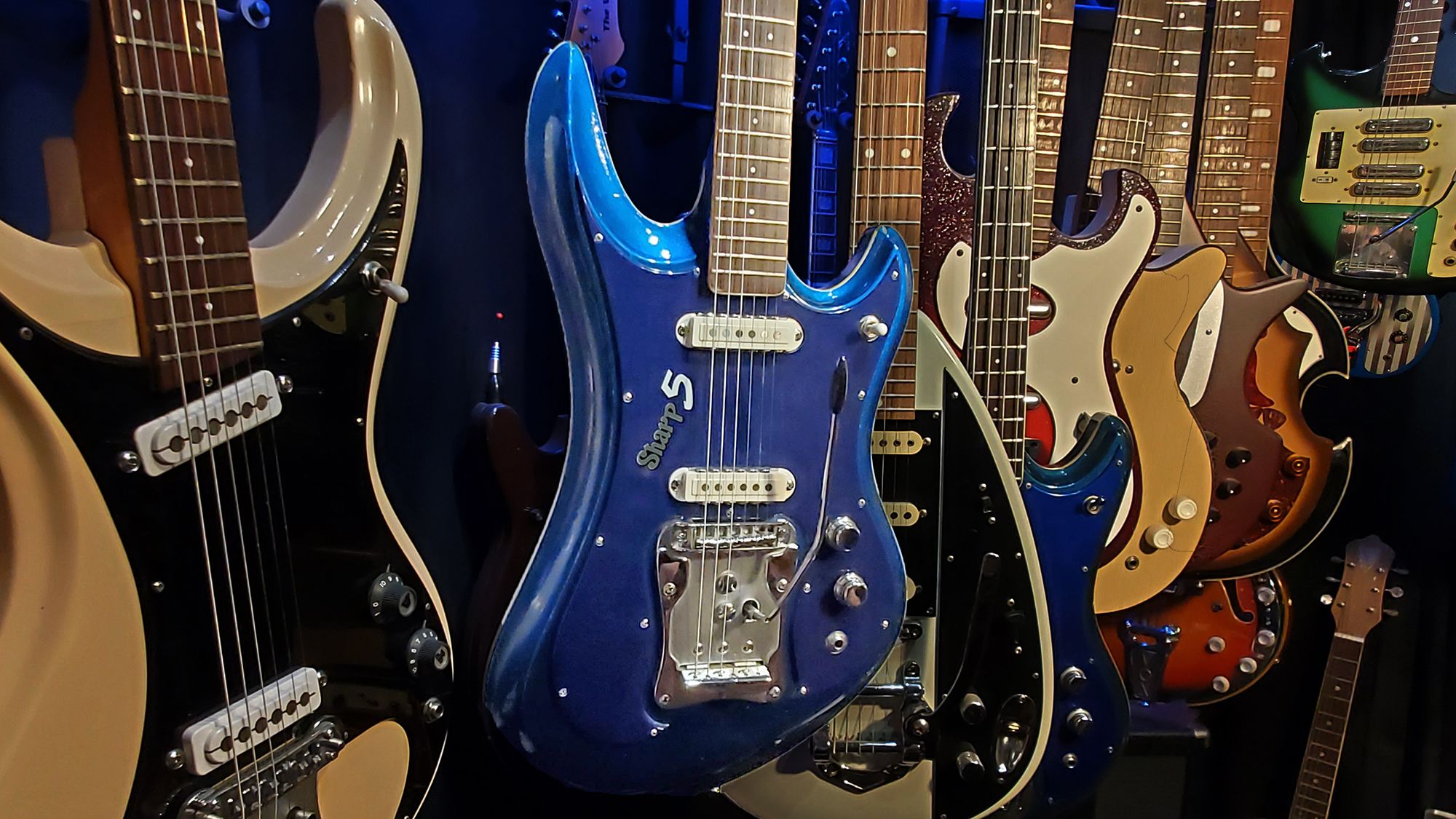
Manufactured at Guyatone’s Kawai facility, the 1968 LG 350-T is a remarkable example of craftsmanship. Its distinctive offset cutaways and striking headstock are eye-catching features, complemented by a stunning blue pickguard atop a deep-blue sparkle body with a sculpted top reminiscent of German designs. This carved top was a rarity among guitars of that era, seen only in select Rickenbacker models and a few Mosrite guitars.
beyond its aesthetic appeal, the LG 350-T is a well-constructed instrument that could have made waves in the late ’60s and continues to shine in today’s vintage market. It boasts a slim neck akin to that of a Mosrite, featuring 22 low-profile frets on a rosewood fingerboard with cream binding. The guitar is equipped with a metal nut and a zero-fret, eliminating the common volute found in manny models, resulting in a fast and agreeable playing experience.

Sound and Performance
The LG 350-T features two single-coil pickups that evoke the look and sound of a Fender Jaguar, albeit with a slightly louder and bass-heavy output. The electronics include global tone and volume controls along with a three-way pickup selector, making it ideal for funk strumming and surf lead lines. The middle setting produces an out-of-phase sound that is particularly impressive.
This guitar excels with added distortion, producing rich harmonic “chick” sounds without becoming overly microphonic. While some later models had noisier pickups, early versions like this one are relatively quiet. The tremolo system operates smoothly, akin to a Bigsby, allowing for expressive playing without the risk of dive bombs.

Specifications and Market Value
With a scale length of 24 inches from nut to saddle, the Sharp 5 is on the longer side for a three-quarter-scale guitar. While the frets are slightly closer together, the difference is minimal. One drawback is the neck angle; the headstock extends straight from the neck without a downward angle.Although three dual string trees help mitigate the lack of string tension, it can feel somewhat banjo-like during play. Despite this minor issue, the guitar is a fantastic instrument.
Originally priced around $95 in 1968, a well-maintained Sharp 5 today can command between $1,000 and $2,000. I purchased mine for $1,300 in 2025, a great deal considering its age and condition, especially since it features the Sharp 5 decal that later models lack. If you’re in search of a distinctive vintage electric guitar that looks and sounds unbelievable, is lightweight, easy to play, and remains relatively affordable, I highly recommend the LG 350-T Sharp 5.