The Unsung Maestro: John Paul Jones and His Pivotal Role in Led Zeppelin’s Legacy
Few bands have left as profound a mark on the rock genre as Led Zeppelin, notably in the realm of heavy music. A crucial element of their groundbreaking sound was the dynamic and soulful rhythm section formed by John Paul Jones and the legendary drummer John Bonham.
While his stage presence may not have been as flamboyant as that of his bandmates, Jones was far from a mere background player. His intricate bass lines, showcased in tracks like Black Dog and the infectious grooves of Trampled Under Foot, were integral to the band’s identity.
Multi-Instrumentalist Extraordinaire
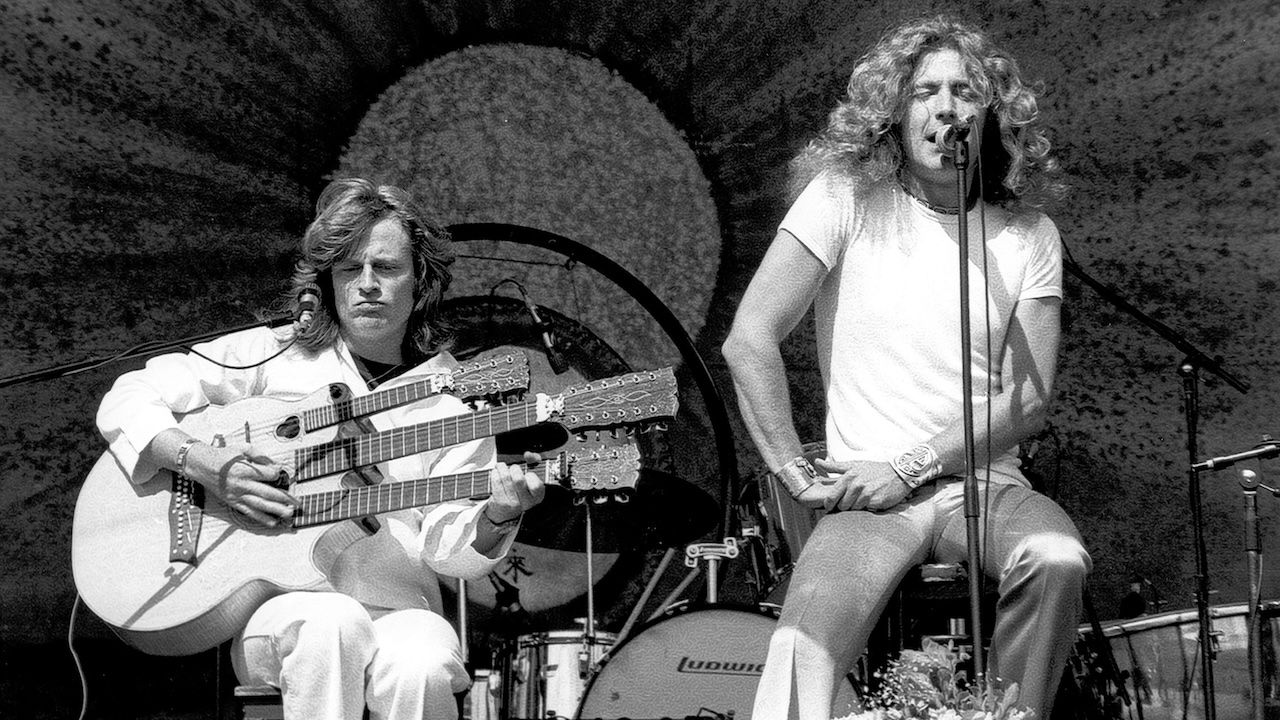
In recent years, John Paul Jones has garnered more recognition for his exceptional bass skills, but he was also the band’s primary keyboardist. During live performances, he seamlessly transitioned between bass guitar and keyboards, showcasing his versatility. it became a running joke within Led Zeppelin that if an unusual instrument was required for a song, Jones would be the one to handle it-be it organ, mandolin, or recorders.
Reflecting on his multifaceted role, Jones once shared with Bass Player in 2008, ”I’d be there with a triple-neck guitar, bass pedals, and keyboards, and Robert would ask, ‘Can you sing, as well?’”
Crafting the Zeppelin Sound
In a revealing interview from May 2008, Jones discussed his contributions to Led Zeppelin’s unique sound. “I was heavily influenced by Motown and Stax during my time as a studio musician,and I infused that groove into led Zeppelin. Bonzo was also a huge R&B enthusiast, which added depth to our rhythm section. Along with my keyboard and mandolin work, I brought my diverse musical background to the table.”
“I’ve always believed that Zeppelin was the space between four distinct musicians, creating something greater than the sum of it’s parts. Each of us had varied musical tastes, and we never aimed to mimic any other band. Our influences ranged from soul and jazz to country, folk, Arabic, and Indian music. We embraced these diverse styles, and the way they blended became the essence of Zeppelin.”
The Genesis of zeppelin
Jones reminisced about the band’s first rehearsal, recalling, “We gathered in a cramped room in London, looking at each other and figuring out what to play. It was a bit like, ‘What do you know?’ ‘I don’t know, what do you know?’”
“Page asked, ‘Do you know The Train Kept Rolling?’ I said no, and he explained, ‘Its in E, but there’s a riff that starts on G.’ He showed me the riff, counted it in, and the room erupted. We all realized we had something extraordinary.”
Bonham’s Unique Drumming Style
“Absolutely. Bonham was an incredibly imaginative drummer.He had a knack for highlighting the most interesting parts of a riff and crafting a captivating rhythm around it,” Jones noted.
When asked how he adapted to Bonham’s intricate drumming, he explained, “Given the complexity of Bonzo’s kick-drum patterns, it was more effective to synchronize with the kick rather than just play over it. This was a hallmark of our style; I would intentionally leave out notes to allow the kick or snare to shine through. This approach made the rhythm come alive, especially with a drummer of his caliber.”
Adapting Techniques
Jones shared his preference for fingerstyle playing but acknowledged the necessity of using a pick during recording sessions. “I can play Immigrant Song with my fingers, but it sounds better with a pick. The same goes for Black Dog. Each technique offers a different phrasing and a more metallic,guitar-like sound. I saw no reason not to switch between them as the situation required.”
Onstage Interaction and Setup
“We relied heavily on eye contact and listening to each other. Robert frequently enough encouraged me to take the front position during the first song, but I would gradually move back to my preferred spot just under the ride cymbal, where I could feel the kick,” Jones explained.
“For improvised sections,we would gather around center stage,maintaining intense eye contact and focus. That concentration was key to our success; anyone could take the music in any direction,and we would all follow.”
Regarding his keyboard setup, Jones noted, “It evolved over time. Initially, I used a Mellotron, which was the only way to achieve string or flute sounds back then, but it was notoriously unreliable. I eventually switched to a Yamaha GX1, a large green machine, and later transitioned to a Fairlight, one of the early 8-bit samplers.”
Live Performance vs. Studio Recording
“To me, Led Zeppelin was fundamentally a live band. We would create a record as a blueprint, then take it on the road and let it evolve. I was accustomed to studio environments, but the thrill of live performance was where I found the most joy; that was the true essence of Zeppelin,” Jones concluded.