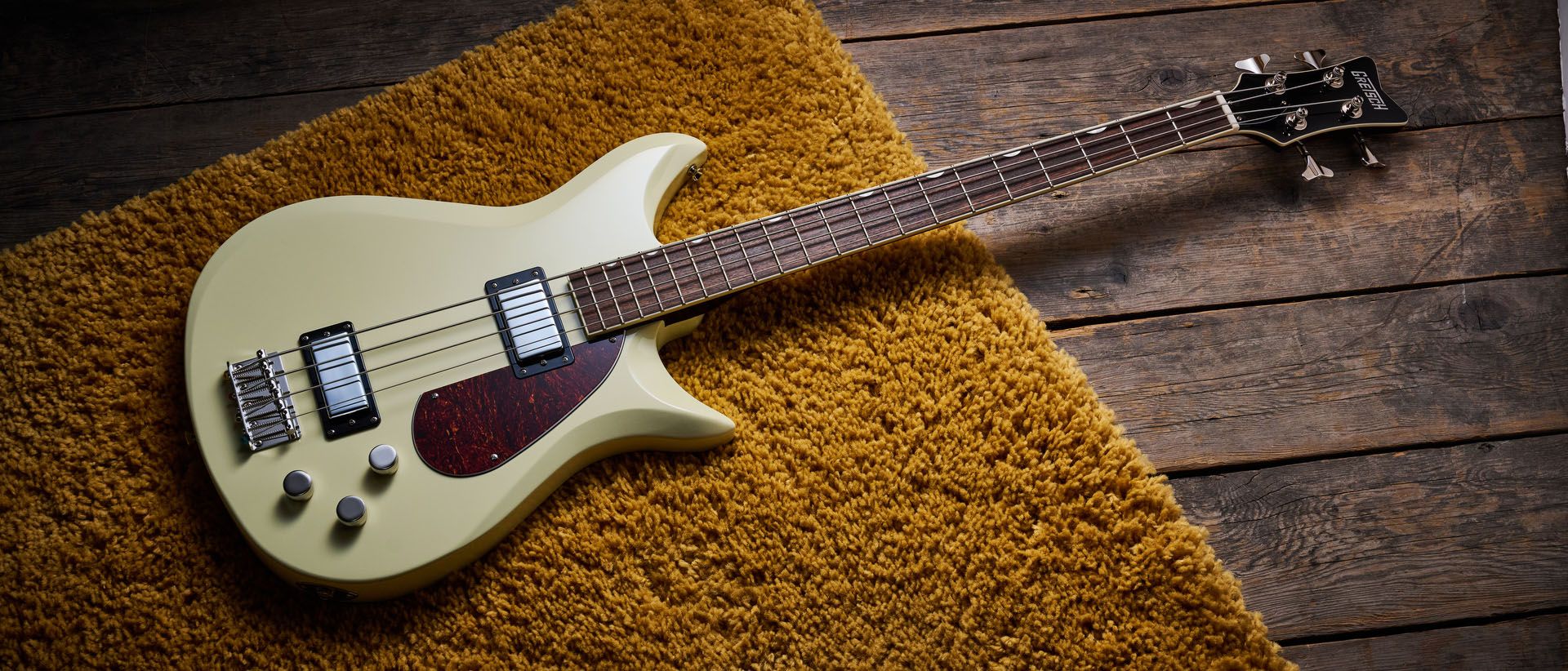
Overview
While Fender has long dominated the bass guitar scene, Gretsch has not achieved the same level of mainstream recognition.
They have ventured into short-scale, vintage-inspired models like the Junior Jet and a few bass variations of their renowned hollow-body guitars, but these have remained somewhat niche and failed to gain widespread acclaim.
However, the corvette model may change that narrative. This sleek, lesser-known solid-body design first emerged in 1961 as a response to gibson’s SG and Epiphone’s double-cutaway offerings.
Notable musicians like Rory Gallagher and Jimi Hendrix have played this model,yet it has often been overlooked in history. Now, Gretsch has revitalized this classic for modern players with the new CVT series.
Having already reviewed the electric guitar variant, the Electromatic CVT, it’s time to evaluate how the Electromatic bass-the first four-string version of the Corvette-performs.
Specifications
- Price: £499/$419/€555
- origin: China
- Type: Medium-scale four-string bass guitar
- Body Material: Mahogany
- Neck: Bolt-on, mahogany – ‘Performance C’ shape
- Fingerboard: Laurel, pearloid Neo-Classic Thumbnail inlays
- scale Length: 32″/813mm
- Nut Width: Bone, 39.6mm
- Frets: 20, medium jumbo
- Hardware: Sealed die-cast tuners, nickel-plated adjustable 4-saddle bridge
- String Spacing at Bridge: 19mm
- Electronics: Low-Down alnico single-coil (bridge), Low-Down alnico humbucker (neck), bridge pickup volume, neck pickup volume, master tone
- Weight: 8.2lb/3.7kg
- Left-Handed Options: None
- Finishes: Vintage White (as reviewed), Bristol Fog, Havana Burst
- Case: not included
- Contact: Gretsch
Construction Quality

Build Quality rating: ★★★½
With a classic white and tortoiseshell color scheme, the CVT manages to evoke a retro feel without directly mimicking any vintage instruments.
While not the most aesthetically pleasing shape, the CVT six-string’s design can be seen as a quirky reinterpretation of the original Corvette, which extends to the four-string version.
The unique teardrop pickguard does not quite harmonize with the body’s contours.

the build quality is commendable, even though the neck fit could be improved, and the nut’s edge might benefit from rounding. The hardware feels robust for its price point, and the mahogany body and neck produce a pleasant acoustic resonance.

A notable feature is the conventional Gretsch knurled chrome knobs; while they may seem minor, these are frequently used controls. It’s refreshing to see them included rather of opting for cheaper plastic alternatives.
With classic edge-position inlays and a well-bound neck and headstock, attention to detail is evident.
Playability

Playability Rating: ★★★☆☆
the weight isn’t excessive, but the body feels bulky.
The somewhat awkward design of the CVT bass becomes apparent during play; it lacks ergonomic finesse. While the weight is manageable, the bulkiness is noticeable.
The contouring in the elbow area appears to be purely decorative,offering no real comfort benefits. However, the bass maintains a good balance when played standing, and the slim bolt-on mahogany neck is quite comfortable.

Despite its 32″ scale, which is close to a full-length bass, its compact design due to the positioning of the pickups and bridge may appeal to players of smaller stature.
The two pickups are positioned quite far apart-one near the bridge and the other at the neck. This setup does not provide an ideal thumb anchor point for fingerstyle players,suggesting that the CVT might potentially be better suited for those who prefer using a pick.
Sound Quality
Sound Quality Rating: ★★★★☆
The pickups are two uniquely sized chrome-covered units-the bridge pickup resembles a mini-humbucker but is actually a single-coil, while the neck pickup is a slightly larger humbucker, smaller than the typical ‘mudbucker’ found in Gibson EB models.
When both pickup volumes are maxed out, they produce the CVT’s most traditional sound. Even with the bright overtones from new strings, the tone remains warm and classic.
Using classic Ampeg SVT and Acoustic 360 bass amp simulations, the tone exhibits a distinctive hollow resonance, complemented by significant low-end presence from the neck pickup.

The bridge pickup, positioned at the end of the string’s vibrating length, lacks bass depth but delivers a satisfying, mid-forward growl that pairs well with distortion effects.
Conversely, the neck pickup emphasizes bass and low mids, providing a fuller sound.
While it may not be as robust as the Squier Telecaster Bass I recently reviewed, it captures the essence of ’60s tones beautifully when palm-muted and picked. Adding a strip of foam in front of the saddles can help achieve that classic sound.
Final Thoughts

Gretsch had various options for developing a bass model within the new CVT series; instead, they opted for a unique approach. With its medium scale and distinctive pickup layout, this bass offers a sound that stands apart.
Its medium scale and unusual pickup configuration give it a distinctive sound.
While its aesthetics may not be universally appealing and the ergonomics could use improvement, the design is subjective. If you’re in the market for a quirky, vintage-sounding bass at an attractive price, this model is worth considering.
Guitar World Verdict: For those seeking classic sounds and who appreciate its unique appearance, the CVT bass presents a compelling option in the retro bass guitar market. Its compact size, slim neck, and intriguing tonal possibilities make it a noteworthy choice.
|
Test |
Results |
Score |
|---|---|---|
|
Build Quality |
Some elegant design elements, though minor imperfections exist. |
★★★½ |
|
Playability |
The body shape is somewhat awkward, impacting ergonomics. Pickup placement complicates fingerstyle playing. |
★★★☆☆ |
|
Sound |
Delivers a genuine vintage vibe with a bit of growl. |
★★★★☆ |
|
Overall |
A model worth trying out-ensure you’re comfortable with its ergonomics, and you might discover an intriguing, budget-amiable bass. |
★★★½ |
Additional Recommendations
Video Demonstrations
Gretsch

Watch On