Exploring the Sonic Depths: Dylan Desmond of Stygian Bough
Dylan Desmond, the bassist and vocalist for Stygian bough, reveals surprising inspirations behind their latest release, Volume II. “We’re blending elements reminiscent of Thergothon and Mournful Congregation with the intricate guitar harmonies akin to Thin Lizzy,” he shares. “Our aim was to emphasize pivotal moments, crafting tension through melodic lines.”
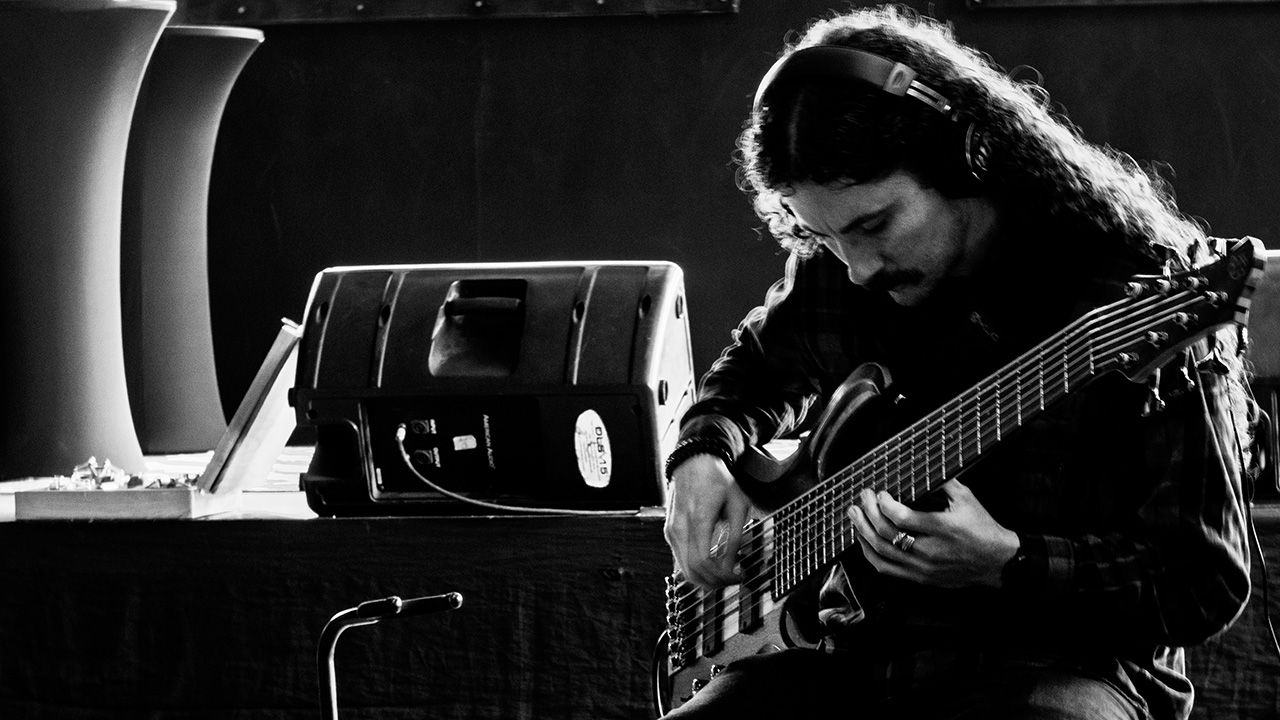
Since 2010, Desmond has been a driving force in the funeral doom duo Bell Witch, commanding an Ibanez 7-string bass amidst a powerful array of tube amplifiers. Their landmark third album, Mirror Reaper, released in 2017, encapsulated their essence with a single, sprawling 84-minute track that showcased their signature sound: somber, intricate, and profoundly heavy.
Following the departure of founding drummer and vocalist Adrian Guerra in 2015, who tragically passed away the next year, Erik Moggridge of Aerial Ruin stepped in to provide vocals for Mirror Reaper. This collaboration paved the way for further creative endeavors under the Stygian Bough name,culminating in the release of Volume I in 2020.
Collaborative Challenges and Creative Solutions
Desmond acknowledges that integrating MoggridgeS guitar work posed initial difficulties. “In Bell Witch, I strive to cover the entire sonic spectrum, even reaching into the piercing highs,” he explains.”Erik and I often found ourselves in the studio, questioning how the guitar would fit into the mix.”
“When I had a riff or melody, I would share it with Erik, and then I’d layer in a counter melody. Sometiems, the simplest solution was for erik to play an octave or two higher, ensuring he didn’t clash with the bass’s frequency range.”
The Evolution of a Unique Bass Technique
Desmond’s distinctive two-handed tapping technique on the bass developed largely by chance. “My father was a guitarist, and I was persistent not to follow in his footsteps, even though I secretly wanted to,” he recalls.”He advised me that ther’s always a need for drummers or bassists.”
His first 6-string bass was acquired from a friend who claimed they were merely for show and rarely played. “He told me I wouldn’t be able to play it, so I took it as a challenge to learn the 6-string and prove him wrong!”
“I’ve always envisioned the bass guitar as a means to recreate a bass and dual guitar trio within a single instrument. I play the bass lines with my left hand while tapping melodies with my right, much like a pianist or a Chapman Stick player.”
He cites the innovative guitarist Michael hedges as a notable influence: “Hedges played a harp guitar and utilized two-hand tapping in a way that was mesmerizing. At times, it felt like there were four guitars playing simultaneously. He was truly a wizard.”
Gear and Sound: The Magic of the 7-string
Currently, Desmond plays an Ibanez BTB747, but he emphasizes that the difference extends beyond just the addition of a seventh string. “There’s something special in those pickups!” he exclaims.
“While the models are essentially the same-neck-through design, identical wood, pickups, and strings-the 7-string resonates through the amps with a sustain that the 6-string lacks. It might be due to a pickup upgrade or the extra wood on the neck, but it feels like a little magic trick between the two.”
A crucial aspect of his sound is his triple-amp setup, which includes two guitar tube amplifiers. “Initially,like many,I relied on an SVT,” he recalls. “Then, when the guitarist from my previous band was selling his gear, I thought, ‘Why not expand my setup?’”
“I aimed to cover as much tonal territory as a guitar, which proved to be both fun and challenging. The addition of guitar amps thickens the sound, creating a unique blend of overtones that differ considerably from using a single amp, especially with varied effect chains and multiple reverbs or modulations.”
Crafting a Unique Live Experience
To manage his complex signal chains, Desmond employs a custom ABCD splitter and effect loop. “my friend Brian sours built me a phase Linear Distribution Amplifier designed to isolate and distribute signals across four outputs and a DI from one input,” he explains.
“I split my signal into an SVT II for low frequencies, a vintage Ampeg V4 for mids, and a Verellen Loucks for upper-mids and highs. The SVT is paired with a Perestroika muff, while the others feature a Benedict B1 and Pig Mine distortion, complemented by modulation and reverb from BlueSky, Strymon, and Chase bliss.”
“Solid-state amps don’t capture the nuances of my tapping technique. Tube amps are essential for handling the intricate details from my pickups.”
“The combination of the two guitar amps, along with varying modulation patterns, creates a ‘doubling’ or ‘dual mono’ effect in the mid and high frequencies. This can lead to magical moments during live performances,such as one amp entering feedback while the other sustains a fretted note.”
As he prepares for an upcoming tour across the US and EU with his extensive rig,Desmond remains steadfast in his preference for analog over digital alternatives. “What I aim to achieve with Bell Witch and Stygian Bough is a series of long, dramatic notes that hang in the air,” he states. “Solid-state amps simply can’t capture that essence. Tube amps are vital for processing all the data from my pickups.”
“And yes, lugging around heavy equipment is part of the journey. Ask me again in 20 years, and I might have a different perspective-who knows?”