The Folk Inspiration Behind alice CooperS ‘Hello Hooray’: A Rock Conversion
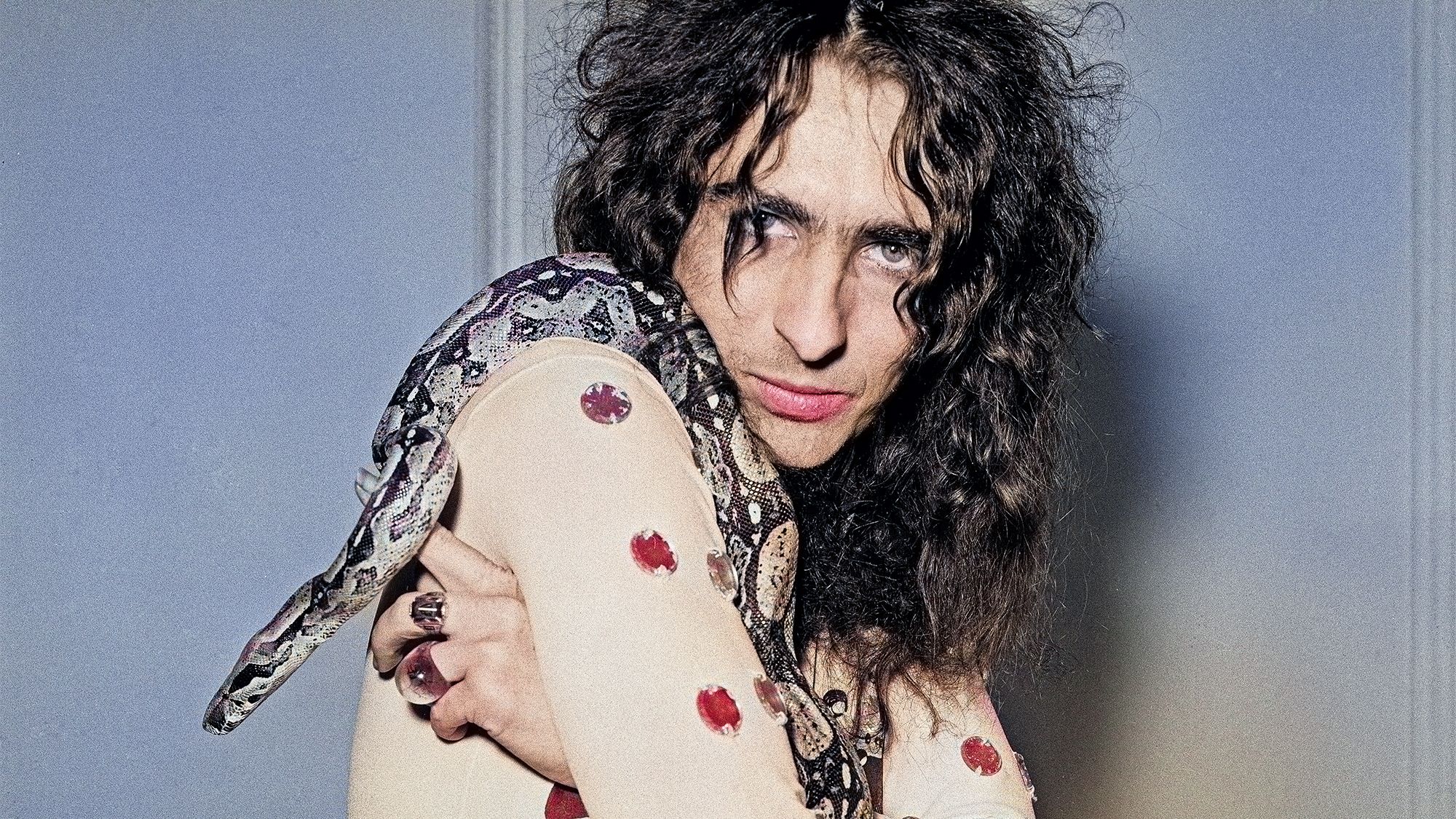
In the vibrant year of 1973, Alice Cooper had evolved beyond being merely a rock icon; he had become the master of a loud and theatrical spectacle. As he and his band set out to create what would become the legendary album Billion Dollar Babies, they found themselves in search of the ideal opening track-something that could capture the electrifying energy of a packed arena.
Unexpectedly,the answer came from a folk-pop song that had previously gained fame through Judy Collins. This song underwent a dramatic sonic overhaul, morphing into a dark yet triumphant anthem that rallied fans for Alice’s grand entrance.
A New Chapter in Alice Cooper’s Career
Billion Dollar Babies signified a pivotal shift in Cooper’s artistic journey, aligning his persona with the changing tides of rock music. Following the success of his 1972 hit “School’s Out,” he garnered a massive teenage following while concurrently inciting outrage among parents who feared the song would inspire rebellion and truancy.
In light of this, Cooper began his transformation from an underground shock rocker to a headline-grabbing provocateur. The track ”Elected” from Billion Dollar Babies exemplified this new image, presenting Alice as a satirical presidential candidate for the rock generation.
Bob Ezrin: The Visionary Producer
Bob Ezrin, Cooper’s producer, played a crucial role in this transformation. His innovative approach to music production, characterized by theatrical elements, elevated Cooper’s sound. Weather it was incorporating children’s voices in “School’s Out” or adding a brass section to “Elected,” Ezrin’s creativity knew no bounds.
For Cooper’s re-emergence, Ezrin identified a song that he believed would serve as the perfect opener: “Hello, Hooray.”
Originally penned by Canadian singer-songwriter Rolf Kempf, the song was notably covered by collins on her 1968 album, Who Knows Where the Time Goes. The lyrics revolve around a performer poised to step into the spotlight, a theme that resonated deeply with Cooper’s evolving persona.
Convincing the Rock Star
However, Cooper was initially hesitant about the choice.
“I heard it and said,’Bob,this is a folk song,’” he recounted during an interview on The Alice Cooper Show Radio Special. “He replied, ‘No, listen to the lyrics.It’s about a guy who is about to go onstage. and he’s terrified – but he’s ready.’”
“It was the perfect opening for Billion Dollar Babies,” cooper concluded.
“I said,’bob,this is a folk song.’ He said, ‘No, listen to the lyrics. It’s about a guy who is about to go onstage. And he’s terrified – but he’s ready.’”
– Alice Cooper
Reimagining the Folk Tune
With Ezrin’s guidance, Cooper reimagined Kempf’s folk-pop melody into a powerful declaration of his newfound identity. They crafted new lyrics that directly addressed the audience, complemented by an orchestral arrangement and dramatic cannon blasts that punctuated the song’s extended outro.
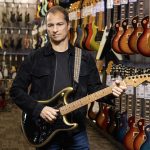
To enhance the track with heavy guitar riffs, Ezrin brought in studio guitarist Steve Hunter, who was tasked with incorporating harmonized slide guitar into the introduction and solo.
At the time, Hunter’s most meaningful achievements were still on the horizon-such as his work on Aerosmith’s “Train Kept A’ Rollin’” and Peter Gabriel’s “Solsbury Hill.” Still, he had a keen sense of what the song required.
Initially, however, he was skeptical about Ezrin’s vision.

“The arrangement was fantastic, and the parts played by the Alice Cooper band were remarkable,” he shared with Guitar Player. “Though, I was surprised when Bob suggested a slide part for the solo. I had dabbled in slide guitar before and found it to be quite challenging. I thought it best to leave that to experts like Johnny winter or George Harrison.”
“Fortunately, I had spent years learning lap-steel guitar, thanks to my father, and I experimented with making my lap-steel technique mimic slide guitar,” he added.
For the session, Hunter arrived with a vintage mid-to-late-1950s Gibson electric pedal steel guitar. Even though it was a basic model with only four pedals-one of which was broken-he made it work.
“Whatever Bob had in mind when he envisioned a ‘slide part,’ it was a pedal-steel performance.”
– Steve hunter
“I tuned the guitar to an open E, the first pedal to an open A, and the third pedal to an A minor chord, allowing me to access at least one minor chord,” he explained. “That was about the extent of my music theory back then.”
“Despite its issues, when I plugged the pedal steel into a Marshall half-stack, it produced an incredible sound, likely due to its PAF pickup. Whatever bob envisioned for the ‘slide part,’ it turned out to be a pedal-steel performance,” Hunter remarked.
while Hunter typically favored improvisation for solos, he and Ezrin agreed that a structured solo was necessary for this track.

“I crafted the solo, then doubled the first half and added harmony to the second half. Over the chords following the solo,I engaged a couple of the Gibson’s ‘chord pedals’ to follow the progression,” he explained.
“The tone was quite organic, relying on the amp’s volume and tone controls, and also those on the guitar. I still cherish the sound of that old pedal steel on ‘hello Hooray,’” Hunter reminisced.
Regrettably, he no longer possesses the Gibson pedal steel.
“It met a tragic end,” he lamented. “Had I known then what I no now, I would have kept that PAF pickup.”
A Hit and a Grand Opening
Ezrin’s instincts proved to be spot on.”Hello Hooray” (with the original comma omitted) became a chart success for Cooper, peaking at number 35 on the Billboard Hot 100. It also set the stage for a spectacular opening during the Billion Dollar Babies tour.
“That song was the quintessential Alice opening,” Cooper reflected. “It served as a rallying cry,signaling to the audience,’The show is about to begin,and you’re part of it now.’”