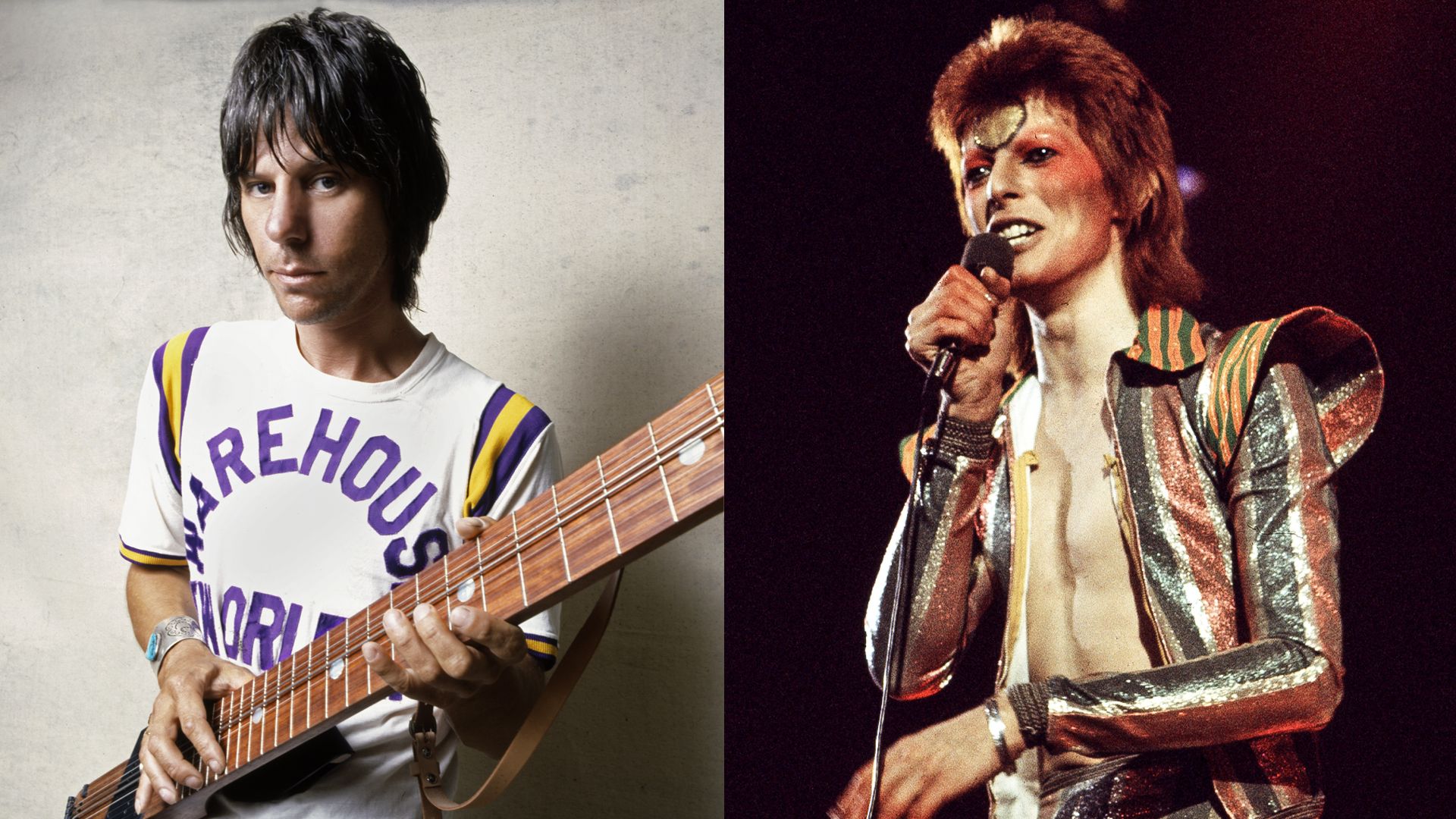
The Unlikely guitarist: How Jeff Beck Shaped David Bowie’s Ziggy Stardust Journey
David Bowie possessed an extraordinary knack for collaborating with guitarists, enlisting the talents of legends throughout his illustrious career. Among those who joined him were Mick Ronson, Carlos Alomar, Earl slick, Adrian Belew, Stevie Ray Vaughan, and Reeves Gabrels.
However, one guitarist remained elusive: Jeff Beck. In 1969, following the success of his iconic single “Space Oddity,” Bowie had his sights set on Beck as the ideal addition to his band.
As Beck recounted in an interview with Guitarist magazine, “Bowie initially wanted me in his band, but he ended up with Mick Ronson, whom he often referred to as his own version of Jeff Beck.”
The Search for the Right Sound
Bowie explored various options, including Tim Renwick, before ultimately choosing Ronson. Their connection was facilitated by drummer John Cambridge, who had played on “Space Oddity” and had previously performed with Ronson in a Hull-based rock band called the Rats, led by Benny Marshall.
“Cambridge was tasked with finding Ronson and bringing him to London,” Marshall recalled. “He discovered Mick while he was marking lines on a local football pitch in Hull.”
A Fateful Meeting
Bowie and Ronson’s paths crossed at the Marquee Club in London on February 3, 1970, where bowie was performing. Both musicians shared a deep admiration for Beck’s groundbreaking 1968 album, Truth.
“Mick was familiar with all the licks,” Marshall noted, “except for ‘Beck’s boogie,’ which he studied but couldn’t quite master, much to his frustration.”
“In 1968, the Rats had opened for Beck at the Cat Ballou in Grantham. After the show, Ronson asked Beck to demonstrate the fast run at the beginning of the song. Beck played it, and Mick insisted, ‘No, play it slower.’ Beck replied, ‘If I play it any slower, I’ll stop!’ Yet, he patiently helped Mick learn the riff.”
beck’s Brief Appearance
While Bowie couldn’t secure Beck as a permanent guitarist, he did manage to enlist him for a pivotal performance at london’s Hammersmith Odeon on July 3, 1973, marking the finale of his groundbreaking tour for The Rise and Fall of Ziggy Stardust and the Spiders From Mars.
“Mick insisted, ‘No, play it slower.’ Beck replied, ‘If I play it any slower, I’ll stop!’ But he was patient, and Mick learned that riff.”
– benny Marshall
This tour, which ran from January 1972 to July 1973, was Bowie’s first major undertaking, initially intended to promote both Ziggy Stardust and its predecessor, Hunky Dory. As the tour progressed, it also featured tracks from Aladdin sane, Bowie’s subsequent album.
A Legendary Encore
During the encore at the Hammersmith show, Beck joined the band, wielding his Oxblood 1954 Gibson Les Paul, complementing Ronson’s modified 1968 Les Paul Custom. Together, they performed ”The Jean Genie,” the lead single from Aladdin Sane, before transitioning into a snippet of The Beatles’ classic “Love Me Do” and wrapping up with chuck berry’s “Around and Around.”
This iconic concert was captured on film by director D.A. Pennebaker for the documentary Ziggy Stardust and the Spiders from mars.
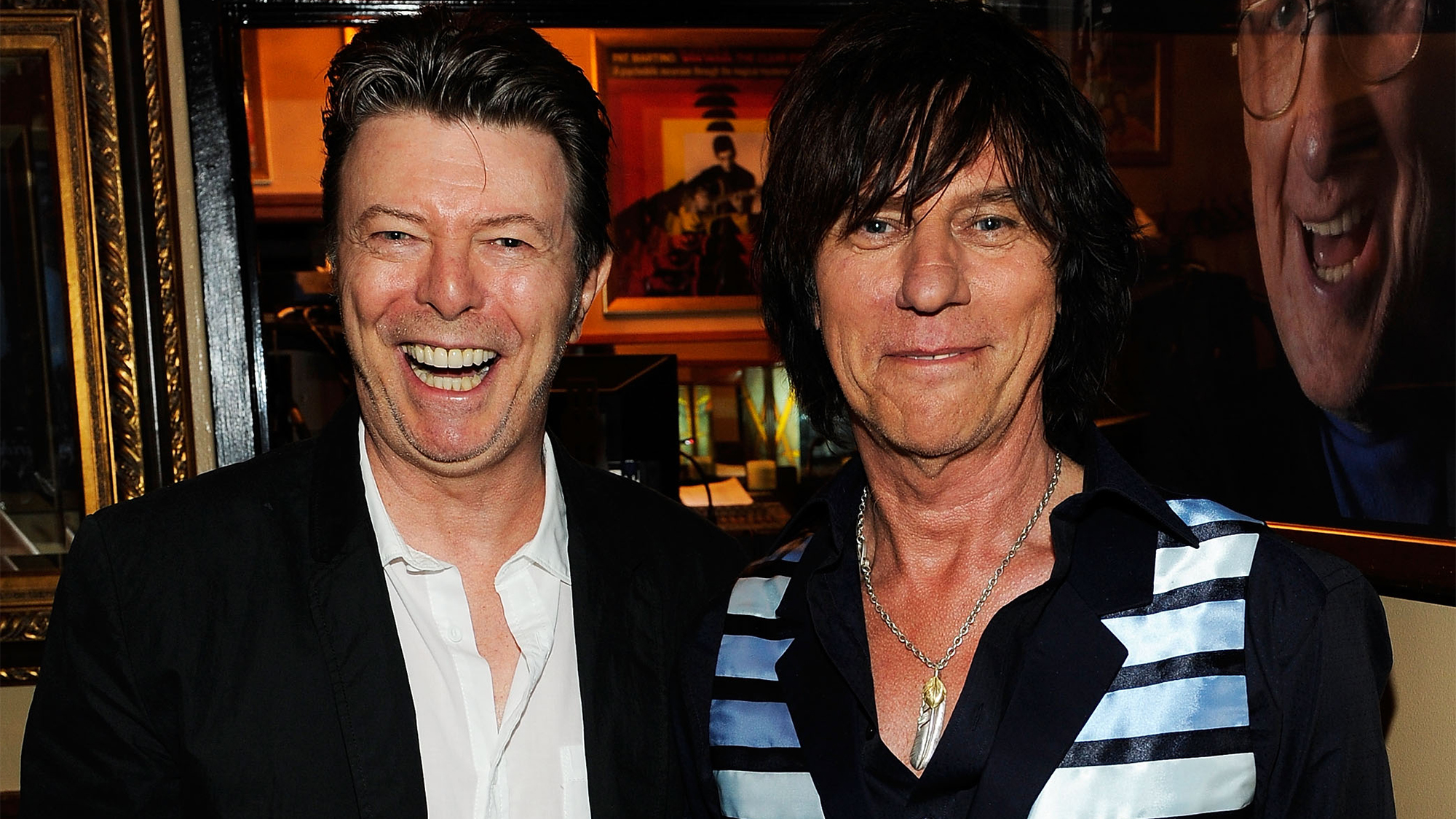
Reflecting on the experience, Beck recalled, “I remember they were filming, and the cameras focused on my wah-wah pedal during The Jean Genie. I was wearing these dirty white platform shoes and went ballistic when they said they were using me in the film, so I refused to sign the release.”
“Bowie quipped, ‘You might as well agree; they’re already showing a bootleg version at the XXX theaters on 42nd Street, and you didn’t look any sillier than I did.’ Eventually, I relented.”
Though, when Pennebaker’s film was finally released in 1979, Beck’s contributions were notably absent.
beck later reflected on the Ziggy Stardust performance as his first experience playing for such a massive audience. “The level of teenage screaming was astonishing. I had never encountered anything like it. I thought I was just a little mascot gift for someone’s birthday, but it turned out Bowie was a huge fan.”
in a meaningful update,Beck’s performances were finally restored in the 4K remaster of the film released in 2023.
Beck’s Reluctance to Join
Interestingly, Bowie wasn’t the only artist who sought Beck’s collaboration. He also turned down offers from John Mayall, Pink Floyd, and the Rolling Stones when they were looking for a replacement for Mick Taylor after his departure in 1974.
As Beck explained, “I’m not really a ‘joiner.’ Pink Floyd wanted me, but they lacked the courage to ask directly. And with the Rolling Stones,I made it clear that I don’t do auditions. I never felt like I would fit in, and I have no regrets.”