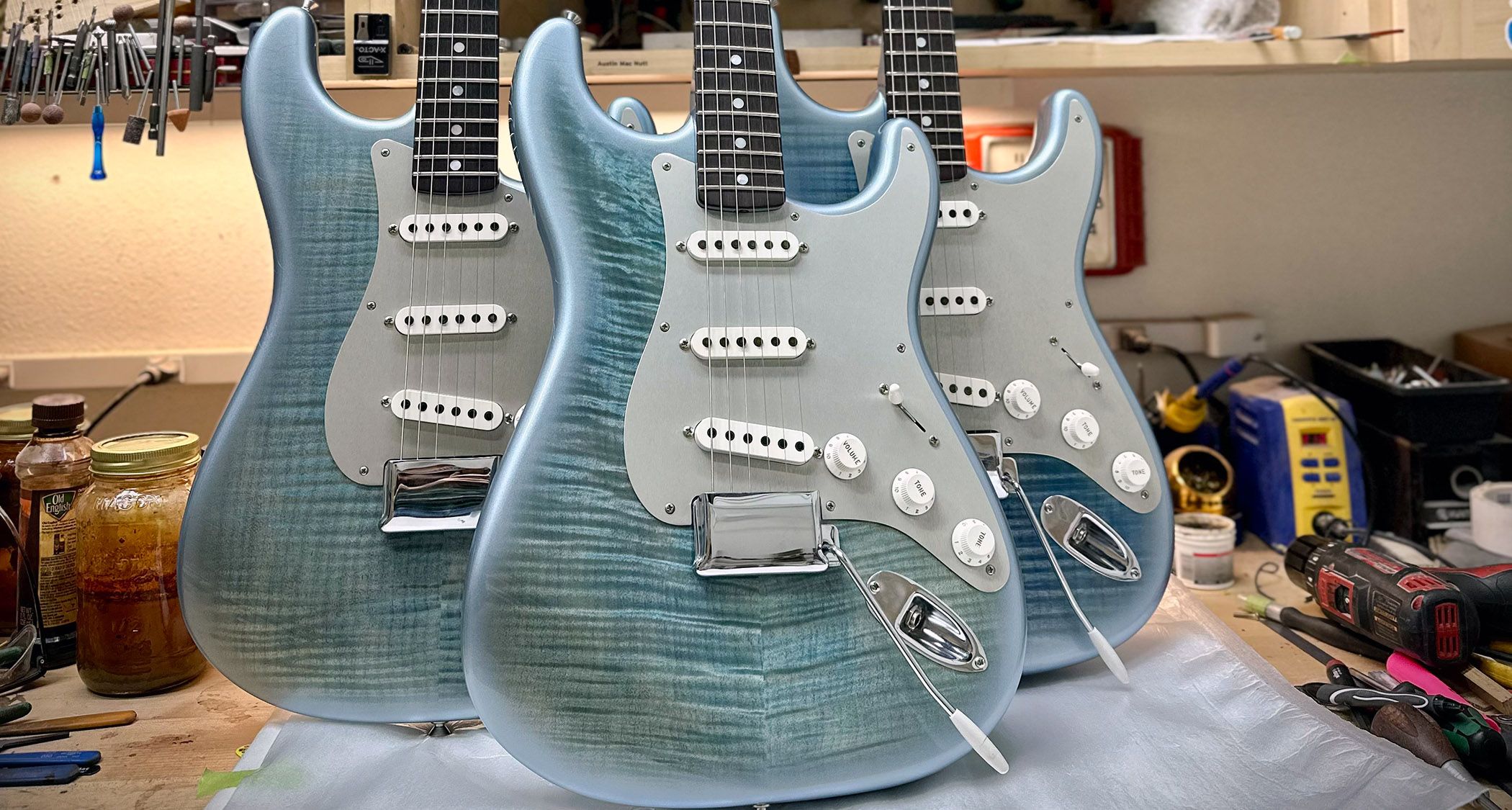
Inside the Fender Custom Shop: Master Builders Share Their Expertise
Fender’s Custom Shop stands as the pinnacle of craftsmanship, where the iconic guitars are meticulously crafted to meet the highest standards set by the renowned California brand.
Within this elite realm, the Masterbuilt series represents the zenith of guitar-making, offering musicians an unparalleled experience akin to the artistry of master luthiers. A select group of seasoned Fender artisans dedicates themselves to creating these exceptional instruments, ensuring every detail is perfected from the headstock to the end-pin.
recently,we had the privilege of engaging with two of Fender’s most sought-after Master Builders,Austin MacNutt and andy Hicks,to delve into their insights on guitar craftsmanship,maintenance,and the evolving landscape of custom guitar making.
Celebrating 75 Years of the Telecaster
As we commemorate the 75th anniversary of the Telecaster, we asked Austin and Andy for their top setup tips for this legendary guitar.
Austin MacNutt: “When dealing with vintage three-barrel saddles, it’s crucial to consider intonation. Without compensated saddles, you’re merely guessing, which can lead to one string being slightly sharp and another flat. Upgrading to compensated saddles can significantly enhance your tuning accuracy.”
Modern Innovations in Telecaster Design
On the latest American Ultra Luxe Vintage ’50s Telecaster,we noticed the use of six individual brass block-style saddles. This design aims to maintain the classic Tele twang while improving intonation. what are your thoughts on this approach?
Austin: “I haven’t personally worked with that specific bridge yet,but it appears to be a fantastic setup.It retains the vintage essence while integrating modern advancements.”
Maintaining Tuning Stability with Vibrato Systems
When it comes to Fender guitars equipped with vibrato systems, especially the Stratocaster, what strategies do you recommend to ensure they stay in tune?
Andy Hicks: “The foundation of any good setup begins with proper fret dressing. If the frets aren’t right, you’ll encounter issues throughout the setup process.”
“When I cut the nut slot, I avoid oversizing it, but I do roll the file slightly to eliminate any burrs that could snag the strings.” – Andy Hicks
Andy elaborates on the importance of using the right nut files, emphasizing that a curved bottom replicates the string’s shape, allowing for smoother movement. He also stresses the need to ensure all strings are properly stretched and that there are no burrs on the bridge saddles, as these can lead to tuning instability.
optimizing break Angle for Enhanced Tuning
Andy: “I pay close attention to the nut slot angle to ensure it aligns naturally with the string path to the tuning key. A steep angle can create sharp points that bind the strings, while an insufficient angle can lead to slippage. Finding that balance is key to preventing tuning issues.”
Austin: “Whether using staggered tuners or traditional ones with a string tree, the angle must match the string’s natural trajectory. Subtle adjustments can significantly enhance a guitar’s overall performance.”
Special Considerations for Offset Guitars
What unique setup considerations do you have for classic offset guitars like the Jazzmaster?
Austin: “For vintage Jazzmaster bridges, it’s essential to understand their design and limitations. They weren’t perfect, and even today, we continue to refine them.”
“In the Custom Shop, the person assembling the bridge is also responsible for setting up the guitar, ensuring every component is optimized for performance.” – Austin MacNutt
He explains that ensuring all components fit correctly is vital for tuning stability.Simple adjustments, such as filing the height adjustment screws, can make a meaningful difference.
The Evolution of Custom Shop Offerings
How has the Custom Shop’s approach to guitar making evolved over the past two decades?
Andy: “Initially, we focused on recreating vintage instruments, which we still do. Though, we’ve expanded to include unique models with unconventional color combinations and features that stray from vintage accuracy.”
Austin: “This evolution allows for more creative freedom, resulting in visually striking instruments that stand out. While we still honor vintage designs, we also embrace the opportunity to create something entirely new.”
As the market evolves, relic finishes remain popular, allowing players to own one-of-a-kind instruments that reflect their personal style.
Shred Culture and Custom Shop Trends
With the rise of guitarists influenced by shred culture, have you noticed an increase in demand for high-performance features in Custom Shop orders?
andy: “Absolutely. I’ve seen a surge in requests for Floyd Rose systems and other high-performance features. The new generation of players is looking for guitars that reflect their heroes’ styles.”
Austin: “We’re witnessing a shift where customers want guitars that resonate with their musical influences, moving away from traditional designs to more modern, performance-oriented instruments.”
Future directions for Custom Shop Guitars
What exciting new directions do you foresee for Custom Shop guitars?
Austin: “The possibilities are endless. Each request is an opportunity to create a unique instrument that fulfills a player’s dream.”
“When I think of Leo Fender, I liken him to someone who invented baseball and hit a home run on his first try.” – Andy Hicks
Andy: “Though, we must balance innovation with tradition. If we stray too far from what defines a Fender, we risk losing the essence of these iconic instruments.”
As the Custom Shop continues to evolve,the commitment to quality and craftsmanship remains unwavering,ensuring that every guitar produced is a true reflection of the player’s vision.