The Legendary Mary Kaye Stratocaster: A Collector’s Dream Come True
While Gretsch had its Chet Atkins 6120 and Gibson showcased a variety of Les Pauls, Fender’s most iconic artist signature model never officially bore that title. Perhaps it was the overwhelming popularity of these guitars that led Fender to be more recognized for its production techniques than its marketing efforts.
In contrast to other major American guitar brands, fender did not venture into artist signature models before the CBS era.Nevertheless, the Mary Kaye Stratocaster has informally earned that distinction, becoming the ‘holy grail’ for many vintage Fender enthusiasts and serious collectors alike.
Distinctive Features of the Mary Kaye Stratocaster
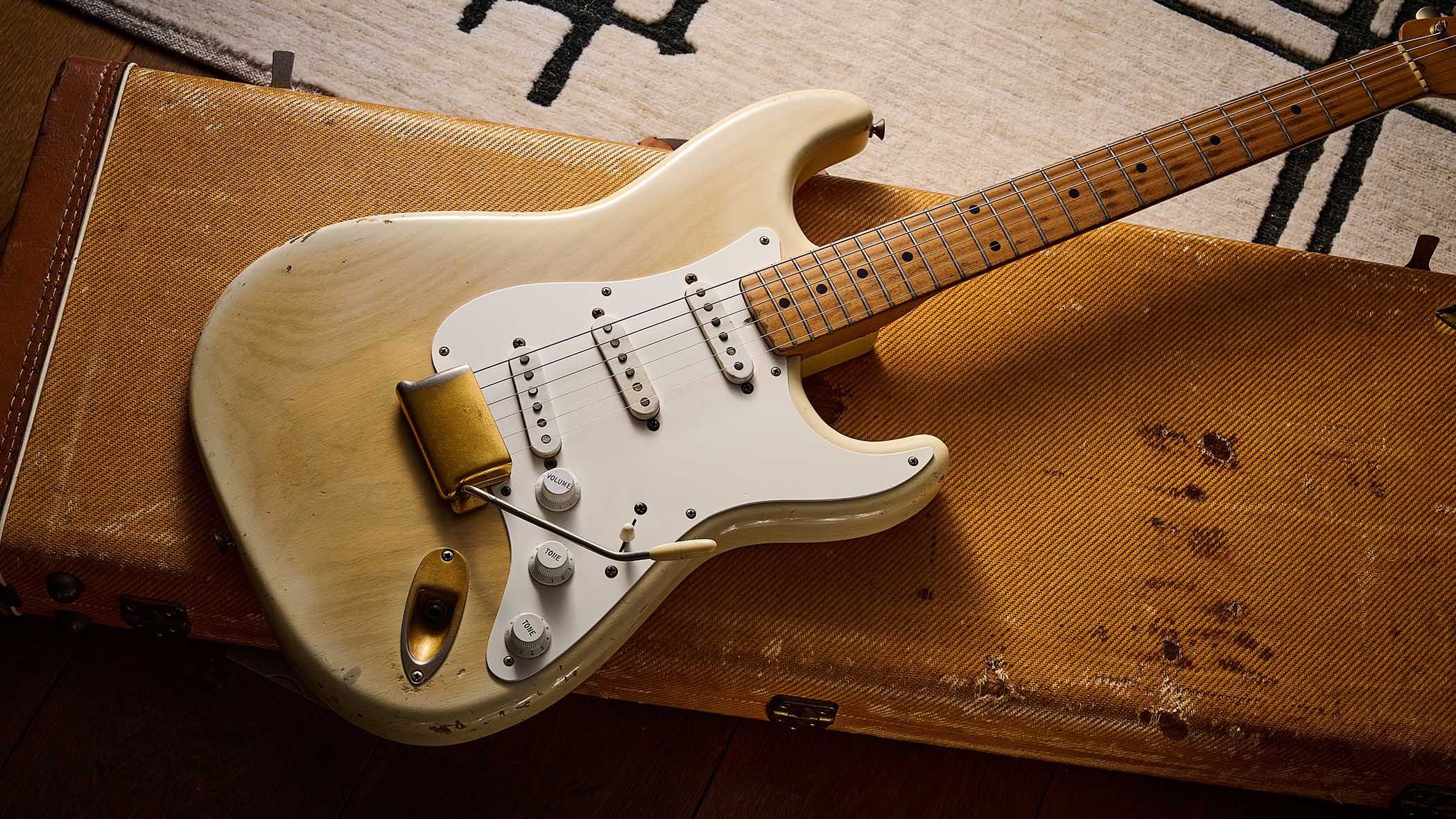
at first glance, the Mary Kaye Stratocaster may not seem extraordinary; its neck profile, pickups, and wiring are quite standard. However, two key features set it apart from other Stratocasters produced in the mid-to-late 1950s: a striking translucent blonde finish over an ash body and factory-installed 14-karat gold-plated hardware.
By 1955, Fender transitioned from the ‘butterscotch’ finish used on Broadcasters and early Telecasters to a more off-white ‘blonde’ finish, which complemented the newly introduced white pickguard. Although sunburst was the standard finish for stratocasters, blonde variants began appearing in early 1955, typically featuring chrome and nickel-plated hardware. To qualify as a true ‘Mary Kaye,’ a Stratocaster must possess the distinctive gold hardware.
The Origins of the Iconic Strat
Phil Hylander, a member of the band Seven Decades, is believed to own the first Stratocaster to leave the Fender factory with a blonde finish and gold hardware.This particular guitar, which was photographed with Mary Kaye, dates back to January 1956 and carries the serial number 09391. Though, it is indeed vital to note that the neck is a period replacement, a detail we will explore further.
Research conducted by Iain Ashley Hersey, a previous owner, revealed that the blonde and gold combination was not officially available to the public until 1957. Fender announced this new offering in The Music Trades in February 1957, listing it at $330, while a sunburst stratocaster was priced at $274.50 that same year.
Mary Kaye’s Connection to the Guitar
Initially,the guitar was kept in Don Randall’s office for six months,during which it was photographed with Mary Kaye and her trio before a performance at the Frontier Hotel in Las Vegas in early 1956.Sadly, the original backstage photo was not ideal, as the headstock was in shadow, obscuring the Fender logo.
In subsequent versions of the photo, the fretboard and headstock were crudely retouched, and a larger logo was added. mary believed the guitar was hers to keep, but the Fender employee who brought it to the photoshoot took it back afterward.
Mary briefly reunited with the guitar while filming the movie Cha-Cha-Cha Boom!, where she mimed to three songs. although the guitar appeared on screen, it was not audible, as the rythm guitar in the tracks sounded like an archtop.
After the shoot, the guitar returned to Fender and later made an appearance at the Summer NAMM Show in New York, where it was demoed by Johnny Cucci. At the end of the show, Don Randall offered Cucci the guitar, stating, “since you’ve been playing it for four days, we can’t exactly sell it as new… so we would like you to have it.”
Johnny Cucci and the Guitar’s Journey
Although primarily a jazz musician, Cucci preferred the Strat over his Gibson Super 400 and D’Angelico archtops. His band recorded the album Hot Club Of America In Hi-Fi in 1958,showcasing the Strat’s capabilities. The album cover features a captivating photo of Cucci with the guitar, and the music itself is a unique blend of styles.
Though, shortly after acquiring the guitar, Cucci noticed that the neck had developed a twist. He declined Randall’s offer for a new guitar, but Fender sent a replacement neck with the condition that the original be returned for inspection.
This replacement neck, dated September 1956, has remained with the guitar ever since. Cucci held onto the guitar until early 1982 when he sold it to Guitar Trader in New Jersey. The shop later sold it to Jimmy Crespo, who used it to record rhythm parts for Aerosmith’s Rock In a Hard Place album.
Over the years, the guitar changed hands multiple times, eventually reaching John Entwistle, who passed it to guitar tech Alan Rogan. In the summer of 1995, Rogan traded the Strat with Lloyd Chiate of Voltage Guitars, who subsequently sold it to Iain Ashley Hersey.
The Guitar’s Legacy and Current Market Value
As of early 2025, the mary Kaye stratocaster achieved a remarkable hammer price of $224,000 at Julien’s Auctions, following a thorough inspection and playtest by appraiser Mike Adams. This guitar has endured nearly 70 years of use, maintaining superb condition, with minimal wear on the maple fretboard.
Mike Long of ATB Guitars provided insight into the current market for Mary Kaye Strats, stating, “They rank highly among vintage Fenders. While a rare custom color pre-CBS Strat may come close, few guitars surpass the value and collector appeal of a Mary Kaye strat.” He emphasized the importance of verifying authenticity, as blonde finishes can be replicated, but the gold-plated truss rod adjuster is a key indicator of a genuine Mary Kaye model.
In 2002, after much persuasion from her nephew, mary Kaye received a brand-new Custom Shop Strat, which came with a certificate reading ‘Mary Kaye Stratocaster,’ serial #MK001. The neckplate was inscribed: “To Mary Kaye from your friends at Fender.”
- Special thanks to Phil Hylander, Mike Adams of Julien’s Auctions, and Mike Long of ATB Guitars.
- This article originally appeared in Guitarist. Subscribe for more insights.