As you read this, the final pieces of Gary Moore’s iconic guitar collection will have found their new homes. While many of us can only dream of owning one of those legendary instruments, we can certainly draw inspiration from the incredible music Gary created with them.
This featured solo draws from two pivotal performances: Gary’s unforgettable solo in Thin Lizzy’s original 1974 rendition of Still In Love With You, and elements from his electrifying live renditions of Parisienne Walkways and Still Got The Blues throughout the years.
Gary was known for his delicate touch and precision, but this particular solo channels his more intense moments, utilizing a driven Marshall amp paired with an Ibanez Tube Screamer for that extra boost. This classic setup mirrors the way Gary often configured his live sound.
A popular technique with the Tube Screamer involves maxing out the level and hitting the amp’s input hard. This approach retains the tonal benefits of boosted mids while reducing the low-end, allowing for additional drive through the gain control if desired.
Gary was a master of drive,skillfully managing feedback by adjusting the volume knob between phrases. The patent Applied For pickups found in vintage Les Pauls were not wax-potted, making them more susceptible to squealing than many modern alternatives.
Many guitarists beleive that unpotted pickups possess a unique tonal quality, but at high volumes, any pickup can be prone to feedback. Gary often let unused strings ring out briefly between phrases, adding a raw edge and sense of urgency to his playing. Enjoy exploring this solo, and see you next time!
Phrase 1: Melodic Simplicity
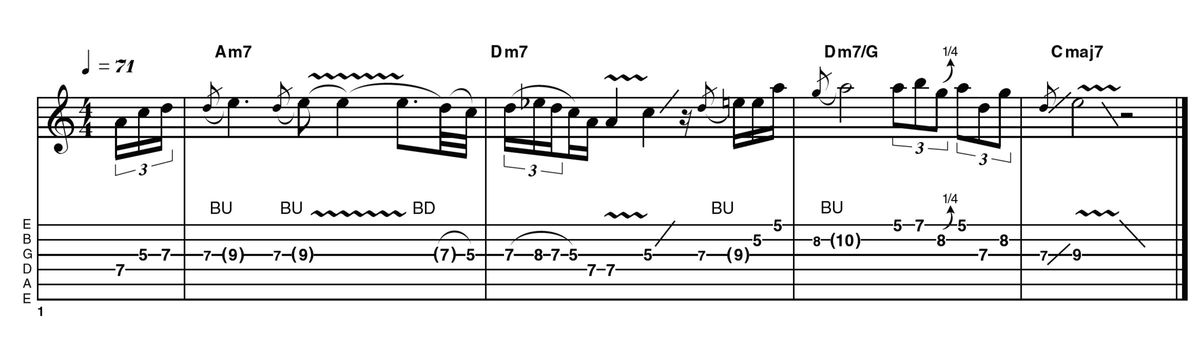
This opening phrase primarily utilizes the shape 1 A minor pentatonic scale, featuring sustained bends and controlled vibrato. We begin on a lower note, keeping the melody simple and leaving space for more complexity later.
Gary’s versatility across various styles is evident in his note choices, such as the B note in bar 3, which complements the dm/G chord. Shortly after, the concluding note (E) is achieved through a slide that transitions from shape 1 pentatonic to shape 2.
Phrase 2: Ascending Lines
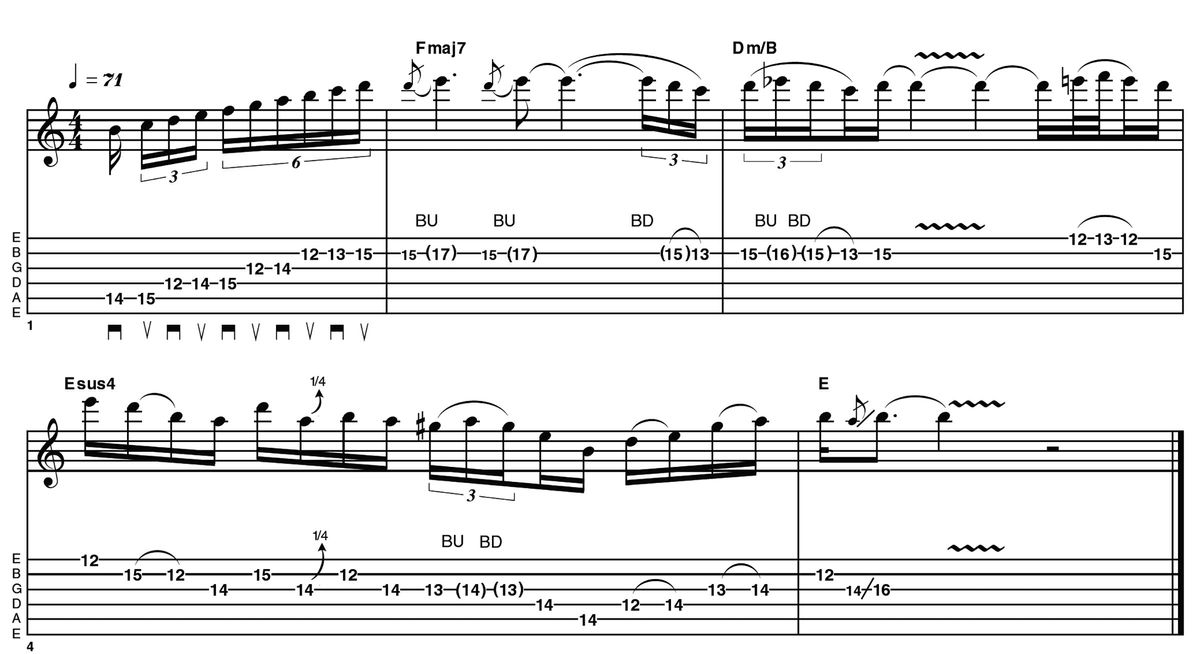
We kick off with an ascending C major scale run, culminating in a held bend. This can be interpreted as a shape 4 A minor pentatonic phrase,transitioning over the subsequent Esus4-E chords into an E dominant 7th arpeggio-based phrase (or E Mixolydian,depending on your preference).
While these terms may seem intimidating,remember that they are merely labels for sounds.we maintain our position on the fretboard throughout this section.
Phrase 3: High-speed Peaks
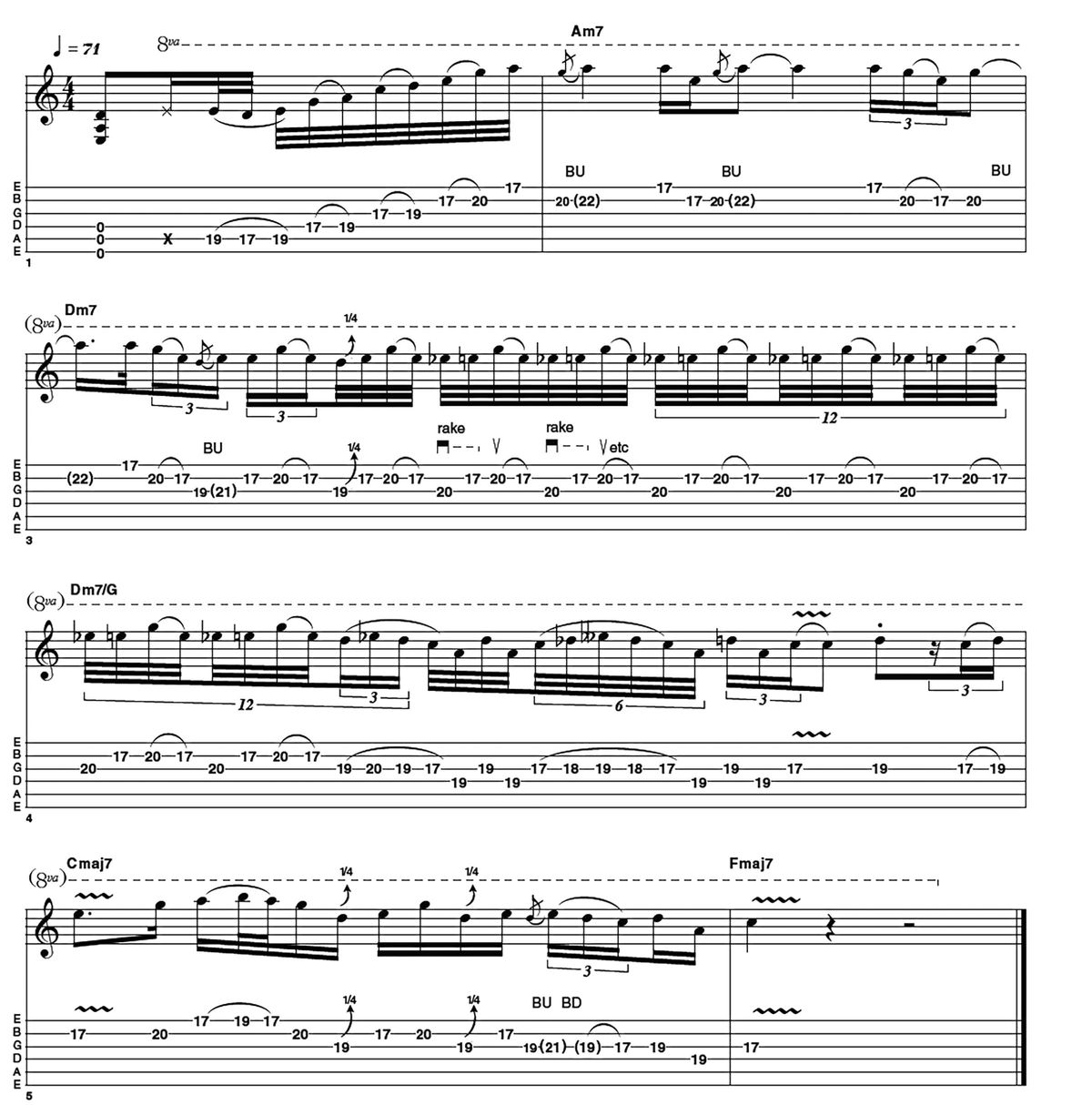
This phrase reaches a climactic point with faster playing and a push/pull feel in the timing.Notice the brief open-string noise before the ascending A minor pentatonic run, which utilizes shape 1 an octave higher than the initial phrase.
Pay attention to the picking directions; some may seem counterintuitive initially, but they enable you to achieve notable speeds with minimal effort. This style greatly influenced the young John Sykes.
Phrase 4: Melodic Flourish
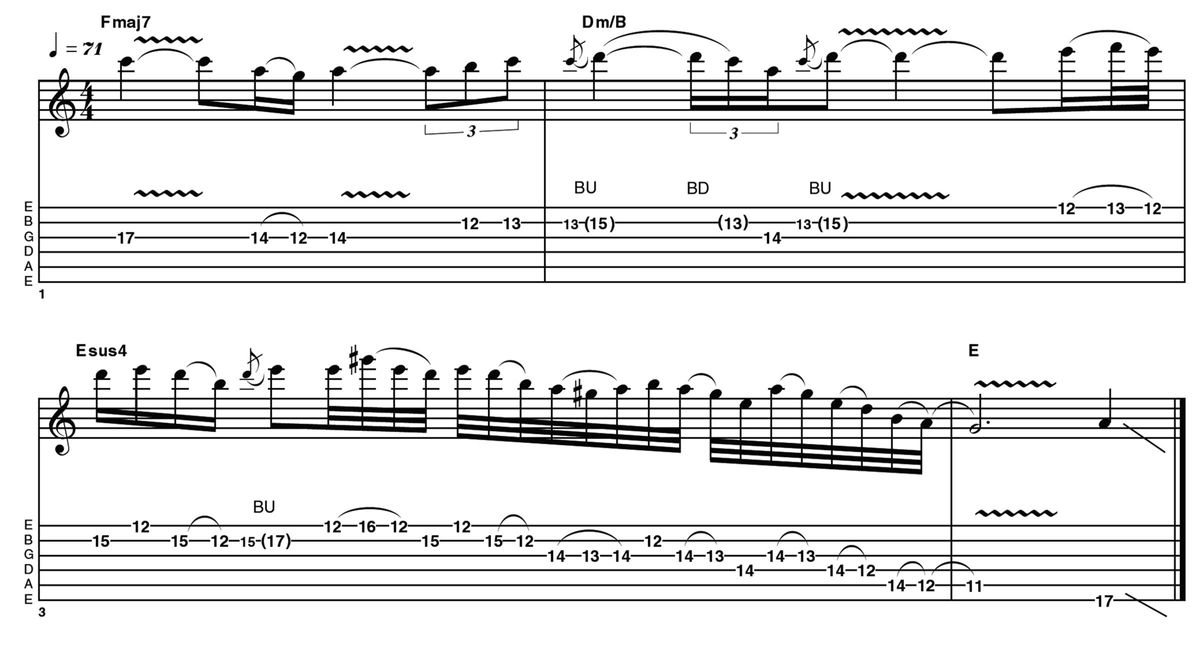
In this section, we maintain a simple and melodic approach over the Dm/B chord, culminating in a flourish over the Esus4-E chords that revisits the E dominant 7th arpeggio/E Mixolydian concept.
This nods to Gary’s fusion era with Colosseum II, although he briefly explores this phrasing during the outro of the full-length version of Still Got The Blues.It felt fitting in the moment!
Listen to the Classics
Thin Lizzy – Nightlife
The rendition of Still In Love With You from this album showcases Gary’s original solo, which served as inspiration for Brian Robertson’s beloved version on the Live And Dangerous album. This original solo is played at a notably higher tempo, beginning with a classic blues feel and evolving into soaring high notes as it progresses. Another noteworthy version is by John Sykes on Lizzy’s Life: Live.
Gary Moore – Blues Alive
This album, recorded during gary’s 1992 tour, is filled with extraordinary performances. Pay special attention to the live versions of Still Got The Blues and Parisienne Walkways, which provide insight into Gary’s spontaneous playing style. You’ll hear him allowing open strings to resonate between phrases, minimizing unwanted feedback and adding an exciting urgency to his sound.
Gary Moore – Back On The streets
This 1978 solo album marks Gary’s transition from fusion to his rock era, which flourished throughout the ’80s. It features the original version of Parisienne Walkways, showcasing precise and controlled playing, alongside What Would You Rather Bee Or A Wasp, which adopts a more flamboyant style with fusion-influenced harmonic ideas. The title track reflects Gary’s awareness of the punk movement while maintaining his intricate playing style.