Exploring the Unique Legacy of the 1967 Gibson Barney Kessel: A Custom Guitar Like No Other
While the Gibson Barney Kessel may not be the first guitar that comes to mind for many enthusiasts, it serves as a remarkable testament to the lengths to which Gibson’s custom division would go to satisfy its clientele during its heyday.
A Rare Gem in the Guitar World
Despite being played by legends like T-Bone Walker and Sister Rosetta Tharpe, the Barney Kessel model has never achieved widespread popularity. However, this particular 1967 version is a custom masterpiece in every aspect. Originally designed for jazz guitarist Tal Farlow, the body shape was ultimately rejected by him, leading to a more conventional single-cutaway design for his signature model.
Barney Kessel’s name was attached to this model without his direct involvement in its design. The Barney Kessel Regular and Custom models debuted in 1961, but there is scant evidence that Kessel himself ever played one; he remained loyal to his ES-350 equipped with a Charlie Christian pickup.
Distinctive Features of the 1967 Model
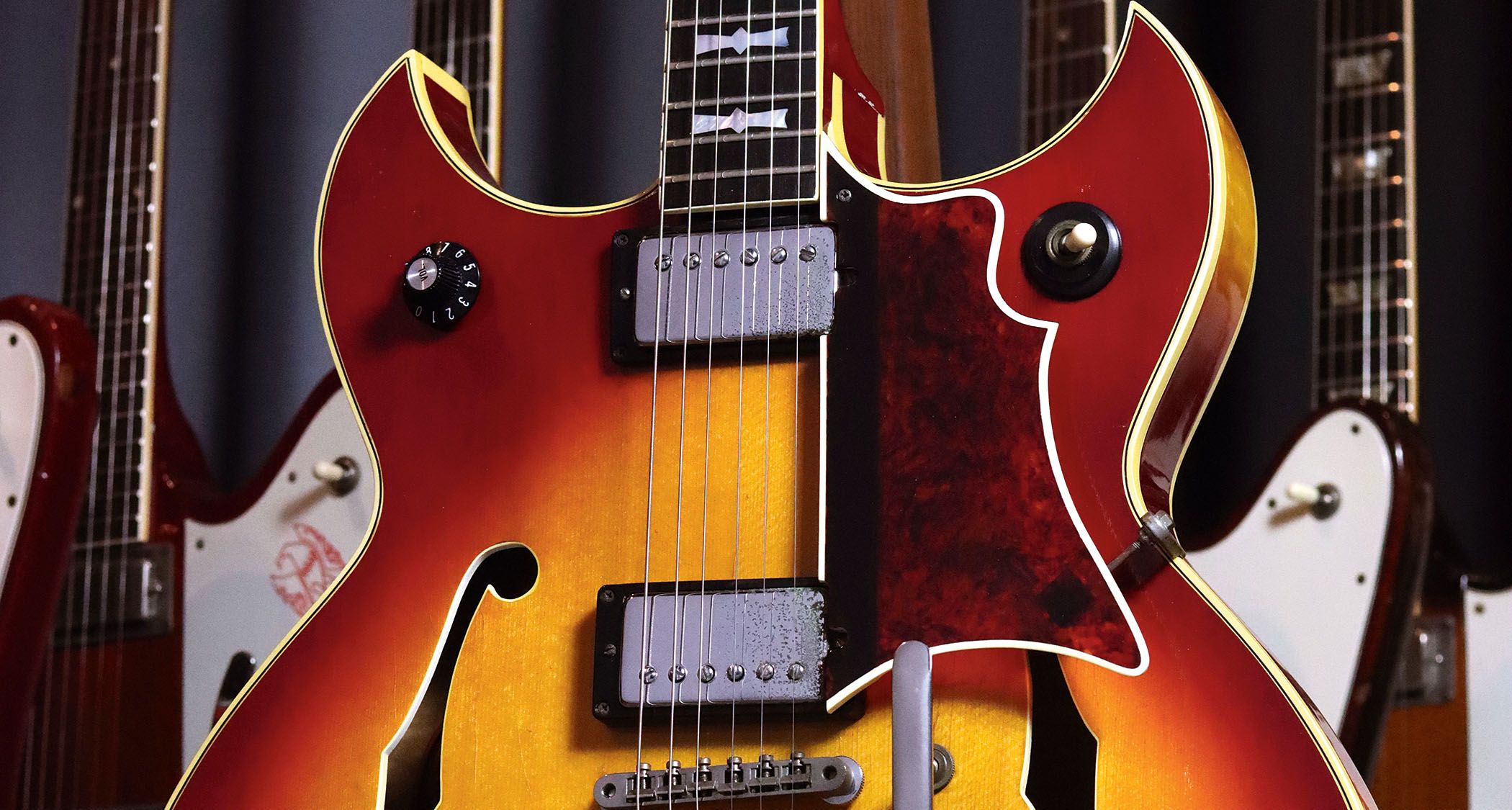
This guitar is based on the Barney Kessel Custom, featuring elegant ‘bow tie’ inlays instead of the typical split parallelograms, and a musical note inlay on the peghead rather then the customary crown. The body is notably intriguing,measuring only 2 ¼ inches in depth compared to the standard three inches.It boasts a solid spruce top with solid maple back and sides, a departure from the earlier models that had laminated spruce tops. From 1965 untill the model’s discontinuation in 1974, production bodies were crafted entirely from laminated maple.

craftsmanship and Electronics
The back of the guitar is crafted from a beautifully figured single piece of maple, devoid of a center seam. The neck features a laminate construction, combining three strips of figured maple with two thin strips of darker walnut. The headstock is adorned with ‘waffle back’ Kluson tuners, and both the front and back are elegantly bound with three-ply binding.
Unlike the standard Barney Kessel tailpiece, this model is equipped with a Bigsby.The electronics are particularly noteworthy, featuring a three-way selector switch, individual volume and tone controls for each of the Patent Number T-Top pickups, a standby switch, a master volume on the upper horn, and a Varitone.
All thes features were factory-installed, and the guitar is stereo, suggesting that the original owner may have had a fondness for Gretsch-style elements, yet it remains distinctly a Gibson.
Without effects,the guitar produces a rich tonal quality. While there is a subtle difference compared to a full-depth Barney Kessel, the distinction is minimal.
Performance and Playability
The guitar retains its original condition, with chrome-plated metal parts instead of the gold typically found on Barney Kessel Custom models. It plays exceptionally well and sounds fantastic. During testing with a Gibson GA-79 amplifier and a Leslie cabinet, the tones evoked a blend reminiscent of Yes and King Crimson.
The neck attachment and deep cutaways provide impressive upper-fret access, which is remarkable for a guitar primarily designed for jazz. The pickguard is uniquely shaped to complement the curve of the cutaway, adding to its aesthetic appeal.
With a longer 25.5-inch scale length, the sound is distinctively wonderful, diverging from the Byrdland model. The tonal richness is evident even without effects, making it a joy to play.

Final Thoughts on a One-of-a-Kind Instrument
This 1967 model features a cherry sunburst finish and ‘witch hat’ knobs, characteristic of that era. While there are minor finish cracks around the standby switch, they are purely cosmetic. The guitar shows signs of use, with some tarnishing on the pickups and hardware.
The pickguard resembles the Tal Farlow design but is uniquely shaped, complemented by a ‘custom’ plaque on the headstock. It retains all the original build-order documentation from CMI (Chicago Musical Instruments), the parent company of Gibson, detailing its custom features, along with the original case.
When the Barney Kessel was first launched, the Regular model retailed for $395, while the Custom model was priced at $560. However, this particular guitar likely commanded a much higher price due to its unique specifications. It truly stands out as a one-of-a-kind instrument.
- David Davidson, a vintage guitar expert, owns Well Strung Guitars in Farmingdale, New York / [email protected] / 001 (516) 221-0563
- This article originally appeared in Guitarist. Subscribe and save.