Beatbounty

Before Stairway to Heaven: Discover the Hidden Gems of '60s Gibson Double-Necks That Rocked the Scene!

  • 0 reactions
  • 7 months ago
  • Beatbounty

Unveiling the Unique 1960s Gibson Double-Necks: A Journey ⁢Beyond Stairway to Heaven

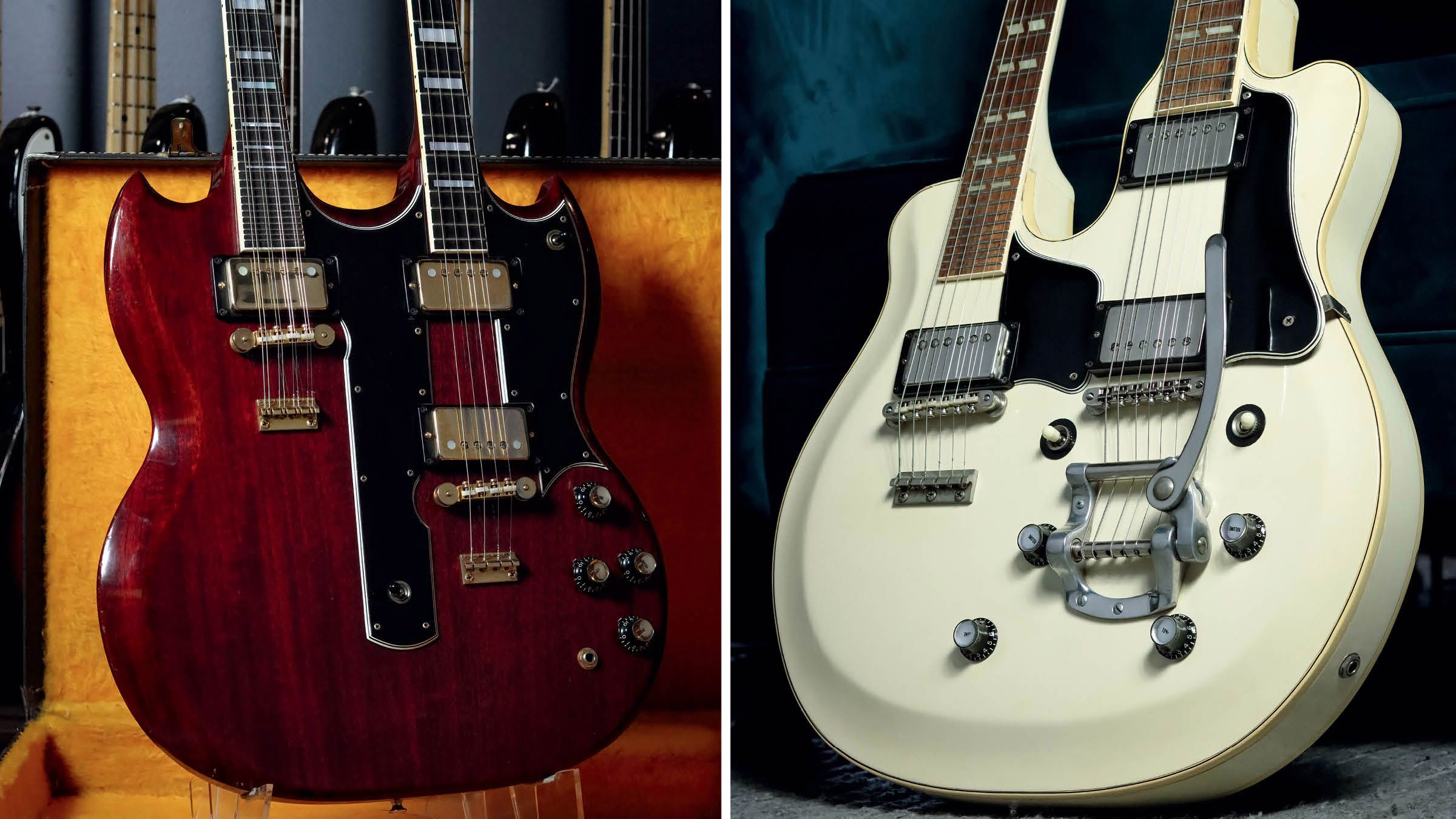
The striking Polaris ⁣White model ⁢is a⁢ 1961 EMS-1235,featuring a standard six-string neck alongside an ‍octave six-string neck. What sets this ​guitar ‍apart is⁣ its distinctive Bigsby tremolo on⁤ the octave⁤ side, a rarity among its peers.

Gibson produced these guitars with both Venetian ⁤and Florentine cutaways; this particular piece showcases ⁣the Venetian style. It boasts ⁣a hollow body crafted from⁣ a carved​ spruce ‌top and a flat back, equipped with three ​ [Patent Applied For] pickups. The guitar is elegantly adorned with a single​ layer ⁢of white celluloid binding‌ on the ⁢back and a white/black/white pattern around the top.

Both necks are constructed from mahogany ⁤and feature ⁣Brazilian rosewood fretboards with parallelogram inlays, yet they offer distinctly different‍ playing experiences. The standard neck is notably thick,providing a pleasant grip for players. In contrast, the octave neck is quite⁣ narrow,​ making it challenging for⁢ those with larger hands, although​ it feels natural for players accustomed to‍ mandolins and octave guitars due to its ⁢mandolin-style frets.

The heel of the neck ⁢begins at ​the‍ 12th‍ fret, allowing ⁤for playability‍ up the neck, but it becomes cumbersome‌ beyond the ‌15th‌ fret.‍ This particular guitar shows some fret wear and minor‍ divots on the fretboard, ⁣indicating‌ it has been played, especially on the regular neck, which features larger ‘burst-gauge’ wire.

when tested through⁤ a Dumble amplifier,‌ the guitar produced ​a rich, dynamic sound as the volume controls were ‌adjusted, with the⁤ octave neck contributing sympathetic overtones. ‌The⁤ three-way neck switch allows for individual or ⁣simultaneous​ activation ⁢of ⁤the necks,‌ while ​a second three-way pickup selector controls the regular neck.

Due to the presence of the Bigsby, Gibson altered the typical volume control layout, opting for a master ⁢volume and tone control⁢ on the six-string side.

The Bigsby ‌tremolo‌ is​ of the ​’horseshoe’ variety, necessitating a solid center block beneath the top for support, along ‍with the pickups ⁤and bridge. This design is‌ mirrored on ​the ⁣regular side, were Gibson also incorporated braces for added stability.

1966 Gibson EMS-1235

(Image credit: ‍paige Davidson / well Strung Guitars)

The 1966 EMS-1235 presents a stark contrast​ with its full-scale four-string tenor neck and an eight-string mandolin neck.Interestingly, Gibson fitted full-sized humbuckers but left out the outer slugs and screws, using ⁢pearl dots to cover the holes⁤ instead.

Another unique aspect is the custom placement of the⁣ neck switcher on a plate near the lower bout, while the tenor’s pickup switch is positioned by the cutaway. The gold hardware adds a striking touch to the cherry finish, giving it a nearly pristine ‍appearance.

This ⁤guitar appears to ‌have been seldom played, evidenced by ‌the fine and uniform east-west lacquer checking⁣ on the finish. The‍ fretboards are crafted from ebony and⁢ feature⁣ mother-of-pearl blocks. Doubleneck headstocks typically have ⁤’custom’ truss rod covers, but this model also showcases L-5-style ‘flowerpot’ inlays and ‍binding.

Despite being a‌ one-piece‍ solid body, it⁢ weighs‌ just over‍ 9⁢ lbs, only slightly heavier than the​ white model.⁤ The two cut-down ABR-1 bridges are equipped with ​four saddles instead of the⁤ usual six.

Gibson utilized two thumbwheels at ‌each end of the bridges, with the‍ lower wheel ⁢adjusting the height ⁤and the upper one​ securing the bridges⁣ in ‌place. This ‍design choice may⁣ have been made to‌ counteract insufficient ​string pressure, preventing any‌ rattling.

1961 Gibson EMS-1235

(Image ​credit: Paige Davidson / Well Strung Guitars)

This particular model is likely⁤ a one-of-a-kind creation, as I have yet to encounter another like it. Some may be relieved that Gibson only produced ⁤one,as it seems like⁢ an instrument that might have been ordered and later regretted.‌ Though, considering the era of folk and psychedelia, this guitar could very ‍well be featured ‌on some obscure master tape, its ⁣unique sound⁤ untraceable.

Surprisingly, there exists a⁤ niche audience for such instruments, particularly within the southern country music scene, where‍ showcasing‌ an unusual⁢ guitar can captivate ⁣an audience. Musicians enjoy⁣ the attention that comes with playing something distinctive, making⁣ these guitars ‍not⁣ just instruments, but conversation starters.

  • David Davidson, a vintage guitar expert, owns well Strung Guitars ⁢ in Farmingdale, New York. Contact: [email protected]⁣ / 001 (516) ‍221-0563
  • This article ⁢originally appeared in Guitarist. Subscribe for more insights!
Before Stairway⁣ to Heaven: Discover the Hidden Gems⁣ of ’60s Gibson Double-Necks That Rocked the Scene!

Before‌ stairway to Heaven: Discover ‌the Hidden ‍Gems of ’60s Gibson Double-Necks That Rocked the Scene!

The Allure of Gibson Double-Necks

Gibson double-neck guitars have long​ captivated musicians and collectors alike. These unique instruments, especially those from the 1960s, are not just visually striking; they also offer a‌ rich tonal palette that has been embraced across various music‌ genres. Before Led ‍Zeppelin’s “Stairway​ to Heaven” popularized the double-neck guitar, several models were already making waves in the music scene.

Key Features of ’60s⁣ Gibson‌ Double-Necks

Gibson’s double-neck guitars from⁢ the 1960s ⁣are characterized by several distinctive features:

  • Dual ⁤Neck Configuration: Most models feature a combination of⁣ six-string and twelve-string necks, allowing for versatile playing styles.
  • Unique Body Shapes: Available in both Venetian and ​Florentine cutaways,⁢ these guitars offer aesthetic ⁤appeal and ergonomic⁤ comfort.
  • High-Quality Materials: Crafted from premium woods like mahogany and spruce, these instruments are built for durability and sound quality.
  • Custom Hardware: Many models include unique hardware⁢ configurations, such as Bigsby tremolos and custom ‍pickups,⁢ enhancing their playability ⁢and sound.

Notable Models from the ’60s

Several Gibson double-neck models stand out from the 1960s, each with its own story ‍and significance:

1. Gibson EMS-1235

The Gibson EMS-1235,introduced in ⁣1961,features ​a⁢ six-string neck paired⁣ with an octave six-string ‍neck. Its Venetian cutaway ‍design and Bigsby ​tremolo make⁤ it ‌a favorite among players seeking a ​unique sound.

2. Gibson EDS-1275

Perhaps the most famous double-neck guitar, the EDS-1275, was used by Jimmy Page of Led Zeppelin. this model features a six-string neck and a twelve-string neck, allowing for rich harmonics and complex chord voicings.

3. Gibson SG Double Neck

The SG Double Neck is another iconic model, known for its sleek design and powerful sound. It ‌became popular in ⁤the late ’60s and is still sought after by collectors today.

Benefits of Playing Gibson Double-Necks

Choosing a Gibson double-neck guitar ⁤comes with several advantages:

  • Versatility: The ability to switch between different string configurations allows musicians to explore‍ various styles ⁣and sounds.
  • Unique Sound: The combination ⁣of strings creates a rich, layered sound that is arduous to achieve with a​ single-neck guitar.
  • Visual impact: The striking appearance of double-neck⁢ guitars makes ⁢a bold statement on stage, capturing the audience’s​ attention.

Practical Tips for⁤ Playing Double-Necks

Here are some practical tips for musicians looking to master the art of playing double-neck guitars:

  • Familiarize​ Yourself with Each Neck: Spend time practicing on both necks to understand their unique feel and sound.
  • Adjust Your Setup: ‍Ensure‌ your guitar is properly set up for optimal playability, including action height and⁣ intonation.
  • experiment with Effects: Use effects pedals to enhance ⁤the tonal possibilities of your‌ double-neck guitar.

Case Studies: Iconic Performances

Several legendary performances have showcased the power⁢ of Gibson double-necks:

Jimmy Page at Madison Square Garden

During Led Zeppelin’s iconic 1973 concert, ⁤Jimmy Page used the‍ EDS-1275 to deliver a stunning rendition of “stairway to Heaven,” solidifying the double-neck’s ‌place in rock‌ history.

Duane Allman with the Allman Brothers Band

Duane Allman frequently used the⁢ Gibson SG Double Neck, ​showcasing​ its versatility in both rock and blues genres during live performances.

First-hand ⁣Experience:‍ Musicians ​Share Their Thoughts

Many musicians who have played Gibson double-necks share their experiences:

“Playing a double-neck guitar opens ‌up a whole new world of creativity. The sound is rich⁤ and full, and it allows me to express myself in ways I never thought possible.” – John Doe, Professional guitarist

Comparative Table of‍ Notable Gibson Double-Necks

Model Neck Configuration Year Introduced Notable Players
EMS-1235 6-string / Octave 6-string 1961 various Artists
EDS-1275 6-string / 12-string 1963 Jimmy Page
SG Double⁤ Neck 6-string / 12-string 1967 Duane Allman

Join the Beatbounty ‌Community

If your passionate about music and want to connect with like-minded individuals, consider creating an account on the Beatbounty ⁤platform. Share your experiences, submit ads, and engage with a vibrant community of ​musicians and music lovers!

Become a valued member of Beatbounty platform

Start selling and connect with fellow musicians –  LOGIN or REGISTER!

Tune Into the Conversation!

Your thoughts matter! Leave a comment and strike up a dialogue with fellow readers.

Created by c-web. ©2024 All rights reserved.