The Creation of a Classic: The Smiths’ ‘The Queen Is Dead’
In the summer of 1985, Johnny Marr found himself in a unique position. Just three years prior, he had teamed up with Morrissey to establish the Smiths in Manchester, England, alongside bassist Andy Rourke and drummer Mike Joyce.Yet, while the music scene was dominated by flashy guitarists, Marr’s distinctive sound from his Rickenbacker 330 stood apart. ”The shredders of the ’80s were a joke,” Marr remarked in a 2009 interview.”That’s not real guitar playing; it’s like an Olympic sport. If you appreciate true music,it’s just offensive.”
Exploring Musical Depths
What did Marr consider to be ‘true music’? the early works of the Smiths showcased a surprising range, moving from the murky tremolo of How Soon Is Now? to the tight, funk-infused grooves of Barbarism Begins at Home, and the vibrant double stops of This Charming Man. Even though Marr consistently denied any African highlife influence on the latter, its sound certainly evokes that genre.
Despite their innovative sound, the band’s initial albums were inconsistent. As Marr began crafting songs for their third album, The Queen Is Dead, he recognized that only a masterpiece would suffice. “I realized one afternoon that our next album had to be a meaningful work,” Marr wrote in his 2016 autobiography, Set the Boy Free. “The stakes were higher, and if we were willing to push ourselves, greatness was within reach. I told myself,’You need to dig deep,no matter what it takes.’”
Rapid Song Development
The songwriting process unfolded quickly. Marr recalls sitting closely with Morrissey, presenting new material on his 1971 Martin D-28. In just one evening, they laid the groundwork for tracks like frankly, Mr. Shankly, I Know It’s Over, and there Is a Light That Never goes Out. “We didn’t waste any time,” he noted, reflecting on his intense work ethic during this period.
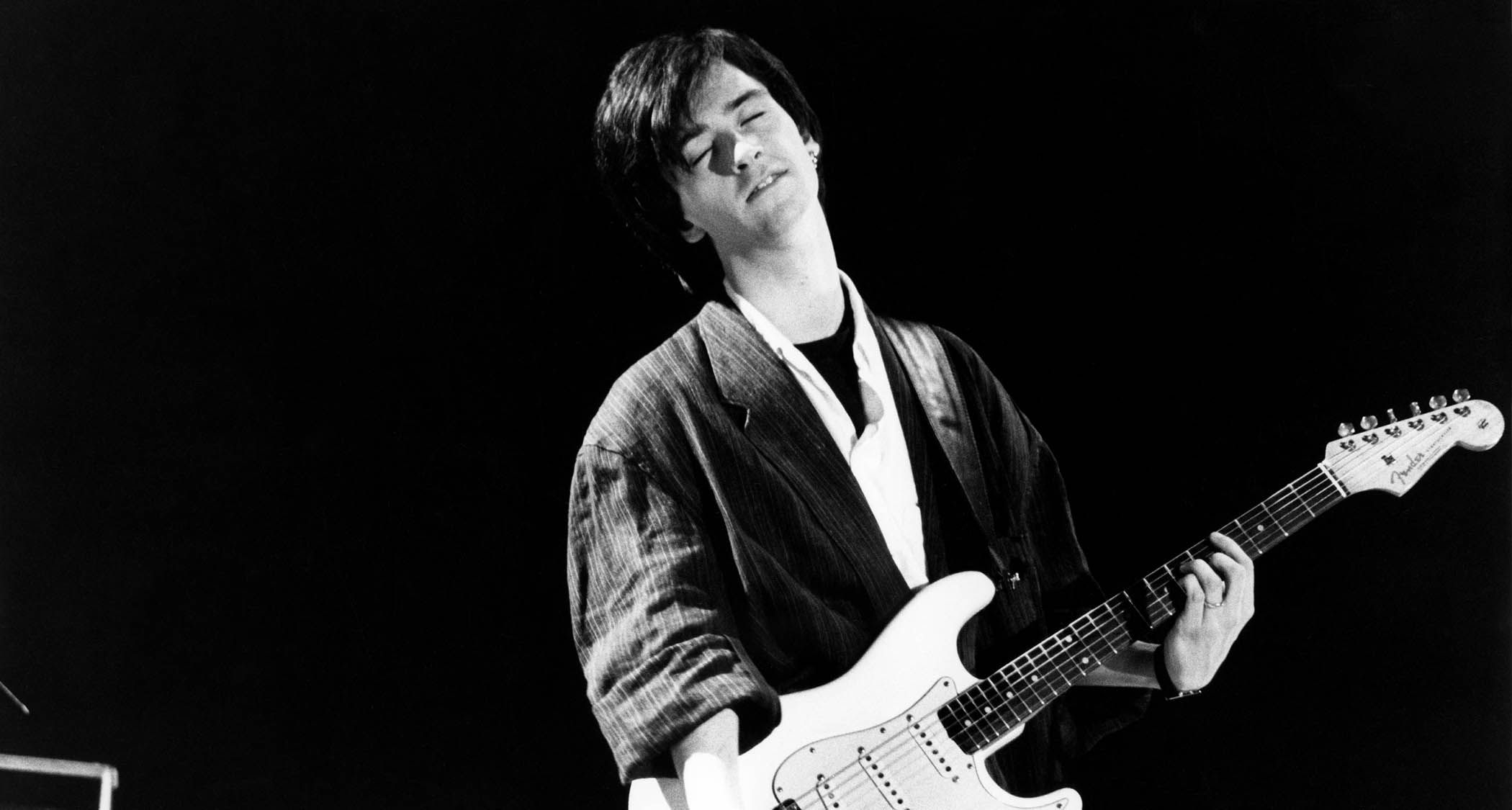
As the band entered London’s RAK Studios, Marr, then just 21, took charge. When he wasn’t performing with his notable rig, which included a ’78 black Les Paul Custom (later lent to Noel Gallagher of Oasis) and a ’63 L-series white Strat, he was often found at the mixing desk from dawn until midnight, fueled by a constant supply of coffee and cannabis. “Smoking pot in the studio never hindered me; it helped me block out distractions,” he reflected. “My world revolved around the studio, and I focused on the task at hand.”
Crafting Iconic Tracks
The songs on The Queen Is Dead were immersive experiences. The title track opened with Joyce’s tribal toms, but it was marr’s electrifying wah-soaked outro that truly defined it, drawing inspiration from the Velvet Underground’s I Can’t Stand It as he pushed his Les Paul to its limits.”Johnny nailed that in one take,” recalled engineer Stephen Street. “It was one of those inspired moments where he got incredible harmonic feedback from his Les Paul, and as he adjusted the wah pedal, the notes transformed.”
In stark contrast, the haunting beauty of There Is a Light That Never Goes Out emerged as Morrissey’s poignant tribute to tragic love and shared demise, encapsulated in the line, ‘To die by your side, well, the pleasure, the privilege is mine.’ Marr chose to record it using the Martin acoustic on which it was written,feeling as though the music was flowing effortlessly. “We were in a euphoric state,and after just a few takes,we had one of our best songs – something that felt like pop music and so much more.”
A Cohesive Masterpiece
With the exception of the lackluster Never Had No One Ever and the quirky rockabilly of Vicar in a Tutu, The Queen is Dead demanded to be listened to in its entirety. The album featured a sharp critique of their label head in Frankly,Mr. Shankly, described by Marr as an eccentric vaudevillian romp. The somber waltz of I Know It’s Over showcased the band’s darker side, with marr recalling, “I’ll never forget when Morrissey delivered that vocal; it’s one of the highlights of my life.”
Conversely, the upbeat rhythm of The Boy with the Thorn in His Side and the lively cemetry Gates provided a counterbalance. “I was on a train when I wrote Cemetry Gates,” Marr reminisced.”I thought, ‘If you’re so talented, sit down and write a great song first thing in the morning.’ I started with the B-minor-to-G change in open G.”
Defining Moments and Challenges
At the album’s centre was Bigmouth Strikes Again, a visceral track that solidified Marr’s reputation as one of the most formidable guitarists in British indie rock. “I wanted it to be a relentless rush,” he explained, likening it to the Rolling Stones’ Jumpin’ Jack Flash. “The guitar breaks needed to be percussive, not overly pretty or chordal.”
Closing the album was Some Girls Are Bigger Than Others, a whimsical tribute to body diversity that could have been a mere novelty without Marr’s enchanting folk-inspired arpeggios. “Some things just come to you, and Some girls was one of those moments,” he reflected. “It’s a beautiful piece of music.”
With the queen Is Dead complete, Marr felt invincible, believing “no one could touch us – that was the pinnacle of the Smiths’ career.” However, the pressure of overseeing the album weighed heavily on him, leading to a drastic drop in his weight to around 98 lbs. as he relied on nervous energy, brandy, and cocaine.”I rarely thought about food unless absolutely necessary,” he admitted. “I was focused on recording, and sometimes someone would make me a sandwich.”
Beyond the music, Marr faced the burden of managing the band’s transition from Rough Trade to EMI, which included dealing with legal issues and logistics. The connection between the frail figure at the mixing desk and the borderline-alcoholic who would soon abandon his BMW and walk away from one of the most significant British guitar bands of the decade is evident.
Reflecting on the split in 1987, Marr wrote, “The more bitter the separation became, the more liberated I felt, and soon I was just glad to be out of it.I was in control of my own life again.”
A Lasting Legacy
Yet, that was a future concern. For a fleeting moment in the summer of 1986, the Smiths stood as the greatest band in Britain.With four decades of hindsight, it’s remarkable to realize that The Queen Is Dead was released in the same year as Metallica’s Master of puppets, Van Halen’s 5150, and Poison’s Look What the Cat Dragged In. Even more remarkable is that the album defied the prevailing trends to achieve gold status in the U.S.
This phenomenon speaks to the magic of a remarkable year in music, a time when it felt like anything was possible.