The Remarkable rise of Rowan Robertson: how a 17-Year-Old Guitarist Joined Forces with Ronnie James Dio
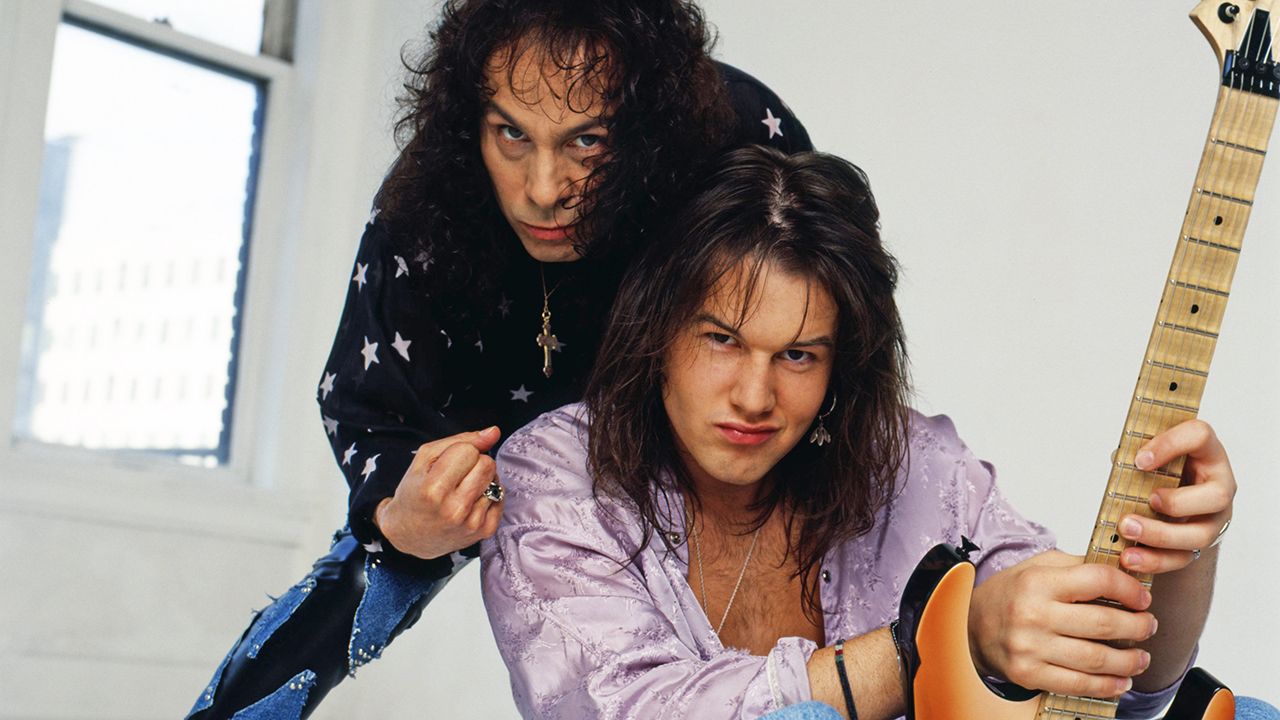
At just 17 years old, Rowan Robertson landed the prestigious role of guitarist for the legendary Ronnie James Dio. When it came time to record the 1990 album Lock Up the Wolves, he not only played but also co-wrote every track. “During the writing phase, I expressed my doubts to Ronnie, saying, ‘I’m not sure I can handle this.’ He reassured me, ‘Trust me – you can,’” recalls Robertson.
The Choice Behind the guitar
Dio’s decision to bring robertson on board stemmed from his admiration for the young guitarist’s rhythm tone. “He appreciated the style of British guitarists, which worked in my favor,” Robertson explains. This confidence allowed him to carve out his own identity, steering clear of mimicking previous guitarists like Craig Goldy, Vivian Campbell, and Ritchie Blackmore. “Oddly enough, I didn’t feel any pressure,” he adds.
Embracing the Challenge
“Ronnie warned me,’Some fans might not accept you for replacing Viv,’ but I rarely encountered negativity,” Robertson shares. He found that the songs originally crafted by Ritchie Blackmore resonated with him the most during live performances. “The only advice Ronnie gave me about emulating past guitarists was, ‘Tony Iommi used to vibrate the chords with his left hand,’” he recalls.
A Unique bond
Despite the age difference-dio was in his 40s at the time-the two musicians developed a strong camaraderie. “Ronnie sought a partner in crime and a bandmate to share experiences with, which he certainly found in me!” Robertson reflects. “Being so young, he felt a responsibility to look out for me, and he did just that.”
Transitioning After Dio
Following the release of Lock Up the Wolves, Dio rejoined Black Sabbath, while Robertson formed a new band called Violet’s Demise with Oni Logan, the former vocalist of Lynch Mob. Regrettably, neither venture gained traction, and when Dio reassembled his band, he opted for Tracy G rather of Robertson.
Reflecting on the Experience
“I don’t view my time with Dio as better or worse in terms of playing,” Robertson states about his singular album with the iconic frontman. “I wouldn’t change a thing as I gave it my all at that moment.”
How Did You Catch Dio’s Attention?
Robertson’s journey began when he read in Kerrang! and Metal Hammer that Dio was searching for a new guitarist.Inspired by Steve Vai’s early success with frank Zappa,he thought,”I’m almost too old for this! I need to seize this opportunity!”
Crafting the Perfect Audition Tape
using a four-track Tascam recorder,he created a demo tape featuring Dio’s song The Last in Line with his own solo layered on top. “My dad joked, ‘I’d be shocked if you don’t get an audition from that!’” he remembers. After an initial rejection from Phonogram in London,he sent the tape to Dio’s fan club in the U.S., along with a Polaroid of himself striking a pose.
Months later, Wendy Dio called him, asking how he would feel about performing in front of 20,000 fans. “I acted confident, but I was incredibly nervous afterward. My dad reassured me that I was getting a free trip to America to play with my idols, which helped ease my anxiety,” he says.
The Audition Process
Ronnie auditioned Robertson twice in Los Angeles before instructing him to return to the UK, pack his belongings, and come back to start writing for Lock Up the Wolves.
Gear Used for the Audition
Robertson used a modified Squier Stratocaster, equipped with a humbucker and a Kahler locking tremolo, along with a Marshall Jubilee 25/50 head and a 2×12 cabinet. “I later regretted letting that gear go!” he admits.
Memorable Moments from the LA Audition
The audition took place at The Alley rehearsal studios in North Hollywood. “Before we started, Ronnie expressed, ‘I really want this to work,’ which was encouraging,” he recalls. They played classics like Stand Up and Shout and Holy Diver. “I noticed bassist jimmy Bain smiling,which felt like a good sign!”
Then came a surprise: they asked him to improvise over a series of chords. “I played through Ronnie’s Marshalls, which I believe were the same ones used on their early albums-two full stacks of JCM800s. I had never experienced such a wall of sound before,” he shares.
The Moment of Truth
After the second audition,Larry Morand,Dio’s personal assistant,discreetly informed him,”I’m not supposed to tell you this,but you got the gig!”
Life After Joining Dio
Transitioning from a quiet village in England to the vibrant hair metal scene in LA was a culture shock for Robertson. “Larry helped me secure endorsements with Jackson and St. Louis Music, who provided me with Alvarez acoustics and a Crate practice amp,” he explains.
Beginning the Recording Sessions
Robertson doesn’t recall the first song they wrote together, but he distinctly remembers crafting the chorus riff for Born On the Sun after being sent home from the audition with instructions to write riffs. “Jimmy contributed the opening riff, along with some fantastic parts on the album, as did Ronnie,” he notes.
Studio Gear and Recording
In the studio, Robertson had access to high-quality equipment, including Marshall amps, Charvel guitars, and Boss pedals. “Ronnie always said the best tone comes from a Marshall,a cable,and a guitar. It was classic metal, so those were the right tools for the job,” he explains. While he experimented with other gear, he always returned to the Marshall setup.
Creating Hey Angel
Robertson recalls a YouTube video of the recording session for Hey Angel. “The riff came to me while Ronnie was out of the room at Audible rehearsal studios. Vinnie Appice laid down an open beat, and I jammed something that felt like a mix of Stand Up and Shout and ozzy Osbourne’s Miracle Man. When Ronnie returned, I could tell he was intrigued by what we were playing,” he says.
Reception of Lock Up the Wolves
“The album seemed to fade into obscurity,” robertson reflects. “It wasn’t especially commercially viable and was overshadowed by the rise of grunge at the time.”
The Unwritten Second Album
Despite rumors, there was never a second album written. “I visited Ronnie’s house a few times to brainstorm riffs, but that tape is long gone,” he laments. At that time, Dio was still contemplating rejoining Black Sabbath, and when Wendy informed him of the decision, he felt indifferent. “I would have loved to collaborate with him again; I believe I could have contributed considerably,” he adds.
Post-Dio Ventures
Robertson’s next project, Violet’s Demise, struggled to gain traction. “We were told to find a single for our album, but we couldn’t. When we refused to let them edit a track,they dropped us,” he explains.
Rejoining Dio and the Short-Lived Tour
In 2001, Robertson was invited back to tour with Dio, but the tour was canceled due to safety concerns following the events of 9/11.
Current Endeavors with Bang Tango
Since 2014, Robertson has been performing with Bang Tango.”I’ve toured with Joe Leste and kyle Kyle, and they can call on me anytime for gigs,” he shares. His rig remains consistent: a Superstrat or hard-tailed gibson-style guitar, Marshall amps, and a few pedals for added effects.
Unreleased Material and Future Possibilities
robertson mentions a full song that never made it onto Lock Up the Wolves. ”wendy once said the sound quality was too low for release, but with advancements in AI, it might be possible to clean it up now. It’s on my to-do list!”
Looking Back on His Journey
Reflecting on the ups and downs after such a significant break, Robertson expresses, “I have no regrets. I did my best and feel incredibly fortunate.”
Advice for Aspiring Musicians
To young players embarking on their musical journey, he advises, “Imagine meeting your future self and getting a good slap in the face while he tells you, ‘Don’t overreact to this!’”